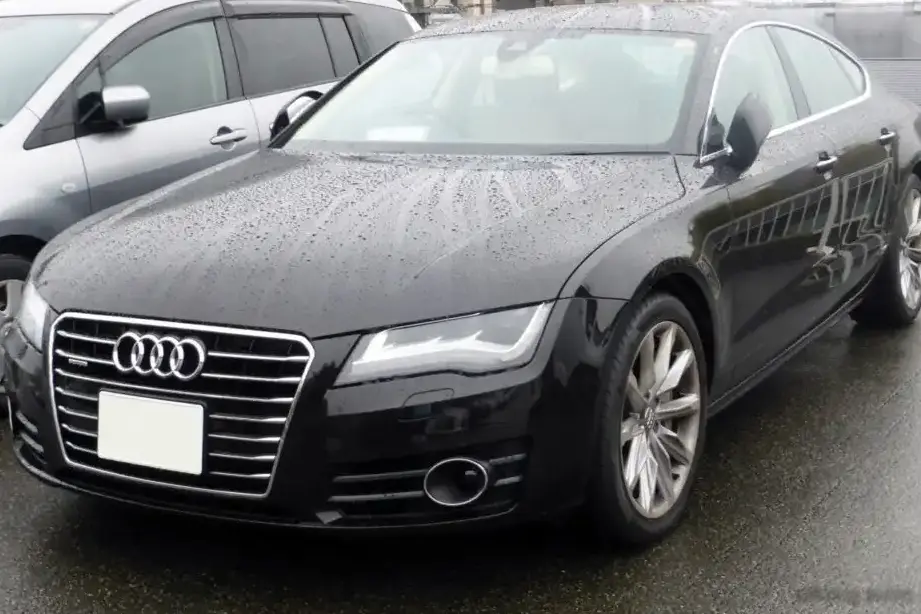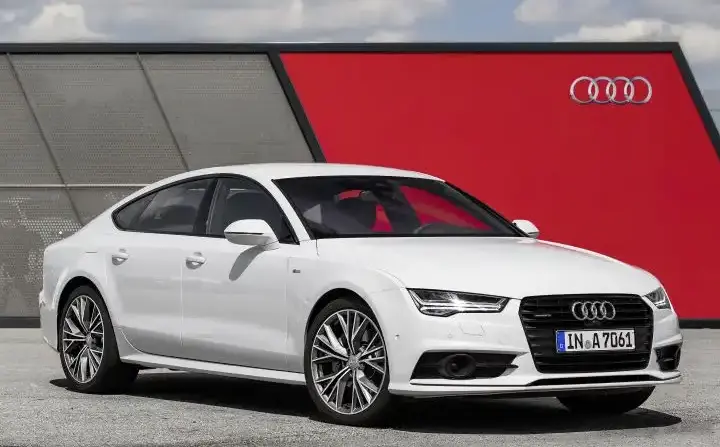
The Audi A7 Sportback (C7) facelift, specifically the 3.0 TFSI V6 quattro S tronic variant, represents a compelling blend of luxury, performance, and technology within Audi’s executive car lineup. Produced from 2014 to 2016, this model year saw refinements to the original C7 A7, enhancing its aesthetics and technological offerings. Positioned as a mid-to-high range trim, it offered a significant step up from the base 2.0 TFSI models, appealing to buyers seeking a more potent and sophisticated driving experience without venturing into the fully-fledged S7 performance territory. The A7 Sportback, with its distinctive coupe-like roofline and practical liftback design, aimed to carve a niche for itself between traditional sedans and larger, more cumbersome hatchbacks.
Technical Specifications
| Brand | Audi |
| Model | A7 |
| Generation | A7 Sportback (C7, facelift 2014) |
| Type (Engine) | 3.0 TFSI V6 (333 Hp) quattro S tronic |
| Start of production | 2014 |
| End of production | 2016 |
| Powertrain Architecture | Internal Combustion engine |
| Body type | Liftback |
| Seats | 5 |
| Doors | 5 |
| Fuel consumption (urban) | 10 l/100 km (23.5 US mpg, 28.2 UK mpg, 10 km/l) |
| Fuel consumption (extra urban) | 6.2 l/100 km (37.9 US mpg, 45.6 UK mpg, 16.1 km/l) |
| Fuel consumption (combined) | 7.6 l/100 km (30.9 US mpg, 37.2 UK mpg, 13.2 km/l) |
| CO2 emissions | 176 g/km |
| Fuel Type | Petrol (Gasoline) |
| Acceleration 0 – 100 km/h | 5.3 sec |
| Acceleration 0 – 62 mph | 5.3 sec |
| Acceleration 0 – 60 mph | 5 sec (Calculated) |
| Maximum speed | 250 km/h (155.34 mph), Electronically limited |
| Emission standard | Euro 6 |
| Weight-to-power ratio | 5.4 kg/Hp, 184 Hp/tonne |
| Weight-to-torque ratio | 4.1 kg/Nm, 243.1 Nm/tonne |
| Power | 333 Hp @ 5500-6500 rpm |
| Power per litre | 111.2 Hp/l |
| Torque | 440 Nm @ 2900-5300 rpm (324.53 lb.-ft. @ 2900-5300 rpm) |
| Engine layout | Front, Longitudinal |
| Engine Model/Code | EA837 evo / CREC |
| Engine displacement | 2995 cm3 (182.77 cu. in.) |
| Number of cylinders | 6 |
| Engine configuration | V-engine |
| Cylinder Bore | 84.5 mm (3.33 in.) |
| Piston Stroke | 89 mm (3.5 in.) |
| Compression ratio | 10.8:1 |
| Number of valves per cylinder | 4 |
| Fuel injection system | Direct injection and Multi-port manifold injection |
| Engine aspiration | Supercharger, Intercooler |
| Valvetrain | DOHC |
| Engine oil capacity | 6.95 l (7.34 US qt, 6.12 UK qt) |
| Coolant | 11.6 l (12.26 US qt, 10.21 UK qt) |
| Kerb Weight | 1810 kg (3990.37 lbs.) |
| Max. weight | 2420 kg (5335.19 lbs.) |
| Max load | 610 kg (1344.82 lbs.) |
| Trunk (boot) space – minimum | 535 l (18.89 cu. ft.) |
| Trunk (boot) space – maximum | 1390 l (49.09 cu. ft.) |
| Fuel tank capacity | 75 l (19.81 US gal, 16.5 UK gal) |
| Max. roof load | 100 kg (220.46 lbs.) |
| Permitted trailer load with brakes (8%) | 2100 kg (4629.71 lbs.) |
| Permitted trailer load with brakes (12%) | 2100 kg (4629.71 lbs.) |
| Permitted trailer load without brakes | 750 kg (1653.47 lbs.) |
| Permitted towbar download | 85 kg (187.39 lbs.) |
| Length | 4974 mm (195.83 in.) |
| Width | 1911 mm (75.24 in.) |
| Width including mirrors | 2139 mm (84.21 in.) |
| Height | 1420 mm (55.91 in.) |
| Wheelbase | 2914 mm (114.72 in.) |
| Front track | 1644 mm (64.72 in.) |
| Rear track | 1635 mm (64.37 in.) |
| Front overhang | 937 mm (36.89 in.) |
| Rear overhang | 1123 mm (44.21 in.) |
| Drag coefficient (Cd) | 0.28 |
| Minimum turning circle | 11.9 m (39.04 ft.) |
| Drivetrain Architecture | ICE to all wheels |
| Drive wheel | All wheel drive (4×4) |
| Number of gears and type of gearbox | 7 gears, automatic transmission S tronic |
| Front suspension | Coil spring, Independent multi-link suspension, Transverse stabilizer |
| Rear suspension | Independent on trapezoidal lever, Transverse stabilizer |
| Front brakes | Ventilated discs |
| Rear brakes | Ventilated discs |
| Assisting systems | ABS (Anti-lock braking system) |
| Steering type | Steering rack and pinion |
| Power steering | Electric Steering |
| Tires size | 235/55 R17; 255/45 R18 |
| Wheel rims size | 7J x 17; 8.5J x 18 |
INTRODUCTION
The Audi A7 Sportback (C7) facelift, launched in 2014, built upon the success of the original C7 generation, introduced in 2010. This refresh brought subtle but significant changes to the exterior styling, interior technology, and engine options. The 3.0 TFSI V6 quattro S tronic model occupied a sweet spot in the lineup, offering a substantial power upgrade over the base engines while remaining more accessible than the high-performance S7. It was designed to appeal to buyers who prioritized a refined driving experience, luxurious appointments, and all-weather capability provided by Audi’s quattro all-wheel-drive system. The A7 Sportback competed directly with vehicles like the BMW 6 Series Gran Coupe and Mercedes-Benz CLS-Class, offering a unique blend of style and practicality.
Powertrain & Engine Architecture
At the heart of the A7 3.0 TFSI lies the EA837 evo engine, a 3.0-liter supercharged V6. This engine, designated with the code CREC, represents a sophisticated piece of engineering. It utilizes a twin-scroll supercharger, providing instant boost and eliminating much of the turbo lag associated with traditional turbocharging. Direct injection and multi-port fuel injection work in concert to optimize combustion efficiency and power delivery. The engine produces 333 horsepower at 5500-6500 rpm and 440 Nm (324.53 lb-ft) of torque between 2900-5300 rpm. The S tronic 7-speed dual-clutch transmission is a key component of this powertrain. It offers incredibly fast and smooth gear changes, contributing to both performance and fuel efficiency. The transmission’s programming is tuned for a balance between comfort and responsiveness, providing seamless acceleration in everyday driving situations.
Driving Characteristics
The 3.0 TFSI V6 with the S tronic transmission delivers a remarkably refined and capable driving experience. Acceleration from 0 to 60 mph takes approximately 5 seconds, making it a genuinely quick car. The supercharger provides immediate throttle response, while the S tronic transmission ensures that power is delivered efficiently to all four wheels via Audi’s quattro system. The gear ratios are well-chosen, providing strong acceleration in all gears. Compared to the 2.0 TFSI models, the 3.0 TFSI offers a significantly more effortless and engaging driving experience. While not as overtly sporty as the S7, it provides ample power for both highway cruising and spirited driving. The quattro all-wheel-drive system provides excellent traction in all weather conditions, enhancing stability and confidence.
Equipment & Trim Levels
The A7 3.0 TFSI quattro S tronic came generously equipped as standard. Typical features included leather upholstery, tri-zone automatic climate control, a power-adjustable driver’s seat with memory function, Audi’s MMI infotainment system with a central display screen, and a premium sound system. Optional extras were plentiful, including adaptive cruise control, a head-up display, ventilated front seats, a panoramic sunroof, and various driver-assistance systems. Interior trim options ranged from wood veneers to brushed aluminum, allowing buyers to personalize the cabin to their tastes. Exterior options included various wheel designs and paint colors.
Chassis & Braking
The A7 Sportback features a sophisticated chassis designed to balance comfort and handling. The front suspension utilizes a multi-link setup with a transverse stabilizer bar, while the rear suspension employs an independent trapezoidal link design, also with a stabilizer bar. This configuration provides a comfortable ride while minimizing body roll during cornering. The A7 3.0 TFSI is equipped with ventilated disc brakes on all four wheels, providing ample stopping power. ABS (Anti-lock Braking System) is standard, along with electronic stability control and traction control. The steering is a rack-and-pinion system with electric power assistance, offering precise and responsive steering feel.
Market Reception & Comparison
The Audi A7 Sportback 3.0 TFSI quattro S tronic was generally well-received by automotive critics. It was praised for its stylish design, luxurious interior, refined driving experience, and strong performance. Fuel economy was considered respectable for a vehicle of its size and performance, averaging around 30.9 US mpg in combined driving. Compared to the 2.0 TFSI models, the 3.0 TFSI offered a significant performance upgrade, justifying the higher price tag for many buyers. Compared to the S7, it provided a more comfortable ride and a slightly lower price point, making it a more practical choice for everyday use. Reliability reports generally indicate good long-term reliability, although preventative maintenance is crucial, particularly regarding the supercharger and S tronic transmission.
Legacy
The Audi A7 Sportback (C7) 3.0 TFSI quattro S tronic remains a desirable used car today. The EA837 engine, while requiring regular maintenance, is generally considered robust and reliable. The S tronic transmission, however, can be prone to issues if not properly maintained, with fluid changes being critical. The A7’s combination of style, luxury, and performance continues to appeal to buyers seeking a sophisticated and capable grand tourer. Its distinctive design and well-appointed interior have ensured its enduring appeal in the used car market, making it a compelling alternative to more mainstream luxury sedans.