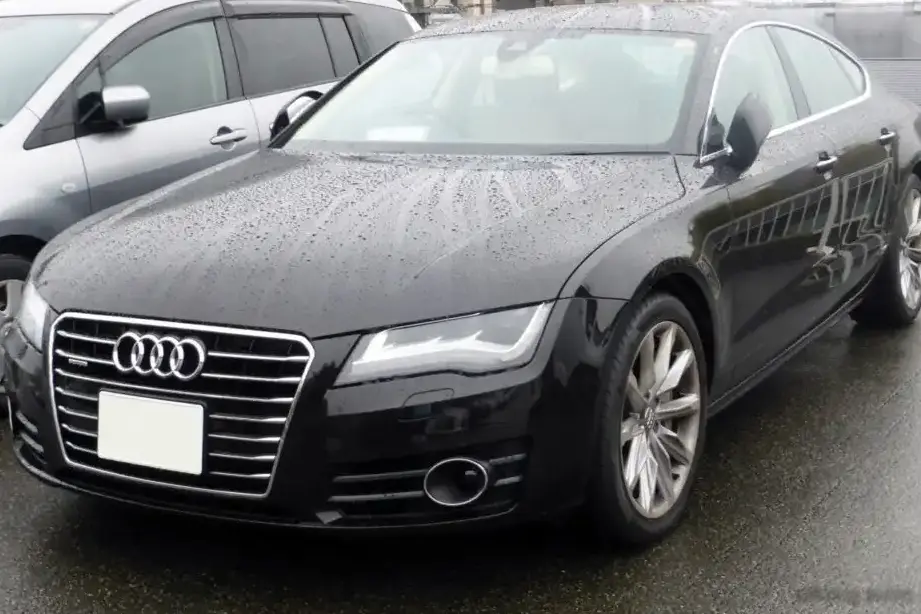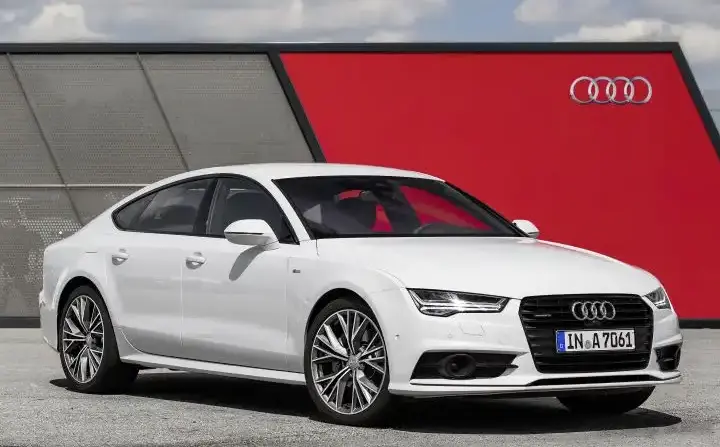
The Audi A7 Sportback Competition 3.0 BiTDI, produced for a limited time in 2014 as part of the C7 facelift generation, represented a performance-oriented variant within the A7 range. Positioned as a flagship trim, it aimed to bridge the gap between the standard A7 models and the even more potent RS 7. Production was concentrated within the 2014 model year, making it a relatively rare and sought-after vehicle. The “Competition” designation signified enhanced power output and a more focused driving experience compared to other A7 3.0 TDI models. It utilized Audi’s quattro all-wheel drive system and an eight-speed Tiptronic automatic transmission, catering to drivers seeking both performance and refinement.
Technical Specifications
| Brand | Audi |
| Model | A7 |
| Generation | A7 Sportback (C7, facelift 2014) |
| Type (Engine) | Competition 3.0 BiTDI V6 (347 Hp) quattro Tiptronic |
| Start of production | May, 2014 |
| End of production | 2014 |
| Powertrain Architecture | Internal Combustion engine |
| Body type | Liftback |
| Seats | 5 |
| Doors | 5 |
| Fuel Type | Diesel |
| Acceleration 0 – 100 km/h | 5.1 sec |
| Acceleration 0 – 62 mph | 5.1 sec |
| Acceleration 0 – 60 mph | 4.8 sec |
| Maximum speed | 250 km/h (155.34 mph) |
| Weight-to-power ratio | 5.5 kg/Hp, 183.1 Hp/tonne |
| Weight-to-torque ratio | 2.9 kg/Nm, 343 Nm/tonne |
| Power | 347 Hp @ 4600 rpm |
| Power per litre | 117 Hp/l |
| Torque | 650 Nm @ 1400-2800 rpm (479.42 lb.-ft. @ 1400-2800 rpm) |
| Engine layout | Front, Longitudinal |
| Engine Model/Code | VZVC, CZVD |
| Engine displacement | 2967 cm3 (181.06 cu. in.) |
| Number of cylinders | 6 |
| Engine configuration | V-engine |
| Cylinder Bore | 83 mm (3.27 in.) |
| Piston Stroke | 91.4 mm (3.6 in.) |
| Compression ratio | 15.5:1 |
| Number of valves per cylinder | 4 |
| Fuel injection system | Diesel Commonrail |
| Engine aspiration | BiTurbo, Intercooler |
| Valvetrain | DOHC |
| Engine oil capacity | 6.1 l (6.45 US qt | 5.37 UK qt) |
| Kerb Weight | 1895 kg (4177.76 lbs.) |
| Max. weight | 2505 kg (5522.58 lbs.) |
| Max load | 610 kg (1344.82 lbs.) |
| Trunk (boot) space – minimum | 535 l (18.89 cu. ft.) |
| Trunk (boot) space – maximum | 1390 l (49.09 cu. ft.) |
| Fuel tank capacity | 73 l (19.28 US gal | 16.06 UK gal) |
| Length | 4974 mm (195.83 in.) |
| Width | 1911 mm (75.24 in.) |
| Width including mirrors | 2139 mm (84.21 in.) |
| Height | 1420 mm (55.91 in.) |
| Wheelbase | 2914 mm (114.72 in.) |
| Front track | 1644 mm (64.72 in.) |
| Rear (Back) track | 1635 mm (64.37 in.) |
| Front overhang | 937 mm (36.89 in.) |
| Rear overhang | 1123 mm (44.21 in.) |
| Drag coefficient (Cd) | 0.29 |
| Minimum turning circle | 11.9 m (39.04 ft.) |
| Drive wheel | All wheel drive (4×4) |
| Number of gears | 8 |
| Gearbox type | automatic transmission Tiptronic |
| Front suspension | Independent multi-link suspension |
| Rear suspension | Independent on trapezoidal lever |
| Front brakes | Ventilated discs |
| Rear brakes | Ventilated discs |
| Assisting systems | ABS (Anti-lock braking system) |
| Steering type | Steering rack and pinion |
| Power steering | Electric Steering |
| Tires size | 265/35 R20 |
| Wheel rims size | 20 |
Powertrain & Engine Architecture
The heart of the A7 Sportback Competition is the 3.0-liter V6 diesel engine, specifically utilizing the VZVC or CZVD engine codes depending on minor regional variations. This engine is a member of Audi’s modular engine family, known for its robust construction and advanced technology. The BiTDI designation indicates the use of a sequential twin-turbocharger system. A smaller turbocharger provides quick response at low engine speeds, minimizing turbo lag, while a larger turbocharger delivers increased power at higher RPMs. The engine features direct injection with common rail technology, operating at a high compression ratio of 15.5:1 to maximize efficiency. The eight-speed Tiptronic automatic transmission is a torque-converter type, offering smooth and relatively quick shifts. It allows for both fully automatic operation and manual gear selection via steering wheel-mounted paddles or the gear selector. The transmission is designed to handle the substantial 650 Nm (479 lb-ft) of torque produced by the engine.
Driving Characteristics
The 347 horsepower and 650 Nm of torque translate into brisk acceleration. The 0-60 mph sprint takes approximately 4.8 seconds, making it a genuinely quick vehicle for its size and class. The BiTurbo setup provides a broad torque curve, delivering strong pulling power across a wide range of engine speeds. Compared to the standard 240 hp 3.0 TDI, the Competition model offers a significantly more engaging driving experience. While the eight-speed Tiptronic transmission is generally smooth, it doesn’t offer the same level of driver involvement as a manual gearbox. The quattro all-wheel-drive system provides excellent traction in all weather conditions, enhancing stability and confidence. The suspension is tuned for a balance between comfort and handling, offering a reasonably compliant ride without sacrificing cornering ability.
Equipment & Trim Levels
The Competition trim level came generously equipped. Standard features typically included Audi’s MMI navigation plus system with a high-resolution touchscreen display, leather upholstery, heated front seats, a panoramic sunroof, and a premium sound system. Exterior styling cues included unique 20-inch alloy wheels, S-line exterior enhancements (front and rear bumpers, side skirts), and darkened exterior trim elements. Optional extras included adaptive cruise control, a head-up display, and advanced driver-assistance systems. The interior typically featured aluminum or carbon fiber trim accents, adding to the sporty ambiance.
Chassis & Braking
The A7 Sportback Competition utilizes a sophisticated chassis design. The front suspension features a multi-link setup, while the rear employs a trapezoidal link configuration. This arrangement provides a good balance of ride comfort and handling precision. The braking system consists of ventilated discs on all four wheels, providing ample stopping power. ABS (Anti-lock Braking System) is standard, along with electronic stability control. The steering is a rack-and-pinion system with electric power assistance, offering precise and responsive steering feel.
Market Reception & Comparison
The A7 Sportback Competition was generally well-received by automotive critics. It was praised for its powerful engine, refined interior, and comfortable ride. However, some reviewers noted that the Tiptronic transmission could feel slightly less engaging than a manual gearbox. Compared to the standard A7 3.0 TDI, the Competition model offered a noticeable performance upgrade. Against rivals like the BMW 6 Series Gran Coupe and Mercedes-Benz CLS, the A7 Competition held its own, offering a compelling combination of performance, luxury, and practicality. Fuel economy, while respectable for a vehicle of this size and performance, was slightly lower than the less powerful TDI variants.
Legacy
The Audi A7 Sportback Competition 3.0 BiTDI, despite its limited production run, has gained a following among enthusiasts. The 3.0 TDI engine, in general, is known for its durability and reliability, provided it is properly maintained. The Tiptronic transmission is also generally reliable, although regular fluid changes are essential. In the used car market, these models command a premium over the standard A7 TDI variants due to their increased performance and exclusivity. They represent a compelling option for buyers seeking a stylish, comfortable, and capable grand tourer with a diesel powertrain.