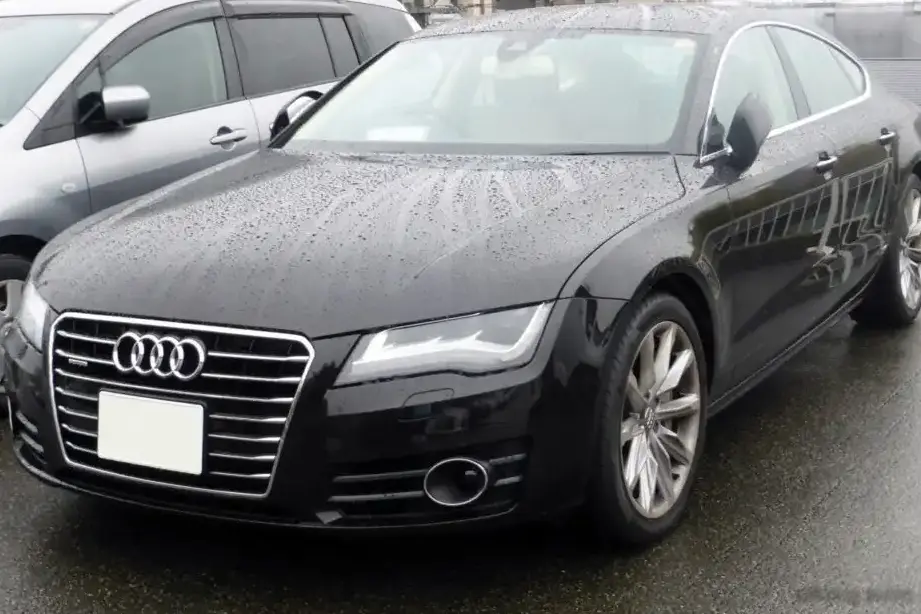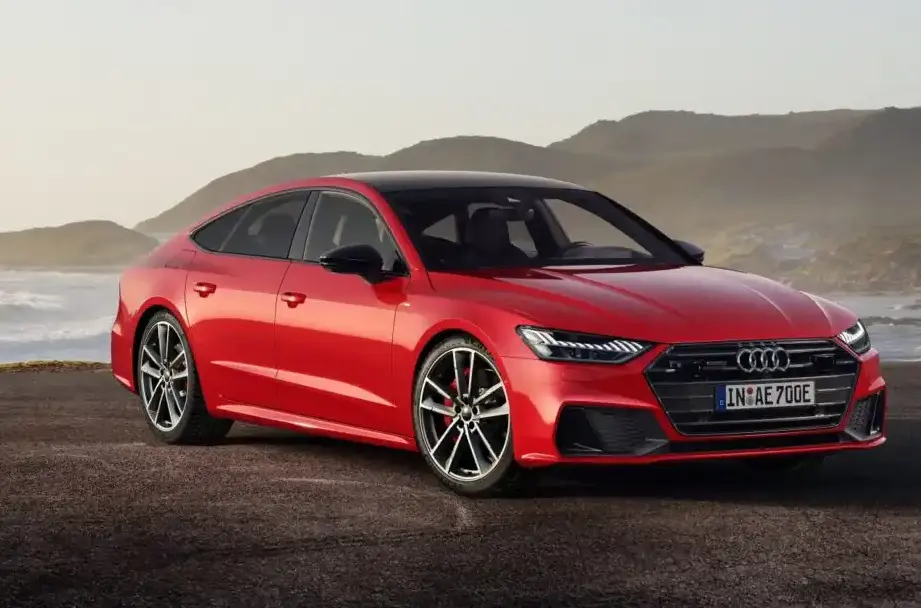
The Audi A7 Sportback (C8) 40 TDI quattro ultra S tronic represents a compelling blend of luxury, performance, and efficiency within the Audi A7 lineup. Produced from 2018 to 2020, this variant occupied a significant position as a mid-range offering, appealing to buyers seeking a sophisticated grand tourer with a diesel powertrain and all-wheel drive capability. It’s built on the Volkswagen Group’s MLB Evo platform (1HX0/A3), shared with other Audi, Porsche, and Volkswagen models, emphasizing modularity and advanced engineering. This specific configuration aimed to deliver a balance between spirited driving and respectable fuel economy, making it a popular choice in European markets where diesel engines remained prevalent.
Technical Specifications
| Brand | Audi |
| Model | A7 |
| Generation | A7 Sportback (C8) |
| Type (Engine) | 40 TDI (204 Hp) quattro ultra S tronic |
| Start of production | 2018 |
| End of production | 2020 |
| Powertrain Architecture | Internal Combustion engine |
| Body type | Liftback |
| Seats | 5 |
| Doors | 5 |
| Combined fuel consumption (WLTP) | 6.0-6.4 l/100 km (39.2 – 36.8 US mpg, 47.1 – 44.1 UK mpg, 16.7 – 15.6 km/l) |
| CO2 emissions (WLTP) | 158-167 g/km |
| Fuel consumption (urban) | 4.8-4.9 l/100 km (49 – 48 US mpg, 58.9 – 57.6 UK mpg, 20.8 – 20.4 km/l) |
| Fuel consumption (extra urban) | 4.1-4.4 l/100 km (57.4 – 53.5 US mpg, 68.9 – 64.2 UK mpg, 24.4 – 22.7 km/l) |
| Fuel consumption (combined) | 4.4-4.6 l/100 km (53.5 – 51.1 US mpg, 64.2 – 61.4 UK mpg, 22.7 – 21.7 km/l) |
| CO2 emissions | 115-120 g/km |
| Fuel Type | Diesel |
| Acceleration 0 – 100 km/h | 7.8 sec |
| Acceleration 0 – 62 mph | 7.8 sec |
| Acceleration 0 – 60 mph | 7.4 sec |
| Maximum speed | 245 km/h (152.24 mph) |
| Emission standard | Euro 6d – TEMP |
| Weight-to-power ratio | 8.6 kg/Hp, 115.9 Hp/tonne |
| Weight-to-torque ratio | 4.4 kg/Nm, 227.3 Nm/tonne |
| Power | 204 Hp @ 3750-4200 rpm |
| Torque | 400 Nm @ 1750-3500 rpm (295.02 lb.-ft. @ 1750-3500 rpm) |
| Engine layout | Front, Longitudinal |
| Engine Model/Code | DFBA |
| Engine displacement | 1968 cm3 (120.09 cu. in.) |
| Number of cylinders | 4 |
| Engine configuration | Inline |
| Number of valves per cylinder | 4 |
| Fuel injection system | Diesel Commonrail |
| Engine aspiration | Turbocharger, Intercooler |
| Engine oil capacity | 5.5 l (5.81 US qt | 4.84 UK qt) |
| Kerb Weight | 1760 kg (3880.14 lbs.) |
| Max. weight | 2435 kg (5368.26 lbs.) |
| Max load | 675 kg (1488.12 lbs.) |
| Trunk (boot) space – minimum | 535 l (18.89 cu. ft.) |
| Fuel tank capacity | 63 l (16.64 US gal | 13.86 UK gal) |
| Max. roof load | 90 kg (198.42 lbs.) |
| Permitted trailer load with brakes (8%) | 2000 kg (4409.25 lbs.) |
| Permitted trailer load with brakes (12%) | 2000 kg (4409.25 lbs.) |
| Permitted trailer load without brakes | 750 kg (1653.47 lbs.) |
| Permitted towbar download | 95 kg (209.44 lbs.) |
| Length | 4969 mm (195.63 in.) |
| Width | 1908 mm (75.12 in.) |
| Width including mirrors | 2118 mm (83.39 in.) |
| Height | 1422 mm (55.98 in.) |
| Wheelbase | 2926 mm (115.2 in.) |
| Front track | 1651 mm (65 in.) |
| Rear (Back) track | 1637 mm (64.45 in.) |
| Front overhang | 927 mm (36.5 in.) |
| Rear overhang | 1116 mm (43.94 in.) |
| Drivetrain Architecture | All wheel drive (4×4). ICE drives front wheels, rear driven by clutch. |
| Number of gears and type of gearbox | 7 gears, automatic transmission S tronic |
| Front suspension | Independent multi-link suspension |
| Rear suspension | Independent multi-link suspension |
| Front brakes | Ventilated discs |
| Rear brakes | Disc |
Powertrain & Engine Architecture
The heart of the A7 40 TDI is the DFBA engine, a 2.0-liter inline-four cylinder diesel engine. This engine utilizes a sophisticated common rail direct injection system, delivering fuel at extremely high pressures for optimized combustion. A turbocharger with an intercooler is employed to boost power and torque, mitigating turbo lag and enhancing responsiveness. The engine produces 204 horsepower at 3750-4200 rpm and a substantial 400 Nm (295 lb-ft) of torque between 1750 and 3500 rpm. This broad torque curve provides strong acceleration in everyday driving situations. The engine also incorporates a particulate filter to reduce emissions, complying with stringent Euro 6d-TEMP standards. Paired with the engine is Audi’s 7-speed S tronic dual-clutch transmission. This transmission offers quick, smooth shifts and contributes to the car’s overall efficiency. The ‘ultra’ designation in the name indicates a more sophisticated quattro all-wheel-drive system that can decouple the rear axle when not needed, further improving fuel economy.
Driving Characteristics
The 204 hp and 400 Nm of torque provide adequate performance for the A7 Sportback. Acceleration from 0 to 60 mph takes approximately 7.4-7.8 seconds, and the car feels composed and stable at highway speeds. While not as overtly sporty as higher-powered A7 variants (like the 55 TFSI), the 40 TDI offers a refined and comfortable driving experience. The S tronic transmission provides quick and seamless gear changes, and the quattro all-wheel-drive system ensures excellent traction in various weather conditions. Compared to the manual transmission options available on other A7 models, the S tronic prioritizes convenience and ease of use, making it ideal for long-distance cruising. The gear ratios are tuned for a balance between acceleration and fuel efficiency, with taller gears for relaxed highway driving.
Equipment & Trim Levels
The A7 Sportback 40 TDI quattro ultra S tronic typically came well-equipped as standard. Features included Audi’s Virtual Cockpit digital instrument cluster, a 10.1-inch touchscreen infotainment system with MMI Navigation plus, three-zone automatic climate control, leather upholstery, and LED headlights. Optional extras included features like a Bang & Olufsen sound system, adaptive cruise control, a head-up display, and various driver assistance systems. Interior trim levels varied, with options for different wood or aluminum inlays. The standard seats provided good support and comfort, and optional sport seats were available for a more bolstered feel.
Chassis & Braking
The A7 Sportback features an independent multi-link suspension at both the front and rear axles, providing a comfortable and controlled ride. The suspension is tuned to balance handling and comfort, absorbing bumps and imperfections in the road effectively. The car is equipped with ventilated disc brakes at the front and solid discs at the rear. Anti-lock braking system (ABS) and electronic stability control (ESC) are standard features, enhancing safety and stability. The steering is a power-assisted rack and pinion system, providing precise and responsive steering feel.
Market Reception & Comparison
The A7 Sportback 40 TDI quattro ultra S tronic was generally well-received by automotive critics. It was praised for its refined driving experience, comfortable interior, and fuel efficiency. Compared to the more powerful A7 variants, the 40 TDI offered a more affordable entry point into the A7 range without sacrificing too much in terms of luxury or performance. Its fuel economy of 6.0-6.4 l/100 km (39.2-36.8 US mpg) was a significant advantage, particularly in Europe where diesel fuel was often cheaper than gasoline. Compared to the 3.0-liter TDI models, the 2.0-liter engine offered lower running costs and a slightly lighter weight, but with a corresponding reduction in outright performance.
Legacy
The DFBA engine, while generally reliable, is known to require regular maintenance, particularly regarding the diesel particulate filter (DPF). Ensuring the DPF is regularly regenerated through highway driving is crucial to prevent clogging and costly repairs. The S tronic transmission is also a complex unit that requires scheduled servicing. In the used car market, the A7 Sportback 40 TDI quattro ultra S tronic represents a good value proposition for buyers seeking a luxurious and efficient grand tourer. Its combination of comfort, performance, and technology continues to appeal to a wide range of drivers. Well-maintained examples are still relatively common and offer a compelling alternative to newer models.