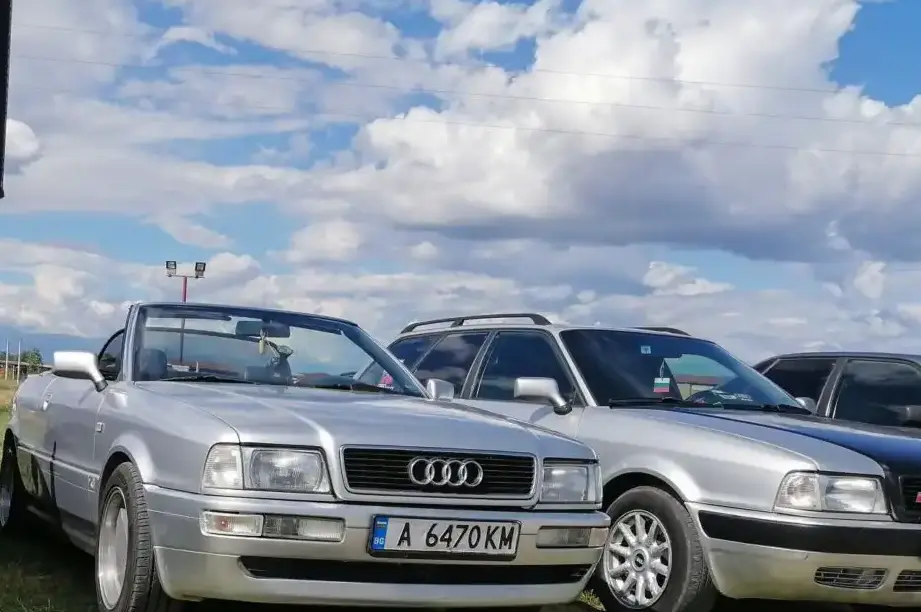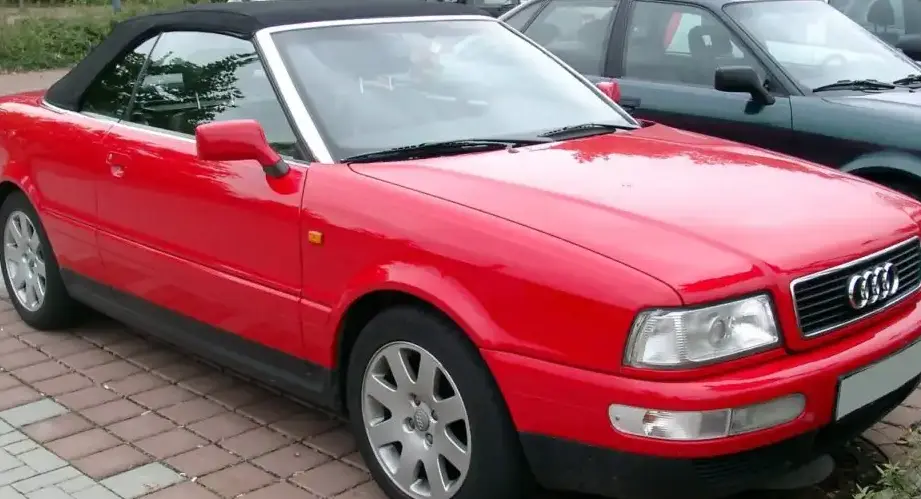
The Audi Cabriolet, specifically the B3 8G facelift model produced from 1997 to 2001, represented a significant step forward for Audi in the open-top luxury segment. This iteration, featuring the 1.8-liter 20-valve engine producing 125 horsepower, occupied a middle ground within the Cabriolet range, offering a balance between performance, fuel economy, and affordability. It was positioned as a more accessible alternative to the higher-performance variants, like those equipped with the 2.8-liter V6 engine, while still providing the premium Audi experience. The B3 Cabriolet was built on the Audi 80/Volkswagen Passat (B3) platform, known internally as the B3, and later updated to the B4 platform with the facelift in 1997.
Technical Specifications
| Brand | Audi |
| Model | Cabriolet |
| Generation | Cabriolet (B3 8G, facelift 1997) |
| Type (Engine) | 1.8 20V (125 Hp) |
| Start of production | April, 1997 |
| End of production | 2001 |
| Powertrain Architecture | Internal Combustion engine |
| Body type | Cabriolet |
| Seats | 4 |
| Doors | 2 |
| Fuel consumption (urban) | 12.6 l/100 km (18.7 US mpg, 22.4 UK mpg, 7.9 km/l) |
| Fuel consumption (extra urban) | 6.9 l/100 km (34.1 US mpg, 40.9 UK mpg, 14.5 km/l) |
| Fuel consumption (combined) | 9 l/100 km (26.1 US mpg, 31.4 UK mpg, 11.1 km/l) |
| CO2 emissions | 216 g/km |
| Fuel Type | Petrol (Gasoline) |
| Acceleration 0 – 100 km/h | 11.5 sec |
| Acceleration 0 – 62 mph | 11.5 sec |
| Acceleration 0 – 60 mph | 10.9 sec |
| Maximum speed | 195 km/h (121.17 mph) |
| Weight-to-power ratio | 11 kg/Hp, 91.2 Hp/tonne |
| Weight-to-torque ratio | 7.9 kg/Nm, 126.3 Nm/tonne |
| Power | 125 Hp @ 5800 rpm |
| Power per litre | 70.2 Hp/l |
| Torque | 173 Nm @ 3950 rpm (127.6 lb.-ft. @ 3950 rpm) |
| Engine layout | Front, Longitudinal |
| Engine Model/Code | ADR |
| Engine displacement | 1781 cm3 (108.68 cu. in.) |
| Number of cylinders | 4 |
| Engine configuration | Inline |
| Cylinder Bore | 81 mm (3.19 in.) |
| Piston Stroke | 86.4 mm (3.4 in.) |
| Compression ratio | 10.3:1 |
| Number of valves per cylinder | 5 |
| Fuel injection system | Multi-port manifold injection |
| Engine aspiration | Naturally aspirated engine |
| Valvetrain | DOHC |
| Engine oil capacity | 3.5 l (3.7 US qt | 3.08 UK qt) |
| Coolant | 6.5 l (6.87 US qt | 5.72 UK qt) |
| Kerb Weight | 1370 kg (3020.33 lbs.) |
| Max. weight | 1770 kg (3902.18 lbs.) |
| Max load | 400 kg (881.85 lbs.) |
| Trunk (boot) space – minimum | 230 l (8.12 cu. ft.) |
| Fuel tank capacity | 70 l (18.49 US gal | 15.4 UK gal) |
| Permitted trailer load with brakes (8%) | 1000 kg (2204.62 lbs.) |
| Permitted trailer load with brakes (12%) | 1000 kg (2204.62 lbs.) |
| Permitted trailer load without brakes | 730 kg (1609.37 lbs.) |
| Permitted towbar download | 40 kg (88.18 lbs.) |
| Length | 4366 mm (171.89 in.) |
| Width | 1716 mm (67.56 in.) |
| Height | 1379 mm (54.29 in.) |
| Wheelbase | 2556 mm (100.63 in.) |
| Front track | 1453 mm (57.2 in.) |
| Rear (Back) track | 1447 mm (56.97 in.) |
| Drag coefficient (Cd) | 0.36 |
| Minimum turning circle (turning diameter) | 11.1 m (36.42 ft.) |
| Drivetrain Architecture | The Internal combustion engine (ICE) drives the front wheels of the vehicle. |
| Drive wheel | Front wheel drive |
| Number of gears and type of gearbox | 5 gears, manual transmission |
| Front suspension | Independent, type McPherson with coil spring and anti-roll bar |
| Rear suspension | Semi-independent, coil spring |
| Front brakes | Ventilated discs |
| Rear brakes | Disc |
| Assisting systems | ABS (Anti-lock braking system) |
| Steering type | Steering rack and pinion |
| Power steering | Hydraulic Steering |
| Tires size | 195/65 R15 |
| Wheel rims size | 6J x 15 |
Powertrain & Engine Architecture
The heart of this Cabriolet variant is the Audi-developed 1.8-liter inline-four cylinder engine, designated ADR. This engine is a 20-valve (five valves per cylinder – three intake, two exhaust) unit, a key feature contributing to its relatively high output for its displacement. It utilizes a Bosch Motronic multi-port fuel injection system, carefully managing fuel delivery for optimal combustion. The engine’s design emphasized smooth power delivery and reasonable fuel efficiency. The ADR engine is known for its durability and relatively straightforward maintenance. The engine is longitudinally mounted, driving the front wheels. The standard transmission for this model was a 5-speed manual, but a 4-speed automatic transmission was also available, and is the focus of this article. This automatic transmission, while providing convenience, did impact acceleration and fuel economy compared to the manual counterpart.
Driving Characteristics
The 1.8-liter 20V engine with the automatic transmission delivered a comfortable and refined driving experience. While not overtly sporty, it provided adequate power for everyday driving and cruising. Acceleration from 0-60 mph took approximately 10.9 seconds, and top speed was around 121 mph. The automatic transmission, while smooth, had noticeable gear changes and wasn’t particularly quick to downshift. This resulted in a less engaging driving experience compared to the manual version. The gear ratios were optimized for fuel economy and comfort rather than outright performance. The car felt balanced and predictable in corners, but lacked the sharpness of the more powerful V6 models.
Equipment & Trim Levels
The 1.8-liter Cabriolet typically came with a respectable level of standard equipment. This included power windows, central locking, power steering, and an anti-lock braking system (ABS). Interior upholstery was typically cloth, with options for leather upgrades. The dashboard layout was functional and well-designed, typical of Audi interiors of the era. Optional extras included a sunroof, upgraded audio systems, and alloy wheels. The trim level often dictated the availability of these options, with higher trims offering more standard features and a wider range of customization possibilities.
Chassis & Braking
The B3 Cabriolet utilized a McPherson strut front suspension and a semi-independent coil spring rear suspension. This setup provided a good balance between ride comfort and handling. The front brakes were ventilated discs, offering good stopping power, while the rear brakes were solid discs. The steering was rack and pinion with hydraulic assistance, providing precise and responsive control. The chassis was reinforced to compensate for the lack of a fixed roof, ensuring structural rigidity and safety.
Market Reception & Comparison
The 1.8-liter Cabriolet was generally well-received by critics as an affordable and stylish entry into the premium open-top market. It was praised for its comfortable ride, refined interior, and relatively fuel-efficient engine. However, some reviewers noted that the automatic transmission detracted from the driving experience and that the engine lacked the punch of the V6 models. Compared to the 2.8-liter V6, the 1.8 offered significantly better fuel economy but considerably less performance. The 1.8 was also more affordable to purchase and maintain than the V6.
Legacy
The Audi B3 Cabriolet 1.8 20V with automatic transmission has become a popular choice among classic Audi enthusiasts. The ADR engine is known for its reliability, and parts availability remains relatively good. While not a high-performance machine, it offers a stylish and enjoyable driving experience. Today, well-maintained examples command reasonable prices in the used car market, making it an accessible entry point into classic Audi ownership. The combination of a reliable engine, comfortable ride, and classic styling ensures its continued appeal for years to come.