
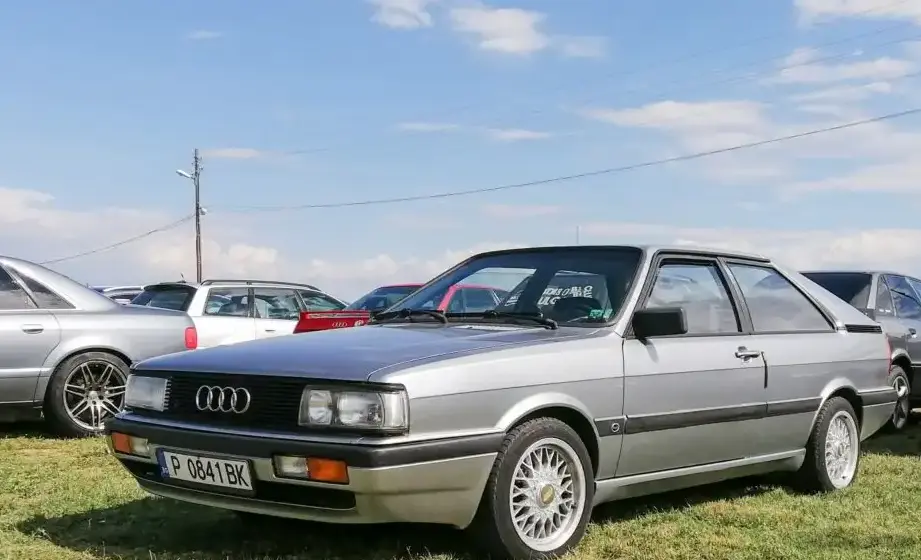
The Audi Coupe (B2), produced between 1980 and 1988, represented a significant step forward for Audi, blending sporty styling with advanced engineering. The 2.3-liter quattro CAT variant, introduced in August 1986 and continuing through 1988, occupied a premium position within the B2 Coupe lineup. It combined a potent five-cylinder engine with Audi’s renowned quattro all-wheel-drive system, offering a compelling package for drivers seeking performance and all-weather capability. This model was part of the broader B2 generation (chassis codes 81 and 85), which benefited from a significant facelift in 1984, improving both aesthetics and aerodynamics.
Technical Specifications
| Brand | Audi |
| Model | Coupe |
| Generation | Coupe (B2 81, 85, facelift 1984) |
| Type (Engine) | 2.3 (136 Hp) quattro CAT |
| Start of production | August, 1986 |
| End of production | 1988 |
| Powertrain Architecture | Internal Combustion engine |
| Body type | Coupe |
| Seats | 5 |
| Doors | 2 |
| Fuel Type | Petrol (Gasoline) |
| Weight-to-power ratio | 8.8 kg/Hp, 113.3 Hp/tonne |
| Weight-to-torque ratio | 6.3 kg/Nm, 158.3 Nm/tonne |
| Power | 136 Hp @ 5700 rpm |
| Power per litre | 58.9 Hp/l |
| Torque | 190 Nm @ 4500 rpm, 140.14 lb.-ft. @ 4500 rpm |
| Engine layout | Front, Longitudinal |
| Engine Model/Code | NG |
| Engine displacement | 2309 cm3, 140.9 cu. in. |
| Number of cylinders | 5 |
| Engine configuration | Inline |
| Cylinder Bore | 82.5 mm, 3.25 in. |
| Piston Stroke | 86.4 mm, 3.4 in. |
| Compression ratio | 10:1 |
| Number of valves per cylinder | 2 |
| Fuel injection system | Multi-port manifold injection |
| Engine aspiration | Naturally aspirated engine |
| Engine oil capacity | 4 l, 4.23 US qt | 3.52 UK qt |
| Coolant | 8 l, 8.45 US qt | 7.04 UK qt |
| Kerb Weight | 1200 kg, 2645.55 lbs |
| Max. weight | 1660 kg, 3659.67 lbs |
| Max load | 460 kg, 1014.13 lbs |
| Trunk (boot) space – minimum | 391 l, 13.81 cu. ft |
| Fuel tank capacity | 70 l, 18.49 US gal | 15.4 UK gal |
| Length | 4421 mm, 174.06 in |
| Width | 1682 mm, 66.22 in |
| Height | 1350 mm, 53.15 in |
| Wheelbase | 2538 mm, 99.92 in |
| Front track | 1403 mm, 55.24 in |
| Rear (Back) track | 1407 mm, 55.39 in |
| Ride height (ground clearance) | 120 mm, 4.72 in |
| Drag coefficient (Cd) | 0.36 |
| Minimum turning circle (turning diameter) | 11 m, 36.09 ft |
| Drive wheel | All wheel drive (4×4) |
| Number of gears and type of gearbox | 5 gears, manual transmission |
| Front brakes | Ventilated discs |
| Rear brakes | Disc |
| Tires size | 185/60 R14 |
| Wheel rims size | 14 |
Powertrain & Engine Architecture
The heart of the 2.3 quattro CAT was the NG engine, a naturally aspirated, inline five-cylinder powerplant. This engine was a hallmark of Audi’s engineering prowess during the 1980s, offering a unique blend of smoothness and performance. The ‘CAT’ designation indicated the presence of a catalytic converter, reflecting growing environmental concerns and emissions regulations. The engine utilized multi-port fuel injection, a significant advancement over earlier carbureted systems, improving fuel efficiency and throttle response. The five-cylinder configuration, with its uneven firing order, contributed to a distinctive exhaust note. The 2.3-liter engine produced 136 horsepower at 5700 rpm and 190 Nm (140 lb-ft) of torque at 4500 rpm. This power was delivered to all four wheels through a robust five-speed manual transmission, the only gearbox option available for this variant. The longitudinal engine layout, coupled with the quattro drivetrain, provided excellent balance and traction.
Driving Characteristics
The 2.3 quattro CAT offered a refined and capable driving experience. While not the fastest version of the B2 Coupe (that honor belonged to the turbocharged variants), it provided ample power for comfortable cruising and spirited driving. The all-wheel-drive system instilled confidence in various road conditions, particularly in inclement weather. The five-speed manual transmission allowed for precise control over the engine’s powerband. Compared to the later 1.8-liter models, the 2.3 offered significantly more torque, resulting in stronger acceleration, especially at lower speeds. The gear ratios were well-matched to the engine’s characteristics, providing good responsiveness in everyday driving situations. The quattro system did add some weight, but the improved traction largely compensated for this.
Equipment & Trim Levels
The 2.3 quattro CAT was positioned as a well-equipped model within the B2 Coupe range. Standard features typically included power windows, central locking, and a high-quality stereo system. The interior was typically finished with cloth upholstery, although leather options were available. The dashboard layout was functional and driver-focused, with clear instrumentation. Optional extras included a sunroof, alloy wheels, and upgraded sound systems. The level of equipment reflected the car’s premium price point and target audience – buyers who appreciated both performance and comfort.
Chassis & Braking
The B2 Coupe featured a MacPherson strut front suspension and a semi-trailing arm rear suspension. The 2.3 quattro CAT benefited from a slightly stiffer suspension setup compared to the base models, improving handling and stability. Disc brakes were fitted to all four wheels, providing ample stopping power. The front brakes were ventilated to dissipate heat more effectively. The quattro system’s weight distribution contributed to balanced braking performance. The car’s relatively low ride height and well-tuned suspension minimized body roll during cornering.
Market Reception & Comparison
The Audi Coupe 2.3 quattro CAT was generally well-received by automotive critics. It was praised for its performance, handling, and all-weather capability. The five-cylinder engine was lauded for its smoothness and distinctive sound. However, some critics noted that the car’s price was relatively high compared to its competitors. Compared to the 1.8-liter versions, the 2.3 offered a significant performance upgrade, but at the cost of slightly higher fuel consumption. The 2.3 quattro CAT was a more practical and refined alternative to the turbocharged models, which were known for their higher maintenance costs and potential reliability issues.
Legacy
The Audi Coupe B2, particularly the 2.3 quattro CAT variant, holds a special place in automotive history. It helped establish Audi as a maker of sophisticated and technologically advanced vehicles. The NG engine proved to be a durable and reliable powerplant, and many examples are still on the road today. The quattro all-wheel-drive system became a defining feature of Audi vehicles, and its influence can still be seen in the company’s current lineup. In the used car market, the 2.3 quattro CAT is sought after by enthusiasts who appreciate its classic styling, unique engine, and all-weather capability. While maintenance can be more involved than with more modern vehicles, the car’s robust construction and readily available parts supply ensure that it can be enjoyed for years to come.
