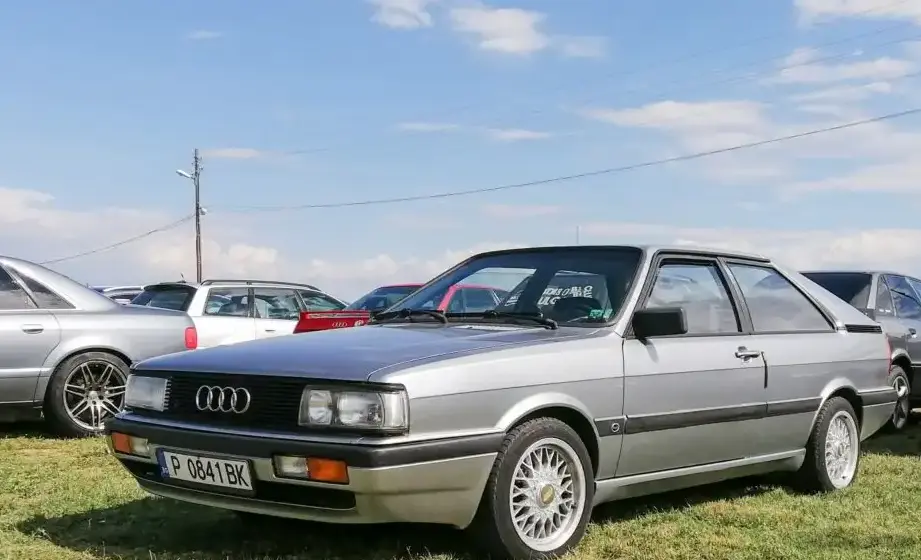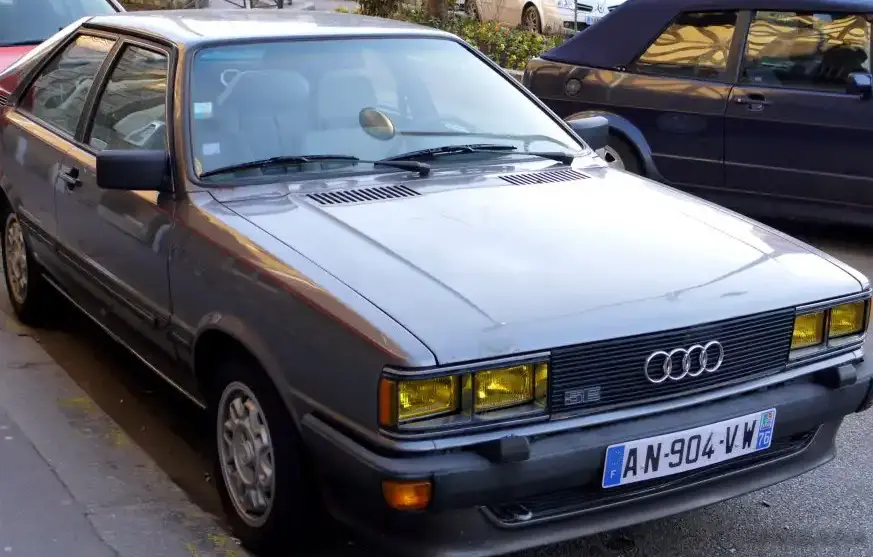
The Audi Coupe (B2), produced between 1980 and 1988, represented a significant step forward for Audi, blending sporty styling with practical usability. Within the B2 generation (chassis codes 81 and 85), the GT 5S 1.9 variant, manufactured from October 1980 to July 1983, occupied a middle ground in the lineup. It offered a balance between performance and affordability, appealing to buyers seeking a more engaging driving experience than the base models but without the higher price tag of the more powerful versions. The B2 Coupe was a key model in establishing Audi’s reputation for sophisticated, front-wheel-drive vehicles, particularly in the European market.
Technical Specifications
| Brand | Audi |
| Model | Coupe |
| Generation | Coupe (B2 81, 85) |
| Type | GT 5S 1.9 (115 Hp) |
| Start of production | October, 1980 |
| End of production | July, 1983 |
| Powertrain Architecture | Internal Combustion engine |
| Body type | Coupe |
| Seats | 5 |
| Doors | 2 |
| Fuel Type | Petrol (Gasoline) |
| Acceleration 0 – 100 km/h | 10.3 sec |
| Acceleration 0 – 62 mph | 10.3 sec |
| Acceleration 0 – 60 mph | 9.8 sec |
| Maximum speed | 183 km/h (113.71 mph) |
| Weight-to-power ratio | 8.9 kg/Hp, 112.7 Hp/tonne |
| Weight-to-torque ratio | 6.6 kg/Nm, 151 Nm/tonne |
| Power | 115 Hp @ 5900 rpm |
| Power per litre | 59.9 Hp/l |
| Torque | 154 Nm @ 3700 rpm (113.58 lb.-ft. @ 3700 rpm) |
| Engine layout | Front, Longitudinal |
| Engine Model/Code | WN |
| Engine displacement | 1921 cm3 (117.23 cu. in.) |
| Number of cylinders | 5 |
| Engine configuration | Inline |
| Cylinder Bore | 79.5 mm (3.13 in.) |
| Piston Stroke | 77.4 mm (3.05 in.) |
| Compression ratio | 10:1 |
| Number of valves per cylinder | 2 |
| Fuel injection system | Carburettor |
| Engine aspiration | Naturally aspirated engine |
| Valvetrain | OHC |
| Engine oil capacity | 3.5 l (3.7 US qt | 3.08 UK qt) |
| Coolant capacity | 8 l (8.45 US qt | 7.04 UK qt) |
| Kerb Weight | 1020 kg (2248.72 lbs) |
| Max. weight | 1480 kg (3262.84 lbs) |
| Max load | 460 kg (1014.13 lbs) |
| Trunk (boot) space – minimum | 494 l (17.45 cu. ft.) |
| Fuel tank capacity | 60 l (15.85 US gal | 13.2 UK gal) |
| Length | 4349 mm (171.22 in.) |
| Width | 1682 mm (66.22 in.) |
| Height | 1350 mm (53.15 in.) |
| Wheelbase | 2542 mm (100.08 in.) |
| Front track | 1400 mm (55.12 in.) |
| Rear (Back) track | 1420 mm (55.91 in.) |
| Drag coefficient (Cd) | 0.39 |
| Minimum turning circle | 10.4 m (34.12 ft.) |
| Drivetrain Architecture | The Internal combustion engine (ICE) drives the front wheels of the vehicle. |
| Drive wheel | Front wheel drive |
| Number of gears | 5 gears, manual transmission |
| Front suspension | Independent, type McPherson with coil spring and anti-roll bar |
| Front brakes | Ventilated discs |
| Rear brakes | Drum |
| Tires size | 175/70 R13 |
| Wheel rims size | 13 |
Powertrain & Engine Architecture
The GT 5S 1.9 was powered by Audi’s inline five-cylinder WN engine, displacing 1921cc. This engine, a hallmark of early 1980s Audi models, was notable for its relatively smooth operation and decent power output for its size. The engine utilized a single overhead camshaft (OHC) design and employed a carburetor fuel injection system – a common feature for the time, but increasingly superseded by fuel injection in later models. The carburetor setup, while simpler and less expensive, offered less precise fuel metering compared to modern systems. The WN engine produced 115 horsepower at 5900 rpm and 154 Nm (113.58 lb-ft) of torque at 3700 rpm. The engine was mounted longitudinally in the front of the vehicle, driving the front wheels. The transmission was a five-speed manual, providing a reasonable spread of gears for both acceleration and highway cruising.
Driving Characteristics
The 1.9-liter engine, coupled with the five-speed manual transmission, provided a respectable, if not exhilarating, driving experience. Acceleration from 0 to 60 mph took approximately 9.8 seconds, and the car could reach a top speed of 113.71 mph. Compared to the more powerful versions of the B2 Coupe, such as those equipped with the 1.8-liter turbocharged engine or the later 2.1-liter five-cylinder, the GT 5S 1.9 felt less urgent in its acceleration. However, the 1.9 offered a more forgiving power delivery, making it easier to drive in everyday traffic. The front-wheel-drive configuration provided good traction in most conditions, although torque steer could be noticeable under hard acceleration. The gear ratios were well-chosen, offering a balance between responsiveness and fuel efficiency.
Equipment & Trim Levels
The GT 5S 1.9 typically came equipped with a relatively basic level of standard features. Interior upholstery was typically cloth, with a functional, if somewhat spartan, dashboard layout. Standard equipment included power-assisted steering, and heated rear window. Optional extras included a sunroof, upgraded audio systems, and alloy wheels. The GT 5S trim level positioned itself as a step up from the base models, offering a slightly more refined interior and a more powerful engine, but it lacked the luxury features found in the higher-end versions of the B2 Coupe.
Chassis & Braking
The B2 Coupe utilized an independent McPherson strut front suspension with coil springs and an anti-roll bar, providing a comfortable ride and decent handling. The rear suspension employed a semi-trailing arm setup. Braking was accomplished via ventilated discs on the front wheels and drum brakes on the rear. While adequate for the car’s weight and performance, the rear drum brakes were a point of criticism, as they offered less stopping power and were more prone to fade under heavy use compared to disc brakes. The car’s curb weight of 1020 kg (2248.72 lbs) contributed to its relatively nimble handling.
Market Reception & Comparison
The Audi Coupe B2 GT 5S 1.9 was generally well-received by automotive critics as a practical and stylish coupe. It was praised for its comfortable ride, decent performance, and relatively affordable price. However, some critics noted the limitations of the carburetor fuel injection system and the rear drum brakes. Compared to other trims in the B2 Coupe lineup, the 1.9-liter version offered a good balance between performance and fuel economy. The turbocharged models provided significantly more power but were more expensive to purchase and maintain. The diesel-powered versions offered better fuel economy but lacked the performance of the gasoline engines.
Legacy
The Audi Coupe B2 GT 5S 1.9, while not the most powerful or luxurious version of the B2 Coupe, remains a fondly remembered classic. The WN engine, while relatively simple, proved to be reasonably reliable if properly maintained. Today, these cars are sought after by enthusiasts for their classic styling and engaging driving experience. Finding well-maintained examples can be challenging, as many have succumbed to rust or neglect. However, the GT 5S 1.9 represents a significant chapter in Audi’s history, showcasing the brand’s commitment to innovation and driving pleasure.