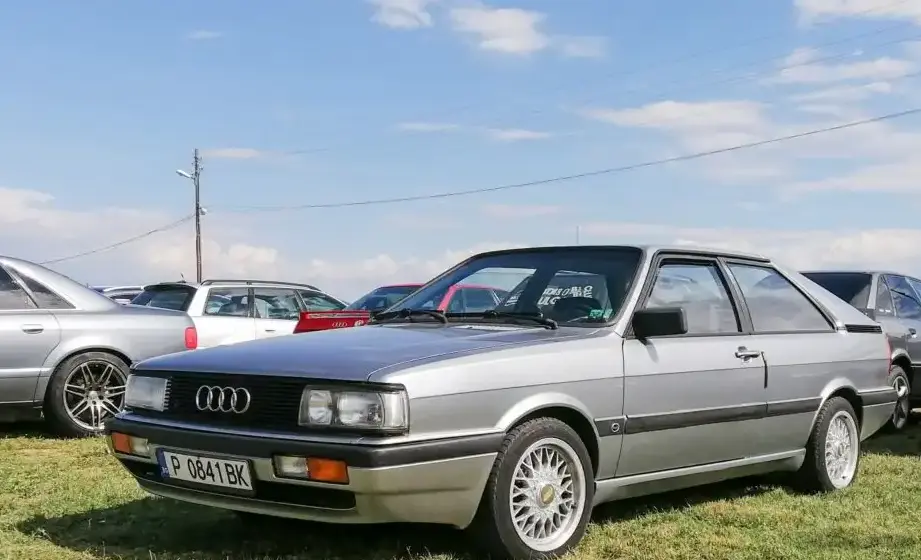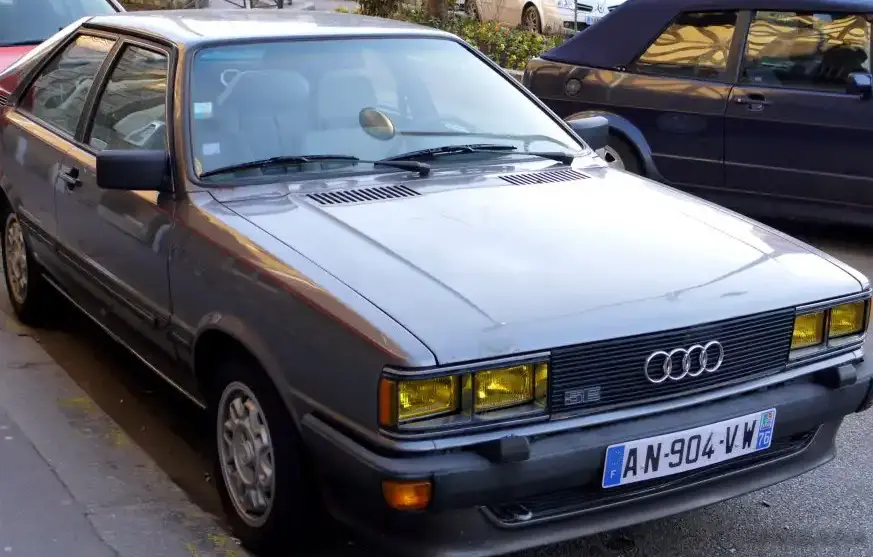
The Audi Coupe (B2), produced between 1980 and 1988, marked a significant evolution for Audi, successfully merging sporty aesthetics with everyday practicality. The GT 5S 2.0 variant, manufactured from August 1981 to 1984, occupied an important middle ground within the B2 Coupe lineup. Positioned above the base models but below the more performance-oriented quattro versions, the GT 5S 2.0 struck a balance between performance and affordability, appealing to buyers who desired a stylish and capable coupe. It was built on the Audi B2 platform (internally designated 81, 85), sharing its fundamental architecture with the Audi 80 sedan.
Technical Specifications
| Brand | Audi |
| Model | Coupe |
| Generation | Coupe (B2 81, 85) |
| Type (Engine) | GT 5S 2.0 (115 Hp) |
| Start of production | August, 1981 |
| End of production | 1984 |
| Powertrain Architecture | Internal Combustion engine |
| Body type | Coupe |
| Seats | 5 |
| Doors | 2 |
| Fuel Type | Petrol (Gasoline) |
| Acceleration 0 – 100 km/h | 10.3 sec |
| Acceleration 0 – 62 mph | 10.3 sec |
| Acceleration 0 – 60 mph | 9.8 sec |
| Maximum speed | 183 km/h (113.71 mph) |
| Weight-to-power ratio | 8.9 kg/Hp, 112.7 Hp/tonne |
| Weight-to-torque ratio | 6.6 kg/Nm, 151 Nm/tonne |
| Power | 115 Hp @ 5900 rpm |
| Power per litre | 59.9 Hp/l |
| Torque | 154 Nm @ 3700 rpm (113.58 lb.-ft. @ 3700 rpm) |
| Engine layout | Front, Longitudinal |
| Engine Model/Code | JS, HP |
| Engine displacement | 1921 cm3 (117.23 cu. in.) |
| Number of cylinders | 5 |
| Engine configuration | Inline |
| Cylinder Bore | 79.5 mm (3.13 in.) |
| Piston Stroke | 77.4 mm (3.05 in.) |
| Compression ratio | 10:1 |
| Number of valves per cylinder | 2 |
| Fuel injection system | Carburettor |
| Engine aspiration | Naturally aspirated engine |
| Valvetrain | OHC |
| Kerb Weight | 1020 kg (2248.72 lbs.) |
| Max. weight | 1480 kg (3262.84 lbs.) |
| Max load | 460 kg (1014.13 lbs.) |
| Trunk (boot) space – minimum | 494 l (17.45 cu. ft.) |
| Fuel tank capacity | 60 l (15.85 US gal | 13.2 UK gal) |
| Length | 4349 mm (171.22 in.) |
| Width | 1682 mm (66.22 in.) |
| Height | 1350 mm (53.15 in.) |
| Wheelbase | 2542 mm (100.08 in.) |
| Front track | 1400 mm (55.12 in.) |
| Rear (Back) track | 1420 mm (55.91 in.) |
| Drag coefficient (Cd) | 0.39 |
| Minimum turning circle | 10.4 m (34.12 ft.) |
| Drivetrain Architecture | The Internal combustion engine (ICE) drives the front wheels of the vehicle. |
| Drive wheel | Front wheel drive |
| Number of gears and type of gearbox | 5 gears, manual transmission |
| Front brakes | Disc |
| Rear brakes | Drum |
| Tires size | 175/70 R13 |
| Wheel rims size | 13 |
Powertrain & Engine Architecture
The GT 5S 2.0 was powered by Audi’s renowned inline five-cylinder engine, designated JS or HP depending on subtle variations. This engine, displacing 1921cc, was a cornerstone of the B2 Coupe and Audi 80 range. Notably, unlike later iterations that adopted fuel injection, the GT 5S 2.0 utilized a twin-barrel Solex carburetor for fuel delivery. While a simpler system than fuel injection, the carburetor provided sufficient performance for the target market. The engine featured a single overhead camshaft (OHC) actuating two valves per cylinder. The longitudinal engine layout, combined with front-wheel drive, was a defining element of Audi’s engineering approach during this period. A five-speed manual transmission was standard, giving drivers precise control over the engine’s power delivery.
Driving Characteristics
The 2.0-liter engine produced 115 horsepower and 113.58 lb-ft of torque, delivering respectable performance for the early 1980s. Acceleration from 0 to 60 mph took around 9.8 seconds, and the car could achieve a top speed of 113.71 mph. Compared to the more potent quattro models, the GT 5S 2.0 felt less aggressively quick. However, the five-speed manual transmission allowed drivers to maintain the engine within its optimal power band. The gear ratios were thoughtfully chosen for everyday driving, balancing responsiveness with fuel efficiency. The front-wheel-drive configuration offered good traction in most conditions, although some understeer could be experienced when pushed hard through corners. The overall driving experience was comfortable and refined, making the GT 5S 2.0 a capable grand tourer.
Equipment & Trim Levels
The GT 5S 2.0 was reasonably well-equipped for its time. Standard features generally included cloth upholstery, a basic stereo system, and power steering. The interior design was functional and understated, reflecting the German emphasis on practicality. Optional extras included a sunroof, upgraded audio systems, and metallic paint options. The “S” designation indicated a slightly elevated trim level compared to the base Coupe models, featuring some additional interior refinements. The dashboard layout was typical of early 1980s Audis, characterized by clear gauges and intuitive controls.
Chassis & Braking
The B2 Coupe employed a MacPherson strut front suspension and a torsion beam rear suspension. This configuration provided a good compromise between ride comfort and handling. The GT 5S 2.0 featured disc brakes on the front wheels and drum brakes on the rear. While the rear drum brakes were adequate for routine driving, they lacked the stopping power and fade resistance of disc brakes. The car’s curb weight of 2248.72 lbs contributed to its relatively agile handling. A stabilizer bar was incorporated into the front suspension to minimize body roll during cornering.
Market Reception & Comparison
The Audi Coupe GT 5S 2.0 generally received positive reviews from automotive journalists. It was praised for its attractive design, comfortable interior, and competent handling. However, some critics pointed out that the carburetor engine lacked the sophistication and performance of fuel-injected alternatives. Compared to the more expensive quattro models, the GT 5S 2.0 offered a more accessible entry point into the Audi Coupe range. Fuel economy was reasonable for the era, averaging between 25 and 30 miles per gallon. Reliability was generally good, although the carburetor required periodic adjustment and maintenance. The GT 5S 2.0 competed with other European coupes such as the Opel Manta, Ford Capri, and Volkswagen Scirocco.
Legacy
The Audi Coupe B2, and particularly the GT 5S 2.0 variant, holds a special place in the memories of many car enthusiasts. The inline five-cylinder engine became a signature of Audi performance for years to come. While the carburetor-equipped GT 5S 2.0 isn’t as highly sought after as the later fuel-injected models or the quattro versions, it remains a relatively affordable and enjoyable classic car. The powertrain is known for its durability, and many examples are still in operation today. However, sourcing parts for the carburetor system can present a challenge. The GT 5S 2.0 represents a significant chapter in Audi’s history, demonstrating the brand’s dedication to innovation and driving enjoyment.