
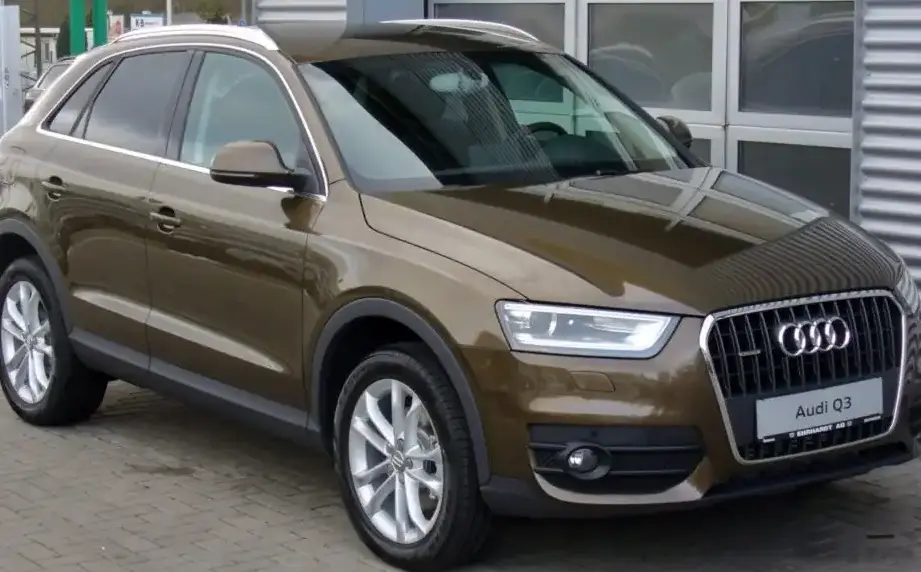
The Audi Q3 I (8U) 2.0 TFSI quattro S tronic was a compact luxury crossover SUV produced by the German manufacturer Audi between 2012 and 2014. Positioned as a premium offering in the burgeoning compact SUV segment, the Q3 aimed to bring Audi’s renowned build quality and technology to a more accessible price point. This particular variant, equipped with the 2.0-liter turbocharged four-cylinder engine producing 170 horsepower and paired with Audi’s seven-speed S tronic dual-clutch transmission and quattro all-wheel drive, represented a mid-range option within the Q3 lineup, offering a balance between performance, fuel efficiency, and features. It was a key model in Audi’s expansion into the crossover market, particularly in Europe and other regions where smaller SUVs were gaining popularity.
Technical Specifications
| Brand | Audi |
| Model | Q3 |
| Generation | Q3 I (8U) |
| Type (Engine) | 2.0 TFSI (170 Hp) quattro S tronic |
| Start of production | 2012 |
| End of production | 2014 |
| Powertrain Architecture | Internal Combustion engine |
| Body type | SUV |
| Seats | 5 |
| Doors | 5 |
| Fuel consumption (urban) | 10.2 l/100 km (23.1 US mpg, 27.7 UK mpg, 9.8 km/l) |
| Fuel consumption (extra urban) | 6.4 l/100 km (36.8 US mpg, 44.1 UK mpg, 15.6 km/l) |
| Fuel consumption (combined) | 7.7 l/100 km (30.5 US mpg, 36.7 UK mpg, 13 km/l) |
| CO2 emissions | 179 g/km |
| Fuel Type | Petrol (Gasoline) |
| Acceleration 0 – 100 km/h | 7.8 sec |
| Acceleration 0 – 62 mph | 7.8 sec |
| Acceleration 0 – 60 mph | 7.4 sec |
| Maximum speed | 212 km/h (131.73 mph) |
| Emission standard | Euro 5 |
| Weight-to-power ratio | 9.6 kg/Hp, 104.3 Hp/tonne |
| Weight-to-torque ratio | 5.8 kg/Nm, 171.8 Nm/tonne |
| Power | 170 Hp @ 4300-6200 rpm |
| Power per litre | 85.7 Hp/l |
| Torque | 280 Nm @ 1700-4200 rpm (206.52 lb.-ft. @ 1700-4200 rpm) |
| Engine layout | Front, Transverse |
| Engine Model/Code | CCZC |
| Engine displacement | 1984 cm3 (121.07 cu. in.) |
| Number of cylinders | 4 |
| Engine configuration | Inline |
| Fuel injection system | Direct injection |
| Engine aspiration | Turbocharger, Intercooler |
| Engine oil capacity | 4.6 l (4.86 US qt | 4.05 UK qt) |
| Coolant | 10 l (10.57 US qt | 8.8 UK qt) |
| Kerb Weight | 1630 kg (3593.53 lbs.) |
| Max. weight | 2155 kg (4750.96 lbs.) |
| Max load | 525 kg (1157.43 lbs.) |
| Trunk (boot) space – minimum | 460 l (16.24 cu. ft.) |
| Fuel tank capacity | 64 l (16.91 US gal | 14.08 UK gal) |
| Length | 4385 mm (172.64 in.) |
| Width | 1831 mm (72.09 in.) |
| Height | 1608 mm (63.31 in.) |
| Wheelbase | 2603 mm (102.48 in.) |
| Front track | 1571 mm (61.85 in.) |
| Rear (Back) track | 1575 mm (62.01 in.) |
| Minimum turning circle | 11.8 m (38.71 ft.) |
| Drive wheel | All wheel drive (4×4) |
| Number of gears | 7 |
| Gearbox type | automatic transmission S tronic |
| Front suspension | Independent type McPherson |
| Rear suspension | Independent multi-link suspension |
| Front brakes | Ventilated discs |
| Rear brakes | Disc |
| Assisting systems | ABS (Anti-lock braking system) |
| Steering type | Steering rack and pinion |
| Power steering | Electric Steering |
| Tires size | 215/65 R16 |
| Wheel rims size | 6.5J x 16 |
Powertrain & Engine Architecture
At the heart of the Q3 2.0 TFSI quattro S tronic lies the CCZC engine code, a 1.984-liter (121.07 cubic inches) inline-four cylinder gasoline engine. This engine is part of Volkswagen Group’s EA888 family, known for its robust design and tuning potential. The CCZC features direct fuel injection (FSI) and a single turbocharger with an intercooler, allowing for a good balance of power and efficiency. The engine produces 170 horsepower at 4300-6200 rpm and 280 Nm (206.52 lb-ft) of torque between 1700 and 4200 rpm. The S tronic seven-speed dual-clutch transmission (DCT) provides quick and seamless gear changes, contributing to a more engaging driving experience compared to a traditional automatic. The quattro all-wheel-drive system utilizes a multi-plate clutch to distribute power between the front and rear axles, enhancing traction and stability, particularly in adverse weather conditions.
Driving Characteristics
The 170 hp 2.0 TFSI with the S tronic transmission delivered a respectable, though not overtly sporty, driving experience. Acceleration from 0 to 60 mph took approximately 7.4 seconds, making it competitive within its class. The S tronic transmission’s quick shifts and the quattro system’s all-wheel drive grip provided confident handling. Compared to the more powerful 211 hp version of the 2.0 TFSI, this variant felt less urgent in acceleration, but it offered better fuel economy. The gear ratios were tuned for a balance of performance and efficiency, with a relatively short first gear for quick off-the-line acceleration and taller gears for relaxed highway cruising. The automatic transmission generally shifted smoothly, but could occasionally exhibit some hesitation at lower speeds. The steering was precise and well-weighted, providing good feedback to the driver.
Equipment & Trim Levels
The Q3 2.0 TFSI quattro S tronic typically came standard with a generous array of features, reflecting its premium positioning. Standard equipment included automatic climate control, a multi-function steering wheel, power windows and locks, and an Audi Concert audio system. Upholstery was typically cloth, though leather options were available. Optional extras included a panoramic sunroof, navigation system, parking sensors, and upgraded sound systems. Trim levels varied by market, but generally offered packages that bundled popular options together. The interior design was typically understated and elegant, with a focus on quality materials and a user-friendly layout.
Chassis & Braking
The Q3 I (8U) utilized a McPherson strut front suspension and a multi-link rear suspension, providing a comfortable and controlled ride. The suspension was tuned to prioritize comfort over outright sportiness, but still offered good body control in corners. Braking duties were handled by ventilated discs at the front and solid discs at the rear. Anti-lock braking system (ABS) was standard, along with electronic brake-force distribution (EBD). The Q3’s chassis was relatively lightweight, contributing to its agile handling. Stabilizer bars were fitted front and rear to reduce body roll during cornering.
Market Reception & Comparison
The Audi Q3 2.0 TFSI quattro S tronic was generally well-received by automotive critics. It was praised for its stylish design, high-quality interior, and refined driving experience. However, some critics noted that the 170 hp engine could feel underpowered when fully loaded or tackling steep hills. Compared to other trims in the Q3 lineup, such as the 211 hp version, this variant offered a more affordable entry point into the Q3 range, appealing to buyers who prioritized fuel efficiency and value over outright performance. Its fuel economy of around 30.5 US mpg combined was competitive within its segment. Reliability was generally good, although some owners reported minor issues with the S tronic transmission.
Legacy
The Audi Q3 I (8U) 2.0 TFSI quattro S tronic has proven to be a relatively reliable vehicle in the used car market. The EA888 engine is known for its durability, and the S tronic transmission, while requiring occasional maintenance, is generally robust. The quattro all-wheel-drive system continues to be a desirable feature for buyers in regions with inclement weather. Today, these Q3s represent a good value proposition for buyers seeking a compact luxury crossover with a proven track record. Regular maintenance, including timely transmission fluid changes, is crucial to ensure the long-term reliability of this powertrain.
