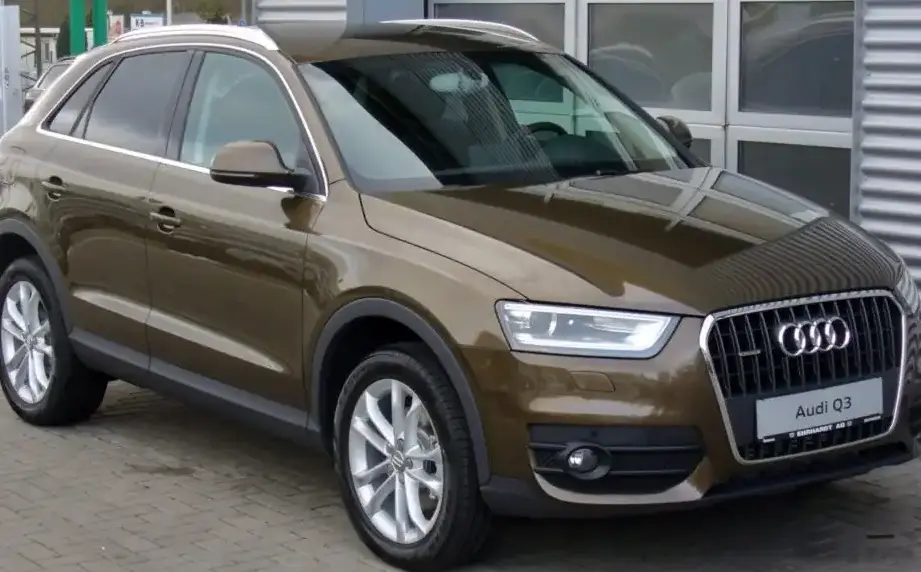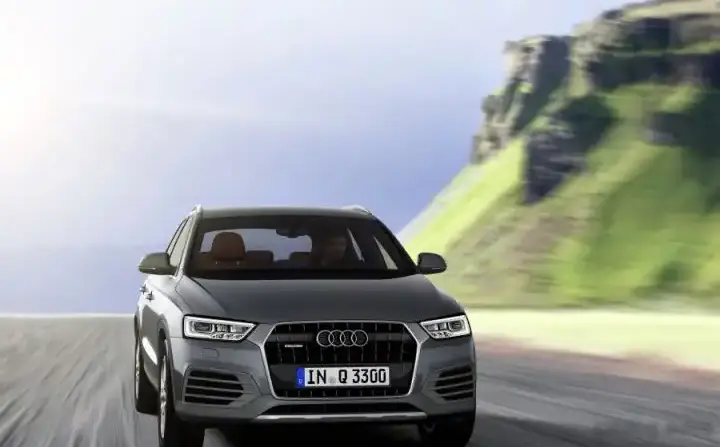
The Audi Q3 I (8U), particularly the facelifted version introduced in 2014, represented Audi’s entry into the burgeoning compact luxury crossover segment. The 1.4 TFSI ultra model, producing 150 horsepower, was a key variant offered between 2014 and 2018. Positioned as a fuel-efficient and accessible option within the Q3 range, it aimed to attract buyers prioritizing economy and refinement over outright performance. This version sat below the more powerful 2.0 TFSI models and offered a more affordable alternative to its competitors like the BMW X1 and Mercedes-Benz GLA.
Technical Specifications
| Brand | Audi |
| Model | Q3 |
| Generation | Q3 I (8U, facelift 2014) |
| Type (Engine) | 1.4 TFSI ultra (150 Hp) |
| Start of production | 2014 |
| End of production | 2018 |
| Powertrain Architecture | Internal Combustion engine |
| Body type | SUV |
| Seats | 5 |
| Doors | 5 |
| Fuel consumption (urban) | 6.6 l/100 km (35.6 US mpg, 42.8 UK mpg, 15.2 km/l) |
| Fuel consumption (extra urban) | 4.9 l/100 km (48 US mpg, 57.6 UK mpg, 20.4 km/l) |
| Fuel consumption (combined) | 5.5 l/100 km (42.8 US mpg, 51.4 UK mpg, 18.2 km/l) |
| CO2 emissions | 127 g/km |
| Fuel Type | Petrol (Gasoline) |
| Acceleration 0 – 100 km/h | 9.2 sec |
| Acceleration 0 – 62 mph | 9.2 sec |
| Acceleration 0 – 60 mph | 8.7 sec |
| Maximum speed | 204 km/h (126.76 mph) |
| Emission standard | Euro 6 |
| Weight-to-power ratio | 9.2 kg/Hp, 108.3 Hp/tonne |
| Weight-to-torque ratio | 5.5 kg/Nm, 180.5 Nm/tonne |
| Power | 150 Hp @ 5000-6000 rpm |
| Power per litre | 107.5 Hp/l |
| Torque | 250 Nm @ 1500-3500 rpm (184.39 lb.-ft. @ 1500-3500 rpm) |
| Engine layout | Front, Transverse |
| Engine Model/Code | EA211 / CZDA, CZEA |
| Engine displacement | 1395 cm3 (85.13 cu. in.) |
| Number of cylinders | 4 |
| Engine configuration | Inline |
| Number of valves per cylinder | 4 |
| Fuel injection system | Direct injection |
| Engine aspiration | Turbocharger, Intercooler |
| Engine oil capacity | 4 l (4.23 US qt | 3.52 UK qt) |
| Coolant | 8 l (8.45 US qt | 7.04 UK qt) |
| Kerb Weight | 1385 kg (3053.4 lbs.) |
| Max. weight | 1985 kg (4376.18 lbs.) |
| Max load | 600 kg (1322.77 lbs.) |
| Trunk (boot) space – minimum | 460 l (16.24 cu. ft.) |
| Trunk (boot) space – maximum | 1365 l (48.2 cu. ft.) |
| Fuel tank capacity | 64 l (16.91 US gal | 14.08 UK gal) |
| Max. roof load | 75 kg (165.35 lbs.) |
| Permitted trailer load with brakes (8%) | 1800 kg (3968.32 lbs.) |
| Permitted trailer load with brakes (12%) | 1800 kg (3968.32 lbs.) |
| Permitted trailer load without brakes | 730 kg (1609.37 lbs.) |
| Permitted towbar download | 80 kg (176.37 lbs.) |
| Length | 4388 mm (172.76 in.) |
| Width | 1831 mm (72.09 in.) |
| Width including mirrors | 2019 mm (79.49 in.) |
| Height | 1608 mm (63.31 in.) |
| Wheelbase | 2603 mm (102.48 in.) |
| Front track | 1571 mm (61.85 in.) |
| Rear (Back) track | 1575 mm (62.01 in.) |
| Front overhang | 905 mm (35.63 in.) |
| Rear overhang | 880 mm (34.65 in.) |
| Minimum turning circle (turning diameter) | 11.8 m (38.71 ft.) |
| Drivetrain Architecture | The Internal combustion engine (ICE) drives the front wheels of the vehicle. |
| Drive wheel | Front wheel drive |
| Number of gears and type of gearbox | 6 gears, manual transmission |
| Front suspension | Independent, type McPherson with coil spring and anti-roll bar |
| Rear suspension | Independent coil spring |
| Front brakes | Ventilated discs |
| Rear brakes | Disc |
| Assisting systems | ABS (Anti-lock braking system) |
| Steering type | Steering rack and pinion |
| Power steering | Electric Steering |
| Tires size | 215/65 R16 |
| Wheel rims size | 6.5J x 16 |
INTRODUCTION
The Audi Q3 I (8U) facelift, launched in 2014, brought updated styling, improved technology, and refined engine options to Audi’s compact SUV. The 1.4 TFSI ultra variant, producing 150 horsepower, was a significant offering, particularly in European markets where fuel efficiency and lower running costs were highly valued. Built on the Volkswagen Group’s PQ25 platform (also known as the A3 platform – 1HX0/A3), the Q3 aimed to provide a premium experience in a smaller, more manageable package. This specific engine and transmission combination was designed to appeal to buyers seeking a balance between affordability, practicality, and the Audi brand experience.
Powertrain & Engine Architecture
The heart of the Q3 1.4 TFSI ultra is the EA211 engine family, specifically the CZDA or CZEA engine code depending on the market. This 1.4-liter, four-cylinder engine utilizes direct fuel injection and a turbocharger with an intercooler to deliver a respectable 150 horsepower and 250 Nm (184 lb-ft) of torque. The engine employs a timing chain for durability and features four valves per cylinder. The ‘ultra’ designation signifies efficiency enhancements, including reduced weight components and optimized engine management. The engine is transversely mounted at the front of the vehicle. The 1.4 TFSI was typically paired with a six-speed manual transmission, although a seven-speed S tronic dual-clutch transmission was also available as an option. The S tronic offered quicker shifts and improved fuel economy, but at a higher cost.
Driving Characteristics
The 1.4 TFSI ultra-equipped Q3 offered a comfortable and refined driving experience, prioritizing ease of use over outright performance. Acceleration from 0-60 mph took around 8.7 to 9.2 seconds, making it adequate for everyday driving but not particularly sporty. The turbocharger provides a noticeable boost in power, but the engine can feel somewhat strained when pushed hard, especially when fully loaded. The six-speed manual transmission offers precise shifts, while the optional S tronic provides seamless gear changes. Compared to the more powerful 2.0 TFSI variants, the 1.4 TFSI feels less responsive and requires more planning when overtaking. However, its lighter weight contributes to better handling and agility in urban environments.
Equipment & Trim Levels
The Q3 1.4 TFSI ultra typically came well-equipped, even in base trim. Standard features often included alloy wheels, air conditioning, a multi-function steering wheel, and an infotainment system with a color display. Higher trim levels added features such as leather upholstery, panoramic sunroof, parking sensors, and a more advanced infotainment system with navigation. Optional extras included xenon headlights, heated seats, and a premium sound system. Interior upholstery was typically cloth in the base models, with leather options available as upgrades. The dashboard layout was clean and modern, typical of Audi’s design language at the time.
Chassis & Braking
The Q3’s chassis featured independent suspension all around, with a McPherson strut setup at the front and a multi-link setup at the rear. This provided a comfortable ride and good handling characteristics. The steering was precise and well-weighted, offering a good level of feedback. Braking duties were handled by ventilated discs at the front and solid discs at the rear. ABS (Anti-lock Braking System) was standard. The Q3’s suspension was tuned for comfort rather than outright sportiness, prioritizing a smooth ride over aggressive handling. Stabilizer bars were fitted to both axles to reduce body roll during cornering.
Market Reception & Comparison
The Audi Q3 1.4 TFSI ultra was generally well-received by critics, who praised its fuel efficiency, comfortable ride, and refined interior. However, some reviewers noted that the engine could feel underpowered, especially when fully loaded or driving uphill. Compared to the 2.0 TFSI models, the 1.4 TFSI offered significantly better fuel economy, but at the expense of performance. It was often seen as a sensible choice for buyers prioritizing practicality and running costs over driving thrills. Against competitors like the BMW X1 and Mercedes-Benz GLA, the Q3 offered a compelling combination of luxury, practicality, and value.
Legacy
The 1.4 TFSI engine, while generally reliable, has been known to exhibit issues with carbon buildup on the intake valves over time, particularly if not regularly driven on longer journeys. Regular servicing and the use of quality fuel are crucial for maintaining its longevity. The Q3 I (8U) as a whole has proven to be a durable and well-built vehicle, and the 1.4 TFSI ultra variant remains a popular choice in the used car market. Its fuel efficiency and relatively low running costs continue to appeal to buyers seeking a practical and affordable compact SUV. The EA211 engine family continues to be used in various Volkswagen Group vehicles, demonstrating its enduring design and adaptability.