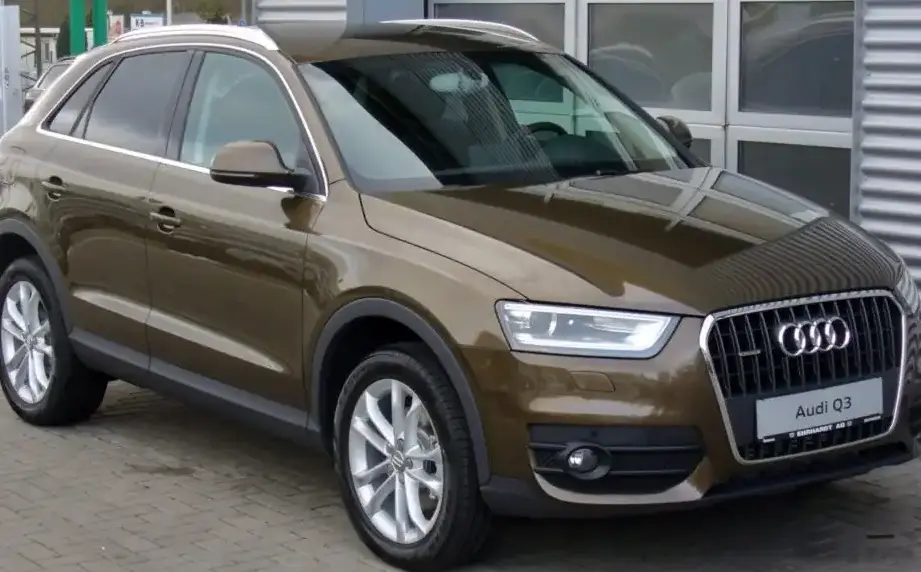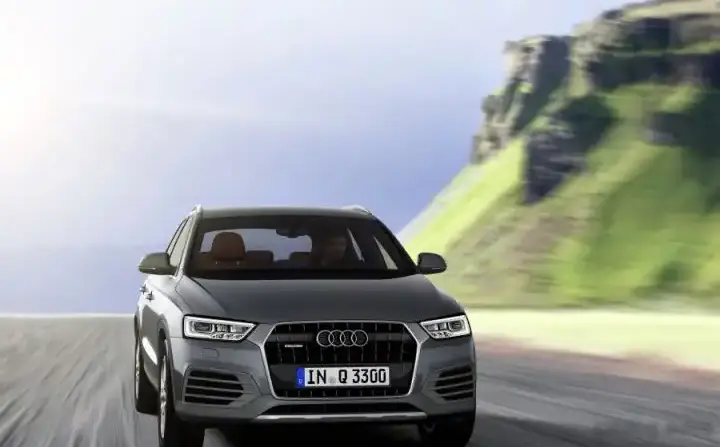
The Audi Q3 I (8U), particularly the facelifted version introduced in 2014, represented Audi’s entry into the burgeoning compact luxury crossover segment. Produced from 2014 to 2018, this generation Q3 aimed to blend practicality, a premium interior, and Audi’s renowned quattro all-wheel-drive system into a relatively accessible package. The 2.0 TFSI 180 hp quattro S tronic variant occupied a key position in the lineup, offering a balance between performance, fuel efficiency, and price, appealing to buyers seeking a more engaging driving experience than the base engine offered. It was positioned as a mid-range offering, sitting above the lower-powered 1.4 TFSI models and below the more potent 2.0 TFSI 230 hp version.
Technical Specifications
| Brand | Audi |
| Model | Q3 |
| Generation | Q3 I (8U, facelift 2014) |
| Type (Engine) | 2.0 TFSI (180 Hp) quattro S tronic |
| Start of production | 2014 |
| End of production | 2018 |
| Powertrain Architecture | Internal Combustion engine |
| Body type | SUV |
| Seats | 5 |
| Doors | 5 |
| Fuel consumption (urban) | 7.8-8.4 l/100 km (30.2 – 28 US mpg, 36.2 – 33.6 UK mpg, 12.8 – 11.9 km/l) |
| Fuel consumption (extra urban) | 5.7-6.3 l/100 km (41.3 – 37.3 US mpg, 49.6 – 44.8 UK mpg, 17.5 – 15.9 km/l) |
| Fuel consumption (combined) | 6.5-7 l/100 km (36.2 – 33.6 US mpg, 43.5 – 40.4 UK mpg, 15.4 – 14.3 km/l) |
| CO2 emissions | 149-161 g/km |
| Fuel Type | Petrol (Gasoline) |
| Acceleration 0 – 100 km/h | 7.6 sec |
| Acceleration 0 – 62 mph | 7.6 sec |
| Acceleration 0 – 60 mph | 7.2 sec |
| Maximum speed | 217 km/h (134.84 mph) |
| Emission standard | Euro 6 |
| Weight-to-power ratio | 8.6 kg/Hp, 116.9 Hp/tonne |
| Weight-to-torque ratio | 4.8 kg/Nm, 207.8 Nm/tonne |
| Power | 180 Hp @ 4000-6200 rpm |
| Power per litre | 90.7 Hp/l |
| Torque | 320 Nm @ 1400-3900 rpm (236.02 lb.-ft. @ 1400-3900 rpm) |
| Engine layout | Front, Transverse |
| Engine Model/Code | EA888 / CULB |
| Engine displacement | 1984 cm3 (121.07 cu. in.) |
| Number of cylinders | 4 |
| Engine configuration | Inline |
| Cylinder Bore | 82.5 mm (3.25 in.) |
| Piston Stroke | 92.8 mm (3.65 in.) |
| Compression ratio | 9.6:1 |
| Number of valves per cylinder | 4 |
| Fuel injection system | Direct injection and Multi-port manifold injection |
| Engine aspiration | Turbocharger, Intercooler |
| Valvetrain | DOHC |
| Engine oil capacity | 4.6 l (4.86 US qt | 4.05 UK qt) |
| Coolant | 7.4 l (7.82 US qt | 6.51 UK qt) |
| Kerb Weight | 1540 kg (3395.12 lbs.) |
| Max. weight | 2140 kg (4717.89 lbs.) |
| Max load | 600 kg (1322.77 lbs.) |
| Trunk (boot) space – minimum | 460 l (16.24 cu. ft.) |
| Trunk (boot) space – maximum | 1365 l (48.2 cu. ft.) |
| Fuel tank capacity | 64 l (16.91 US gal | 14.08 UK gal) |
| Max. roof load | 75 kg (165.35 lbs.) |
| Permitted trailer load with brakes (8%) | 2000 kg (4409.25 lbs.) |
| Permitted trailer load with brakes (12%) | 2000 kg (4409.25 lbs.) |
| Permitted trailer load without brakes | 750 kg (1653.47 lbs.) |
| Permitted towbar download | 80 kg (176.37 lbs.) |
| Length | 4388 mm (172.76 in.) |
| Width | 1831 mm (72.09 in.) |
| Width including mirrors | 2019 mm (79.49 in.) |
| Height | 1608 mm (63.31 in.) |
| Wheelbase | 2603 mm (102.48 in.) |
| Front track | 1571 mm (61.85 in.) |
| Rear (Back) track | 1575 mm (62.01 in.) |
| Front overhang | 905 mm (35.63 in.) |
| Rear overhang | 880 mm (34.65 in.) |
| Drag coefficient (Cd) | 0.32 |
| Minimum turning circle (turning diameter) | 11.8 m (38.71 ft.) |
| Drivetrain Architecture | The Internal combustion engine (ICE) drives the front wheels permanently, and the rear wheels are driven through an electrically or mechanically operated clutch if necessary. |
| Drive wheel | All wheel drive (4×4) |
| Number of gears and type of gearbox | 7 gears, automatic transmission S tronic |
| Front suspension | Independent, type McPherson with coil spring and anti-roll bar |
| Rear suspension | Independent multi-link spring suspension with stabilizer |
| Front brakes | Ventilated discs |
| Rear brakes | Disc |
| Assisting systems | ABS (Anti-lock braking system) |
| Steering type | Steering rack and pinion |
| Power steering | Electric Steering |
| Tires size | 215/65 R16; 235/55 R17; 235/50 R18; 255/40 R19 |
| Wheel rims size | 6.5J x 16; 7J x 17; 7J x 18; 8.5J x 19 |
INTRODUCTION
The Audi Q3 I (8U) facelift, launched in 2014, brought a refreshed design and updated technology to Audi’s compact SUV offering. This variant, powered by the 2.0 TFSI engine producing 180 horsepower and paired with the seven-speed S tronic dual-clutch transmission and quattro all-wheel drive, was a popular choice for buyers in Europe and other markets. It represented a sweet spot in the Q3 range, offering a noticeable performance upgrade over the base 1.4 TFSI while remaining more affordable and fuel-efficient than the higher-output 2.0 TFSI models. The Q3 aimed to compete with rivals like the BMW X1, Mercedes-Benz GLA, and Volvo XC60, offering a blend of luxury, practicality, and driving dynamics.
Powertrain & Engine Architecture
At the heart of the Q3 2.0 TFSI quattro S tronic lies the EA888 engine, specifically the CULB code variant. This is a 1.984-liter (121.07 cubic inches) inline-four cylinder engine featuring direct fuel injection and a turbocharger with an intercooler. The direct injection system, combined with the turbocharging, allows for precise fuel delivery and increased power output. The engine utilizes a dual overhead camshaft (DOHC) valvetrain with four valves per cylinder, optimizing airflow for improved performance. The S tronic transmission is a seven-speed dual-clutch gearbox known for its quick and smooth shifts. This transmission allows for both fully automatic operation and manual gear changes via steering wheel-mounted paddles or the gear selector. The quattro all-wheel-drive system employs a multi-plate clutch to distribute torque between the front and rear axles, providing enhanced traction and stability, particularly in adverse weather conditions. The engine also featured a start/stop system to improve fuel economy in city driving.
Driving Characteristics
The 180 hp 2.0 TFSI engine, coupled with the S tronic transmission and quattro all-wheel drive, provided the Q3 with brisk acceleration. The 0-60 mph sprint was achieved in approximately 7.2 seconds, making it a competitive performer in its class. The S tronic transmission’s quick shifts contributed to a responsive driving experience. While not as overtly sporty as some rivals, the Q3 offered a comfortable and composed ride. The quattro system provided excellent grip and stability, inspiring confidence in various driving conditions. The gear ratios were tuned to balance acceleration and fuel efficiency, with the seventh gear providing a comfortable cruising speed on the highway. Compared to the 1.4 TFSI, the 2.0 TFSI offered significantly more power and torque, resulting in a more effortless driving experience, especially when fully loaded or tackling inclines. However, it didn’t possess the outright performance of the 230 hp version, which was geared towards a more enthusiastic driver.
Equipment & Trim Levels
The Q3 2.0 TFSI quattro S tronic typically came well-equipped as standard. Features included automatic climate control, a multi-function steering wheel, power windows and mirrors, and an infotainment system with a color display. Upholstery was typically cloth, but leather options were available. Higher trim levels offered features such as panoramic sunroof, navigation system, parking sensors, and upgraded sound systems. Optional extras included heated seats, xenon headlights, and various driver assistance systems. The interior design was typically understated and elegant, reflecting Audi’s commitment to quality and refinement.
Chassis & Braking
The Q3’s chassis featured an independent McPherson strut suspension at the front and a multi-link suspension at the rear, providing a comfortable and controlled ride. Stabilizer bars were fitted to both axles to reduce body roll during cornering. The braking system consisted of ventilated discs at the front and solid discs at the rear, providing adequate stopping power. Anti-lock braking system (ABS) was standard, enhancing safety and stability during emergency braking. The steering was an electric power steering system, offering a precise and responsive feel.
Market Reception & Comparison
The Audi Q3 2.0 TFSI quattro S tronic was generally well-received by automotive critics. It was praised for its refined interior, comfortable ride, and capable all-wheel-drive system. The 180 hp engine was considered a good balance between performance and fuel efficiency. Compared to the 1.4 TFSI, the 2.0 TFSI offered a more satisfying driving experience, while the 230 hp version provided more outright performance but at a higher price point and with slightly reduced fuel economy. Reliability was generally good, although some owners reported minor issues with the infotainment system and occasional turbocharger-related concerns. Fuel economy figures were competitive for its class, averaging around 36 mpg combined.
Legacy
The Audi Q3 I (8U) established Audi as a key player in the compact luxury crossover segment. The 2.0 TFSI quattro S tronic variant remains a popular choice in the used car market, offering a compelling combination of practicality, performance, and refinement. The EA888 engine, in this configuration, is generally considered reliable, although regular maintenance is crucial. The S tronic transmission, while offering quick shifts, may require more frequent servicing than a traditional automatic gearbox. Overall, the Q3 2.0 TFSI quattro S tronic represents a well-rounded and capable vehicle that continues to appeal to buyers seeking a premium compact SUV.