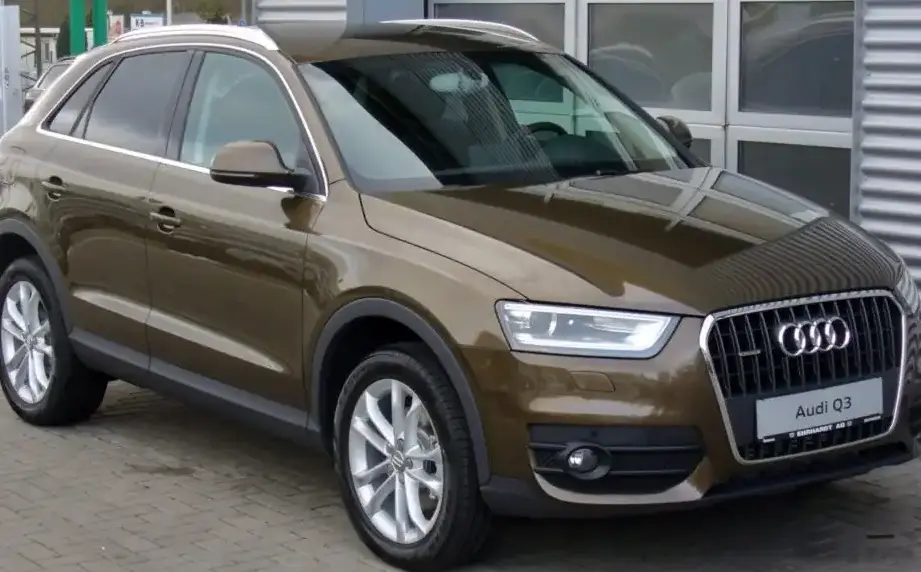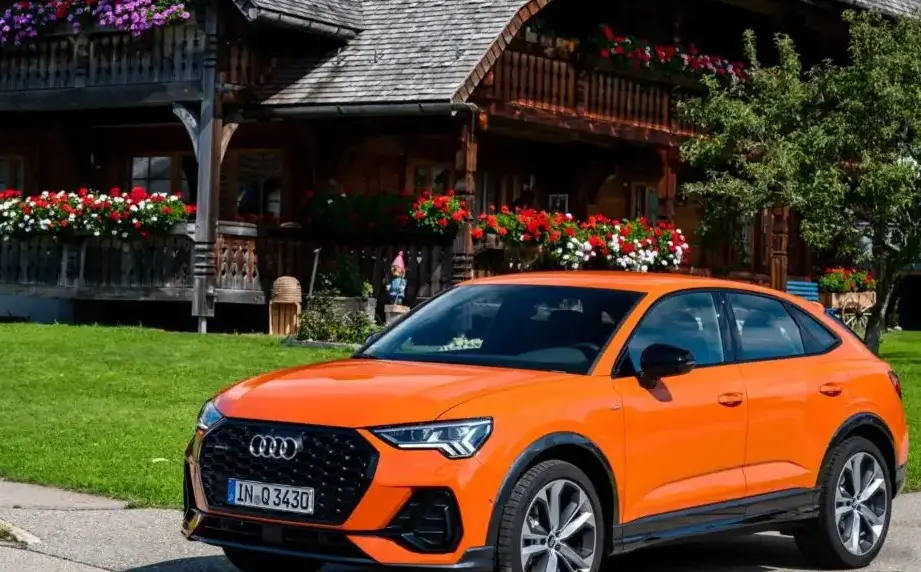
The Audi Q3 II Sportback (F3) 35 TDI quattro, produced from 2019 to 2020, represents a compelling entry point into Audi’s compact luxury crossover segment. Positioned as a more style-focused variant of the standard Q3, the Sportback features a sloping roofline and coupe-like silhouette. This particular 35 TDI trim level, equipped with a 2.0-liter turbocharged diesel engine producing 150 horsepower and paired with a six-speed manual transmission, aimed to balance fuel efficiency, reasonable performance, and all-weather capability through Audi’s quattro all-wheel-drive system. It occupied a mid-range position within the Q3 Sportback lineup, offering a step up from the base engine options while remaining more accessible than the higher-performance variants.
Technical Specifications
| Brand | Audi |
| Model | Q3 |
| Generation | Q3 II Sportback (F3) |
| Type (Engine) | 35 TDI (150 Hp) quattro |
| Start of production | 2019 |
| End of production | 2020 |
| Powertrain Architecture | Internal Combustion engine |
| Body type | Coupe, SUV |
| Seats | 5 |
| Doors | 5 |
| Combined fuel consumption (WLTP) | 6.7-7.1 l/100 km (35.1 – 33.1 US mpg, 42.2 – 39.8 UK mpg, 14.9 – 14.1 km/l) |
| CO2 emissions (WLTP) | 175-187 g/km |
| Fuel consumption (urban) | 6.5-6.6 l/100 km (36.2 – 35.6 US mpg, 43.5 – 42.8 UK mpg, 15.4 – 15.2 km/l) |
| Fuel consumption (extra urban) | 4.9-5.2 l/100 km (48 – 45.2 US mpg, 57.6 – 54.3 UK mpg, 20.4 – 19.2 km/l) |
| Fuel consumption (combined) | 5.5-5.7 l/100 km (42.8 – 41.3 US mpg, 51.4 – 49.6 UK mpg, 18.2 – 17.5 km/l) |
| CO2 emissions | 144-151 g/km |
| Fuel Type | Diesel |
| Acceleration 0 – 100 km/h | 9.3 sec |
| Acceleration 0 – 62 mph | 9.3 sec |
| Acceleration 0 – 60 mph | 8.8 sec |
| Maximum speed | 207 km/h (128.62 mph) |
| Emission standard | Euro 6d – TEMP – EVAP – ISC |
| Weight-to-power ratio | 10.9 kg/Hp, 91.7 Hp/tonne |
| Weight-to-torque ratio | 4.8 kg/Nm, 208 Nm/tonne |
| Power | 150 Hp @ 3500-4000 rpm |
| Torque | 340 Nm @ 1750-3000 rpm (250.77 lb.-ft. @ 1750-3000 rpm) |
| Engine layout | Front, Transverse |
| Engine Model/Code | DFGA |
| Engine displacement | 1968 cm3 (120.09 cu. in.) |
| Fuel injection system | Diesel Commonrail |
| Engine aspiration | Turbocharger, Intercooler |
| Engine oil capacity | 4.7 l (4.97 US qt | 4.14 UK qt) |
| Coolant | 8 l (8.45 US qt | 7.04 UK qt) |
| Kerb Weight | 1635 kg (3604.56 lbs.) |
| Trunk (boot) space – minimum | 530 l (18.72 cu. ft.) |
| Fuel tank capacity | 60 l (15.85 US gal | 13.2 UK gal) |
| Max. roof load | 75 kg (165.35 lbs.) |
| Permitted trailer load with brakes (12%) | 2000 kg (4409.25 lbs.) |
| Permitted trailer load without brakes | 750 kg (1653.47 lbs.) |
| Permitted towbar download | 90 kg (198.42 lbs.) |
| Length | 4500 mm (177.17 in.) |
| Width | 1843 mm (72.56 in.) |
| Width including mirrors | 2022 mm (79.61 in.) |
| Height | 1567 mm (61.69 in.) |
| Wheelbase | 2680 mm (105.51 in.) |
| Front track | 1584 mm (62.36 in.) |
| Rear track | 1576 mm (62.05 in.) |
| Front overhang | 905 mm (35.63 in.) |
| Rear overhang | 915 mm (36.02 in.) |
| Drive wheel | All wheel drive (4×4) |
| Number of gears and type of gearbox | 6 gears, manual transmission |
| Assisting systems | ABS (Anti-lock braking system) |
| Steering type | Steering rack and pinion |
| Power steering | Electric Steering |
| Tires size | 215/65 R17; 235/55 R18 |
| Wheel rims size | 7J x 17; 7J x 18 |
INTRODUCTION
The Audi Q3 II Sportback (F3) 35 TDI quattro, launched in 2019, is a compact luxury crossover SUV that builds upon the success of the second-generation Q3 (F3). The Sportback variant distinguishes itself with a more aggressively sloped rear roofline, offering a sportier aesthetic compared to the traditional Q3. This model year represented a significant update for the Q3 line, incorporating the latest Audi design language and technology. The 35 TDI designation indicates the engine type – a 2.0-liter turbocharged diesel – and the approximate power output. The “quattro” badge signifies Audi’s renowned all-wheel-drive system, providing enhanced traction and stability. This particular configuration was aimed at buyers seeking a balance between fuel economy, practicality, and a premium driving experience.
Powertrain & Engine Architecture
At the heart of the Q3 35 TDI quattro lies the DFGA engine, a 2.0-liter four-cylinder diesel engine. This engine is part of Volkswagen Group’s modular engine family, known for its efficiency and refinement. It utilizes a common rail direct injection system, delivering fuel directly into the combustion chamber at extremely high pressure for optimized combustion. The engine is turbocharged with a variable geometry turbocharger (VGT) and intercooled, enhancing power and torque across a broad RPM range. The engine produces 150 horsepower at 3500-4000 rpm and 340 Nm (250.77 lb.-ft.) of torque between 1750 and 3000 rpm. The six-speed manual transmission provides precise gear changes and contributes to the vehicle’s engaging driving experience. The transmission is designed to handle the engine’s torque output efficiently, while also optimizing fuel economy.
Driving Characteristics
The Q3 35 TDI quattro, with its 150 hp and manual transmission, offers a respectable, though not overtly sporty, driving experience. Acceleration from 0-60 mph takes approximately 8.8 seconds, and it reaches a top speed of 207 km/h (128.62 mph). The engine delivers strong low-end torque, making it well-suited for everyday driving and overtaking maneuvers. The six-speed manual transmission allows for greater driver engagement compared to an automatic, and the gear ratios are well-matched to the engine’s powerband. Compared to higher-output Q3 variants, such as the 45 TFSI with its petrol engine, the 35 TDI feels less urgent in its acceleration. However, it compensates with significantly better fuel economy. The quattro all-wheel-drive system provides excellent grip and stability, particularly in adverse weather conditions, making it a confident and secure vehicle to drive year-round.
Equipment & Trim Levels
The Q3 Sportback 35 TDI quattro came reasonably well-equipped as standard. Typical features included Audi’s MMI infotainment system with a 10.1-inch touchscreen display, Apple CarPlay and Android Auto integration, automatic climate control, and a leather-wrapped steering wheel. Safety features such as Audi pre sense basic (forward collision warning) and lane departure warning were also standard. Optional extras included a panoramic sunroof, upgraded leather upholstery, a premium sound system, and various driver assistance systems like adaptive cruise control and park assist. Interior upholstery typically consisted of cloth or leatherette, with higher trims offering full leather options. The dashboard layout was modern and minimalist, reflecting Audi’s contemporary design philosophy.
Chassis & Braking
The Q3 Sportback utilizes a MacPherson strut front suspension and a multi-link rear suspension, providing a comfortable and controlled ride. The suspension is tuned to balance handling and comfort, absorbing bumps and imperfections in the road surface effectively. The quattro all-wheel-drive system distributes power between the front and rear axles as needed, optimizing traction and stability. Braking duties are handled by ventilated disc brakes at the front and solid disc brakes at the rear. The braking system is equipped with ABS (Anti-lock Braking System) and electronic brake-force distribution (EBD) for enhanced safety. The steering is an electric power steering system, providing precise and responsive steering feel.
Market Reception & Comparison
The Audi Q3 Sportback 35 TDI quattro was generally well-received by automotive critics. It was praised for its stylish design, comfortable interior, and efficient diesel engine. However, some reviewers noted that the 150 hp engine could feel underpowered when fully loaded or driving uphill. Compared to other trims in the Q3 lineup, the 35 TDI offered a more affordable entry point while still providing the benefits of the quattro all-wheel-drive system. Its fuel economy was a significant advantage over the petrol-powered variants. Competitors in this segment included the BMW X2, Mercedes-Benz GLA, and Volvo XC40.
Legacy
The 2.0-liter TDI engine and six-speed manual transmission combination in the Q3 35 TDI quattro has proven to be a reliable powertrain. While diesel engines have faced increased scrutiny in recent years, this particular engine has a good reputation for durability and longevity when properly maintained. On the used car market, these models represent a good value proposition, offering a premium driving experience at a relatively affordable price. However, potential buyers should be aware of the potential for diesel particulate filter (DPF) issues, particularly if the vehicle has been primarily used for short trips. Regular servicing and the use of high-quality diesel fuel are essential for maintaining the long-term reliability of this powertrain.