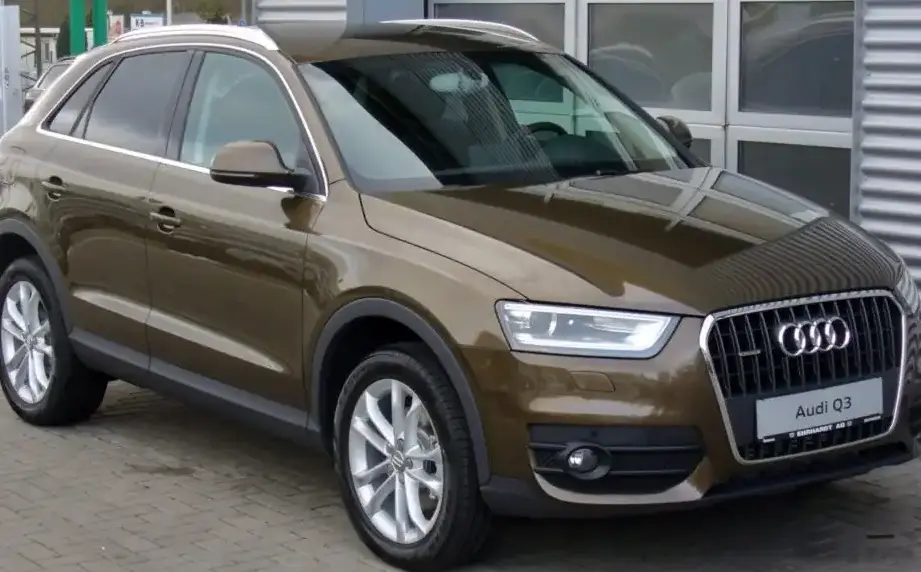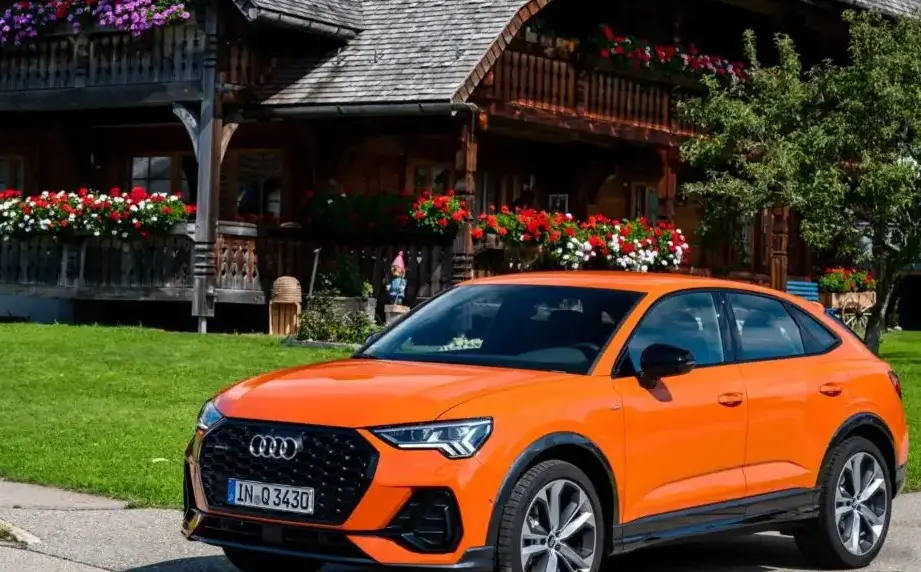
The Audi Q3 II Sportback 35 TFSI, produced from 2019 to 2020, represents a compelling entry point into the premium compact SUV coupe market. Part of the F3 generation of the Q3, the Sportback variant distinguishes itself with a sloping roofline, offering a more dynamic aesthetic compared to the standard Q3. This particular 35 TFSI trim level was positioned as the base engine option within the Sportback lineup, targeting buyers prioritizing fuel efficiency and a comfortable driving experience over outright performance. It occupied a space below the more powerful 40 TFSI and 45 TFSI models, offering a balance of Audi’s renowned build quality and technology at a more accessible price point.
Technical Specifications
| Brand | Audi |
| Model | Q3 |
| Generation | Q3 II Sportback (F3) |
| Type (Engine) | 35 TFSI (150 Hp) |
| Start of production | 2019 |
| End of production | 2020 |
| Powertrain Architecture | Internal Combustion engine |
| Body type | Coupe, SUV |
| Seats | 5 |
| Doors | 5 |
| Combined fuel consumption (WLTP) | 6.6-7.2 l/100 km (35.6 – 32.7 US mpg, 42.8 – 39.2 UK mpg, 15.2 – 13.9 km/l) |
| CO2 emissions (WLTP) | 150-163 g/km |
| Fuel consumption (urban) | 7.1-7.3 l/100 km (33.1 – 32.2 US mpg, 39.8 – 38.7 UK mpg, 14.1 – 13.7 km/l) |
| Fuel consumption (extra urban) | 4.9-5.2 l/100 km (48 – 45.2 US mpg, 57.6 – 54.3 UK mpg, 20.4 – 19.2 km/l) |
| Fuel consumption (combined) | 5.7-6.0 l/100 km (41.3 – 39.2 US mpg, 49.6 – 47.1 UK mpg, 17.5 – 16.7 km/l) |
| CO2 emissions | 130-137 g/km |
| Fuel Type | Petrol (Gasoline) |
| Acceleration 0 – 100 km/h | 9.6 sec |
| Acceleration 0 – 62 mph | 9.6 sec |
| Acceleration 0 – 60 mph | 9.1 sec |
| Maximum speed | 204 km/h (126.76 mph) |
| Emission standard | Euro 6d – TEMP – EVAP – ISC |
| Weight-to-power ratio | 9.7 kg/Hp, 102.7 Hp/tonne |
| Weight-to-torque ratio | 5.8 kg/Nm, 171.2 Nm/tonne |
| Power | 150 Hp @ 5000-6000 rpm |
| Power per litre | 100.1 Hp/l |
| Torque | 250 Nm @ 1500-3500 rpm (184.39 lb.-ft. @ 1500-3500 rpm) |
| Engine layout | Front, Transverse |
| Engine Model/Code | EA211evo / DADA, DPCA |
| Engine displacement | 1498 cm3 (91.41 cu. in.) |
| Number of cylinders | 4 |
| Engine configuration | Inline |
| Fuel injection system | Direct injection |
| Engine aspiration | Turbocharger, Intercooler |
| Engine oil capacity | 4.3 l (4.54 US qt | 3.78 UK qt) |
| Coolant | 9 l (9.51 US qt | 7.92 UK qt) |
| Kerb Weight | 1460 kg (3218.75 lbs.) |
| Max. weight | 2045 kg (4508.45 lbs.) |
| Max load | 585 kg (1289.7 lbs.) |
| Trunk (boot) space – minimum | 530 l (18.72 cu. ft.) |
| Fuel tank capacity | 60 l (15.85 US gal | 13.2 UK gal) |
| Max. roof load | 75 kg (165.35 lbs.) |
| Permitted trailer load with brakes (8%) | 2000 kg (4409.25 lbs.) |
| Permitted trailer load with brakes (12%) | 1800 kg (3968.32 lbs.) |
| Permitted trailer load without brakes | 750 kg (1653.47 lbs.) |
| Permitted towbar download | 90 kg (198.42 lbs.) |
| Length | 4500 mm (177.17 in.) |
| Width | 1843 mm (72.56 in.) |
| Width including mirrors | 2022 mm (79.61 in.) |
| Height | 1567 mm (61.69 in.) |
| Wheelbase | 2680 mm (105.51 in.) |
| Front track | 1584 mm (62.36 in.) |
| Rear track | 1576 mm (62.05 in.) |
| Front overhang | 905 mm (35.63 in.) |
| Rear overhang | 915 mm (36.02 in.) |
| Minimum turning circle | 11.8 m (38.71 ft.) |
| Drivetrain Architecture | Front wheel drive |
| Number of gears and type of gearbox | 6 gears, manual transmission |
| Front suspension | Independent type McPherson |
| Rear suspension | Independent multi-link suspension |
| Front brakes | Ventilated discs |
| Rear brakes | Disc |
| Assisting systems | ABS (Anti-lock braking system) |
| Steering type | Steering rack and pinion |
| Power steering | Electric Steering |
| Tires size | 215/65 R17; 235/55 R18 |
| Wheel rims size | 7J x 17; 7J x 18 |
Powertrain & Engine Architecture
The heart of the Q3 35 TFSI is the EA211evo 1.5-liter turbocharged four-cylinder gasoline engine. This engine, identified by codes such as DADA and DPCA, is a member of the Volkswagen Group’s modular engine family. It features direct fuel injection, a single turbocharger with an intercooler, and variable valve timing on both the intake and exhaust sides. The direct injection system allows for precise fuel delivery, enhancing efficiency and reducing emissions. The turbocharger provides a boost in power, compensating for the relatively small displacement. The engine produces 150 horsepower at 5000-6000 rpm and 250 Nm (184 lb-ft) of torque between 1500 and 3500 rpm. This engine was paired with a 6-speed manual transmission, driving the front wheels. While a 7-speed S tronic dual-clutch transmission was available on other Q3 variants, it wasn’t offered with the 35 TFSI in many markets.
Driving Characteristics
The 1.5-liter engine in the Q3 35 TFSI delivers adequate performance for everyday driving. Acceleration from 0-60 mph takes approximately 9.1 seconds, and the top speed is 126.76 mph. However, it’s not a particularly sporty setup. The engine feels responsive at lower RPMs thanks to the turbocharger, providing sufficient torque for merging onto highways and overtaking. The 6-speed manual transmission offers a decent shift feel, but the gear ratios are tuned for fuel economy rather than outright acceleration. Compared to the more powerful 40 TFSI and 45 TFSI models, the 35 TFSI feels noticeably slower, especially when fully loaded or tackling uphill climbs. The front-wheel-drive configuration contributes to a slightly less engaging driving experience compared to the quattro all-wheel-drive variants.
Equipment & Trim Levels
The Q3 35 TFSI Sportback typically came standard with a generous amount of equipment. This included Audi’s MMI infotainment system with a 10.1-inch touchscreen display, Apple CarPlay and Android Auto integration, automatic climate control, and a suite of driver-assistance features such as lane departure warning and forward collision warning. Interior upholstery was typically cloth, with leather options available as an upgrade. Common optional extras included a panoramic sunroof, a premium sound system, and adaptive cruise control. The Sportback trim also featured unique styling elements, such as a sportier front bumper and side skirts.
Chassis & Braking
The Q3 Sportback utilizes a MacPherson strut front suspension and a multi-link rear suspension, providing a comfortable and controlled ride. The suspension is tuned to prioritize comfort over sporty handling. The braking system consists of ventilated discs at the front and solid discs at the rear. ABS (Anti-lock Braking System) is standard. The steering is electrically assisted, offering light and precise control. The Q3 35 TFSI’s weight of approximately 3218.75 lbs is relatively moderate for its class, contributing to reasonable handling characteristics.
Market Reception & Comparison
The Audi Q3 35 TFSI Sportback was generally well-received by automotive critics. It was praised for its stylish design, comfortable interior, and advanced technology. However, some reviewers noted that the 1.5-liter engine felt underpowered compared to its rivals and the higher-spec Q3 models. In terms of fuel economy, the 35 TFSI offered competitive figures, achieving between 32.7 and 35.6 US mpg on the combined cycle. Compared to the 40 TFSI, the 35 TFSI offered a lower purchase price but sacrificed performance. The 35 TFSI appealed to buyers who prioritized style, comfort, and fuel efficiency over outright speed.
Legacy
The EA211evo engine family, including the 1.5-liter unit found in the Q3 35 TFSI, has proven to be relatively reliable. Common issues are typically related to the turbocharger and fuel injectors, but these are generally infrequent. On the used car market, the Q3 35 TFSI Sportback represents a good value proposition, offering a premium experience at a more affordable price point. Its fuel efficiency and relatively low maintenance costs make it an attractive option for buyers seeking a stylish and practical compact SUV coupe.