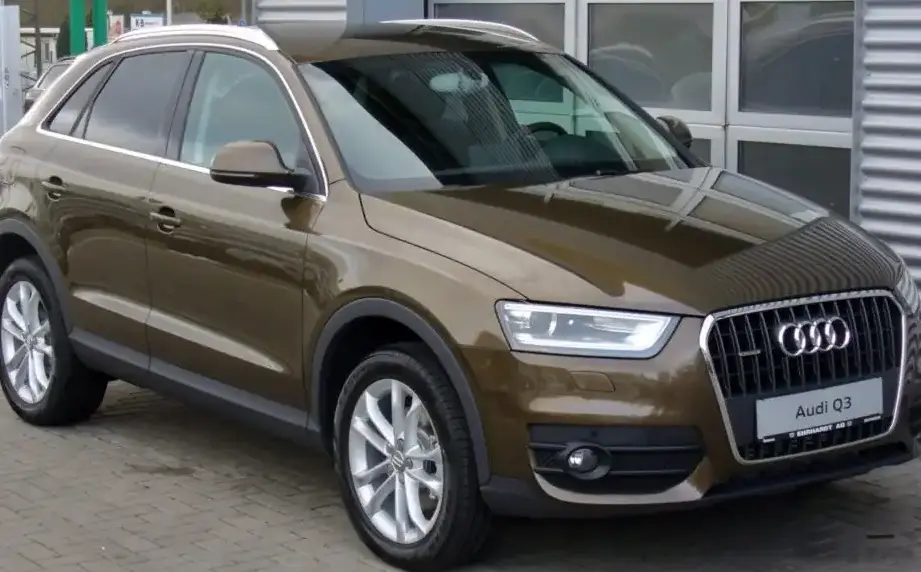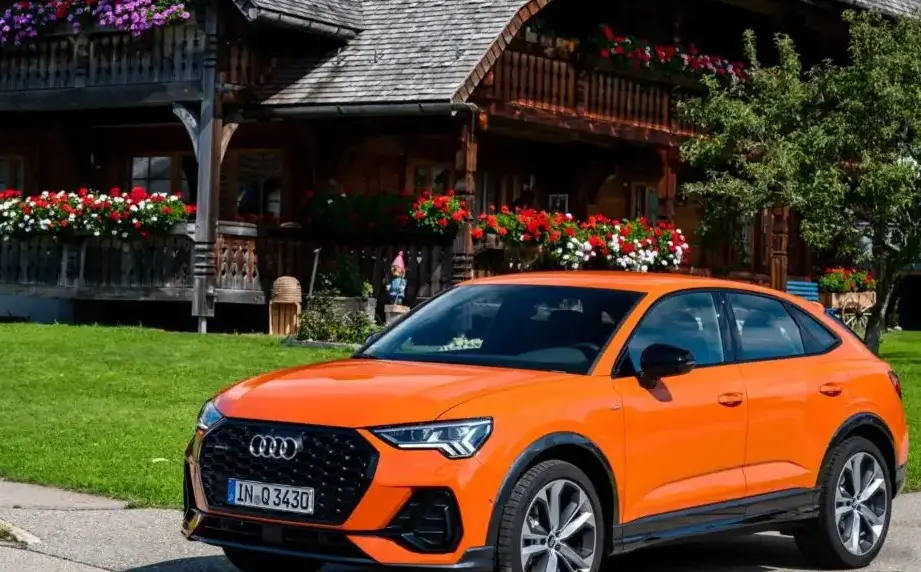
The Audi Q3 II Sportback (F3) 45 TFSI quattro S tronic represents a compelling blend of style, performance, and technology within the second generation of Audi’s compact luxury crossover. Introduced in August 2019 and continuing through October 2020, this variant occupied a significant position in the Q3 Sportback lineup, offering a step up in power and all-wheel-drive capability compared to the base models. It’s built on the Volkswagen Group’s MQB platform (specifically the A3/1HX0 variant), shared with models like the Volkswagen Tiguan and SEAT Ateca, but distinguished by Audi’s premium appointments and driving dynamics. The Sportback body style, a coupe-like SUV, further differentiates it from the more traditionally shaped Q3.
Technical Specifications
| Brand | Audi |
| Model | Q3 |
| Generation | Q3 II Sportback (F3) |
| Type (Engine) | 45 TFSI (230 Hp) quattro S tronic |
| Start of production | August, 2019 |
| End of production | October, 2020 |
| Powertrain Architecture | Internal Combustion engine |
| Body type | Coupe, SUV |
| Seats | 5 |
| Doors | 5 |
| Combined fuel consumption (WLTP) | 8.6-9.1 l/100 km (27.4 – 25.8 US mpg, 32.8 – 31 UK mpg, 11.6 – 11 km/l) |
| CO2 emissions (WLTP) | 194-206 g/km |
| Fuel consumption (urban) | 9.5-9.7 l/100 km (24.8 – 24.2 US mpg, 29.7 – 29.1 UK mpg, 10.5 – 10.3 km/l) |
| Fuel consumption (extra urban) | 6.1-6.5 l/100 km (38.6 – 36.2 US mpg, 46.3 – 43.5 UK mpg, 16.4 – 15.4 km/l) |
| Fuel consumption (combined) | 7.3-7.7 l/100 km (32.2 – 30.5 US mpg, 38.7 – 36.7 UK mpg, 13.7 – 13 km/l) |
| CO2 emissions | 166-174 g/km |
| Fuel Type | Petrol (Gasoline) |
| Acceleration 0 – 100 km/h | 6.5 sec |
| Acceleration 0 – 62 mph | 6.5 sec |
| Acceleration 0 – 60 mph | 6.2 sec |
| Maximum speed | 233 km/h (144.78 mph) |
| Emission standard | Euro 6d – TEMP – EVAP – ISC |
| Weight-to-power ratio | 7.1 kg/Hp, 141.5 Hp/tonne |
| Weight-to-torque ratio | 4.6 kg/Nm, 215.4 Nm/tonne |
| Power | 230 Hp @ 5000-6700 rpm |
| Power per litre | 115.9 Hp/l |
| Torque | 350 Nm @ 1500-4300 rpm (258.15 lb.-ft. @ 1500-4300 rpm) |
| Engine layout | Front, Transverse |
| Engine Model/Code | DKTA |
| Engine displacement | 1984 cm3 (121.07 cu. in.) |
| Number of cylinders | 4 |
| Engine configuration | Inline |
| Fuel injection system | Direct injection |
| Engine aspiration | Turbocharger, Intercooler |
| Engine oil capacity | 5.7 l (6.02 US qt | 5.02 UK qt) |
| Kerb Weight | 1625 kg (3582.51 lbs.) |
| Max. weight | 2210 kg (4872.22 lbs.) |
| Max load | 585 kg (1289.7 lbs.) |
| Trunk (boot) space – minimum | 530 l (18.72 cu. ft.) |
| Fuel tank capacity | 60 l (15.85 US gal | 13.2 UK gal) |
| Max. roof load | 75 kg (165.35 lbs.) |
| Permitted trailer load with brakes (12%) | 2100 kg (4629.71 lbs.) |
| Permitted trailer load without brakes | 750 kg (1653.47 lbs.) |
| Permitted towbar download | 90 kg (198.42 lbs.) |
| Length | 4500 mm (177.17 in.) |
| Width | 1843 mm (72.56 in.) |
| Width including mirrors | 2022 mm (79.61 in.) |
| Height | 1567 mm (61.69 in.) |
| Wheelbase | 2680 mm (105.51 in.) |
| Front track | 1584 mm (62.36 in.) |
| Rear track | 1576 mm (62.05 in.) |
| Front overhang | 905 mm (35.63 in.) |
| Rear overhang | 915 mm (36.02 in.) |
| Minimum turning circle | 11.8 m (38.71 ft.) |
| Drivetrain Architecture | All wheel drive (4×4). ICE drives front wheels, rear driven by clutch. |
| Drive wheel | All wheel drive (4×4) |
| Number of gears and type of gearbox | 7 gears, automatic transmission S tronic |
| Front suspension | Independent type McPherson |
| Rear suspension | Independent multi-link suspension |
| Front brakes | Ventilated discs |
| Rear brakes | Disc |
| Assisting systems | ABS (Anti-lock braking system) |
| Steering type | Steering rack and pinion |
| Power steering | Electric Steering |
| Tires size | 215/65 R17; 235/55 R18 |
| Wheel rims size | 7J x 17; 7J x 18 |
Powertrain & Engine Architecture
At the heart of the Q3 45 TFSI Sportback lies the DKTA engine, a 2.0-liter turbocharged inline-four cylinder gasoline engine. This engine is a member of the Volkswagen Group’s EA888 family, known for its robust construction and tuning potential. The DKTA utilizes direct fuel injection, delivering fuel directly into the combustion chamber for improved efficiency and power. A single twin-scroll turbocharger, coupled with an intercooler, provides forced induction, boosting output to 230 horsepower between 5000 and 6700 rpm and 350 Nm (258 lb-ft) of torque from 1500 to 4300 rpm. The engine features variable valve timing on both the intake and exhaust sides, optimizing performance across the rev range. The S tronic 7-speed dual-clutch transmission (DCT) is standard, offering quick and seamless gear changes. This transmission is known for its efficiency and responsiveness, contributing to the vehicle’s overall performance.
Driving Characteristics
The 230 hp and 350 Nm of torque, combined with the quattro all-wheel-drive system and the S tronic transmission, deliver a spirited driving experience. Acceleration from 0 to 60 mph takes approximately 6.2 seconds, and the car reaches a top speed of 144.78 mph. The S tronic transmission’s quick shifts and the quattro system’s ability to distribute power effectively provide excellent traction and stability, particularly in adverse weather conditions. Compared to lower-powered Q3 variants, the 45 TFSI offers noticeably stronger acceleration and a more confident feel. While not a sports car, the Q3 45 TFSI Sportback provides ample power for everyday driving and highway passing maneuvers. The gear ratios are tuned for a balance of acceleration and fuel efficiency, with taller gears for relaxed cruising.
Equipment & Trim Levels
The 45 TFSI quattro S tronic trim typically included a generous array of standard features. These commonly included Audi’s virtual cockpit digital instrument cluster, a touchscreen infotainment system with Apple CarPlay and Android Auto integration, leather upholstery, heated front seats, and a panoramic sunroof. Available options included a premium sound system, navigation, adaptive cruise control, and various driver-assistance features like lane departure warning and blind-spot monitoring. The interior design emphasized a modern and minimalist aesthetic, with high-quality materials and a focus on ergonomics.
Chassis & Braking
The Q3 Sportback features a fully independent suspension system, with McPherson struts at the front and a multi-link setup at the rear. This configuration provides a comfortable ride while maintaining good handling characteristics. The quattro all-wheel-drive system utilizes a multi-plate clutch to distribute torque between the front and rear axles as needed. Braking duties are handled by ventilated discs at the front and solid discs at the rear, providing ample stopping power. Anti-lock brakes (ABS) and electronic stability control (ESC) are standard safety features.
Market Reception & Comparison
The Audi Q3 II Sportback 45 TFSI quattro S tronic was generally well-received by automotive critics. It was praised for its stylish design, refined interior, and strong performance. Compared to the base Q3 models, the 45 TFSI offered a significant upgrade in power and driving enjoyment. However, some reviewers noted that the price was relatively high compared to competitors like the BMW X2 and Mercedes-Benz GLA. Fuel economy, while respectable, wasn’t class-leading, with combined figures ranging from 8.6 to 9.1 l/100 km. The 1.5 TFSI and 2.0 TDI variants offered better fuel economy, but at the expense of performance.
Legacy
The DKTA engine, in general, has proven to be a reliable unit when properly maintained. Common issues, if any, often relate to the turbocharger or the timing chain, but these are not widespread. The S tronic transmission requires regular servicing, including fluid changes, to ensure longevity. On the used car market, the Q3 45 TFSI Sportback holds its value relatively well, thanks to its desirable combination of performance, features, and the Audi brand reputation. It remains a popular choice for buyers seeking a compact luxury crossover with a sporty character.