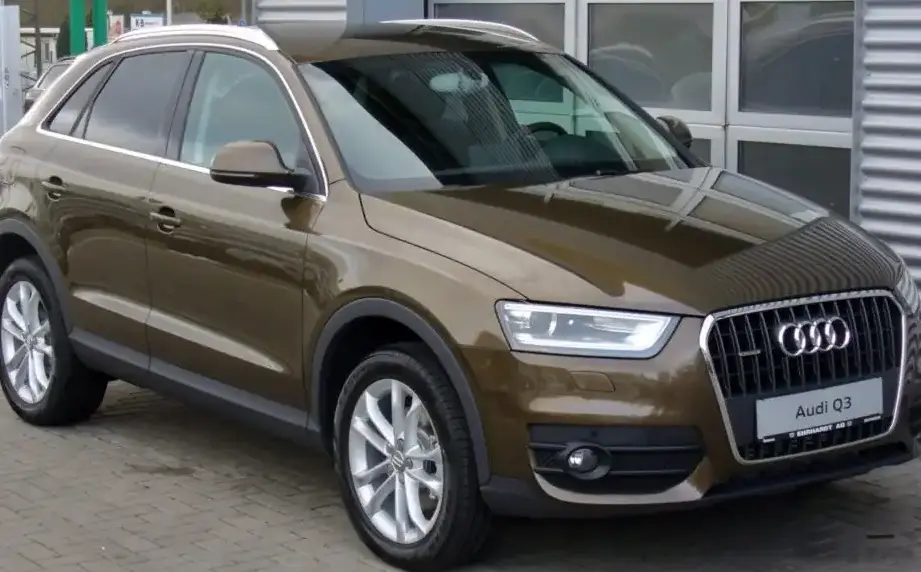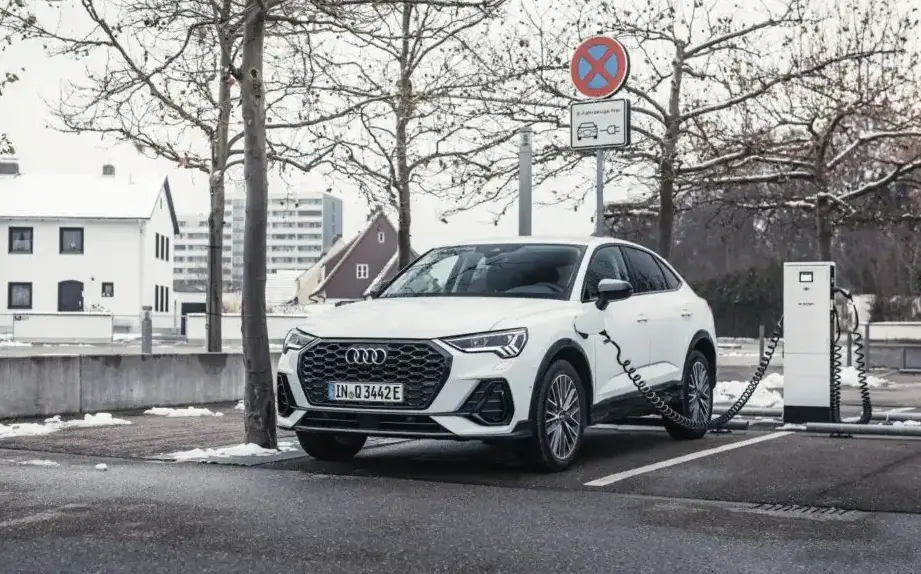
The Audi Q3 II Sportback 45 TFSI e, produced from January 2021 to December 2023, represents Audi’s entry into the premium compact plug-in hybrid crossover segment. Based on the F3 generation Q3 Sportback, this variant combines a 1.4-liter turbocharged gasoline engine with an electric motor, offering a balance of performance and efficiency. Positioned as a mid-range offering within the Q3 Sportback lineup, it aimed to attract buyers seeking a more environmentally conscious option without sacrificing the Audi brand’s reputation for quality and technology. The “45 TFSI e” designation signifies its combined system output and plug-in hybrid electric vehicle (PHEV) powertrain.
Technical Specifications
| Brand | Audi |
| Model | Q3 |
| Generation | Q3 II Sportback (F3) |
| Type (Engine) | 45 TFSI e (245 Hp) Plug-in Hybrid S tronic |
| Start of production | January, 2021 |
| End of production | December, 2023 |
| Powertrain Architecture | PHEV (Plug-in Hybrid Electric Vehicle) |
| Body type | Coupe, SUV |
| Seats | 5 |
| Doors | 5 |
| Fuel consumption (combined) | 1.4-1.7 l/100 km (168 – 138.4 US mpg, 201.8 – 166.2 UK mpg, 71.4 – 58.8 km/l) |
| CO2 emissions | 33-38 g/km |
| Fuel Type | Petrol / electricity |
| Acceleration 0 – 100 km/h | 7.3 sec |
| Acceleration 0 – 62 mph | 7.3 sec |
| Acceleration 0 – 60 mph | 6.9 sec |
| Maximum speed | 210 km/h (130.49 mph) |
| Emission standard | Euro 6d-ISC-FCM |
| Weight-to-power ratio | 7.1 kg/Hp, 140.8 Hp/tonne |
| Weight-to-torque ratio | 4.4 kg/Nm, 229.9 Nm/tonne |
| Gross battery capacity | 13 kWh |
| Battery technology | Lithium-ion (Li-Ion) |
| Battery weight | 130 kg (286.6 lbs) |
| Battery location | Below the floor, under the rear seats |
| Recuperation output | 40 kW |
| All-electric range (WLTP) | 45-50 km (27.96 – 31.07 mi) |
| All-electric range (NEDC) | 61 km (37.9 mi) |
| Average Energy consumption (NEDC/WLTP) | 14.6-15.9 kWh/100 km (23.5 – 25.59 kWh/100 mi, 143 – 132 MPGe, 6.8 – 6.3 km/kWh, 4.3 – 3.9 mi/kWh) |
| Max speed (electric) | 140 km/h (86.99 mph) |
| Electric motor power | 116 Hp |
| Electric motor Torque | 330 Nm (243.4 lb.-ft.) |
| Electric motor location | Between the combustion engine and the transmission |
| System power | 245 Hp |
| System torque | 400 Nm (295.02 lb.-ft.) |
| Engine Power | 150 Hp @ 5000-6000 rpm |
| Engine Torque | 250 Nm @ 1550-3500 rpm (184.39 lb.-ft. @ 1550-3500 rpm) |
| Engine layout | Front, Transverse |
| Engine Model/Code | DGEA |
| Engine displacement | 1395 cm3 (85.13 cu. in.) |
| Number of cylinders | 4 |
| Engine configuration | Inline |
| Cylinder Bore | 74.5 mm (2.93 in.) |
| Piston Stroke | 80 mm (3.15 in.) |
| Compression ratio | 10:1 |
| Number of valves per cylinder | 4 |
| Fuel injection system | Direct injection |
| Engine aspiration | Turbocharger, Intercooler |
| Valvetrain | DOHC |
| Engine oil capacity | 4 l (4.23 US qt | 3.52 UK qt) |
| Coolant capacity | 14.6 l (15.43 US qt | 12.85 UK qt) |
| Kerb Weight | 1740 kg (3836.04 lbs) |
| Max. weight | 2320 kg (5114.72 lbs) |
| Max load | 580 kg (1278.68 lbs) |
| Trunk (boot) space – minimum | 380 l (13.42 cu. ft.) |
| Trunk (boot) space – maximum | 1250 l (44.14 cu. ft.) |
| Fuel tank capacity | 45 l (11.89 US gal | 9.9 UK gal) |
| Max. roof load | 75 kg (165.35 lbs) |
| Permitted trailer load with brakes (8%) | 1700 kg (3747.86 lbs) |
| Permitted trailer load with brakes (12%) | 1400 kg (3086.47 lbs) |
| Permitted trailer load without brakes | 750 kg (1653.47 lbs) |
| Permitted towbar download | 90 kg (198.42 lbs) |
| Length | 4518 mm (177.87 in.) |
| Width | 1843 mm (72.56 in.) |
| Width including mirrors | 2022 mm (79.61 in.) |
| Height | 1576 mm (62.05 in.) |
| Wheelbase | 2680 mm (105.51 in.) |
| Front track | 1581 mm (62.24 in.) |
| Rear track | 1574 mm (61.97 in.) |
| Drag coefficient (Cd) | 0.34 |
| Minimum turning circle | 11.8 m (38.71 ft.) |
| Approach angle | 20.4° |
| Departure angle | 17.7° |
| Drivetrain Architecture | Front wheel drive. PHEV. ICE and electric motor drive front wheels. |
| Number of gears | 6 |
| Gearbox type | Automatic transmission S tronic |
| Front suspension | Independent type McPherson |
| Rear suspension | Independent multi-link suspension |
| Front brakes | Ventilated discs |
| Rear brakes | Disc |
| Assisting systems | ABS (Anti-lock braking system) |
| Steering type | Steering rack and pinion |
| Power steering | Electric Steering |
| Tires size | 215/65 R17; 235/55 R18; 235/50 R19; 255/45 R19; 255/40 R20 |
| Wheel rims size | 6.5J x 17; 7J x 17; 7J x 18; 7J x 19; 8.5J x 19; 8.5J x 20 |
Powertrain & Engine Architecture
The 45 TFSI e utilizes a 1.4-liter, four-cylinder turbocharged gasoline engine (engine code DGEA) paired with a permanent magnet synchronous electric motor. The engine produces 150 horsepower at 5000-6000 rpm and 184 lb-ft of torque between 1550-3500 rpm. Direct fuel injection and a turbocharger with intercooling contribute to its efficiency and responsiveness. The electric motor, integrated between the engine and the S tronic dual-clutch transmission, delivers 116 horsepower and 243 lb-ft of torque. The combined system output is 245 horsepower and 295 lb-ft of torque. The 13 kWh lithium-ion battery pack is located under the rear seats, minimizing impact on passenger space. The powertrain features intelligent energy management, allowing for electric-only driving for up to 45-50 kilometers (28-31 miles) based on the WLTP cycle. The S tronic transmission, a seven-speed dual-clutch unit, provides quick and smooth gear changes, optimizing both performance and fuel economy.
Driving Characteristics
The Q3 Sportback 45 TFSI e offers a refined driving experience. In electric mode, it provides near-silent acceleration and instant torque, making it ideal for urban commuting. Switching to hybrid mode seamlessly blends the power of the gasoline engine and electric motor, delivering brisk acceleration – 0 to 60 mph in approximately 6.9 seconds. The S tronic transmission contributes to responsive shifts, and the front-wheel-drive configuration provides adequate traction in most conditions. Compared to the standard gasoline-powered Q3 variants, the 45 TFSI e feels more effortless in everyday driving, thanks to the electric motor’s assistance. However, the added weight of the battery pack (approximately 287 lbs) is noticeable, particularly during spirited driving, making it feel slightly less agile than lighter Q3 models. The gear ratios are tuned to maximize efficiency in electric mode and provide strong acceleration in hybrid mode.
Equipment & Trim Levels
The 45 TFSI e trim typically included a high level of standard equipment. Interior features generally included leather upholstery, heated front seats, a panoramic sunroof, and Audi’s Virtual Cockpit digital instrument cluster. The MMI touch response infotainment system with a 10.1-inch touchscreen display was standard, offering navigation, Apple CarPlay, and Android Auto compatibility. Exterior features included distinctive “e-tron” badging, LED headlights, and 18-inch alloy wheels. Optional extras included adaptive cruise control, a premium sound system, and a 360-degree camera system. The overall interior ambiance was consistent with Audi’s premium brand image, emphasizing quality materials and a modern design.
Chassis & Braking
The Q3 Sportback 45 TFSI e utilizes a McPherson strut front suspension and a multi-link rear suspension, providing a comfortable and controlled ride. The suspension tuning is slightly softer than that of the sportier Q3 variants to accommodate the added weight of the battery pack. Ventilated front disc brakes and solid rear discs provide adequate stopping power. ABS, electronic stability control, and traction control are standard safety features. The steering is electrically assisted, offering precise and responsive handling. Stabilizer bars are fitted to both the front and rear axles to minimize body roll during cornering.
Market Reception & Comparison
The Audi Q3 Sportback 45 TFSI e was generally well-received by automotive critics. It was praised for its fuel efficiency, refined driving experience, and luxurious interior. However, some reviewers noted that its price was higher than that of comparable gasoline-powered Q3 models. Compared to the Q3 45 TFSI (gasoline only), the 45 TFSI e offered significantly better fuel economy and the ability to drive in electric-only mode, but at the cost of slightly reduced performance and increased weight. Compared to the Q3 40 TDI (diesel), the 45 TFSI e provided a more environmentally friendly alternative, but with a higher purchase price and potentially higher running costs depending on electricity prices.
Legacy
The Q3 Sportback 45 TFSI e represents an important step in Audi’s electrification strategy. While production ended in 2023, these models continue to appear on the used car market. The powertrain, while not without its complexities, has proven relatively reliable. The longevity of the battery pack remains a key consideration for potential buyers, but Audi’s battery warranty provides some peace of mind. The 45 TFSI e’s combination of performance, efficiency, and luxury has made it a desirable option for buyers seeking a premium compact plug-in hybrid crossover.