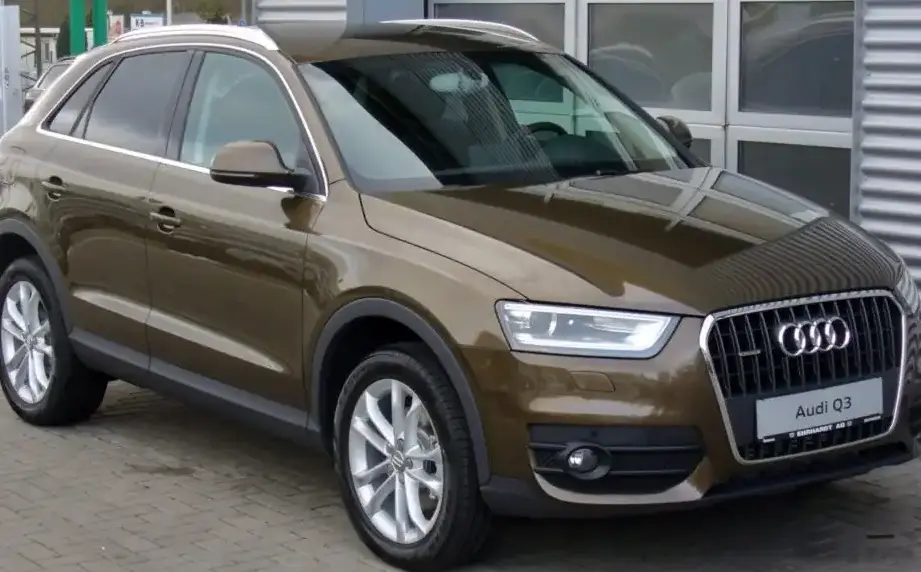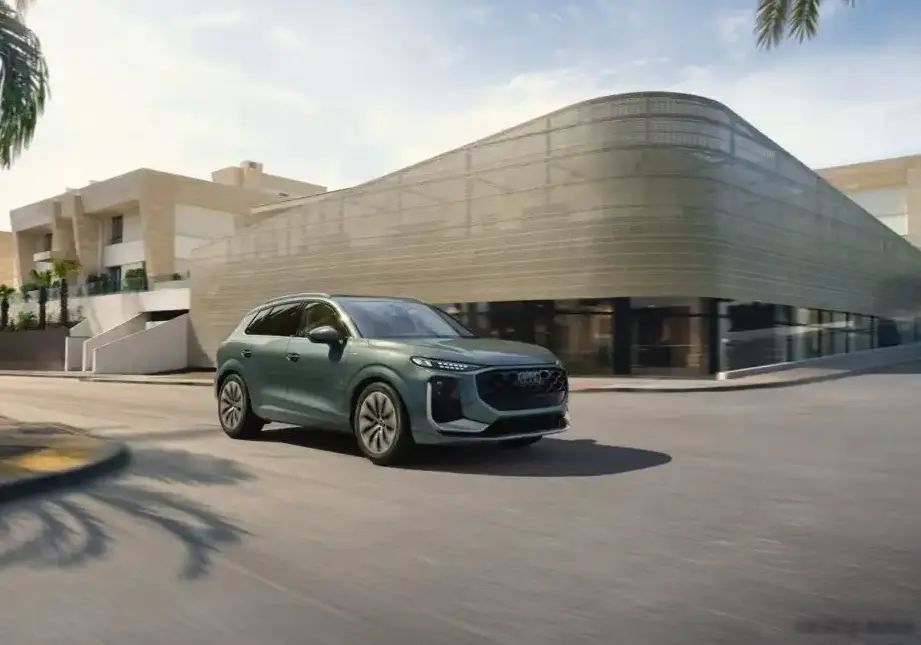
The Audi Q3 III (FJ) 2.0 TFSI quattro S tronic represents the third generation of Audi’s compact luxury SUV, launched in November 2025. This variant, equipped with a 2.0-liter turbocharged four-cylinder engine producing 255 horsepower, occupies a performance-oriented position within the Q3 lineup, slotting above the base engine options and offering a compelling blend of power, handling, and premium features. It builds upon the foundation of the MQB Evo platform, shared with other Volkswagen Group vehicles, and aims to compete with rivals like the BMW X3, Mercedes-Benz GLC, and Acura RDX in the North American market.
Technical Specifications
| Brand | Audi |
| Model | Q3 |
| Generation | Q3 III (FJ) |
| Type (Engine) | 2.0 TFSI (255 Hp) quattro S tronic |
| Start of production | November, 2025 |
| Powertrain Architecture | Internal Combustion engine |
| Body type | SUV |
| Seats | 5 |
| Doors | 5 |
| Fuel Type | Petrol (Gasoline) |
| Acceleration 0 – 100 km/h | 5.9 sec |
| Acceleration 0 – 62 mph | 5.9 sec |
| Acceleration 0 – 60 mph | 5.5 sec |
| Maximum speed | 210 km/h (130.49 mph) |
| Weight-to-power ratio | 7 kg/Hp, 142.9 Hp/tonne |
| Weight-to-torque ratio | 4.8 kg/Nm, 207.3 Nm/tonne |
| Power | 255 Hp @ 5250-6500 rpm |
| Power per litre | 128.5 Hp/l |
| Torque | 370 Nm @ 1650-4500 rpm (272.9 lb.-ft. @ 1650-4500 rpm) |
| Engine layout | Front, Transverse |
| Engine displacement | 1984 cm3 (121.07 cu. in.) |
| Number of cylinders | 4 |
| Engine configuration | Inline |
| Cylinder Bore | 82.5 mm (3.25 in.) |
| Piston Stroke | 92.8 mm (3.65 in.) |
| Compression ratio | 9.6:1 |
| Number of valves per cylinder | 4 |
| Fuel injection system | Direct injection |
| Engine aspiration | Turbocharger, Intercooler |
| Valvetrain | DOHC |
| Kerb Weight | 1785 kg (3935.25 lbs.) |
| Trunk (boot) space – minimum | 488 l (17.23 cu. ft.) |
| Trunk (boot) space – maximum | 1386 l (48.95 cu. ft.) |
| Fuel tank capacity | 62 l (16.38 US gal | 13.64 UK gal) |
| Permitted trailer load with brakes (12%) | 680 kg (1499.14 lbs.) |
| Permitted towbar download | 68 kg (149.91 lbs.) |
| Length | 4531 mm (178.39 in.) |
| Width | 1859 mm (73.19 in.) |
| Width including mirrors | 2088 mm (82.2 in.) |
| Height | 1628 mm (64.09 in.) |
| Wheelbase | 2682 mm (105.59 in.) |
| Front track | 1585 mm (62.4 in.) |
| Rear (Back) track | 1575 mm (62.01 in.) |
| Drag coefficient (Cd) | 0.35 |
| Minimum turning circle (turning diameter) | 11.8 m (38.71 ft.) |
| Drivetrain Architecture | All wheel drive (4×4) |
| Number of gears and type of gearbox | 7 gears, automatic transmission S tronic |
| Front suspension | Independent, type McPherson with coil spring and anti-roll bar |
| Rear suspension | Independent multi-link spring suspension with stabilizer |
| Front brakes | Ventilated discs, 340 mm |
| Rear brakes | Ventilated discs, 310 mm |
| Tires size | 235/55 R18; 255/45 R19; 255/40 R20 |
| Wheel rims size | 8J x 18; 8.5J x 19; 8.5J x 20 |
INTRODUCTION
The Audi Q3 III (FJ) 2.0 TFSI quattro S tronic, introduced in late 2025, represents a significant evolution of Audi’s popular compact SUV. Positioned as a premium offering in a competitive segment, it aims to deliver a sophisticated driving experience with a focus on performance and technology. The “FJ” designation signifies the third generation of the Q3, built on the modular transverse matrix (MQB Evo) platform. This platform allows for shared components across the Volkswagen Group, contributing to economies of scale and engineering efficiency. The 2.0 TFSI quattro variant is a key model, offering a balance between fuel efficiency and spirited performance, appealing to buyers seeking a more engaging driving experience than the base engine options.
Powertrain & Engine Architecture
At the heart of the Q3 2.0 TFSI lies the EA888 4-cylinder, 1.984-liter turbocharged engine. This engine, a staple in the Volkswagen Group’s portfolio, utilizes direct fuel injection and a sophisticated turbocharging system to deliver 255 horsepower and 370 Nm (272.9 lb-ft) of torque. The engine employs a dual overhead camshaft (DOHC) valvetrain with four valves per cylinder, optimizing airflow for improved performance. The engine also features Audi’s Start & Stop system to enhance fuel economy.
The “S tronic” transmission is a seven-speed dual-clutch automatic gearbox. This transmission offers incredibly fast and smooth gear changes, contributing to both performance and efficiency. Unlike traditional torque-converter automatics, the S tronic utilizes two separate clutches – one for odd-numbered gears and one for even-numbered gears – allowing for pre-selection of the next gear, resulting in near-instantaneous shifts. The quattro all-wheel-drive system is a permanent system, meaning power is continuously distributed to all four wheels. An electronically controlled multi-plate clutch manages torque distribution between the front and rear axles, optimizing traction and stability in various driving conditions.
Driving Characteristics
The Q3 2.0 TFSI quattro S tronic delivers a noticeably more engaging driving experience compared to lower-powered variants. The 255 hp engine provides ample power for confident acceleration, achieving 0-60 mph in approximately 5.5 seconds. The S tronic transmission contributes to this performance with its quick and precise shifts. The quattro all-wheel-drive system enhances grip and stability, particularly in inclement weather or on winding roads. The gear ratios are tuned to provide a balance between acceleration and fuel efficiency, with the lower gears offering strong off-the-line performance and the higher gears optimized for highway cruising. While not a dedicated sports SUV, the 2.0 TFSI variant offers a responsive and enjoyable driving experience that sets it apart from more economy-focused trims.
Equipment & Trim Levels
The Q3 2.0 TFSI quattro S tronic typically comes well-equipped as standard. Features generally include Audi’s Virtual Cockpit digital instrument cluster, a touchscreen infotainment system with Apple CarPlay and Android Auto compatibility, leather upholstery, heated front seats, and a panoramic sunroof. Available options often include a premium sound system, navigation system, adaptive cruise control, and a suite of advanced driver-assistance systems (ADAS) such as lane-keeping assist and automatic emergency braking. Trim levels beyond the base 2.0 TFSI quattro often add cosmetic enhancements, such as unique wheel designs and interior trim options.
Chassis & Braking
The Q3 III utilizes a McPherson strut front suspension and a multi-link rear suspension, providing a comfortable yet controlled ride. Stabilizer bars are fitted to both axles to reduce body roll during cornering. The braking system consists of ventilated discs on all four wheels, providing ample stopping power. Front brake rotors measure 340mm, while rear rotors are 310mm. Anti-lock braking system (ABS) and electronic stability control (ESC) are standard features, enhancing safety and control.
Market Reception & Comparison
The Audi Q3 2.0 TFSI quattro S tronic has generally received positive reviews from automotive critics. Praise is often directed towards its refined engine, responsive transmission, and comfortable ride. Compared to the base Q3 models, the 2.0 TFSI offers a significant performance upgrade. Fuel economy is comparable to other turbocharged four-cylinder SUVs in its class, typically achieving around 22-28 mpg combined. Reliability is generally considered good, although, as with any modern vehicle, preventative maintenance is crucial. Compared to competitors like the BMW X3 and Mercedes-Benz GLC, the Q3 often offers a more competitive price point while still delivering a premium experience.
Legacy
The EA888 engine family, used in the Q3 2.0 TFSI, has a long and proven track record within the Volkswagen Group. While early iterations of the engine had some oil consumption issues, later versions, including those found in the Q3 III, have addressed these concerns. The S tronic transmission is also known for its durability when properly maintained. The Q3 2.0 TFSI quattro S tronic is expected to hold its value reasonably well in the used car market, appealing to buyers seeking a well-equipped and capable compact luxury SUV. Its combination of performance, technology, and Audi’s brand reputation should ensure continued demand for this variant in the years to come.