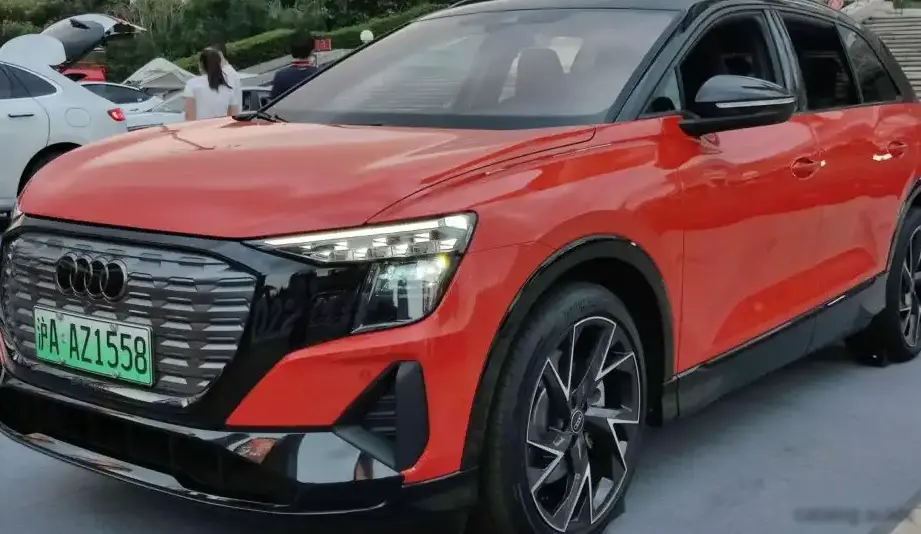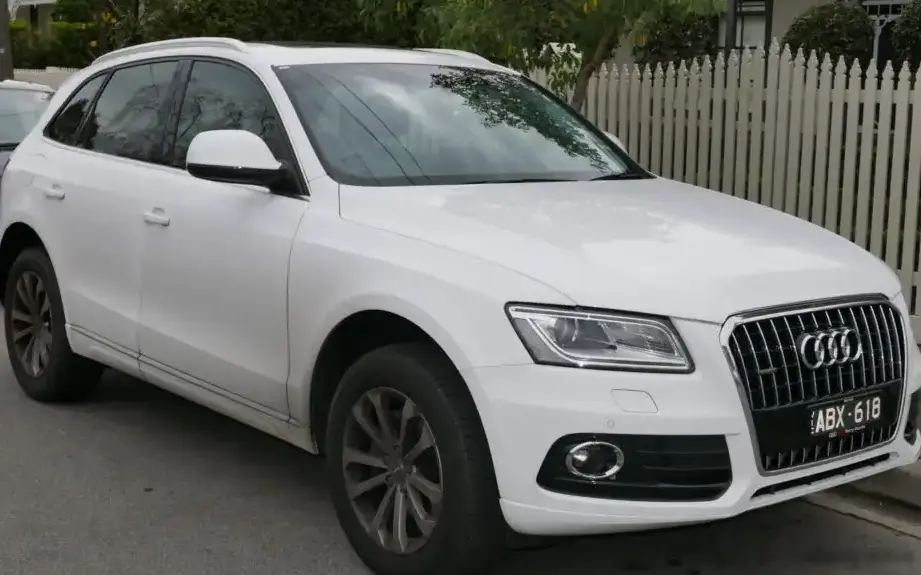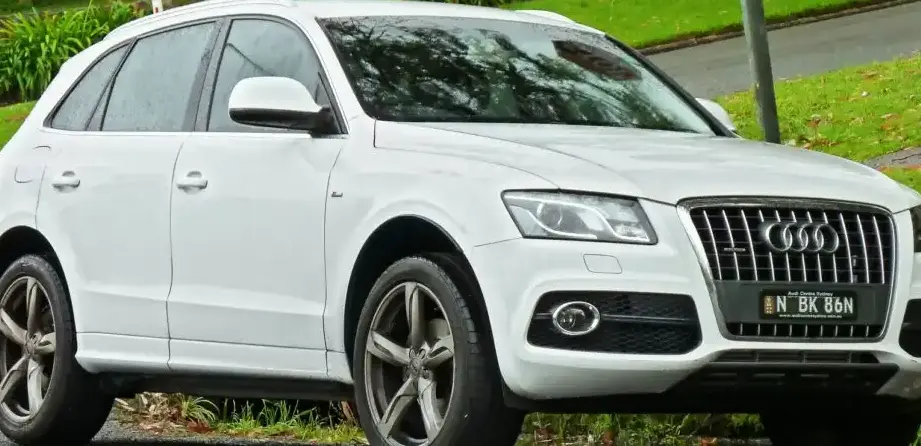
The Audi Q5 I (8R) 2.0 TFSI quattro Tiptronic, produced from July 2011 to May 2012, represents a significant iteration within the first generation of Audi’s popular compact luxury SUV. This variant combined a 2.0-liter turbocharged four-cylinder engine with a mild hybrid system and Audi’s renowned quattro all-wheel-drive system, paired with an eight-speed Tiptronic automatic transmission. Positioned as a mid-range offering within the Q5 lineup, it aimed to balance performance, fuel efficiency, and technological sophistication for the North American and European markets. It was a key model in Audi’s strategy to offer a more fuel-conscious alternative to the higher-powered Q5 trims without sacrificing the brand’s premium driving experience.
Technical Specifications
| Brand | Audi |
| Model | Q5 |
| Generation | Q5 I (8R) |
| Type (Engine) | 2.0 TFSI (245 Hp) quattro Tiptronic |
| Start of production | July, 2011 |
| End of production | May, 2012 |
| Powertrain Architecture | FHEV (Full Hybrid Electric Vehicle) |
| Body type | SUV |
| Seats | 5 |
| Doors | 5 |
| Fuel consumption (urban) | 6.6 l/100 km (35.6 US mpg, 42.8 UK mpg, 15.2 km/l) |
| Fuel consumption (extra urban) | 7.1 l/100 km (33.1 US mpg, 39.8 UK mpg, 14.1 km/l) |
| Fuel consumption (combined) | 6.9 l/100 km (34.1 US mpg, 40.9 UK mpg, 14.5 km/l) |
| CO2 emissions | 159 g/km |
| Fuel Type | Petrol (Gasoline) |
| Acceleration 0 – 100 km/h | 7.1 sec |
| Acceleration 0 – 62 mph | 7.1 sec |
| Acceleration 0 – 60 mph | 6.7 sec |
| Maximum speed | 225 km/h (139.81 mph) |
| Emission standard | Euro 5 |
| Weight-to-power ratio | 7.8 kg/Hp, 128.3 Hp/tonne |
| Weight-to-torque ratio | 4 kg/Nm, 251.3 Nm/tonne |
| Gross battery capacity | 1.3 kWh |
| Electric motor power | 54 Hp |
| System power | 245 Hp |
| System torque | 480 Nm (354.03 lb.-ft.) |
| Engine Power | 211 Hp @ 4300-6000 rpm |
| Power per litre | 106.4 Hp/l |
| Engine Torque | 350 Nm @ 1500-4200 rpm (258.15 lb.-ft. @ 1500-4200 rpm) |
| Engine layout | Front, Longitudinal |
| Engine Model/Code | CDNC, CPMA, CADA, CAEB |
| Engine displacement | 1984 cm3 (121.07 cu. in.) |
| Number of cylinders | 4 |
| Engine configuration | Inline |
| Cylinder Bore | 82.5 mm (3.25 in.) |
| Piston Stroke | 92.8 mm (3.65 in.) |
| Compression ratio | 9.6:1 |
| Number of valves per cylinder | 4 |
| Fuel injection system | Direct injection |
| Engine aspiration | Turbocharger, Intercooler |
| Valvetrain | DOHC |
| Engine oil capacity | 4.6 l (4.86 US qt | 4.05 UK qt) |
| Kerb Weight | 1910 kg (4210.83 lbs.) |
| Max. weight | 2490 kg (5489.51 lbs.) |
| Max load | 580 kg (1278.68 lbs.) |
| Trunk (boot) space – minimum | 460 l (16.24 cu. ft.) |
| Trunk (boot) space – maximum | 1480 l (52.27 cu. ft.) |
| Fuel tank capacity | 72 l (19.02 US gal | 15.84 UK gal) |
| Max. roof load | 75 kg (165.35 lbs.) |
| Permitted trailer load with brakes (8%) | 2400 kg (5291.09 lbs.) |
| Permitted trailer load with brakes (12%) | 2000 kg (4409.25 lbs.) |
| Permitted trailer load without brakes | 750 kg (1653.47 lbs.) |
| Permitted towbar download | 80 kg (176.37 lbs.) |
| Length | 4629 mm (182.24 in.) |
| Width | 1898 mm (74.72 in.) |
| Width including mirrors | 2089 mm (82.24 in.) |
| Height | 1653 mm (65.08 in.) |
| Wheelbase | 2807 mm (110.51 in.) |
| Front track | 1617 mm (63.66 in.) |
| Rear (Back) track | 1613 mm (63.5 in.) |
| Front overhang | 895 mm (35.24 in.) |
| Rear overhang | 927 mm (36.5 in.) |
| Minimum turning circle | 11.6 m (38.06 ft.) |
| Drivetrain Architecture | The Internal combustion engine (ICE) and the electric motor permanently drive the four wheels of the car with the ability to work in full electric or mixed mode. |
| Drive wheel | All wheel drive (4×4) |
| Number of gears and type of gearbox | 8 gears, automatic transmission Tiptronic |
| Front suspension | Independent multi-link suspension |
| Rear suspension | Independent on trapezoidal lever |
| Front brakes | Ventilated discs |
| Rear brakes | Disc |
| Assisting systems | ABS (Anti-lock braking system) |
| Steering type | Steering rack and pinion |
| Power steering | Electric Steering |
| Tires size | 235/55 R19 |
| Wheel rims size | 8.0J x 19 |
Powertrain & Engine Architecture
At the heart of the Q5 2.0 TFSI quattro Tiptronic lies the EA888 2.0-liter inline-four cylinder engine. Specifically, engine codes CDNC, CPMA, CADA, and CAEB were utilized during this production run. This engine featured direct fuel injection (FSI) and a single turbocharger with an intercooler, producing 211 horsepower at 4300-6000 rpm and 258 lb-ft of torque between 1500-4200 rpm. The addition of a 54-horsepower electric motor and a 1.3 kWh battery pack brought the total system output to 245 horsepower and 354 lb-ft of torque. The engine employed a dual overhead camshaft (DOHC) valvetrain with four valves per cylinder. The eight-speed Tiptronic automatic transmission, a staple of Audi’s premium offerings, provided smooth and responsive gear changes. This transmission allowed for both fully automatic operation and manual gear selection via steering wheel-mounted paddles or the gear selector.
Driving Characteristics
The 2.0 TFSI quattro Tiptronic offered a refined driving experience. While not as overtly sporty as the Q5 variants equipped with the 3.2-liter V6, it provided ample power for everyday driving and highway cruising. The electric motor provided instant torque, filling in gaps in the turbocharger’s power delivery and contributing to improved fuel economy. The eight-speed Tiptronic transmission was well-tuned, offering quick and seamless shifts. The quattro all-wheel-drive system ensured excellent traction in all weather conditions. Compared to the manual transmission versions of the 2.0 TFSI, the Tiptronic offered greater convenience, particularly in urban environments. However, some enthusiasts noted a slight reduction in responsiveness and engagement compared to the manual.
Equipment & Trim Levels
The 2.0 TFSI quattro Tiptronic typically came standard with features such as leather upholstery, tri-zone automatic climate control, a panoramic sunroof, and Audi’s Multi Media Interface (MMI) infotainment system. Optional extras included navigation, a premium sound system, and advanced driver-assistance systems like adaptive cruise control and blind-spot monitoring. Interior trim options varied, with choices in wood, aluminum, or carbon fiber accents. The exterior featured standard xenon headlights and 19-inch alloy wheels.
Chassis & Braking
The Q5’s chassis featured an independent multi-link suspension at all four corners, providing a comfortable ride and precise handling. The front suspension utilized coil springs and stabilizer bar, while the rear employed a trapezoidal link setup. Braking duties were handled by ventilated discs at the front and solid discs at the rear, equipped with ABS and electronic stability control. The steering system was a speed-sensitive electric power steering rack and pinion.
Market Reception & Comparison
The Audi Q5 2.0 TFSI quattro Tiptronic was generally well-received by automotive critics. It was praised for its comfortable ride, refined interior, and fuel-efficient powertrain. Compared to the more powerful Q5 3.2, it offered a more accessible price point and better fuel economy. However, some reviewers found the engine to be slightly underpowered for a vehicle of its size and weight. Against competitors like the BMW X3 and Mercedes-Benz GLK, the Q5 stood out with its sophisticated interior and advanced technology.
Legacy
The Audi Q5 I (8R) 2.0 TFSI quattro Tiptronic has proven to be a reliable and durable vehicle. The EA888 engine, while not without its potential issues (such as carbon buildup), is generally considered robust when properly maintained. The Tiptronic transmission is also known for its longevity. Today, these Q5s are readily available on the used car market, offering a compelling value proposition for buyers seeking a premium compact SUV. Regular maintenance, including oil changes and timing belt replacements, is crucial to ensure the continued reliability of this powertrain.