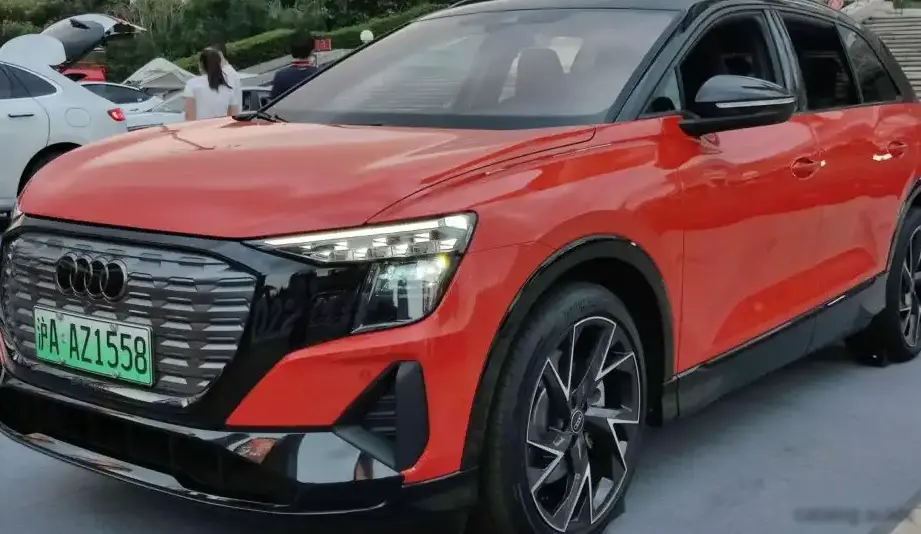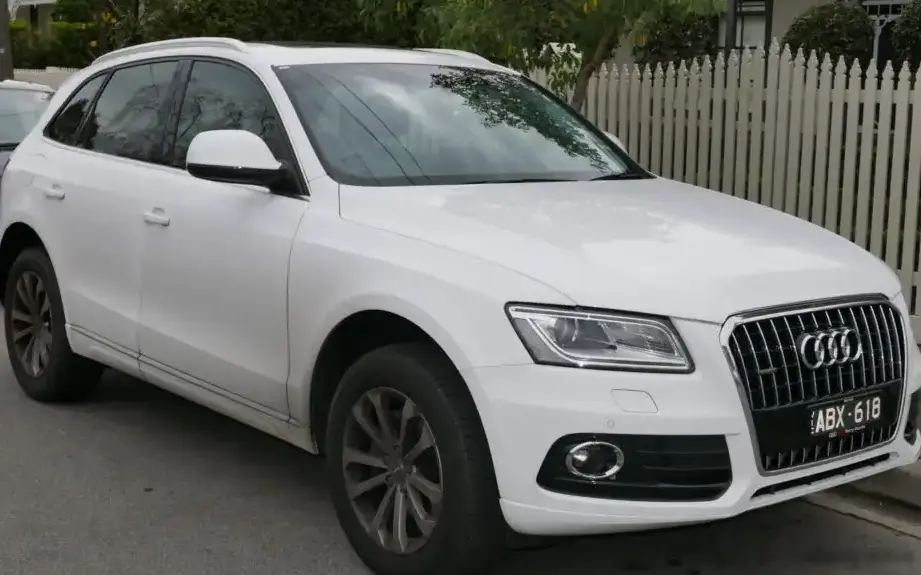
The Audi Q5 I (8R) facelift, specifically the 2.0 TDI clean diesel quattro model producing 190 horsepower, represents a significant iteration of Audi’s popular compact luxury SUV. Introduced in September 2013 and continuing through 2016, this variant occupied a key position in the Q5 lineup, offering a balance between performance, fuel efficiency, and all-weather capability. It was part of the first-generation Q5 (8R) which debuted in 2008, with the facelift bringing styling updates, revised technology, and improved engine options. This particular model was primarily aimed at the European market, where diesel engines held a dominant share, but was also available in other regions with diesel regulations.
Technical Specifications
| Brand | Audi |
| Model | Q5 |
| Generation | Q5 I (8R, facelift 2012) |
| Type (Engine) | 2.0 TDI clean diesel (190 Hp) quattro |
| Start of production | September, 2013 |
| End of production | 2016 |
| Powertrain Architecture | Internal Combustion engine |
| Body type | SUV |
| Seats | 5 |
| Doors | 5 |
| Fuel consumption (urban) | 6.5 l/100 km (36.2 US mpg, 43.5 UK mpg, 15.4 km/l) |
| Fuel consumption (extra urban) | 5.1 l/100 km (46.1 US mpg, 55.4 UK mpg, 19.6 km/l) |
| Fuel consumption (combined) | 5.6 l/100 km (42 US mpg, 50.4 UK mpg, 17.9 km/l) |
| CO2 emissions | 146 g/km |
| Fuel Type | Diesel |
| Acceleration 0 – 100 km/h | 8.4 sec |
| Acceleration 0 – 62 mph | 8.4 sec |
| Acceleration 0 – 60 mph | 8 sec |
| Maximum speed | 210 km/h (130.49 mph) |
| Emission standard | Euro 6 |
| Weight-to-power ratio | 9.6 kg/Hp, 104.7 Hp/tonne |
| Weight-to-torque ratio | 4.5 kg/Nm, 220.4 Nm/tonne |
| Power | 190 Hp @ 3800-4200 rpm |
| Power per litre | 96.5 Hp/l |
| Torque | 400 Nm @ 1750-3000 rpm (295.02 lb.-ft. @ 1750-3000 rpm) |
| Engine layout | Front, Longitudinal |
| Engine Model/Code | CDDA, CNHA |
| Engine displacement | 1968 cm3 (120.09 cu. in.) |
| Number of cylinders | 4 |
| Engine configuration | Inline |
| Cylinder Bore | 81 mm (3.19 in.) |
| Piston Stroke | 95.5 mm (3.76 in.) |
| Compression ratio | 15.5:1 |
| Number of valves per cylinder | 4 |
| Fuel injection system | Diesel Commonrail |
| Engine aspiration | Turbocharger, Intercooler |
| Valvetrain | DOHC |
| Engine oil capacity | 4.7 l (4.97 US qt | 4.14 UK qt) |
| Kerb Weight | 1815 kg (4001.39 lbs.) |
| Max. weight | 2425 kg (5346.21 lbs.) |
| Max load | 610 kg (1344.82 lbs.) |
| Trunk (boot) space – minimum | 540 l (19.07 cu. ft.) |
| Trunk (boot) space – maximum | 1560 l (55.09 cu. ft.) |
| Fuel tank capacity | 75 l (19.81 US gal | 16.5 UK gal) |
| Max. roof load | 75 kg (165.35 lbs.) |
| Permitted trailer load with brakes (8%) | 2400 kg (5291.09 lbs.) |
| Permitted trailer load with brakes (12%) | 2000 kg (4409.25 lbs.) |
| Permitted trailer load without brakes | 750 kg (1653.47 lbs.) |
| Permitted towbar download | 100 kg (220.46 lbs.) |
| Length | 4629 mm (182.24 in.) |
| Width | 1898 mm (74.72 in.) |
| Width including mirrors | 2089 mm (82.24 in.) |
| Height | 1655 mm (65.16 in.) |
| Wheelbase | 2807 mm (110.51 in.) |
| Front track | 1617 mm (63.66 in.) |
| Rear (Back) track | 1614 mm (63.54 in.) |
| Front overhang | 895 mm (35.24 in.) |
| Rear overhang | 927 mm (36.5 in.) |
| Ride height (ground clearance) | 200 mm (7.87 in.) |
| Drag coefficient (Cd) | 0.34 |
| Minimum turning circle (turning diameter) | 11.6 m (38.06 ft.) |
| Approach angle | 25° |
| Ramp-over (brakeover) angle | 17.6° |
| Climb angle | 31° |
| Wading depth | 500 mm (19.69 in.) |
| Drive wheel | All wheel drive (4×4) |
| Number of gears and type of gearbox | 6 gears, manual transmission |
| Front suspension | Independent multi-link suspension |
| Rear suspension | Independent on trapezoidal lever |
| Front brakes | Ventilated discs |
| Rear brakes | Disc |
| Assisting systems | ABS (Anti-lock braking system) |
| Steering type | Steering rack and pinion |
| Tires size | 235/65 R17 |
| Wheel rims size | 8J x 17 |
Powertrain & Engine Architecture
At the heart of the Q5 2.0 TDI quattro lies the Volkswagen Group’s EA888 family of engines, specifically the 2.0-liter four-cylinder diesel. Engine codes CDDA and CNHA were commonly used for this generation. This engine featured common-rail direct injection, delivering fuel at extremely high pressures for optimized combustion. A turbocharger with an intercooler was standard, boosting power and torque. The engine employed a double overhead camshaft (DOHC) valvetrain with four valves per cylinder, enhancing breathing and efficiency. The 15.5:1 compression ratio was typical for a diesel engine, contributing to its thermal efficiency. The six-speed manual transmission was the standard offering, providing a balance between fuel economy and driver engagement.
Driving Characteristics
The 190 horsepower and 400 Nm (295 lb-ft) of torque provided by the 2.0 TDI engine delivered respectable performance for a compact SUV. Acceleration from 0 to 100 km/h (0-62 mph) took approximately 8.4 seconds, and top speed was electronically limited to 210 km/h (130 mph). While not as quick as the higher-output petrol variants (like the 2.0 TFSI), the diesel offered significantly more torque at lower engine speeds, making it feel responsive in everyday driving situations. The quattro all-wheel-drive system provided excellent traction in various weather conditions. Compared to the manual transmission options, the automatic offered smoother shifts and reduced driver fatigue, but at the expense of some driver involvement and potentially slightly lower fuel economy.
Equipment & Trim Levels
The Q5 2.0 TDI quattro typically came well-equipped, even in base trim. Standard features included automatic climate control, a multi-function steering wheel, power windows and mirrors, and an audio system with a color display. Higher trim levels added features like leather upholstery, heated front seats, a panoramic sunroof, and a navigation system. Optional extras included advanced driver-assistance systems such as adaptive cruise control and lane-keeping assist. Interior upholstery was typically cloth in the base models, with leather options available as upgrades. The dashboard layout was typical of Audi’s design language at the time, with a focus on clean lines and intuitive controls.
Chassis & Braking
The Q5’s chassis featured an independent multi-link suspension at the front and an independent trapezoidal link suspension at the rear, providing a comfortable ride and good handling characteristics. The quattro all-wheel-drive system distributed power between the front and rear axles as needed, enhancing stability and traction. Braking duties were handled by ventilated discs at the front and solid discs at the rear, with ABS (Anti-lock Braking System) standard. The suspension was tuned to provide a balance between comfort and handling, making the Q5 a pleasant vehicle to drive on both city streets and highways.
Market Reception & Comparison
The Audi Q5 2.0 TDI quattro was generally well-received by automotive critics. It was praised for its comfortable ride, refined interior, and fuel efficiency. The diesel engine was considered a good compromise between performance and economy, particularly in Europe. Compared to the petrol-powered Q5 variants, the 2.0 TDI offered better fuel economy and more torque, but slightly less outright power. Compared to competitors like the BMW X3 and Mercedes-Benz GLK, the Q5 was often seen as offering a more refined and technologically advanced package.
Legacy
The 2.0 TDI engine in the Q5 proved to be a reliable and durable powertrain. While diesel engines, in general, have faced increased scrutiny in recent years due to emissions concerns, the EA888 family of engines has a solid reputation for longevity. On the used car market, the Q5 2.0 TDI quattro remains a popular choice, offering a good balance of luxury, practicality, and fuel efficiency. Regular maintenance, including timely oil changes and filter replacements, is crucial for ensuring the long-term reliability of this powertrain. The Q5’s success helped establish Audi as a major player in the compact luxury SUV segment, and the 2.0 TDI variant played a significant role in that achievement.