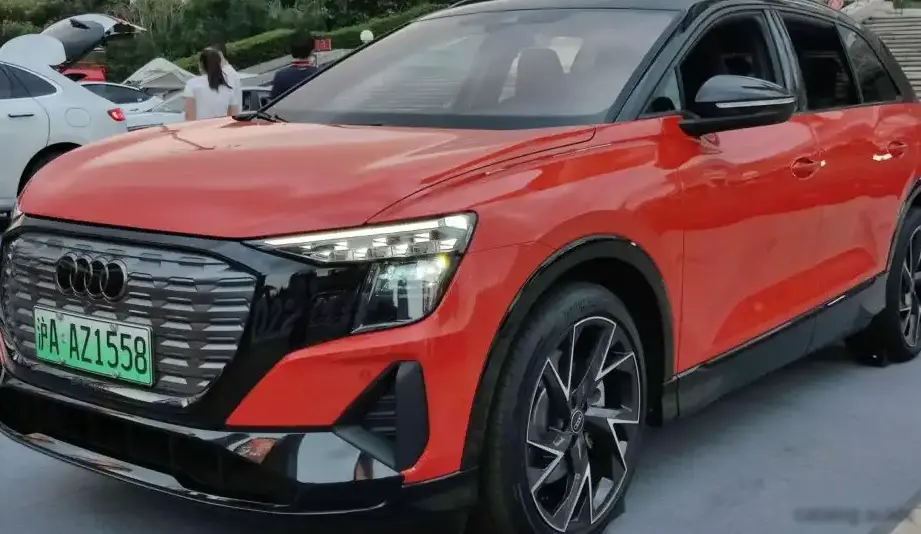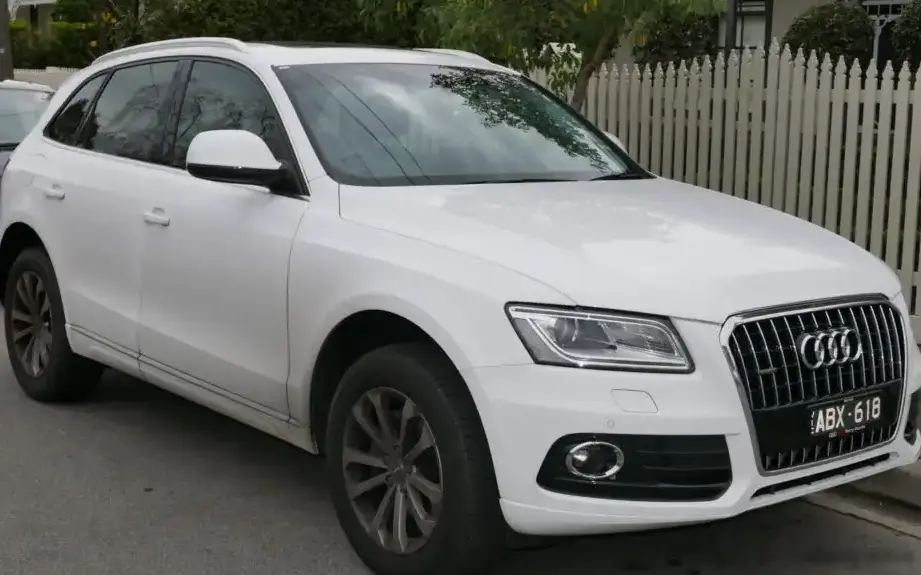
The Audi Q5 I (8R) facelift, produced from 2012 to 2015, represented a significant mid-cycle refresh of Audi’s popular compact luxury SUV. Among the various engine and drivetrain configurations offered, the 2.0 TFSI quattro, producing 225 horsepower, occupied a key position in the lineup. This variant aimed to balance performance, fuel efficiency, and all-weather capability, appealing to a broad range of buyers in the North American and European markets. It built upon the success of the initial Q5 launch, addressing some customer feedback and incorporating updated technology. The Q5, as a whole, was Audi’s entry into the burgeoning compact luxury SUV segment, competing directly with vehicles like the BMW X3, Mercedes-Benz GLK, and Acura RDX.
Technical Specifications
| Brand | Audi |
| Model | Q5 |
| Generation | Q5 I (8R, facelift 2012) |
| Type (Engine) | 2.0 TFSI (225 Hp) quattro |
| Start of production | June, 2012 |
| End of production | 2015 |
| Powertrain Architecture | Internal Combustion engine |
| Body type | SUV |
| Seats | 5 |
| Doors | 5 |
| Fuel consumption (urban) | 9.3 l/100 km (25.3 US mpg) |
| Fuel consumption (extra urban) | 6.4 l/100 km (36.8 US mpg) |
| Fuel consumption (combined) | 7.5 l/100 km (31.4 US mpg) |
| CO2 emissions | 174 g/km |
| Fuel Type | Petrol (Gasoline) |
| Acceleration 0 – 100 km/h | 7.4 sec |
| Acceleration 0 – 62 mph | 7.4 sec |
| Acceleration 0 – 60 mph | 7 sec |
| Maximum speed | 222 km/h (137.94 mph) |
| Emission standard | Euro 6 |
| Weight-to-power ratio | 7.6 kg/Hp |
| Weight-to-torque ratio | 4.9 kg/Nm |
| Power | 225 Hp @ 4500-6250 rpm |
| Torque | 350 Nm @ 1500-4500 rpm (258.15 lb.-ft. @ 1500-4500 rpm) |
| Engine layout | Front, Longitudinal |
| Engine Model/Code | EA888 / CNCD |
| Engine displacement | 1984 cm3 (121.07 cu. in.) |
| Number of cylinders | 4 |
| Engine configuration | Inline |
| Cylinder Bore | 82.5 mm (3.25 in.) |
| Piston Stroke | 92.8 mm (3.65 in.) |
| Compression ratio | 9.6:1 |
| Number of valves per cylinder | 4 |
| Fuel injection system | Direct injection and Multi-port manifold injection |
| Engine aspiration | Turbocharger, Intercooler |
| Valvetrain | DOHC |
| Engine oil capacity | 4.6 l (4.86 US qt | 4.05 UK qt) |
| Kerb Weight | 1720 kg (3791.95 lbs.) |
| Max. weight | 2330 kg (5136.77 lbs.) |
| Max load | 610 kg (1344.82 lbs.) |
| Trunk (boot) space – minimum | 540 l (19.07 cu. ft.) |
| Trunk (boot) space – maximum | 1560 l (55.09 cu. ft.) |
| Fuel tank capacity | 75 l (19.81 US gal | 16.5 UK gal) |
| Max. roof load | 75 kg (165.35 lbs.) |
| Permitted trailer load with brakes (8%) | 2400 kg (5291.09 lbs.) |
| Permitted trailer load with brakes (12%) | 2000 kg (4409.25 lbs.) |
| Permitted trailer load without brakes | 750 kg (1653.47 lbs.) |
| Permitted towbar download | 100 kg (220.46 lbs.) |
| Length | 4629 mm (182.24 in.) |
| Width | 1898 mm (74.72 in.) |
| Width including mirrors | 2089 mm (82.24 in.) |
| Height | 1655 mm (65.16 in.) |
| Wheelbase | 2807 mm (110.51 in.) |
| Front track | 1617 mm (63.66 in.) |
| Rear (Back) track | 1614 mm (63.54 in.) |
| Front overhang | 895 mm (35.24 in.) |
| Rear overhang | 927 mm (36.5 in.) |
| Ride height (ground clearance) | 200 mm (7.87 in.) |
| Drag coefficient (Cd) | 0.34 |
| Minimum turning circle (turning diameter) | 11.6 m (38.06 ft.) |
| Approach angle | 25° |
| Ramp-over (brakeover) angle | 17.6° |
| Climb angle | 31° |
| Wading depth | 500 mm (19.69 in.) |
| Drivetrain Architecture | The Internal combustion engine (ICE) drives permanently the four wheels of the vehicle. |
| Drive wheel | All wheel drive (4×4) |
| Number of gears and type of gearbox | 6 gears, manual transmission |
| Front suspension | Independent multi-link suspension, Transverse stabilizer |
| Rear suspension | Independent on trapezoidal lever, Transverse stabilizer |
| Front brakes | Ventilated discs |
| Rear brakes | Ventilated discs |
| Assisting systems | ABS (Anti-lock braking system) |
| Steering type | Steering rack and pinion |
| Power steering | Electric Steering |
| Tires size | 235/65 R17; 235/60 R18 |
| Wheel rims size | 8J x 17; 8J x 18 |
INTRODUCTION
The Audi Q5 I (8R) facelift 2.0 TFSI quattro, produced between 2012 and 2015, was a pivotal model within Audi’s lineup. Positioned as a mid-range offering, it slotted between the base 2.0 TFSI front-wheel-drive model and the more powerful 3.0 TFSI variants. The “facelift” designation refers to a series of cosmetic and technological updates applied to the original Q5, including revised front and rear styling, updated interior materials, and improvements to the infotainment system. This version of the Q5 was built on the Volkswagen Group’s PL46 platform (also known as the 8K platform), shared with models like the Volkswagen Tiguan and Skoda Yeti. The quattro all-wheel-drive system was a key selling point, providing enhanced traction and stability in various weather conditions, making it particularly popular in regions with harsh winters.
Powertrain & Engine Architecture
At the heart of the Q5 2.0 TFSI quattro lies the EA888 engine, specifically the CNCD code variant. This is a 1.984-liter (121.07 cubic inches) inline-four cylinder engine featuring direct fuel injection (FSI) combined with multi-point injection. This dual-injection system optimizes combustion efficiency and reduces emissions. The engine utilizes a single turbocharger with an intercooler to boost power output. The DOHC (Double Overhead Camshaft) valvetrain, with four valves per cylinder, further enhances breathing and performance. The engine produces 225 horsepower at 4500-6250 rpm and 350 Nm (258.15 lb-ft) of torque between 1500-4500 rpm. The engine is longitudinally mounted, directing power to all four wheels via Audi’s renowned quattro all-wheel-drive system. The transmission offered was a six-speed manual, providing drivers with direct control over gear selection.
Driving Characteristics
The 2.0 TFSI quattro offered a balanced driving experience. While not as overtly sporty as the higher-powered 3.0 TFSI models, it provided ample power for everyday driving and highway cruising. The turbocharger delivers a noticeable boost in acceleration, and the broad torque curve makes it easy to maintain speed on inclines. The six-speed manual transmission allows for precise gear changes, but the gear ratios are tuned more for fuel efficiency than outright performance. Compared to the manual transmission equipped models, the automatic versions offered a smoother, more relaxed driving experience, but at the expense of some driver engagement. The quattro all-wheel-drive system provides excellent grip and stability, particularly in wet or snowy conditions. Steering feel is precise, and the suspension offers a comfortable ride without feeling overly soft.
Equipment & Trim Levels
The Q5 2.0 TFSI quattro typically came well-equipped, even in base trim. Standard features included leather upholstery, tri-zone automatic climate control, a multi-function steering wheel, and Audi’s MMI infotainment system with a 6.5-inch display screen. Optional extras included a panoramic sunroof, navigation system, premium sound system, and advanced driver-assistance features such as adaptive cruise control and blind-spot monitoring. Interior trim options varied, with choices ranging from aluminum to wood accents. Exterior options included different wheel designs and paint colors.
Chassis & Braking
The Q5’s chassis features an independent multi-link suspension at the front and an independent trapezoidal link suspension at the rear, providing a comfortable and controlled ride. Stabilizer bars are fitted to both axles to reduce body roll during cornering. Braking duties are handled by ventilated discs on all four wheels, providing ample stopping power. The ABS (Anti-lock Braking System) is standard, enhancing safety and stability during emergency braking. The steering system utilizes a rack-and-pinion setup with electric power assistance.
Market Reception & Comparison
The Audi Q5 2.0 TFSI quattro was generally well-received by automotive critics. It was praised for its comfortable ride, refined interior, and capable all-wheel-drive system. However, some critics noted that the 2.0 TFSI engine, while adequate, lacked the punch of the 3.0 TFSI variants. Fuel economy was considered competitive for its class, averaging around 31.4 US mpg in combined driving. Compared to the 3.0 TFSI, the 2.0 TFSI offered a lower price point and better fuel efficiency, making it a more attractive option for budget-conscious buyers. The 2.0 TDI diesel variant, popular in Europe, offered even better fuel economy but lacked the performance of the gasoline engine.
Legacy
The Audi Q5 I (8R) 2.0 TFSI quattro has proven to be a reliable and durable vehicle. The EA888 engine, while not without its potential issues (such as carbon buildup on the intake valves), is generally considered robust when properly maintained. The quattro all-wheel-drive system is also known for its longevity. On the used car market, these Q5s remain popular due to their combination of luxury, practicality, and all-weather capability. Regular maintenance, including oil changes and timing belt replacements (if applicable), is crucial to ensure long-term reliability. The Q5 established Audi as a major player in the compact luxury SUV segment, and its success paved the way for the second-generation Q5.