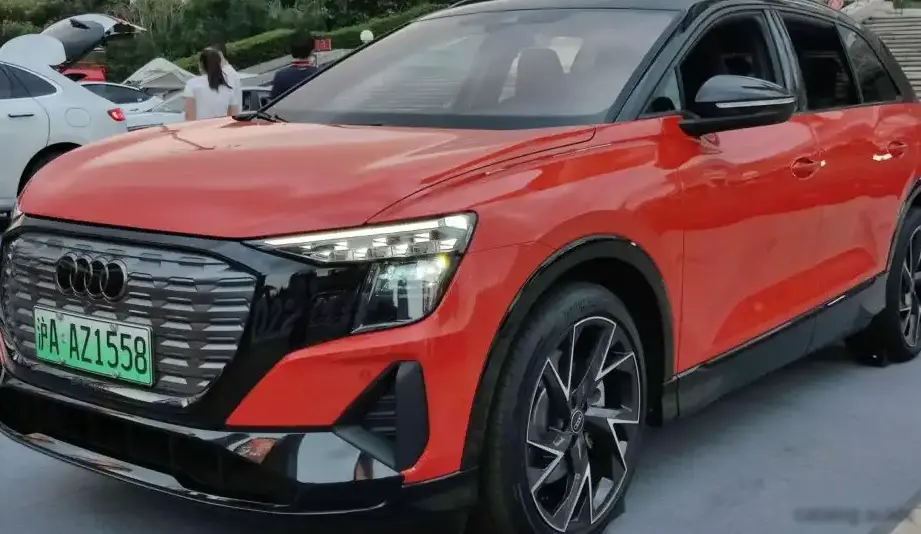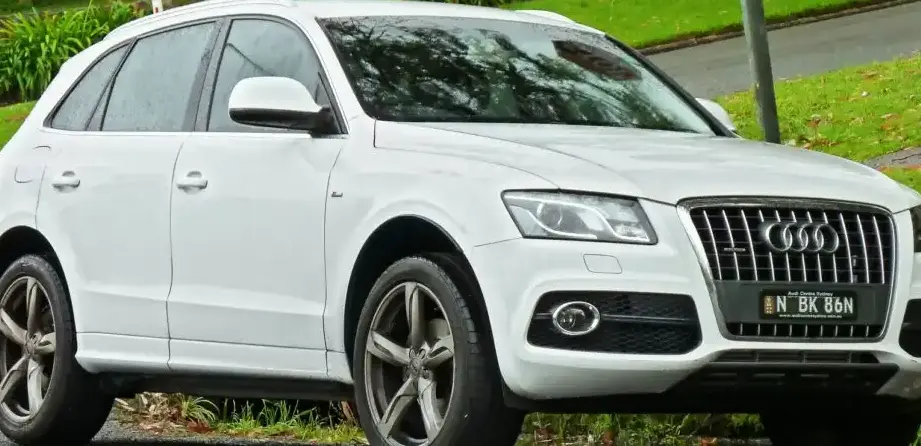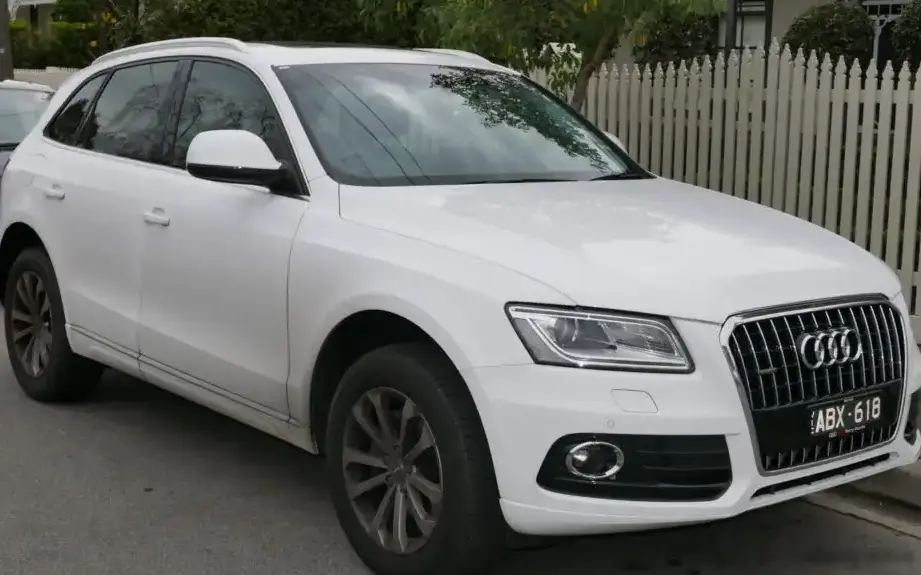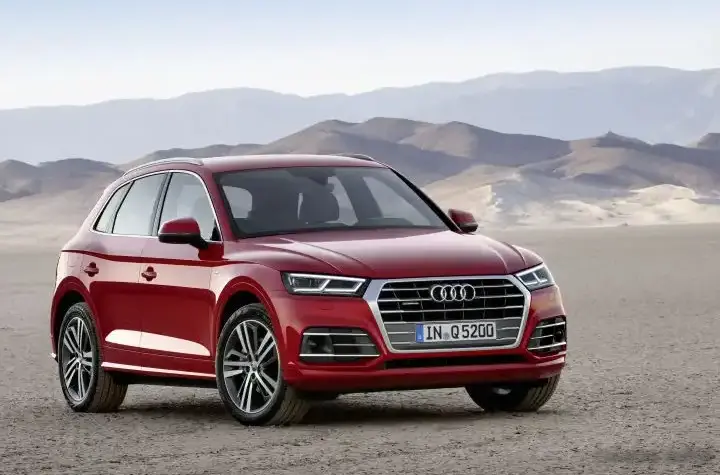
The Audi Q5 II (FY) 35 TDI quattro S tronic represents a specific configuration within the second-generation Q5 line, produced from 2019 to 2020. Positioned as a mid-range offering, this variant combined a 2.0-liter turbocharged diesel engine with Audi’s seven-speed S tronic dual-clutch transmission and the quattro all-wheel-drive system. It aimed to balance fuel efficiency, reasonable performance, and the added security of all-wheel drive, appealing to buyers seeking a practical and refined compact luxury SUV. This model was primarily sold in the European market, where diesel engines remained popular due to their fuel economy and torque characteristics.
Technical Specifications
| Brand | Audi |
| Model | Q5 |
| Generation | Q5 II (FY) |
| Type (Engine) | 35 TDI (163 Hp) quattro S tronic |
| Start of production | 2019 |
| End of production | 2020 |
| Powertrain Architecture | Internal Combustion engine |
| Body type | SUV |
| Seats | 5 |
| Doors | 5 |
| Combined fuel consumption (WLTP) | 7.0-7.8 l/100 km (33.6 – 30.2 US mpg, 40.4 – 36.2 UK mpg, 14.3 – 12.8 km/l) |
| CO2 emissions (WLTP) | 184-204 g/km |
| Fuel consumption (urban) | 6 l/100 km (39.2 US mpg, 47.1 UK mpg, 16.7 km/l) |
| Fuel consumption (extra urban) | 5.1-5.4 l/100 km (46.1 – 43.6 US mpg, 55.4 – 52.3 UK mpg, 19.6 – 18.5 km/l) |
| Fuel consumption (combined) | 5.4-5.6 l/100 km (43.6 – 42 US mpg, 52.3 – 50.4 UK mpg, 18.5 – 17.9 km/l) |
| CO2 emissions | 142-148 g/km |
| Fuel Type | Diesel |
| Acceleration 0 – 100 km/h | 9.1 sec |
| Acceleration 0 – 62 mph | 9.1 sec |
| Acceleration 0 – 60 mph | 8.6 sec |
| Maximum speed | 211 km/h (131.11 mph) |
| Emission standard | Euro 6d-Temp |
| Weight-to-power ratio | 10.9 kg/Hp, 92.1 Hp/tonne |
| Weight-to-torque ratio | 4.4 kg/Nm, 226 Nm/tonne |
| Power | 163 Hp @ 3000-4200 rpm |
| Power per litre | 82.8 Hp/l |
| Torque | 400 Nm @ 1750-2750 rpm (295.02 lb.-ft. @ 1750-2750 rpm) |
| Engine layout | Front, Longitudinal |
| Engine Model/Code | DEZE, DTNA |
| Engine displacement | 1968 cm3 (120.09 cu. in.) |
| Number of cylinders | 4 |
| Engine configuration | Inline |
| Number of valves per cylinder | 4 |
| Fuel injection system | Diesel Commonrail |
| Engine aspiration | Turbocharger, Intercooler |
| Engine oil capacity | 5.5 l (5.81 US qt | 4.84 UK qt) |
| Coolant | 8 l (8.45 US qt | 7.04 UK qt) |
| Kerb Weight | 1770 kg (3902.18 lbs.) |
| Max. weight | 2475 kg (5456.44 lbs.) |
| Max load | 705 kg (1554.26 lbs.) |
| Trunk (boot) space – minimum | 550 l (19.42 cu. ft.) |
| Fuel tank capacity | 65 l (17.17 US gal | 14.3 UK gal) |
| Max. roof load | 75 kg (165.35 lbs.) |
| Permitted trailer load with brakes (8%) | 2400 kg (5291.09 lbs.) |
| Permitted trailer load with brakes (12%) | 2400 kg (5291.09 lbs.) |
| Permitted trailer load without brakes | 750 kg (1653.47 lbs.) |
| Permitted towbar download | 100 kg (220.46 lbs.) |
| Length | 4663 mm (183.58 in.) |
| Width | 1893 mm (74.53 in.) |
| Width including mirrors | 2140 mm (84.25 in.) |
| Height | 1659 mm (65.31 in.) |
| Wheelbase | 2819 mm (110.98 in.) |
| Front track | 1616 mm (63.62 in.) |
| Rear (Back) track | 1609 mm (63.35 in.) |
| Front overhang | 899 mm (35.39 in.) |
| Rear overhang | 945 mm (37.2 in.) |
| Minimum turning circle (turning diameter) | 11.8 m (38.71 ft.) |
| Drive wheel | All wheel drive (4×4) |
| Number of gears and type of gearbox | 7 gears, automatic transmission S tronic |
| Front suspension | Independent multi-link suspension |
| Rear suspension | Independent multi-link spring suspension with stabilizer |
| Front brakes | Ventilated discs |
| Rear brakes | Disc |
| Assisting systems | ABS (Anti-lock braking system) |
| Steering type | Steering rack and pinion |
| Power steering | Electric Steering |
| Tires size | 235/65 R17; 235/60 R18; 235/55 R19; 255/45 R20; 255/40 R21 |
| Wheel rims size | 8J x 17; 8J x 18; 8J x 19; 8.5J x 19; 8J x 20; 8.5J x 21 |
Powertrain & Engine Architecture
The heart of the Q5 35 TDI is the Volkswagen Group’s 2.0-liter inline-four cylinder diesel engine, specifically the DEZE or DTNA engine code depending on the exact production date and market. This engine utilizes a common rail direct injection system, delivering fuel at extremely high pressures for optimized combustion. A single turbocharger with an intercooler provides forced induction, boosting power and torque. The engine features four valves per cylinder and a variable geometry turbocharger (VGT) to enhance responsiveness across the rev range. The S tronic seven-speed dual-clutch transmission offers quick and smooth gear changes, contributing to both performance and efficiency. This transmission is known for its ability to anticipate the driver’s needs and select the appropriate gear, and it also allows for manual gear selection via steering wheel-mounted paddles.
Driving Characteristics
The 163 horsepower and 400 Nm (295 lb-ft) of torque delivered by the 35 TDI powertrain provide adequate, though not exhilarating, performance. Acceleration from 0 to 100 km/h (0-62 mph) takes around 9.1 seconds. The engine’s strength lies in its mid-range torque, making it well-suited for everyday driving and overtaking maneuvers. Compared to higher-output Q5 variants like the 40 TDI, the 35 TDI feels less urgent, particularly at higher speeds. The S tronic transmission contributes to a refined driving experience, with seamless shifts and a responsive feel. The quattro all-wheel-drive system provides excellent traction in various weather conditions, enhancing stability and confidence. The gear ratios are tuned for fuel efficiency, prioritizing comfortable cruising over outright acceleration.
Equipment & Trim Levels
The Q5 35 TDI quattro S tronic typically came equipped with a generous level of standard features. These included Audi’s MMI infotainment system with a 7-inch display, three-zone automatic climate control, leather upholstery, and a suite of driver-assistance systems such as lane departure warning and automatic emergency braking. Optional extras included a larger MMI display, a panoramic sunroof, adaptive cruise control, and a premium sound system. Trim levels varied by market, but generally offered options for upgraded interior materials, exterior styling enhancements, and additional convenience features.
Chassis & Braking
The Q5 II utilizes a sophisticated chassis design featuring independent multi-link suspension at all four corners. This setup provides a comfortable ride quality while maintaining good handling characteristics. The front suspension incorporates a stabilizer bar to reduce body roll during cornering. Braking duties are handled by ventilated discs at the front and solid discs at the rear. The anti-lock braking system (ABS) and electronic stability control (ESC) are standard features, enhancing safety and control. The steering is electrically assisted, providing a precise and responsive feel.
Market Reception & Comparison
The Q5 35 TDI quattro S tronic was generally well-received by automotive critics. It was praised for its fuel efficiency, comfortable ride, and refined interior. However, some reviewers noted that the engine lacked the punch of more powerful Q5 variants. Compared to the 40 TDI, the 35 TDI offered a lower price point but sacrificed some performance. Against competitors like the BMW X3 and Mercedes-Benz GLC, the Q5 35 TDI held its own in terms of refinement and technology, but its diesel engine was becoming less popular as emissions regulations tightened.
Legacy
The 2.0-liter TDI engine and S tronic transmission combination proved to be relatively reliable, although diesel particulate filter (DPF) issues could occur with infrequent long-distance driving. The Q5 II, in general, has maintained a good reputation for build quality and durability. On the used car market, the 35 TDI quattro S tronic represents a good value proposition for buyers seeking a practical and efficient luxury SUV. However, potential buyers should be aware of the increasing restrictions on diesel vehicles in some urban areas and the potential for higher maintenance costs associated with diesel engines.