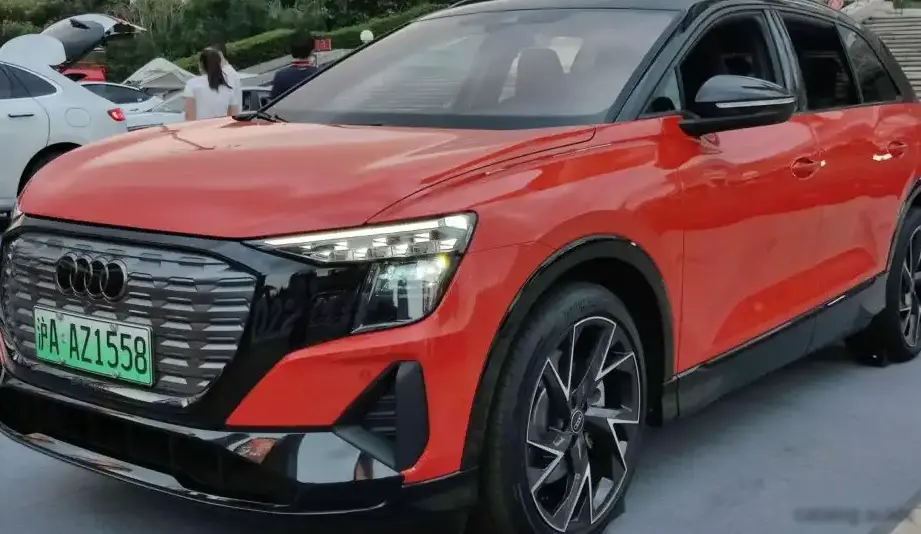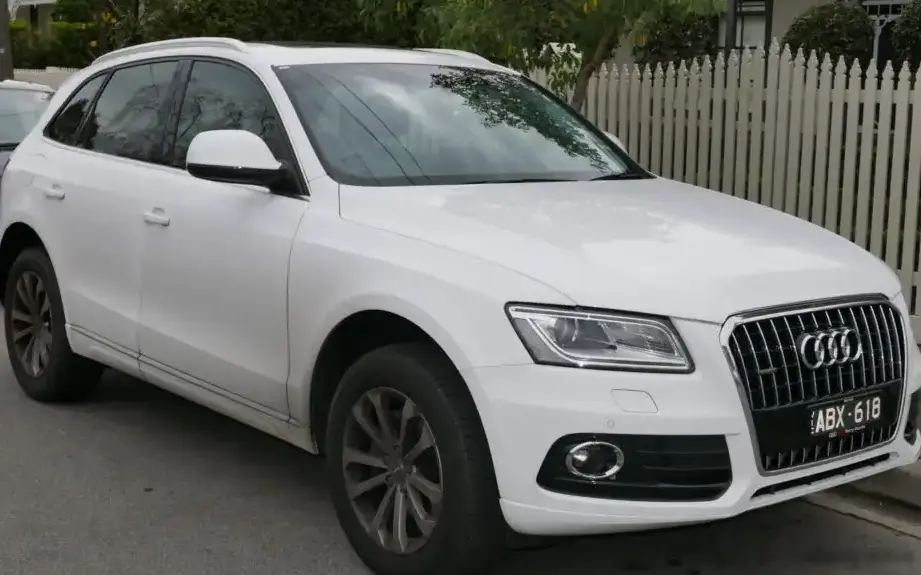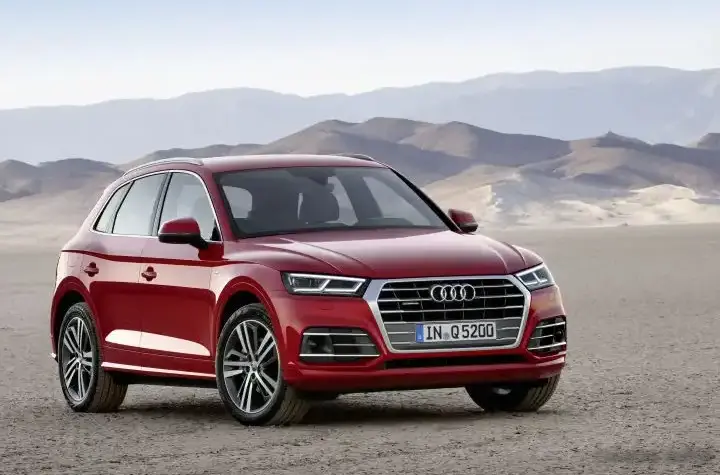
The Audi Q5 II (FY) 45 TDI quattro Tiptronic represents a significant iteration in Audi’s popular luxury compact SUV lineup. Produced from 2019 to 2020, this variant combined a potent diesel engine with Audi’s renowned quattro all-wheel-drive system and a sophisticated eight-speed Tiptronic automatic transmission. Positioned as a mid-range offering within the Q5 FY generation, it aimed to balance performance, efficiency, and refinement for discerning buyers. The Q5 FY series, built on the MLB Evo platform, represented a substantial upgrade over its predecessor, offering increased space, improved technology, and enhanced driving dynamics.
Technical Specifications
| Brand | Audi |
| Model | Q5 |
| Generation | Q5 II (FY) |
| Type (Engine) | 45 TDI (231 Hp) quattro Tiptronic |
| Start of production | 2019 |
| End of production | 2020 |
| Powertrain Architecture | Internal Combustion engine |
| Body type | SUV |
| Seats | 5 |
| Doors | 5 |
| Combined fuel consumption (WLTP) | 7.9-8.5 l/100 km (29.8 – 27.7 US mpg, 35.8 – 33.2 UK mpg, 12.7 – 11.8 km/l) |
| CO2 emissions (WLTP) | 207-223 g/km |
| Fuel consumption (urban) | 6.6-6.8 l/100 km (35.6 – 34.6 US mpg, 42.8 – 41.5 UK mpg, 15.2 – 14.7 km/l) |
| Fuel consumption (extra urban) | 5.7-5.8 l/100 km (41.3 – 40.6 US mpg, 49.6 – 48.7 UK mpg, 17.5 – 17.2 km/l) |
| Fuel consumption (combined) | 6.0-6.2 l/100 km (39.2 – 37.9 US mpg, 47.1 – 45.6 UK mpg, 16.7 – 16.1 km/l) |
| CO2 emissions | 158-163 g/km |
| Fuel Type | Diesel |
| Acceleration 0 – 100 km/h | 6.7 sec |
| Acceleration 0 – 62 mph | 6.7 sec |
| Acceleration 0 – 60 mph | 6.4 sec |
| Maximum speed | 228 km/h (141.67 mph) |
| Emission standard | Euro 6d – TEMP |
| Weight-to-power ratio | 8.1 kg/Hp, 123.5 Hp/tonne |
| Weight-to-torque ratio | 3.7 kg/Nm, 267.4 Nm/tonne |
| Power | 231 Hp @ 3250-4750 rpm |
| Torque | 500 Nm @ 1750-3250 rpm (368.78 lb.-ft. @ 1750-3250 rpm) |
| Engine layout | Front, Longitudinal |
| Engine Model/Code | DCPE |
| Engine displacement | 2967 cm3 (181.06 cu. in.) |
| Number of cylinders | 6 |
| Engine configuration | V-engine |
| Number of valves per cylinder | 4 |
| Fuel injection system | Diesel Commonrail |
| Engine aspiration | Turbocharger, Intercooler |
| Engine oil capacity | 6.1 l (6.45 US qt | 5.37 UK qt) |
| Coolant | 10 l (10.57 US qt | 8.8 UK qt) |
| Kerb Weight | 1870 kg (4122.64 lbs.) |
| Max. weight | 2565 kg (5654.86 lbs.) |
| Max load | 695 kg (1532.21 lbs.) |
| Trunk (boot) space – minimum | 550 l (19.42 cu. ft.) |
| Fuel tank capacity | 65 l (17.17 US gal | 14.3 UK gal) |
| Max. roof load | 75 kg (165.35 lbs.) |
| Permitted trailer load with brakes (8%) | 2400 kg (5291.09 lbs.) |
| Permitted trailer load with brakes (12%) | 2400 kg (5291.09 lbs.) |
| Permitted trailer load without brakes | 750 kg (1653.47 lbs.) |
| Permitted towbar download | 100 kg (220.46 lbs.) |
| Length | 4663 mm (183.58 in.) |
| Width | 1893 mm (74.53 in.) |
| Width including mirrors | 2140 mm (84.25 in.) |
| Height | 1659 mm (65.31 in.) |
| Wheelbase | 2819 mm (110.98 in.) |
| Front track | 1616 mm (63.62 in.) |
| Rear track | 1609 mm (63.35 in.) |
| Front overhang | 899 mm (35.39 in.) |
| Rear overhang | 945 mm (37.2 in.) |
| Minimum turning circle | 11.8 m (38.71 ft.) |
| Drive wheel | All wheel drive (4×4) |
| Number of gears | 8 |
| Gearbox type | automatic transmission Tiptronic |
| Front suspension | Independent multi-link suspension |
| Rear suspension | Independent multi-link spring suspension with stabilizer |
| Front brakes | Ventilated discs |
| Rear brakes | Ventilated discs |
INTRODUCTION
The Audi Q5 II (FY) 45 TDI quattro Tiptronic, launched in 2019, was a key component of Audi’s second-generation Q5 range. This model year marked a significant refresh for the Q5, moving it into a more competitive space against rivals like the BMW X3 and Mercedes-Benz GLC. The “45 TDI” designation indicated a specific power output level within Audi’s naming convention, while “quattro” signified the inclusion of Audi’s renowned all-wheel-drive system. The “Tiptronic” label denoted the eight-speed automatic transmission with manual shift capability. This particular configuration aimed to deliver a blend of performance and efficiency, appealing to buyers who desired a capable and comfortable SUV for both daily commuting and longer journeys.
Powertrain & Engine Architecture
At the heart of the Q5 45 TDI lies the DCPE engine, a 3.0-liter V6 turbocharged diesel engine. This engine is a member of Audi’s modular engine family, known for its robust construction and refined operation. The DCPE utilizes a common-rail direct injection system, delivering fuel at extremely high pressures for optimized combustion. The engine also features a variable geometry turbocharger (VGT) and an intercooler to enhance power and efficiency. The V6 configuration provides inherent smoothness and balance. The eight-speed Tiptronic automatic transmission is a torque-converter type, offering smooth and responsive shifts. It allows for both fully automatic operation and manual gear selection via steering wheel-mounted paddles or the gear selector. The transmission is designed to handle the engine’s substantial 500 Nm (368.78 lb.-ft.) of torque effectively.
Driving Characteristics
The Q5 45 TDI Tiptronic delivers a composed and refined driving experience. The 231 horsepower and 500 Nm of torque provide ample power for confident acceleration and effortless highway cruising. While not as overtly sporty as some of its rivals, the Q5 45 TDI offers a strong surge of mid-range torque, making it particularly well-suited for overtaking maneuvers. The eight-speed Tiptronic transmission contributes to smooth gear changes, and the quattro all-wheel-drive system provides excellent traction in all weather conditions. Compared to the higher-output Q5 variants, the 45 TDI prioritizes fuel efficiency and relaxed cruising over outright performance. The automatic transmission, while convenient, may not offer the same level of driver engagement as a manual gearbox.
Equipment & Trim Levels
The Q5 45 TDI quattro Tiptronic typically came well-equipped as standard. Features included Audi’s MMI infotainment system with a 7-inch touchscreen display, tri-zone automatic climate control, leather upholstery, heated front seats, and a rearview camera. Optional extras included a larger 12.3-inch virtual cockpit digital instrument cluster, a Bang & Olufsen premium sound system, a panoramic sunroof, and a suite of advanced driver-assistance systems such as adaptive cruise control, lane keeping assist, and blind-spot monitoring. Interior trim levels varied, with options for different wood or aluminum inlays. The overall interior design emphasized quality materials and a minimalist aesthetic.
Chassis & Braking
The Q5 FY features a sophisticated chassis design, utilizing an independent multi-link suspension at both the front and rear axles. This setup provides a comfortable ride quality while maintaining good handling characteristics. The quattro all-wheel-drive system distributes power between the front and rear wheels as needed, optimizing traction and stability. Braking duties are handled by ventilated discs on all four wheels, providing ample stopping power. The electronic stability control (ESC) system helps to prevent skidding and maintain control in challenging conditions. The suspension tuning was geared towards comfort and refinement, rather than outright sportiness.
Market Reception & Comparison
The Audi Q5 II (FY) 45 TDI quattro Tiptronic was generally well-received by automotive critics. It was praised for its comfortable ride, refined interior, and efficient engine. The combination of the diesel engine and automatic transmission was seen as a practical and sensible choice for buyers who prioritized fuel economy and ease of use. Compared to the petrol-powered Q5 variants, the 45 TDI offered significantly better fuel economy. However, some critics noted that the diesel engine was not as responsive or engaging as the petrol engines. Against rivals like the BMW X3 and Mercedes-Benz GLC, the Q5 45 TDI was considered a strong contender, offering a compelling blend of luxury, performance, and practicality.
Legacy
The DCPE engine, while generally reliable, is known to require regular maintenance, particularly regarding the diesel particulate filter (DPF) and exhaust gas recirculation (EGR) systems. Proper servicing and the use of high-quality diesel fuel are crucial for ensuring long-term reliability. The eight-speed Tiptronic transmission has also proven to be durable, but fluid changes should be performed according to the manufacturer’s recommendations. In the used car market, the Q5 45 TDI quattro Tiptronic remains a popular choice, offering a good balance of value, comfort, and efficiency. Its reputation for build quality and refinement continues to attract buyers seeking a premium compact SUV.