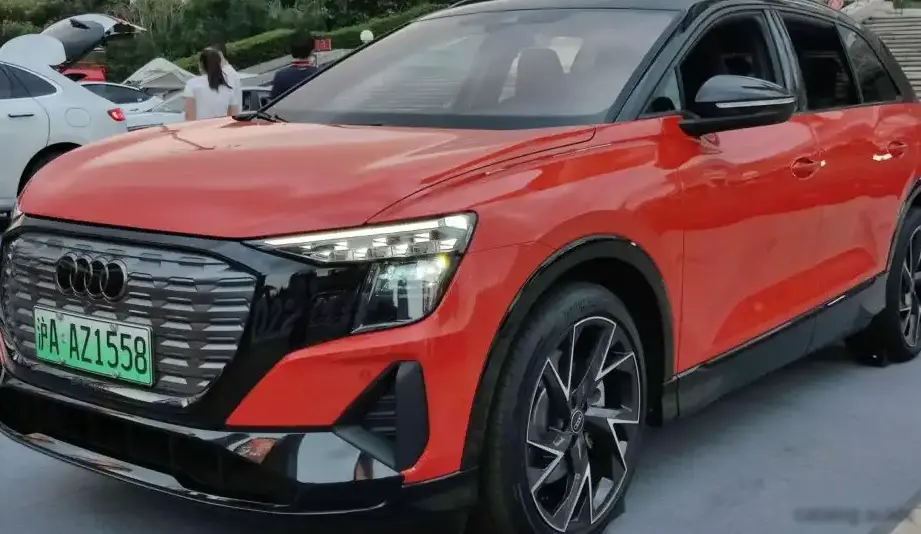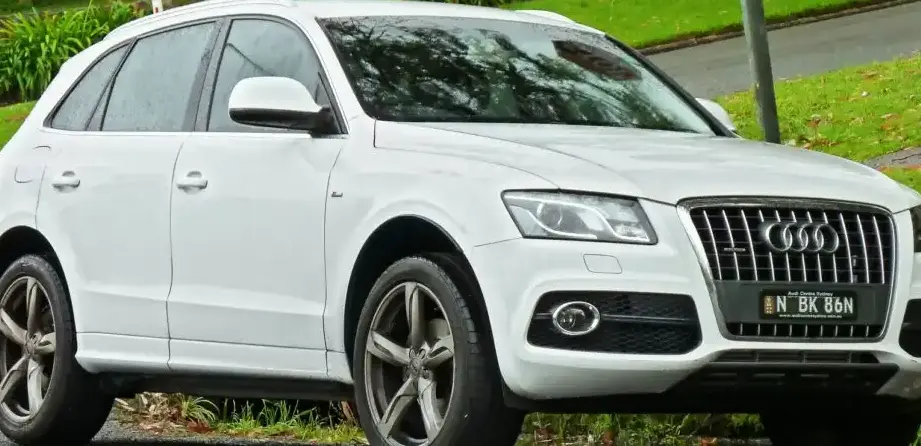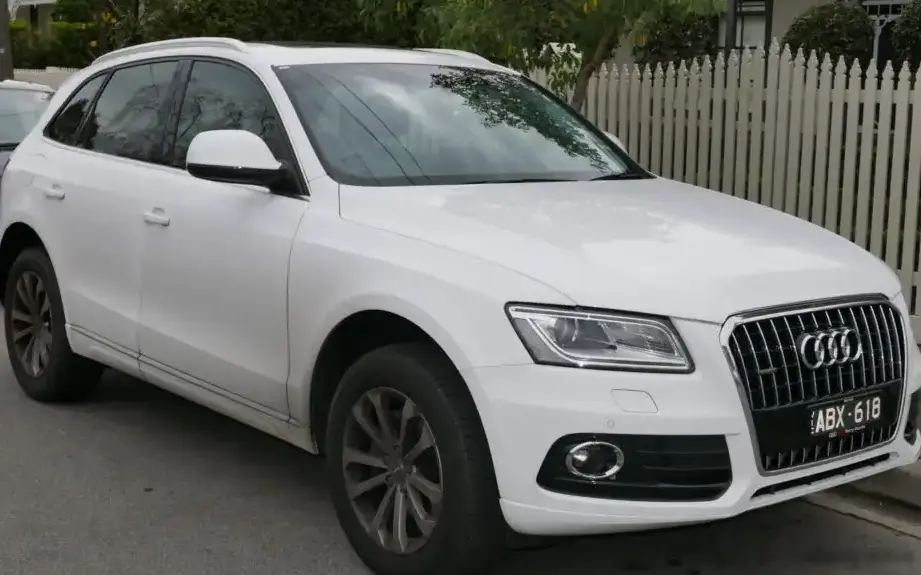
The Audi Q5 III (GU) 2.0 TFSI quattro S tronic, launched in April 2025, represents the latest iteration of Audi’s popular compact luxury SUV. This variant sits within the third generation (GU) of the Q5, building upon the foundation of the MLB Evo platform. Positioned as a mid-range offering, it balances performance and efficiency, appealing to buyers seeking a refined driving experience with all-weather capability. The Q5 competes directly with vehicles like the BMW X3, Mercedes-Benz GLC, and Acura RDX in the North American market.
Technical Specifications
| Brand | Audi |
| Model | Q5 |
| Generation | Q5 III (GU) |
| Type (Engine) | 2.0 TFSI (268 Hp) quattro S tronic |
| Start of production | April, 2025 |
| Powertrain Architecture | Internal Combustion engine |
| Body type | SUV |
| Seats | 5 |
| Doors | 5 |
| Fuel consumption (economy) – urban (EPA) | 10.7 l/100 km (22 US mpg, 26.4 UK mpg, 9.3 km/l) |
| Fuel consumption (economy) – extra urban (EPA) | 7.8 l/100 km (30.2 US mpg, 36.2 UK mpg, 12.8 km/l) |
| Fuel consumption (economy) – combined (EPA) | 9.4 l/100 km (25 US mpg, 30.1 UK mpg, 10.6 km/l) |
| Fuel Type | Petrol (Gasoline) |
| Acceleration 0 – 100 km/h | 6.2 sec |
| Acceleration 0 – 62 mph | 6.2 sec |
| Acceleration 0 – 60 mph | 5.8 sec |
| Maximum speed | 210 km/h (130.49 mph) – Electronically limited |
| Emission standard | SULEV |
| Weight-to-power ratio | 7.2 kg/Hp, 139.2 Hp/tonne |
| Weight-to-torque ratio | 4.8 kg/Nm, 207.8 Nm/tonne |
| Power | 268 Hp |
| Power per litre | 135.1 Hp/l |
| Torque | 400 Nm (295.02 lb.-ft.) |
| Engine layout | Front, Longitudinal |
| Engine displacement | 1984 cm3 (121.07 cu. in.) |
| Number of cylinders | 4 |
| Engine configuration | Inline |
| Cylinder Bore | 82.5 mm (3.25 in.) |
| Piston Stroke | 92.8 mm (3.65 in.) |
| Compression ratio | 10.5:1 |
| Number of valves per cylinder | 4 |
| Fuel injection system | Direct injection |
| Engine aspiration | Turbocharger, Intercooler |
| Valvetrain | DOHC |
| Kerb Weight | 1925 kg (4243.9 lbs.) |
| Trunk (boot) space – minimum | 782 l (27.62 cu. ft.) |
| Trunk (boot) space – maximum | 1611 l (56.89 cu. ft.) |
| Fuel tank capacity | 65 l (17.17 US gal | 14.3 UK gal) |
| Permitted trailer load with brakes (12%) | 1996 kg (4400.43 lbs.) |
| Length | 4717 mm (185.71 in.) |
| Width | 1900 mm (74.8 in.) |
| Width including mirrors | 2154 mm (84.8 in.) |
| Height | 1669 mm (65.71 in.) |
| Wheelbase | 2817 mm (110.91 in.) |
| Drag coefficient (Cd) | 0.34 |
| Minimum turning circle (turning diameter) | 11.8 m (38.71 ft.) |
| Drivetrain Architecture | The Internal combustion engine (ICE) drives the front wheels permanently, and the rear wheels are driven through an electrically or mechanically operated clutch if necessary. |
| Drive wheel | All wheel drive (4×4) |
| Number of gears and type of gearbox | 7 gears, automatic transmission S tronic |
| Front suspension | Coil spring, Independent multi-link suspension, Transverse stabilizer, Air Suspension – Optional |
| Rear suspension | Independent multi-link spring suspension with stabilizer, Air Suspension – Optional |
| Front brakes | Ventilated discs, 338 mm |
| Rear brakes | Ventilated discs, 330 mm |
| Assisting systems | ABS (Anti-lock braking system) |
| Steering type | Steering rack and pinion |
| Power steering | Electric Steering |
| Tires size | 235/60 R18; 235/55 R19; 255/45 R20 |
| Wheel rims size | 8J x 18; 8J x 19; 8J x 20 |
Powertrain & Engine Architecture
At the heart of the Q5 III 2.0 TFSI lies the EA888 1.984-liter inline-four cylinder engine. This engine, often referred to by its internal codes (such as DZG or similar depending on regional specification), utilizes direct fuel injection and a single twin-scroll turbocharger with intercooling. The engine employs a dual overhead camshaft (DOHC) valvetrain with four valves per cylinder, optimizing airflow for increased power and efficiency. The 10.5:1 compression ratio is a key factor in maximizing combustion efficiency. The S tronic 7-speed dual-clutch transmission is standard, offering rapid and smooth gear changes. This transmission is known for its efficiency and responsiveness, contributing to the Q5’s overall driving dynamics. The quattro all-wheel drive system utilizes a mechanically self-locking center differential, distributing torque between the front and rear axles as needed, enhancing traction and stability.
Driving Characteristics
The 268 horsepower and 295 lb-ft of torque delivered by the 2.0 TFSI engine provide brisk acceleration. The 0-60 mph sprint takes approximately 5.8 seconds, making it competitive within its class. The S tronic transmission’s quick shifts contribute to a responsive feel. Compared to higher-output Q5 variants (like those with the older 3.0-liter supercharged V6), this 2.0 TFSI model offers a more fuel-efficient and accessible entry point into the Q5 range. While not as overtly sporty as the V6, the 2.0 TFSI provides ample power for everyday driving and highway passing. The gear ratios are tuned for a balance between acceleration and fuel economy, with taller gearing in higher gears to reduce engine speed at cruising speeds. The quattro all-wheel drive system provides confident handling in various weather conditions.
Equipment & Trim Levels
The Q5 III 2.0 TFSI quattro S tronic typically comes standard with a comprehensive suite of features, including Audi’s virtual cockpit digital instrument cluster, a touchscreen infotainment system with Apple CarPlay and Android Auto integration, leather upholstery, and a power liftgate. Available options include a panoramic sunroof, premium sound system (Bang & Olufsen), adaptive cruise control, and a head-up display. Trim levels often build upon this base, adding features like upgraded interior trim, larger wheels, and advanced driver-assistance systems. Interior upholstery options typically include leather and Alcantara combinations, with a range of color choices. The dashboard layout is modern and minimalist, emphasizing Audi’s design language.
Chassis & Braking
The Q5 III utilizes a sophisticated chassis design featuring a multi-link suspension at both the front and rear. The suspension is tuned to provide a comfortable ride while maintaining good handling characteristics. Optional air suspension is available, offering adjustable ride height and damping for enhanced comfort and off-road capability. Braking duties are handled by ventilated discs on all four wheels, providing ample stopping power. The front brakes measure 338mm, while the rear brakes are 330mm. Anti-lock braking system (ABS) and electronic stability control (ESC) are standard safety features.
Market Reception & Comparison
The Audi Q5 III 2.0 TFSI quattro S tronic has been well-received by automotive critics, praised for its refined driving experience, comfortable interior, and advanced technology. Fuel economy is competitive within its segment, achieving around 25 mpg combined. Compared to the higher-output Q5 variants, the 2.0 TFSI offers a more affordable price point and better fuel efficiency, making it a popular choice for buyers prioritizing practicality and value. Reliability has generally been good, although some owners have reported minor issues with the infotainment system. Compared to rivals like the BMW X3 and Mercedes-Benz GLC, the Q5 is often lauded for its interior quality and user-friendly technology.
Legacy
The EA888 engine family, including the 2.0 TFSI variant found in the Q5, has a proven track record for durability and reliability. With proper maintenance, this powertrain is expected to provide years of dependable service. The S tronic dual-clutch transmission is also known for its longevity, although regular fluid changes are essential. On the used car market, the Q5 III 2.0 TFSI quattro S tronic is expected to hold its value well, due to its reputation for quality and its desirable features. Its blend of luxury, performance, and practicality ensures its continued appeal to a wide range of buyers.