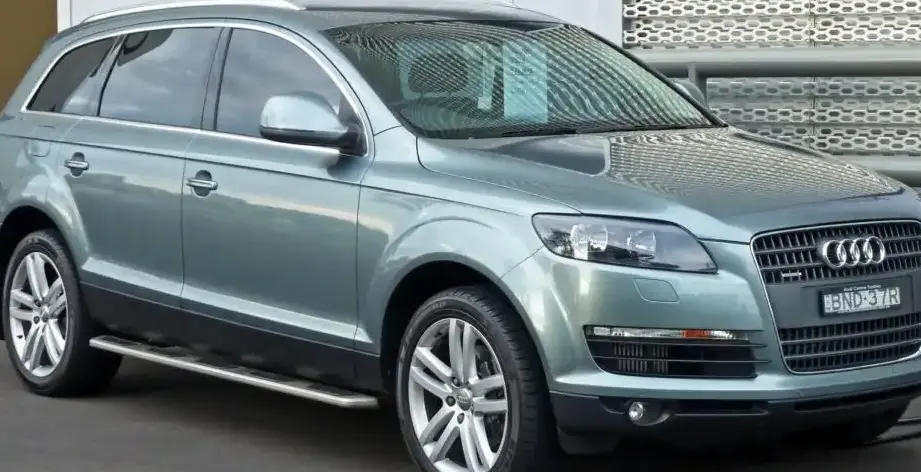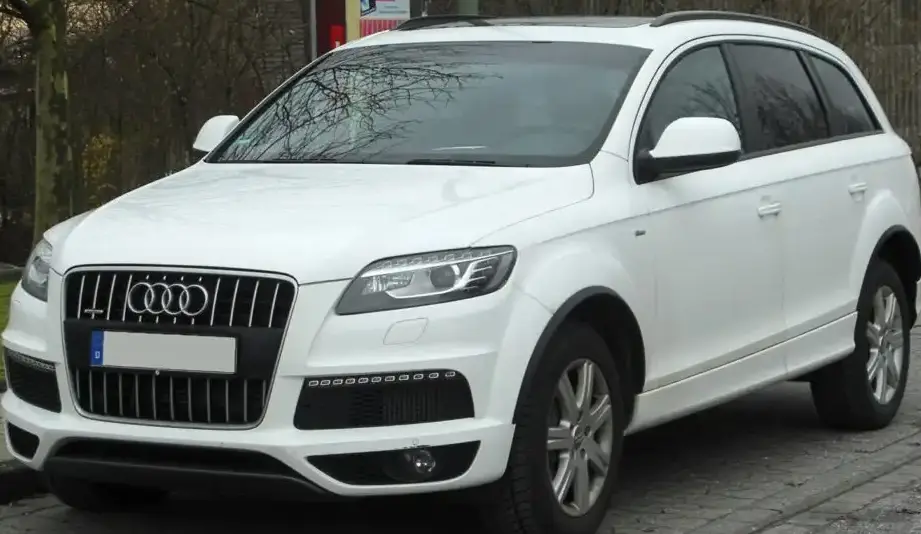
The Audi Q7 4.2 TDI quattro, produced from May 2009 to June 2010, represents a significant iteration of the Typ 4L Q7 range following its mid-cycle facelift. This variant, equipped with a 4.2-liter twin-turbocharged diesel V8 engine producing 340 horsepower and paired with a six-speed Tiptronic automatic transmission, occupied the premium segment of the Q7 lineup. It was positioned as the flagship diesel offering, appealing to buyers seeking a blend of luxury, performance, and all-weather capability in a large SUV. The Q7, launched in 2006, was Audi’s first foray into the full-size luxury SUV market, aiming to compete with established rivals like the BMW X5 and Mercedes-Benz GL-Class.
Technical Specifications
| Brand | Audi |
| Model | Q7 |
| Generation | Q7 (Typ 4L, facelift 2009) |
| Type (Engine) | 4.2 TDI V8 (340 Hp) quattro 6 tiptronic |
| Start of production | May, 2009 |
| End of production | June, 2010 |
| Powertrain Architecture | Internal Combustion engine |
| Body type | SUV |
| Seats | 5 |
| Doors | 5 |
| Fuel consumption (urban) | 12.8 l/100 km (18.4 US mpg, 22.1 UK mpg, 7.8 km/l) |
| Fuel consumption (extra urban) | 8.2 l/100 km (28.7 US mpg, 34.4 UK mpg, 12.2 km/l) |
| Fuel consumption (combined) | 9.9 l/100 km (23.8 US mpg, 28.5 UK mpg, 10.1 km/l) |
| CO2 emissions | 262 g/km |
| Fuel Type | Diesel |
| Acceleration 0 – 100 km/h | 6.4 sec |
| Acceleration 0 – 62 mph | 6.4 sec |
| Acceleration 0 – 60 mph | 6.1 sec |
| Maximum speed | 240 km/h (149.13 mph) |
| Emission standard | Euro 4 |
| Weight-to-power ratio | 7.2 kg/Hp, 138.8 Hp/tonne |
| Weight-to-torque ratio | 3.2 kg/Nm, 310.2 Nm/tonne |
| Power | 340 Hp @ 4000 rpm |
| Power per litre | 82.2 Hp/l |
| Torque | 760 Nm @ 1750-3000 rpm (560.55 lb.-ft. @ 1750-3000 rpm) |
| Engine layout | Front, Longitudinal |
| Engine Model/Code | CCFA |
| Engine displacement | 4134 cm3 (252.27 cu. in.) |
| Number of cylinders | 8 |
| Engine configuration | V-engine |
| Cylinder Bore | 83 mm (3.27 in.) |
| Piston Stroke | 95.5 mm (3.76 in.) |
| Compression ratio | 16.4:1 |
| Number of valves per cylinder | 4 |
| Fuel injection system | Diesel Commonrail |
| Engine aspiration | Twin-Turbo, Intercooler |
| Valvetrain | DOHC |
| Engine oil capacity | 9 l (9.51 US qt | 7.92 UK qt) |
| Kerb Weight | 2450 kg (5401.33 lbs.) |
| Max. weight | 3275 kg (7220.14 lbs.) |
| Max load | 825 kg (1818.81 lbs.) |
| Trunk (boot) space – minimum | 775 l (27.37 cu. ft.) |
| Trunk (boot) space – maximum | 2035 l (71.87 cu. ft.) |
| Fuel tank capacity | 100 l (26.42 US gal | 22 UK gal) |
| Max. roof load | 100 kg (220.46 lbs.) |
| Permitted trailer load with brakes (8%) | 3200 kg (7054.79 lbs.) |
| Permitted trailer load with brakes (12%) | 3200 kg (7054.79 lbs.) |
| Permitted trailer load without brakes | 750 kg (1653.47 lbs.) |
| Permitted towbar download | 130 kg (286.6 lbs.) |
| Length | 5089 mm (200.35 in.) |
| Width | 1983 mm (78.07 in.) |
| Width including mirrors | 2177 mm (85.71 in.) |
| Height | 1737 mm (68.39 in.) |
| Wheelbase | 3002 mm (118.19 in.) |
| Front track | 1651 mm (65 in.) |
| Rear (Back) track | 1681 mm (66.18 in.) |
| Front overhang | 962 mm (37.87 in.) |
| Rear overhang | 1125 mm (44.29 in.) |
| Ride height (ground clearance) | 240 mm (9.45 in.) |
| Drag coefficient (Cd) | 0.35 |
| Minimum turning circle (turning diameter) | 12 m (39.37 ft.) |
| Drive wheel | All wheel drive (4×4) |
| Number of gears and type of gearbox | 6 gears, automatic transmission Tiptronic |
| Front suspension | Independent multi-link suspension |
| Rear suspension | Double wishbone |
| Front brakes | Ventilated discs |
| Rear brakes | Ventilated discs |
| Assisting systems | ABS (Anti-lock braking system) |
| Steering type | Steering rack and pinion |
| Tires size | 255/55 R18 |
| Wheel rims size | 18 |
Powertrain & Engine Architecture
The heart of the Q7 4.2 TDI is the CCFA engine, a 4.134-liter V8 diesel. This engine utilizes a common rail direct injection system, delivering fuel at extremely high pressure for optimized combustion. Crucially, it employs twin turbochargers – one conventional exhaust-gas turbocharger and one electrically assisted turbocharger (EAT). The EAT spools up quickly at low engine speeds, eliminating turbo lag and providing immediate response, while the larger turbo takes over at higher RPMs for sustained power. The engine also features an intercooler to further enhance performance by cooling the compressed intake air. The engine’s DOHC valvetrain, with four valves per cylinder, contributes to its efficient breathing. The six-speed Tiptronic automatic transmission, a torque converter-based unit, was specifically calibrated to handle the substantial 760 Nm (560.55 lb-ft) of torque produced by the engine. The Tiptronic offered both fully automatic operation and manual gear selection via steering wheel-mounted paddles or the gear selector.
Driving Characteristics
The 4.2 TDI Q7 offered a markedly different driving experience compared to the lower-powered 3.0 TDI or gasoline variants. The abundant torque, available from as low as 1750 rpm, provided effortless acceleration and strong pulling power, making it ideal for towing. The 0-60 mph time of around 6.1 seconds was impressive for a vehicle of its size and weight. While the Tiptronic transmission was smooth and responsive, it wasn’t as sporty or engaging as the available six-speed manual. The gear ratios were tuned for a balance of performance and fuel efficiency, prioritizing comfortable cruising over outright acceleration. Compared to the 3.0 TDI, the 4.2 TDI offered significantly more power and a more refined driving experience, but at the cost of increased fuel consumption and a higher purchase price.
Equipment & Trim Levels
The 4.2 TDI quattro typically came well-equipped, reflecting its position as the range-topping diesel model. Standard features included leather upholstery, multi-zone climate control, a premium sound system, parking sensors, and bi-xenon headlights. Optional extras included a panoramic sunroof, adaptive cruise control, a navigation system, and upgraded interior trim packages. The interior design was characterized by Audi’s typically high build quality and attention to detail, with a focus on creating a luxurious and comfortable cabin environment. The Q7’s spacious interior offered ample room for passengers and cargo, making it a practical choice for families.
Chassis & Braking
The Q7’s chassis featured an independent multi-link suspension at the front and a double wishbone suspension at the rear, providing a comfortable ride and good handling characteristics. The quattro all-wheel-drive system, a hallmark of Audi, distributed power between the front and rear axles as needed, enhancing traction and stability in all weather conditions. Braking duties were handled by ventilated discs on all four wheels, providing ample stopping power. The Q7’s relatively high weight necessitated a robust braking system to ensure safe and controlled deceleration.
Market Reception & Comparison
The Audi Q7 4.2 TDI was generally well-received by automotive critics, who praised its powerful engine, luxurious interior, and all-weather capability. However, some reviewers noted its high price and relatively poor fuel economy compared to the 3.0 TDI models. The 4.2 TDI appealed to buyers who prioritized performance and refinement over fuel efficiency. Compared to rivals like the BMW X5 and Mercedes-Benz GL-Class, the Q7 offered a compelling combination of features and performance, establishing itself as a strong contender in the luxury SUV segment.
Legacy
The 4.2 TDI engine, while powerful and refined, has proven to be relatively complex and potentially expensive to maintain, particularly regarding the twin-turbocharger system and the diesel particulate filter (DPF). On the used car market, the Q7 4.2 TDI commands a premium over the lower-powered variants, but potential buyers should be aware of the potential maintenance costs. Despite these concerns, the Q7 4.2 TDI remains a desirable vehicle for those seeking a luxurious and capable SUV with a powerful diesel engine. Its robust construction and advanced technology continue to appeal to enthusiasts and discerning buyers alike.