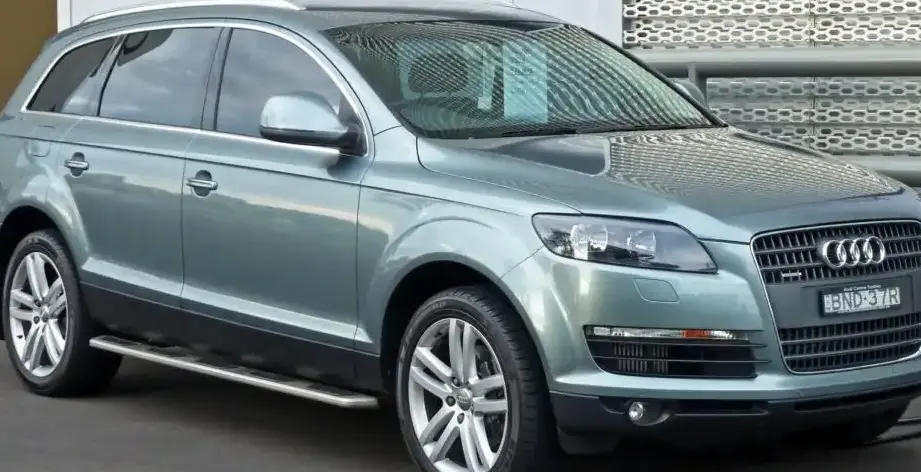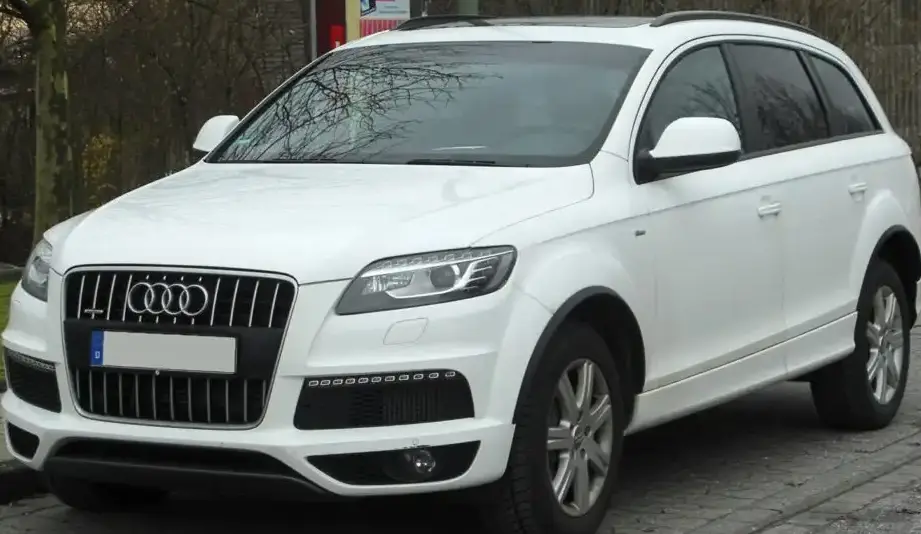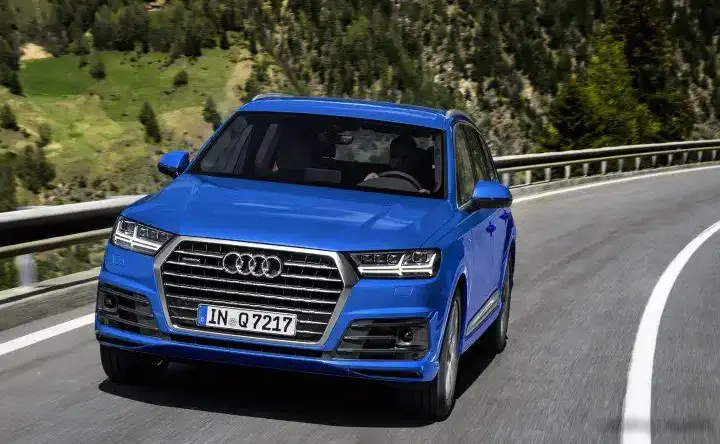
The Audi Q7 (Typ 4M) 50 TDI V6 quattro tiptronic, produced from 2018 to 2019, represents a significant iteration of Audi’s popular luxury SUV. Positioned as a mid-to-high range offering within the Typ 4M generation (introduced in 2015), this variant combined a potent diesel engine with a sophisticated mild-hybrid system and an eight-speed automatic transmission, offering a balance of performance, efficiency, and practicality. The Q7, in its second generation, aimed to refine the original’s formula, providing a more luxurious and technologically advanced experience while maintaining its reputation for all-weather capability thanks to Audi’s quattro all-wheel drive system. This specific 50 TDI trim was particularly popular in European markets where diesel engines remained dominant, and increasingly in North America as diesel SUV options expanded.
Technical Specifications
| Brand | Audi |
| Model | Q7 |
| Generation | Q7 (Typ 4M) |
| Type (Engine) | 50 TDI V6 (286 Hp) quattro Mild Hybrid tiptronic 7 Seat |
| Start of production | 2018 |
| End of production | 2019 |
| Powertrain Architecture | MHEV (Mild Hybrid Electric Vehicle) |
| Body type | SUV |
| Seats | 7 |
| Doors | 5 |
| Fuel consumption (urban) | 7.6-7.7 l/100 km (30.9 – 30.5 US mpg) |
| Fuel consumption (extra urban) | 6.3-6.5 l/100 km (37.3 – 36.2 US mpg) |
| Fuel consumption (combined) | 6.8-6.9 l/100 km (34.6 – 34.1 US mpg) |
| CO2 emissions | 177-180 g/km |
| Fuel Type | Diesel |
| Acceleration 0 – 100 km/h | 6.5 sec |
| Acceleration 0 – 62 mph | 6.5 sec |
| Acceleration 0 – 60 mph | 6.2 sec |
| Maximum speed | 241 km/h (149.75 mph) |
| Emission standard | Euro 6d-Temp |
| Weight-to-power ratio | 7.5 kg/Hp |
| Weight-to-torque ratio | 3.6 kg/Nm |
| Power | 286 Hp @ 3500-4000 rpm |
| Torque | 600 Nm @ 2250-3250 rpm (442.54 lb.-ft.) |
| Engine layout | Front, Longitudinal |
| Engine Model/Code | DHXA |
| Engine displacement | 2967 cm3 (181.06 cu. in.) |
| Number of cylinders | 6 |
| Engine configuration | V-engine |
| Cylinder Bore | 83 mm (3.27 in.) |
| Piston Stroke | 91.4 mm (3.6 in.) |
| Compression ratio | 16:1 |
| Number of valves per cylinder | 4 |
| Fuel injection system | Diesel Commonrail |
| Engine aspiration | Turbocharger, Intercooler |
| Engine oil capacity | 6.1 l (6.45 US qt | 5.37 UK qt) |
| Coolant capacity | 12.3 l (13 US qt | 10.82 UK qt) |
| Kerb Weight | 2135 kg (4706.87 lbs.) |
| Max. weight | 2990 kg (6591.82 lbs.) |
| Max load | 855 kg (1884.95 lbs.) |
| Trunk (boot) space – maximum | 2075 l (73.28 cu. ft.) |
| Fuel tank capacity | 75 l (19.81 US gal | 16.5 UK gal) |
| AdBlue tank capacity | 24 l (6.34 US gal | 5.28 UK gal) |
| Max. roof load | 100 kg (220.46 lbs.) |
| Permitted trailer load with brakes (8%) | 2800 kg (6172.94 lbs.) |
| Permitted trailer load without brakes | 750 kg (1653.47 lbs.) |
| Length | 5052 mm (198.9 in.) |
| Width | 1968 mm (77.48 in.) |
| Height | 1740 mm (68.5 in.) |
| Wheelbase | 2994 mm (117.87 in.) |
| Front track | 1679 mm (66.1 in.) |
| Rear track | 1691 mm (66.57 in.) |
| Drag coefficient (Cd) | 0.33 |
| Minimum turning circle | 12.4 m (40.68 ft.) |
| Drive wheel | All wheel drive (4×4) |
| Number of gears | 8 |
| Gearbox type | Automatic transmission Tiptronic |
| Front suspension | Independent multi-link suspension |
| Rear suspension | Independent multi-link spring suspension with stabilizer |
| Front brakes | Ventilated discs |
| Rear brakes | Ventilated discs |
Powertrain & Engine Architecture
The heart of the Q7 50 TDI is the 3.0-liter V6 diesel engine, designated DHXA. This engine utilizes a sophisticated common-rail direct injection system, delivering fuel at extremely high pressures for optimized combustion. A single turbocharger, coupled with an intercooler, provides forced induction, boosting power and torque. The engine produces 286 horsepower at 3500-4000 rpm and a substantial 600 Nm (442.54 lb-ft) of torque between 2250-3250 rpm. What sets this variant apart is its integration with a 48-volt mild-hybrid system. This system incorporates a belt-driven starter-generator, allowing for extended start-stop functionality, regenerative braking, and a slight power boost during acceleration. The eight-speed tiptronic automatic transmission is a crucial component, offering smooth and responsive gear changes. It’s designed to handle the engine’s high torque output and contribute to improved fuel efficiency. The transmission features adaptive shift patterns, adjusting to the driver’s style and road conditions.
Driving Characteristics
The Q7 50 TDI tiptronic delivers a refined and capable driving experience. The abundant torque available from low engine speeds provides strong acceleration, making overtaking effortless. While not as overtly sporty as some competitors, the Q7 offers a comfortable and composed ride, particularly on long journeys. The eight-speed transmission is well-matched to the engine, providing seamless gear changes and keeping the engine within its optimal power band. Compared to the higher-output SQ7 variant, the 50 TDI prioritizes fuel economy and a more relaxed driving style. Manual transmission options, while available on other Q7 trims, were less common with this engine, as the tiptronic transmission complemented the engine’s characteristics well. The quattro all-wheel drive system provides excellent traction in all weather conditions, enhancing stability and confidence.
Equipment & Trim Levels
The Q7 50 TDI typically came well-equipped as standard. Interior features included leather upholstery, power-adjustable front seats with memory function, a multi-function steering wheel, and a high-resolution infotainment system with navigation. Standard safety features included Audi’s pre-sense basic system, lane departure warning, and automatic emergency braking. Optional extras included a panoramic sunroof, adaptive air suspension, a premium sound system, and advanced driver-assistance systems such as adaptive cruise control and blind-spot monitoring. Trim levels varied by market, but generally offered packages that added cosmetic enhancements, upgraded interior materials, and additional technology features.
Chassis & Braking
The Q7’s chassis features an independent multi-link suspension at both the front and rear, providing a comfortable and controlled ride. The suspension is tuned to balance ride comfort with handling precision. Stabilizer bars are fitted to both axles to reduce body roll during cornering. Braking duties are handled by ventilated disc brakes on all four wheels, providing ample stopping power. The electronic stability control (ESC) system integrates with the anti-lock braking system (ABS) to enhance safety and stability. The Q7’s weight, approximately 2135 kg (4706.87 lbs), is managed effectively by the suspension and braking systems.
Market Reception & Comparison
The Q7 50 TDI was generally well-received by automotive critics. It was praised for its refined engine, comfortable ride, spacious interior, and advanced technology. Fuel economy was considered competitive for a vehicle of its size and class. Compared to the Q7 3.0 TFSI (gasoline) variant, the 50 TDI offered superior fuel efficiency and torque, making it a popular choice for drivers who frequently tow or cover long distances. However, some critics noted that the diesel engine could be slightly noisy compared to the gasoline engine. Reliability reports have been generally positive, with the 3.0 TDI engine proving to be durable and long-lasting.
Legacy
The Audi Q7 (Typ 4M) 50 TDI V6 quattro tiptronic remains a desirable used car option. The 3.0 TDI engine has a reputation for longevity, and the mild-hybrid system adds a layer of efficiency. Maintenance costs are generally reasonable, although diesel-specific components such as the particulate filter and AdBlue system require periodic attention. The Q7’s spacious interior, comfortable ride, and all-weather capability continue to appeal to buyers seeking a luxurious and practical SUV. As a representative of Audi’s commitment to diesel technology, this variant holds a significant place in the Q7’s evolutionary history.