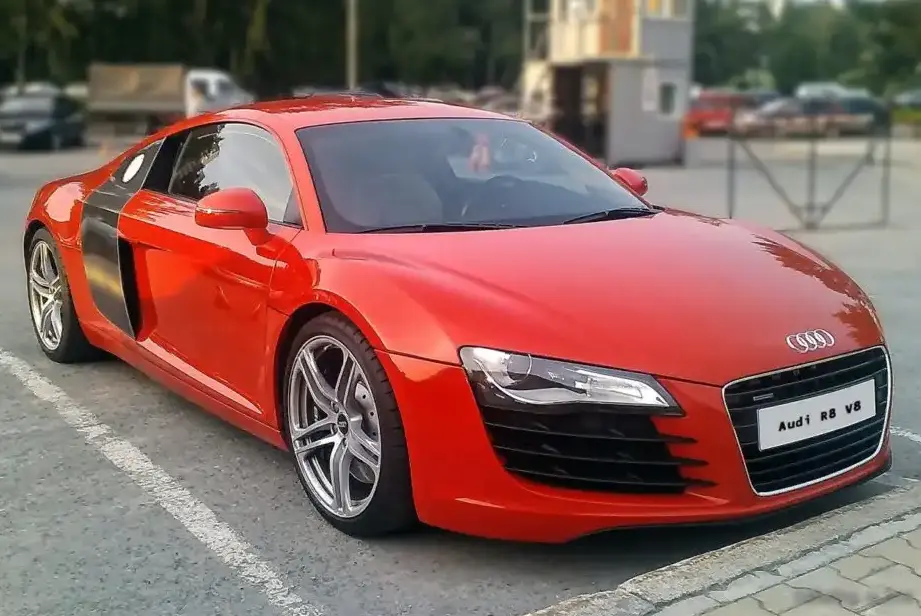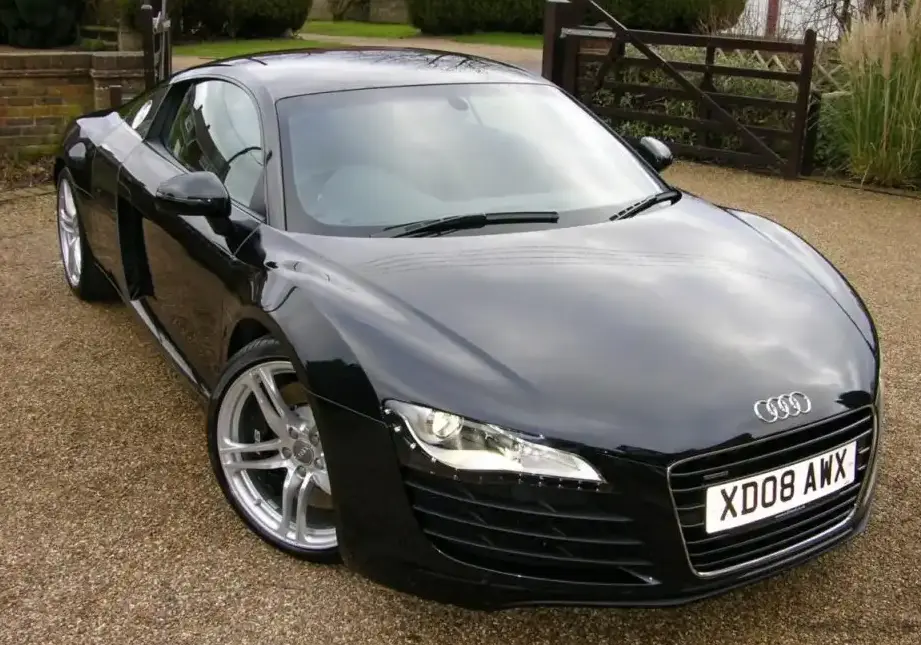
The Audi R8 Coupe (42) 5.2 FSI V10 quattro R tronic, produced from 2008 to 2010, represents the initial high-performance offering of Audi’s first dedicated sports car. Positioned as the flagship variant within the first generation (42) R8 lineup, it established the model as a serious competitor to established supercar manufacturers like Porsche and Ferrari. The R8 was a pivotal model for Audi, demonstrating the brand’s engineering prowess and commitment to building a true performance machine. It utilized the aluminum space frame construction, a technology Audi had honed through its Le Mans racing program, and combined it with a naturally aspirated V10 engine and all-wheel drive. This specific variant, with its R tronic transmission, aimed to deliver a blend of blistering performance and relative usability.
Technical Specifications
| Brand | Audi |
| Model | R8 |
| Generation | R8 Coupe (42) |
| Type (Engine) | 5.2 FSI V10 (525 Hp) quattro R tronic |
| Start of production | 2008 |
| End of production | 2010 |
| Powertrain Architecture | Internal Combustion engine |
| Body type | Coupe |
| Seats | 2 |
| Doors | 2 |
| Fuel consumption (economy) – urban | 21.1 l/100 km (11.1 US mpg, 13.4 UK mpg, 4.7 km/l) |
| Fuel consumption (economy) – extra urban | 9.9 l/100 km (23.8 US mpg, 28.5 UK mpg, 10.1 km/l) |
| Fuel consumption (economy) – combined | 13.9 l/100 km (16.9 US mpg, 20.3 UK mpg, 7.2 km/l) |
| CO2 emissions | 326 g/km |
| Fuel Type | Petrol (Gasoline) |
| Acceleration 0 – 100 km/h | 3.9 sec |
| Acceleration 0 – 62 mph | 3.9 sec |
| Acceleration 0 – 60 mph | 3.7 sec |
| Maximum speed | 316 km/h (196.35 mph) |
| Emission standard | Euro 5 |
| Weight-to-power ratio | 3.1 kg/Hp, 323.1 Hp/tonne |
| Weight-to-torque ratio | 3.1 kg/Nm, 326.2 Nm/tonne |
| Power | 525 Hp @ 8000 rpm |
| Power per litre | 100.9 Hp/l |
| Torque | 530 Nm @ 6500 rpm (390.91 lb.-ft. @ 6500 rpm) |
| Engine layout | Rear, Longitudinal |
| Engine Model/Code | BUJ |
| Engine displacement | 5204 cm3 (317.57 cu. in.) |
| Number of cylinders | 10 |
| Engine configuration | V-engine |
| Cylinder Bore | 84.5 mm (3.33 in.) |
| Piston Stroke | 92.8 mm (3.65 in.) |
| Compression ratio | 12.5:1 |
| Number of valves per cylinder | 4 |
| Fuel injection system | Direct injection |
| Engine aspiration | Naturally aspirated engine |
| Valvetrain | DOHC |
| Engine oil capacity | 8.3 l (8.77 US qt | 7.3 UK qt) |
| Kerb Weight | 1625 kg (3582.51 lbs.) |
| Max. weight | 1925 kg (4243.9 lbs.) |
| Max load | 300 kg (661.39 lbs.) |
| Trunk (boot) space – minimum | 100 l (3.53 cu. ft.) |
| Fuel tank capacity | 90 l (23.78 US gal | 19.8 UK gal) |
| Length | 4434 mm (174.57 in.) |
| Width | 1930 mm (75.98 in.) |
| Width including mirrors | 2029 mm (79.88 in.) |
| Height | 1252 mm (49.29 in.) |
| Wheelbase | 2650 mm (104.33 in.) |
| Front track | 1638 mm (64.49 in.) |
| Rear (Back) track | 1595 mm (62.8 in.) |
| Front overhang | 999 mm (39.33 in.) |
| Rear overhang | 785 mm (30.91 in.) |
| Drag coefficient (Cd) | 0.362 |
| Minimum turning circle (turning diameter) | 11.8 m (38.71 ft.) |
| Drive wheel | All wheel drive (4×4) |
| Number of gears and type of gearbox | 6 gears, automatic transmission R tronic |
| Front suspension | Independent, type McPherson with coil spring and anti-roll bar |
| Rear suspension | Independent multi-link spring suspension with stabilizer |
| Front brakes | Ventilated discs |
| Rear brakes | Ventilated discs |
| Assisting systems | ABS (Anti-lock braking system) |
| Steering type | Steering rack and pinion |
| Power steering | Hydraulic Steering |
| Tires size | 235/35 R19; 295/30 R19 |
| Wheel rims size | 8.5J x 19; 11J x 19 |
Powertrain & Engine Architecture
At the heart of the R8 5.2 FSI quattro R tronic lies the BUJ engine code, a 5.2-liter naturally aspirated V10. This engine is directly derived from the Lamborghini Gallardo’s powerplant, reflecting the close technical relationship between Audi and Lamborghini under the Volkswagen Group umbrella. The ‘FSI’ designation indicates Audi’s direct fuel injection technology, which optimizes combustion efficiency and power output. The engine features a dual overhead camshaft (DOHC) valvetrain with four valves per cylinder, enabling high airflow and contributing to its high-revving nature. The R tronic transmission is a six-speed automated manual gearbox. It operates similarly to a traditional manual transmission but utilizes electronically controlled clutches and actuators for shifting, offering quicker gear changes than a conventional automatic. However, it wasn’t without its quirks, sometimes exhibiting jerky low-speed behavior.
Driving Characteristics
The 525 horsepower and 390 lb-ft of torque delivered by the 5.2-liter V10, combined with the all-wheel-drive system, resulted in exhilarating performance. Acceleration from 0-60 mph took approximately 3.7 seconds, and the car could reach a top speed of 196.35 mph. The R tronic transmission, while quick, didn’t offer the smoothness of a traditional torque-converter automatic. Gear changes were rapid, but could be abrupt, particularly during low-speed maneuvering. Compared to the six-speed manual R8, the R tronic version offered slightly slower acceleration due to shift speed differences, but provided greater convenience for everyday driving. The all-wheel-drive system provided exceptional grip and stability, inspiring confidence even in challenging conditions.
Equipment & Trim Levels
The R8 5.2 FSI quattro R tronic came standard with a high level of equipment, befitting its status as a flagship model. Standard features included leather upholstery, power-adjustable seats, a premium audio system, automatic climate control, and bi-xenon headlights. Optional extras were plentiful, including carbon fiber interior trim, a navigation system, and upgraded wheels. The R8’s interior was driver-focused, with a minimalist design and high-quality materials. The dashboard was angled towards the driver, and the controls were logically laid out.
Chassis & Braking
The R8’s chassis was a groundbreaking achievement – an aluminum space frame. This construction technique resulted in a lightweight yet incredibly rigid structure, contributing to the car’s exceptional handling and performance. The suspension featured independent McPherson struts at the front and a multi-link setup at the rear, providing a comfortable yet controlled ride. Braking duties were handled by ventilated disc brakes on all four wheels, providing ample stopping power. ABS (Anti-lock Braking System) was standard, enhancing safety and stability during hard braking.
Market Reception & Comparison
The Audi R8 was widely praised by automotive critics for its performance, handling, and design. The 5.2 FSI V10 quattro R tronic variant was generally well-received, although some reviewers noted the R tronic transmission’s occasional harshness. Compared to the base 4.2-liter V8 R8, the 5.2-liter model offered significantly more power and performance. Fuel economy, however, was considerably lower. The R8 competed directly with the Porsche 911 and other high-end sports cars, offering a unique blend of German engineering, Italian flair (due to its Lamborghini connection), and all-wheel-drive confidence.
Legacy
The Audi R8 5.2 FSI quattro R tronic remains a highly desirable sports car in the used market. The V10 engine is known for its reliability, although regular maintenance is essential. The R tronic transmission can require more frequent servicing than a traditional automatic. The R8’s aluminum space frame construction has proven durable over time, and the car continues to offer a thrilling driving experience. It cemented Audi’s reputation as a manufacturer capable of producing world-class sports cars and paved the way for future high-performance models.