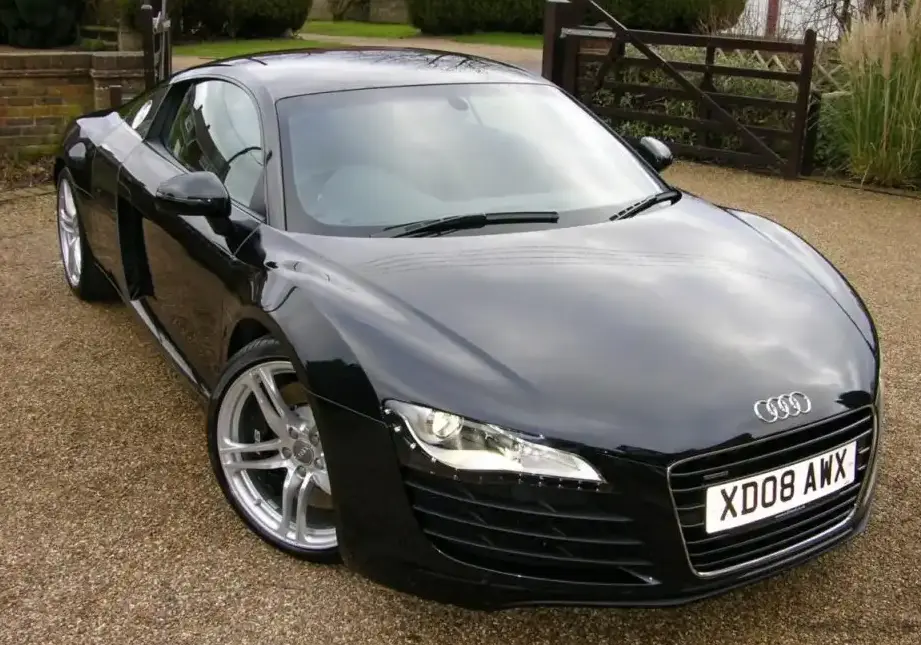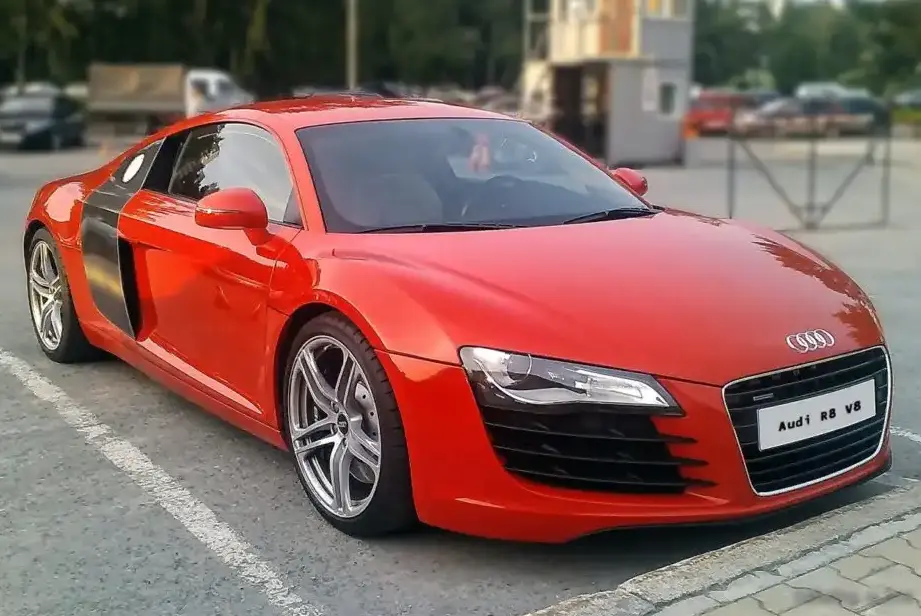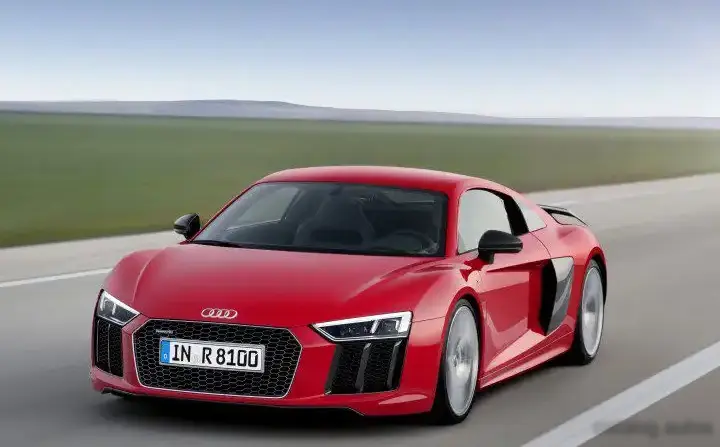
The Audi R8 II Coupe (4S) 5.2 FSI V10 RWS S tronic represents a focused iteration of Audi’s flagship sports car, produced for a limited run between 2017 and 2018. Positioned as a purist’s R8, the RWS (Rear Wheel Series) variant distinguished itself by eschewing the traditional quattro all-wheel drive system in favor of a rear-wheel drive configuration, aiming for a more engaging and traditional sports car driving experience. This model falls within the second generation (4S) of the R8, which debuted in 2015, and utilizes the well-established 5.2-liter naturally aspirated V10 engine. It occupied the top performance tier within the 4S lineup, offering the highest horsepower output in a rear-wheel drive configuration.
Technical Specifications
| Brand | Audi |
| Model | R8 |
| Generation | R8 II Coupe (4S) |
| Type | 5.2 FSI V10 (540 Hp) RWS S tronic |
| Start of production | 2017 |
| End of production | 2018 |
| Powertrain Architecture | Internal Combustion engine |
| Body type | Coupe |
| Seats | 2 |
| Doors | 2 |
| Fuel consumption (economy) – urban (NEDC) | 19 l/100 km (12.4 US mpg, 14.9 UK mpg, 5.3 km/l) |
| Fuel consumption (economy) – extra urban (NEDC) | 8.6 l/100 km (27.4 US mpg, 32.8 UK mpg, 11.6 km/l) |
| Fuel consumption (economy) – combined (NEDC) | 12.4 l/100 km (19 US mpg, 22.8 UK mpg, 8.1 km/l) |
| CO2 emissions (NEDC) | 283 g/km |
| Fuel Type | Petrol (Gasoline) |
| Acceleration 0 – 100 km/h | 3.7 sec |
| Acceleration 0 – 62 mph | 3.7 sec |
| Acceleration 0 – 60 mph | 3.5 sec |
| Maximum speed | 320 km/h (198.84 mph) |
| Emission standard | Euro 6 |
| Weight-to-power ratio | 2.9 kg/Hp, 339.6 Hp/tonne |
| Weight-to-torque ratio | 2.9 kg/Nm, 339.6 Nm/tonne |
| Power | 540 Hp @ 7800 rpm |
| Power per litre | 103.8 Hp/l |
| Torque | 540 Nm @ 6500 rpm (398.28 lb.-ft. @ 6500 rpm) |
| Engine layout | Middle, Longitudinal |
| Engine Model/Code | DKAB |
| Engine displacement | 5204 cm3 (317.57 cu. in.) |
| Number of cylinders | 10 |
| Engine configuration | V-engine |
| Cylinder Bore | 84.5 mm (3.33 in.) |
| Piston Stroke | 92.8 mm (3.65 in.) |
| Number of valves per cylinder | 4 |
| Fuel injection system | Direct injection and Multi-port manifold injection |
| Engine aspiration | Naturally aspirated engine |
| Valvetrain | DOHC |
| Engine oil capacity | 8.3 l (8.77 US qt | 7.3 UK qt) |
| Coolant | 24.7 l (26.1 US qt | 21.73 UK qt) |
| Kerb Weight | 1590 kg (3505.35 lbs.) |
| Max. weight | 1890 kg (4166.74 lbs.) |
| Max load | 300 kg (661.39 lbs.) |
| Trunk (boot) space – minimum | 112 l (3.96 cu. ft.) |
| Fuel tank capacity | 83 l (21.93 US gal | 18.26 UK gal) |
| Length | 4426 mm (174.25 in.) |
| Width | 1940 mm (76.38 in.) |
| Width including mirrors | 2037 mm (80.2 in.) |
| Height | 1240 mm (48.82 in.) |
| Wheelbase | 2650 mm (104.33 in.) |
| Front track | 1638 mm (64.49 in.) |
| Rear (Back) track | 1599 mm (62.95 in.) |
| Front overhang | 994 mm (39.13 in.) |
| Rear overhang | 782 mm (30.79 in.) |
| Minimum turning circle | 11.2 m (36.75 ft.) |
| Drivetrain Architecture | Rear wheel drive |
| Number of gears and type of gearbox | 7 gears, automatic transmission S tronic |
| Front suspension | Coil spring, Double wishbone, Transverse stabilizer |
| Rear suspension | Double wishbone, Transverse stabilizer, Coil spring |
| Front brakes | Ventilated discs |
| Rear brakes | Ventilated discs |
| Tires size | Front: 245/35 R19 or 245/30 R20; Rear: 295/35 R19 or 305/30 R20 |
| Wheel rims size | Front: 8.5J x 19 or 8.5J x 20; Rear: 11J x 19 or 11J x 20 |
Powertrain & Engine Architecture
At the heart of the R8 II Coupe 5.2 FSI RWS lies the DKAB engine, a naturally aspirated 5.2-liter V10. This engine, a descendant of the Lamborghini Gallardo’s powerplant, boasts a high-revving character and delivers a substantial 540 horsepower at 7,800 rpm and 398 lb-ft of torque at 6,500 rpm. It utilizes a combination of direct and multi-port fuel injection to optimize combustion efficiency and power delivery. The engine features a double overhead camshaft (DOHC) valvetrain with four valves per cylinder. The ‘FSI’ designation indicates direct fuel injection, contributing to improved fuel economy and reduced emissions. The S tronic 7-speed dual-clutch transmission provides rapid and precise gear changes, enhancing the driving experience. Unlike other R8 variants, the RWS exclusively features rear-wheel drive, a deliberate choice to alter the car’s handling characteristics.
Driving Characteristics
The rear-wheel drive configuration of the RWS significantly alters the driving dynamics compared to the standard quattro R8. While the quattro system provides immense grip and stability, the RWS offers a more playful and engaging experience, demanding greater driver skill and attention. The S tronic transmission’s quick shifts complement the engine’s responsiveness, allowing for brisk acceleration. The 0-60 mph sprint is achieved in approximately 3.5 seconds, and the car boasts a top speed of 198.84 mph. The RWS requires a more delicate throttle application, particularly when exiting corners, to manage wheelspin. The gear ratios are tuned for performance, prioritizing acceleration over outright fuel efficiency.
Equipment & Trim Levels
The RWS trim level was generally well-equipped, though it focused on performance rather than lavish luxury. Standard features included leather upholstery, a Bang & Olufsen sound system, navigation, and a suite of driver-assistance systems. Optional extras included carbon fiber interior trim, upgraded seats, and various exterior styling enhancements. The RWS was often specified with performance-oriented options, such as carbon ceramic brakes and dynamic steering. Interior color choices were relatively limited, emphasizing a sporty aesthetic.
Chassis & Braking
The R8 II Coupe utilizes a lightweight aluminum chassis, contributing to its relatively low curb weight of 3,505 lbs. The suspension consists of double wishbones at both the front and rear, with coil springs and transverse stabilizers to minimize body roll. Ventilated disc brakes are fitted on all four wheels, providing ample stopping power. The RWS variant did not receive any specific suspension tuning to compensate for the change to rear-wheel drive, relying on the car’s electronic stability control system to manage traction.
Market Reception & Comparison
The R8 II Coupe 5.2 FSI RWS was generally well-received by automotive critics, who praised its engaging driving dynamics and purist appeal. Compared to the standard R8, the RWS was considered more challenging and rewarding to drive, appealing to enthusiasts who preferred a more analog experience. Fuel economy, unsurprisingly, was not a strong point, with combined fuel consumption rated at 19 US mpg. Reliability was generally good, though the complex V10 engine and dual-clutch transmission could be expensive to maintain. Compared to the higher-output V10 Plus model, the RWS offered slightly less power but a more manageable driving experience.
Legacy
The R8 II Coupe 5.2 FSI RWS represents a unique chapter in the R8’s history, offering a rear-wheel drive option that catered to a specific segment of the sports car market. Its limited production run has contributed to its collectibility. On the used car market, these models command a premium over their all-wheel drive counterparts. The DKAB engine, while complex, has proven to be relatively durable when properly maintained. The RWS’s focus on driving engagement has solidified its reputation as a driver’s car, and it remains a desirable option for enthusiasts seeking a high-performance, naturally aspirated sports car.