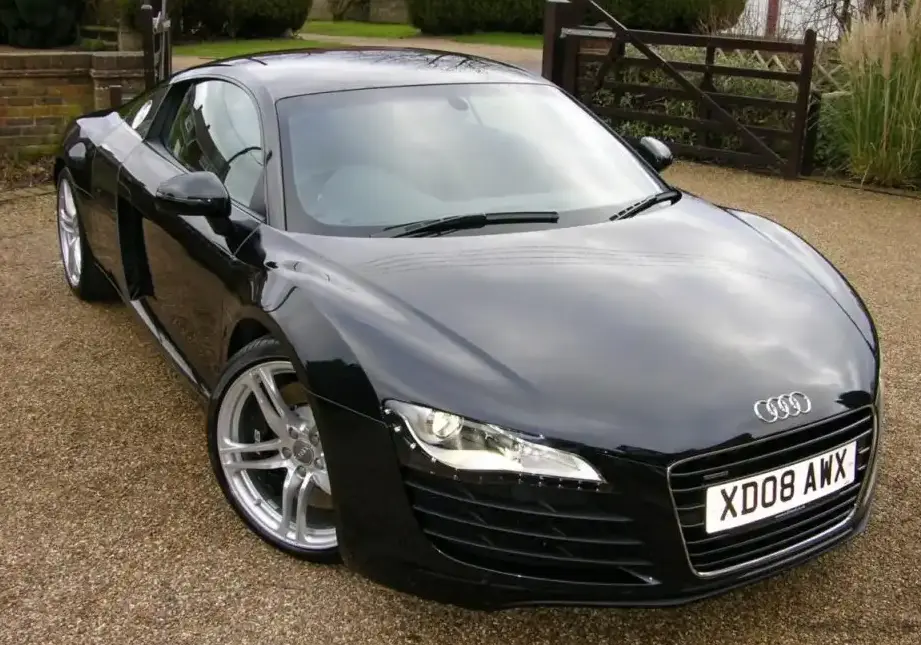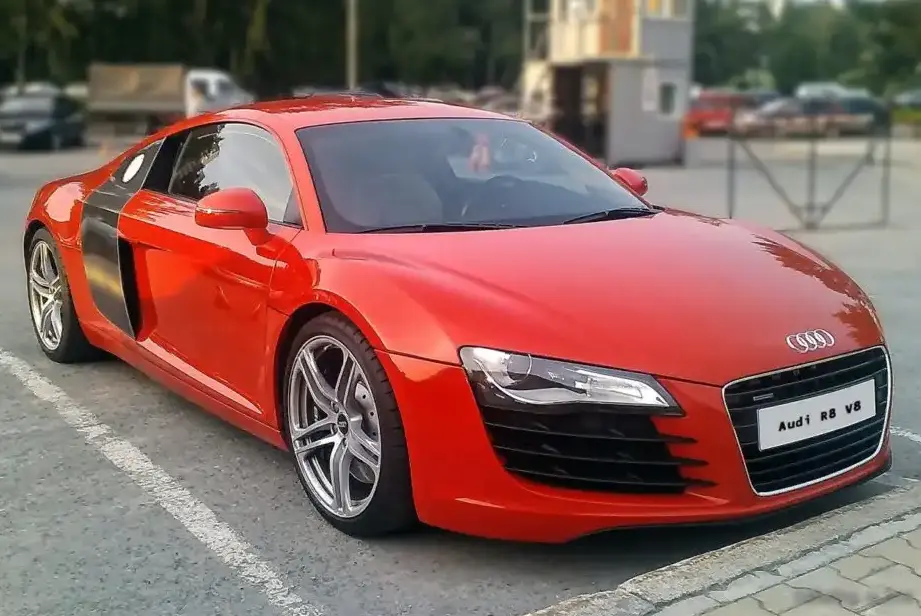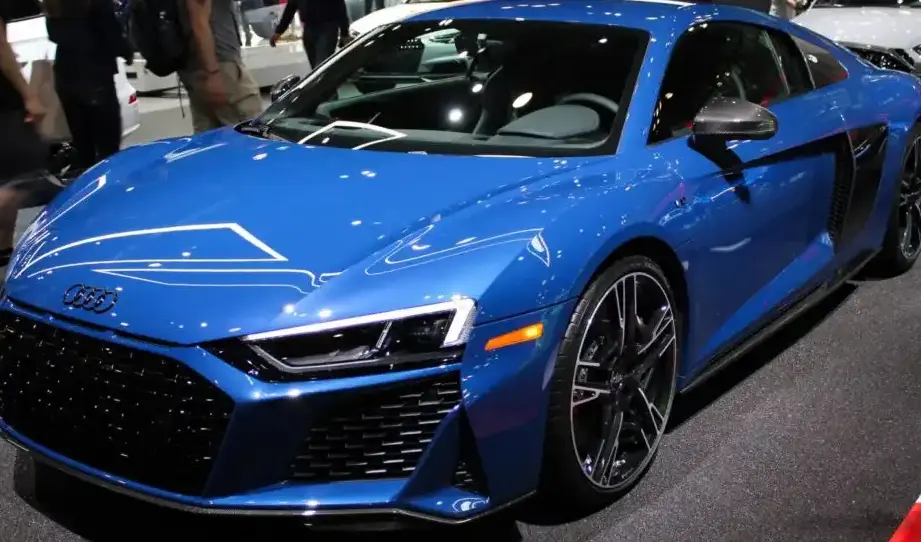
The Audi R8 II Coupe (4S), particularly the facelifted version introduced in 2019, represents the pinnacle of Audi’s high-performance offerings. The GT 5.2 FSI V10 variant, produced from 2023 to 2024, is a limited-edition, track-focused iteration of the already potent R8. Positioned as the most extreme version of the second-generation R8, it builds upon the foundation of the 1HX0/A3 platform, offering a significantly enhanced driving experience compared to the standard R8 models. This variant was designed to deliver uncompromising performance and a direct connection to motorsport, serving as a farewell to the naturally aspirated V10 engine in the R8 lineage.
Technical Specifications
| Brand | Audi |
| Model | R8 |
| Generation | R8 II Coupe (4S, facelift 2019) |
| Type | GT 5.2 FSI V10 (620 Hp) RWD S tronic |
| Start of production | 2023 |
| End of production | 2024 |
| Powertrain Architecture | Internal Combustion engine |
| Body type | Coupe |
| Seats | 2 |
| Doors | 2 |
| Combined fuel consumption (WLTP) | 14.9-15 l/100 km (15.8 – 15.7 US mpg, 19 – 18.8 UK mpg, 6.7 – 6.7 km/l) |
| CO2 emissions (WLTP) | 339-341 g/km |
| Fuel Type | Petrol (Gasoline) |
| Acceleration 0 – 100 km/h | 3.4 sec |
| Acceleration 0 – 62 mph | 3.4 sec |
| Acceleration 0 – 60 mph | 3.3 sec |
| Acceleration 0 – 200 km/h | 10.1 sec |
| Maximum speed | 320 km/h (198.84 mph) |
| Emission standard | Euro 6d-ISC-FCM |
| Weight-to-power ratio | 2.5 kg/Hp, 394.9 Hp/tonne |
| Weight-to-torque ratio | 2.8 kg/Nm, 359.9 Nm/tonne |
| Power | 620 Hp @ 8000 rpm |
| Power per litre | 119.1 Hp/l |
| Torque | 565 Nm @ 6400-7000 rpm (416.72 lb.-ft. @ 6400-7000 rpm) |
| Maximum engine speed | 8700 rpm |
| Engine layout | Middle, Longitudinal |
| Engine Model/Code | DMWA |
| Engine displacement | 5204 cm3 (317.57 cu. in.) |
| Number of cylinders | 10 |
| Engine configuration | V-engine |
| Cylinder Bore | 84.5 mm (3.33 in.) |
| Piston Stroke | 92.8 mm (3.65 in.) |
| Compression ratio | 12.7:1 |
| Number of valves per cylinder | 4 |
| Fuel injection system | Direct injection and Multi-port manifold injection |
| Engine aspiration | Naturally aspirated engine |
| Valvetrain | DOHC |
| Engine oil capacity | 8.3 l (8.77 US qt | 7.3 UK qt) |
| Coolant | 24.7 l (26.1 US qt | 21.73 UK qt) |
| Kerb Weight | 1570 kg (3461.26 lbs.) |
| Max. weight | 1875 kg (4133.67 lbs.) |
| Max load | 305 kg (672.41 lbs.) |
| Fuel tank capacity | 73 l (19.28 US gal | 16.06 UK gal) |
| Length | 4496 mm (177.01 in.) |
| Width | 1964 mm (77.32 in.) |
| Width including mirrors | 2037 mm (80.2 in.) |
| Height | 1225 mm (48.23 in.) |
| Wheelbase | 2650 mm (104.33 in.) |
| Front track | 1645 mm (64.76 in.) |
| Rear (Back) track | 1599 mm (62.95 in.) |
| Drag coefficient (Cd) | 0.42 |
| Minimum turning circle (turning diameter) | 11.2 m (36.75 ft.) |
| Drivetrain Architecture | The Internal combustion engine (ICE) drives the rear wheels of the vehicle. |
| Drive wheel | Rear wheel drive |
| Number of gears and type of gearbox | 7 gears, automatic transmission S tronic |
| Front suspension | Coil spring, Double wishbone, Transverse stabilizer |
| Rear suspension | Double wishbone, Transverse stabilizer, Coil spring |
| Front brakes | Ventilated discs, 380 mm |
| Rear brakes | Ventilated discs, 356 mm |
| Assisting systems | ABS (Anti-lock braking system) |
| Steering type | Steering rack and pinion |
| Power steering | Electric Steering |
| Tires size | Front wheel tires: 245/30 R20 Rear wheel tires: 305/30 R20 |
| Wheel rims size | Front wheel rims: 8.5J x 20 Rear wheel rims: 11J x 20 |
Powertrain & Engine Architecture
At the heart of the R8 GT lies the 5.2-liter naturally aspirated V10 engine, designated DMWA. This engine is a direct descendant of the V10 used in the Lamborghini Gallardo and Huracán, but extensively refined for the R8. It features a dry-sump lubrication system, allowing for a lower engine position and improved handling. The engine employs a combination of direct and multi-port fuel injection, optimizing both power and efficiency. The valvetrain utilizes double overhead camshafts (DOHC) with four valves per cylinder. The engine produces 620 horsepower at 8,000 rpm and 416.72 lb-ft of torque between 6,400 and 7,000 rpm. Power is delivered to the rear wheels via a seven-speed S tronic dual-clutch transmission, known for its incredibly fast and precise shifts. This transmission is specifically tuned for the GT model to provide even quicker response and a more engaging driving experience.
Driving Characteristics
The R8 GT’s driving experience is defined by its raw power and exceptional balance. The rear-wheel-drive configuration, combined with the lightweight construction and optimized aerodynamics, results in a car that feels incredibly agile and responsive. The S tronic transmission delivers lightning-fast gear changes, allowing the driver to maintain optimal power delivery. Compared to the standard R8, the GT offers a more direct and visceral connection to the road. The suspension is tuned for track performance, providing minimal body roll and maximum grip. The 0-60 mph sprint is achieved in just 3.3 seconds, and the car reaches a top speed of 198.84 mph. The GT’s performance is a significant step up from the standard R8, offering a truly exhilarating driving experience.
Equipment & Trim Levels
The R8 GT is a highly focused performance car, and its equipment reflects this. Standard features include a carbon fiber engine bay, a unique aerodynamic package, and a sport exhaust system. The interior is trimmed with Alcantara and leather, and features carbon fiber trim accents. The seats are lightweight bucket seats, providing exceptional support during spirited driving. Optional extras included a Bang & Olufsen sound system, and various customization options for the interior and exterior.
Chassis & Braking
The R8 GT utilizes a lightweight aluminum chassis, contributing to its impressive power-to-weight ratio. The suspension features coil springs, double wishbones, and transverse stabilizers at both the front and rear. The braking system consists of ventilated discs with high-performance calipers. The front brakes measure 380 mm, while the rear brakes measure 356 mm. ABS (Anti-lock braking system) is standard. The car’s chassis and braking systems are designed to withstand the rigors of track driving, providing consistent and reliable performance.
Market Reception & Comparison
The R8 GT was widely praised by automotive critics for its exceptional performance and engaging driving experience. It was lauded as a fitting farewell to the naturally aspirated V10 engine in the R8. Compared to the standard R8, the GT offered a more focused and rewarding driving experience, but at a higher price point. Fuel economy, while not a primary concern for buyers of this vehicle, was rated at 14.9-15 l/100 km. The GT’s reliability was generally considered to be good, although maintenance costs were expected to be higher than those of more mainstream sports cars.
Legacy
The Audi R8 GT represents the ultimate expression of the second-generation R8. Its limited production run and exceptional performance have made it a highly sought-after collectible. The powertrain, while complex, has proven to be relatively reliable when properly maintained. In the used car market, the R8 GT commands a premium price, reflecting its exclusivity and desirability. It stands as a testament to Audi’s engineering prowess and its commitment to delivering uncompromising performance.