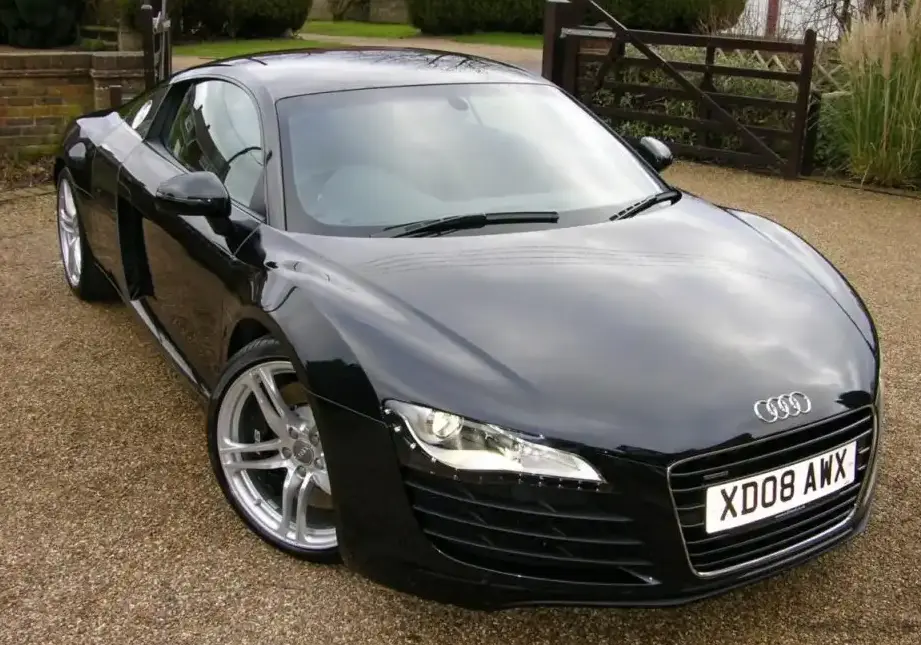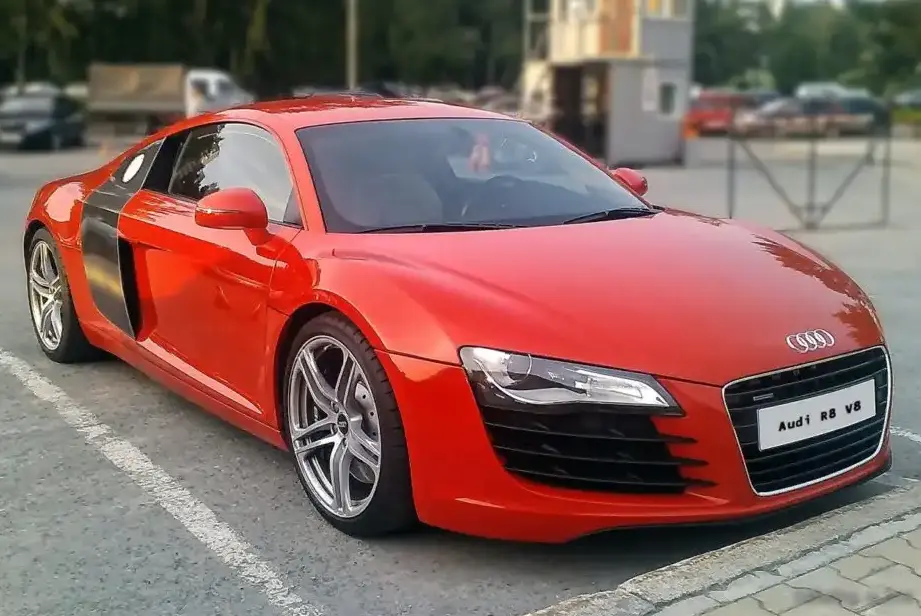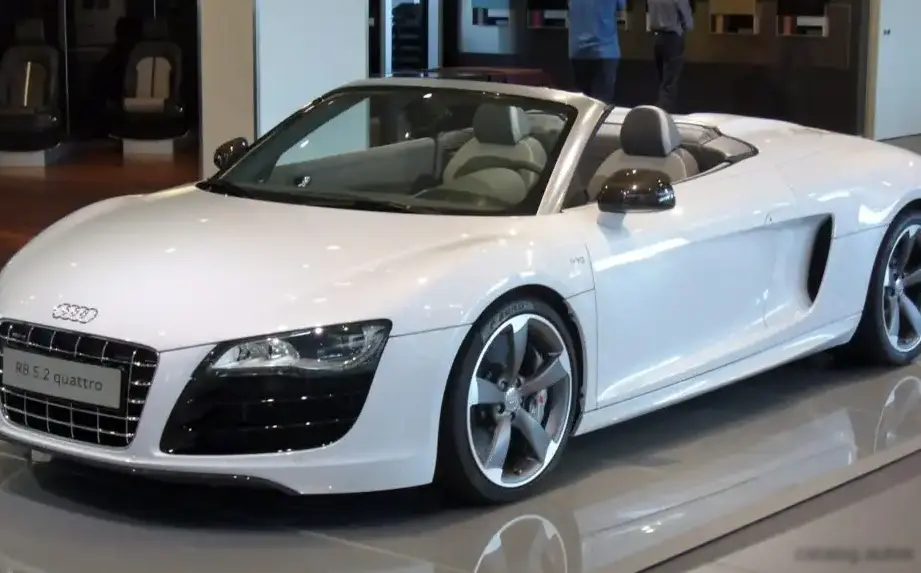
The Audi R8 Spyder (42) 4.2 FSI V8 quattro, produced from June 2011 to 2012, represents the open-top variant of Audi’s flagship sports car. Positioned as the premium convertible offering within the R8 range, it combined the high-performance capabilities of the 4.2-liter V8 engine with the added thrill of open-air driving. This generation, based on the Audi R8 platform, aimed to deliver a sophisticated and engaging driving experience, competing with established rivals like the Porsche 911 Cabriolet and Mercedes-Benz SL. The “42” designation refers to the internal Audi model code for this specific body style and generation.
Technical Specifications
| Brand | Audi |
| Model | R8 |
| Generation | R8 Spyder (42) |
| Type (Engine) | 4.2 FSI V8 (430 Hp) quattro |
| Start of production | June, 2011 |
| End of production | 2012 |
| Powertrain Architecture | Internal Combustion engine |
| Body type | Cabriolet |
| Seats | 2 |
| Doors | 2 |
| Fuel consumption (economy) – urban | 21.3 l/100 km (11 US mpg, 13.3 UK mpg, 4.7 km/l) |
| Fuel consumption (economy) – extra urban | 10.3 l/100 km (22.8 US mpg, 27.4 UK mpg, 9.7 km/l) |
| Fuel consumption (economy) – combined | 14.4 l/100 km (16.3 US mpg, 19.6 UK mpg, 6.9 km/l) |
| CO2 emissions | 337 g/km |
| Fuel Type | Petrol (Gasoline) |
| Acceleration 0 – 100 km/h | 4.8 sec |
| Acceleration 0 – 62 mph | 4.8 sec |
| Acceleration 0 – 60 mph | 4.6 sec |
| Maximum speed | 300 km/h (186.41 mph) |
| Emission standard | Euro 5 |
| Weight-to-power ratio | 3.9 kg/Hp, 259 Hp/tonne |
| Weight-to-torque ratio | 3.9 kg/Nm, 259 Nm/tonne |
| Power | 430 Hp @ 7900 rpm |
| Power per litre | 103.3 Hp/l |
| Torque | 430 Nm @ 4500-6000 rpm (317.15 lb.-ft. @ 4500-6000 rpm) |
| Maximum engine speed | 8250 rpm |
| Engine layout | Rear, Longitudinal |
| Engine Model/Code | CNDA |
| Engine displacement | 4163 cm3 (254.04 cu. in.) |
| Number of cylinders | 8 |
| Engine configuration | V-engine |
| Cylinder Bore | 84.5 mm (3.33 in.) |
| Piston Stroke | 92.8 mm (3.65 in.) |
| Compression ratio | 12.5:1 |
| Number of valves per cylinder | 4 |
| Fuel injection system | Direct injection |
| Engine aspiration | Naturally aspirated engine |
| Valvetrain | DOHC |
| Engine oil capacity | 10 l (10.57 US qt | 8.8 UK qt) |
| Kerb Weight | 1660 kg (3659.67 lbs.) |
| Max. weight | 1960 kg (4321.06 lbs.) |
| Max load | 300 kg (661.39 lbs.) |
| Trunk (boot) space – minimum | 100 l (3.53 cu. ft.) |
| Fuel tank capacity | 80 l (21.13 US gal | 17.6 UK gal) |
| Length | 4431 mm (174.45 in.) |
| Width | 1904 mm (74.96 in.) |
| Width including mirrors | 2029 mm (79.88 in.) |
| Height | 1244 mm (48.98 in.) |
| Wheelbase | 2650 mm (104.33 in.) |
| Front track | 1638 mm (64.49 in.) |
| Rear (Back) track | 1595 mm (62.8 in.) |
| Front overhang | 999 mm (39.33 in.) |
| Rear overhang | 782 mm (30.79 in.) |
| Ride height (ground clearance) | 110 mm (4.33 in.) |
| Drag coefficient (Cd) | 0.37 |
| Minimum turning circle (turning diameter) | 11.8 m (38.71 ft.) |
| Drive wheel | All wheel drive (4×4) |
| Number of gears and type of gearbox | 6 gears, manual transmission |
| Front suspension | Independent, type McPherson with coil spring and anti-roll bar |
| Rear suspension | Independent multi-link spring suspension with stabilizer |
| Front brakes | Ventilated discs |
| Rear brakes | Ventilated discs |
| Assisting systems | ABS (Anti-lock braking system) |
| Steering type | Steering rack and pinion |
| Power steering | Hydraulic Steering |
| Tires size | 235/40 R18; 285/35 R18 |
| Wheel rims size | 8.5J x 18; 10.5J x 18 |
Powertrain & Engine Architecture
At the heart of the R8 Spyder (42) 4.2 FSI V8 quattro lies the CNDA engine code, a naturally aspirated 4.2-liter V8. This engine utilizes Audi’s FSI (Fuel Stratified Injection) direct injection technology, delivering fuel directly into the combustion chamber for improved efficiency and power. The engine boasts a high 12.5:1 compression ratio and a dual overhead camshaft (DOHC) valvetrain with four valves per cylinder. This configuration allows for excellent breathing and contributes to the engine’s 430 horsepower output at 7900 rpm and 430 Nm (317 lb-ft) of torque between 4500 and 6000 rpm. The engine is longitudinally mounted in the rear of the vehicle. The Spyder was exclusively offered with a 6-speed manual transmission, delivering power to all four wheels via Audi’s quattro all-wheel-drive system.
Driving Characteristics
The 4.2 FSI V8, coupled with the manual transmission and quattro all-wheel drive, provided a thrilling yet manageable driving experience. Acceleration from 0 to 60 mph was achieved in approximately 4.6 seconds, and the car could reach a top speed of 300 km/h (186 mph). The quattro system ensured excellent traction, particularly in adverse weather conditions, making the R8 Spyder a usable performance car year-round. While not as brutally fast as the R8 V10 models, the 4.2-liter variant offered a more accessible and engaging driving experience, with a broader powerband and a more forgiving nature. The manual gearbox provided a direct connection to the engine, enhancing driver involvement.
Equipment & Trim Levels
The R8 Spyder (42) 4.2 FSI V8 quattro came standard with a generous array of features, including leather upholstery, automatic climate control, a premium sound system, and bi-xenon headlights. Optional extras included carbon fiber interior trim, upgraded navigation systems, and various exterior styling enhancements. The Spyder’s soft top was fully automatic and could be raised or lowered in a matter of seconds. Interior color choices were relatively limited, focusing on premium materials and a driver-focused layout. The overall aesthetic aimed for a blend of luxury and sporty functionality.
Chassis & Braking
The R8 Spyder featured an aluminum space frame chassis, providing a lightweight yet incredibly rigid foundation. The suspension utilized independent McPherson struts at the front and an independent multi-link setup at the rear, both with coil springs and anti-roll bars. This configuration delivered a balanced and responsive ride. Braking duties were handled by ventilated disc brakes on all four wheels, providing ample stopping power. The ABS (Anti-lock Braking System) was standard, enhancing safety and control. The steering was a hydraulic rack and pinion system, offering precise and communicative feedback.
Market Reception & Comparison
The Audi R8 Spyder (42) 4.2 FSI V8 quattro was generally well-received by automotive critics. It was praised for its stunning design, exhilarating performance, and sophisticated driving experience. Compared to the higher-priced R8 V10 models, the 4.2-liter variant offered a more attainable entry point into the R8 family. Fuel economy, however, was a notable drawback, with combined consumption figures around 16.3 US mpg. Reliability was generally good, although maintenance costs could be substantial due to the car’s exotic nature and specialized components.
Legacy
The Audi R8 Spyder (42) 4.2 FSI V8 quattro remains a desirable sports car in the used market. Its combination of performance, style, and relative affordability has made it a popular choice among enthusiasts. The 4.2-liter V8 engine, while not as technologically advanced as some of its competitors, has proven to be relatively durable and reliable with proper maintenance. The car’s iconic design and engaging driving dynamics ensure its continued appeal for years to come. Values have generally held steady, reflecting the R8’s status as a modern classic.