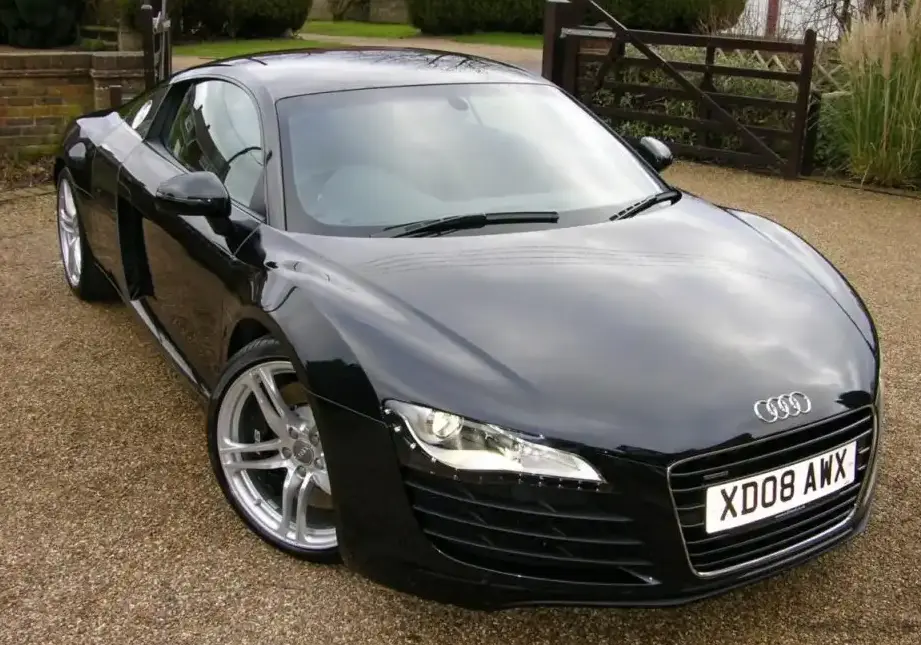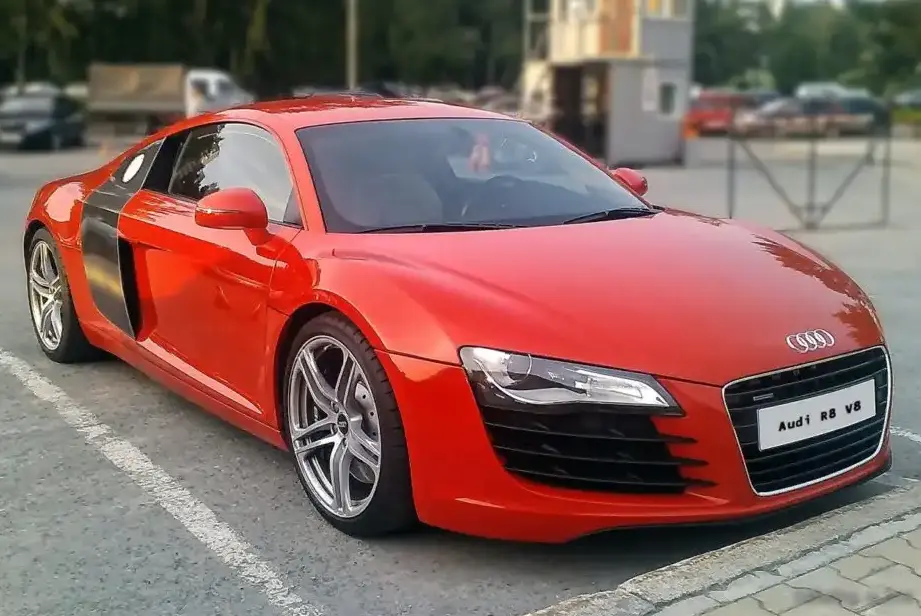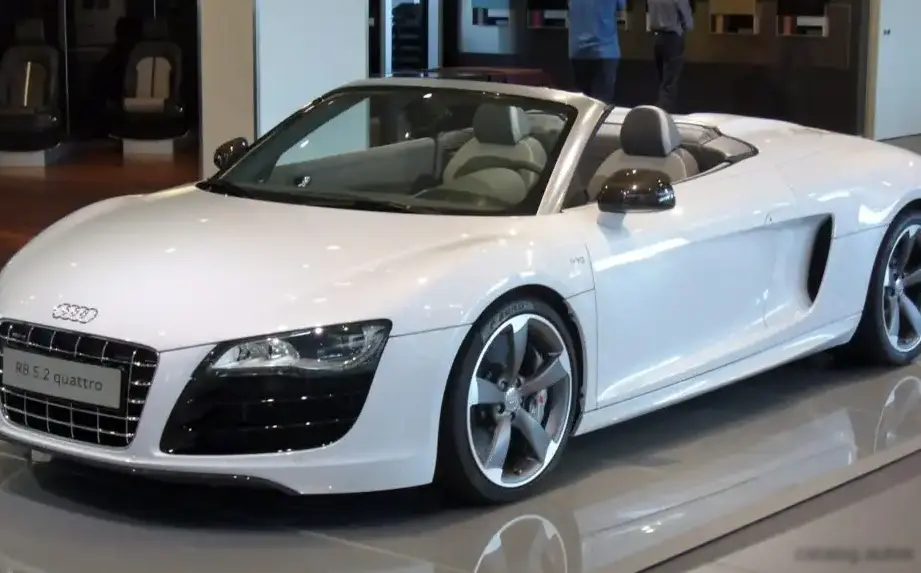
The Audi R8 Spyder (42) GT 5.2 FSI V10 quattro R tronic, produced from June 2011 to October 2012, represents the high-performance, open-top variant of Audi’s flagship sports car. Positioned as the most potent iteration of the first-generation R8 Spyder (internally designated the 42 series), the GT model was designed to deliver an uncompromising driving experience, blending the exhilaration of a naturally aspirated V10 engine with the convenience of a dual-clutch transmission and all-wheel drive. It sat at the very top of the R8 Spyder range, exceeding the performance of the standard 5.2 FSI models and offering a more focused experience than the 4.2-liter V8 versions.
Technical Specifications
| Brand | Audi |
| Model | R8 |
| Generation | R8 Spyder (42) |
| Type | GT 5.2 FSI V10 (560 Hp) quattro R tronic |
| Start of production | June, 2011 |
| End of production | October, 2012 |
| Powertrain Architecture | Internal Combustion engine |
| Body type | Cabriolet |
| Seats | 2 |
| Doors | 2 |
| Fuel consumption (urban) | 21.5 l/100 km (10.9 US mpg, 13.1 UK mpg, 4.7 km/l) |
| Fuel consumption (extra urban) | 10.2 l/100 km (23.1 US mpg, 27.7 UK mpg, 9.8 km/l) |
| Fuel consumption (combined) | 14.2 l/100 km (16.6 US mpg, 19.9 UK mpg, 7 km/l) |
| CO2 emissions | 332 g/km |
| Fuel Type | Petrol (Gasoline) |
| Acceleration 0 – 100 km/h | 3.8 sec |
| Acceleration 0 – 62 mph | 3.8 sec |
| Acceleration 0 – 60 mph | 3.6 sec |
| Maximum speed | 317 km/h (196.97 mph) |
| Emission standard | Euro 5 |
| Weight-to-power ratio | 2.9 kg/Hp, 341.5 Hp/tonne |
| Weight-to-torque ratio | 3 kg/Nm, 329.3 Nm/tonne |
| Power | 560 Hp @ 8000 rpm |
| Power per litre | 107.6 Hp/l |
| Torque | 540 Nm @ 6500 rpm (398.28 lb.-ft. @ 6500 rpm) |
| Maximum engine speed | 8700 rpm |
| Engine layout | Rear, Longitudinal |
| Engine Model/Code | CMPA |
| Engine displacement | 5204 cm3 (317.57 cu. in.) |
| Number of cylinders | 10 |
| Engine configuration | V-engine |
| Cylinder Bore | 84.5 mm (3.33 in.) |
| Piston Stroke | 92.8 mm (3.65 in.) |
| Compression ratio | 12.5:1 |
| Number of valves per cylinder | 4 |
| Fuel injection system | Direct injection |
| Engine aspiration | Naturally aspirated engine |
| Valvetrain | DOHC |
| Engine oil capacity | 8.3 l (8.77 US qt | 7.3 UK qt) |
| Coolant | 25 l (26.42 US qt | 22 UK qt) |
| Kerb Weight | 1640 kg (3615.58 lbs.) |
| Max. weight | 1940 kg (4276.97 lbs.) |
| Max load | 300 kg (661.39 lbs.) |
| Trunk (boot) space – minimum | 100 l (3.53 cu. ft.) |
| Fuel tank capacity | 80 l (21.13 US gal | 17.6 UK gal) |
| Length | 4434 mm (174.57 in.) |
| Width | 1904 mm (74.96 in.) |
| Width including mirrors | 2029 mm (79.88 in.) |
| Height | 1244 mm (48.98 in.) |
| Wheelbase | 2650 mm (104.33 in.) |
| Front track | 1638 mm (64.49 in.) |
| Rear (Back) track | 1595 mm (62.8 in.) |
| Front overhang | 999 mm (39.33 in.) |
| Rear overhang | 785 mm (30.91 in.) |
| Drag coefficient (Cd) | 0.37 |
| Minimum turning circle | 11.8 m (38.71 ft.) |
| Drive wheel | All wheel drive (4×4) |
| Number of gears and type of gearbox | 6 gears, automatic transmission R tronic |
| Front suspension | Independent, type McPherson with coil spring and anti-roll bar |
| Rear suspension | Independent multi-link spring suspension with stabilizer |
| Front brakes | Ventilated discs |
| Rear brakes | Ventilated discs |
| Assisting systems | ABS (Anti-lock braking system) |
| Steering type | Steering rack and pinion |
| Power steering | Hydraulic Steering |
| Tires size | 235/35 R19; 295/30 R19 |
| Wheel rims size | 8.5J x 19; 11J x 19 |
INTRODUCTION
The Audi R8 Spyder (42) GT 5.2 FSI V10 quattro R tronic, built on the foundation of the 42 platform shared with the first-generation R8 coupe, was a limited-production model designed to offer a more focused and track-capable experience than the standard Spyder. The “GT” designation signified a commitment to weight reduction and enhanced performance. It represented the pinnacle of the first-generation R8 Spyder lineup, offering a blend of open-air motoring and supercar performance. Production was deliberately limited, adding to its exclusivity and collectibility.
Powertrain & Engine Architecture
At the heart of the R8 Spyder GT lies the CMPA engine, a 5.2-liter naturally aspirated V10. This engine, derived from the Lamborghini Gallardo’s powerplant, produces 560 horsepower at 8,000 rpm and 398 lb-ft of torque at 6,500 rpm. It features direct fuel injection (FSI) and a double overhead camshaft (DOHC) valvetrain, contributing to its high specific output (107.6 hp per liter). The engine’s architecture is a 90-degree V10, providing inherent balance and smoothness. The R tronic transmission, a six-speed dual-clutch automated manual gearbox, delivers incredibly fast and precise shifts. This transmission, unlike a traditional automatic, uses two separate clutches for odd and even gears, allowing for near-instantaneous gear changes. The quattro all-wheel-drive system distributes power between all four wheels, enhancing traction and stability, particularly during acceleration and cornering.
Driving Characteristics
The combination of the high-revving V10 and the R tronic transmission results in exhilarating acceleration. The 0-60 mph sprint is dispatched in approximately 3.6 seconds, and the car reaches a top speed of 196.97 mph. The R tronic gearbox provides incredibly quick shifts, especially in sport mode, allowing the driver to maintain momentum through corners. Compared to the standard R8 Spyder with the same engine, the GT benefits from a slightly revised gear ratio for quicker acceleration. While the automatic transmission offers convenience, it doesn’t quite match the engagement of a traditional manual gearbox. However, the speed and precision of the R tronic more than compensate for this. The all-wheel-drive system provides immense grip, inspiring confidence in various driving conditions.
Equipment & Trim Levels
The R8 Spyder GT came standard with a comprehensive list of features, befitting its flagship status. Interior appointments included leather upholstery, power-adjustable sport seats, a navigation system, and a premium sound system. Carbon fiber trim was extensively used throughout the interior, reducing weight and adding a sporty aesthetic. Exterior features included a unique front splitter, side skirts, and a rear diffuser, all crafted from carbon fiber. Optional extras included a Bang & Olufsen sound system, full leather interior, and various exterior color options. The GT model also featured unique badging to distinguish it from other R8 Spyder variants.
Chassis & Braking
The R8 Spyder GT utilizes an aluminum space frame chassis, providing a lightweight yet incredibly rigid foundation. The suspension consists of independent McPherson struts at the front and a multi-link setup at the rear, both with coil springs and anti-roll bars. The braking system features ventilated discs at all four corners, providing ample stopping power. The GT model benefits from upgraded brake calipers and rotors compared to the standard Spyder, further enhancing braking performance. The steering is a hydraulic rack-and-pinion system, offering precise and responsive control.
Market Reception & Comparison
The R8 Spyder GT was generally well-received by automotive critics, who praised its performance, handling, and exclusivity. The car’s high price tag and limited availability meant it was not a mainstream choice, but it appealed to enthusiasts seeking a truly special and capable sports car. Compared to the standard R8 Spyder 5.2, the GT offered a noticeable improvement in acceleration and handling. The 4.2-liter V8 models were more affordable but lacked the sheer power and drama of the V10. Fuel economy, unsurprisingly, was not a strong point, with combined fuel consumption rated at 16.6 US mpg.
Legacy
The Audi R8 Spyder (42) GT 5.2 FSI V10 quattro R tronic remains a highly sought-after vehicle in the used car market. Its limited production numbers and exceptional performance have made it a collector’s item. The CMPA V10 engine is known for its reliability, provided it receives regular maintenance. The R tronic transmission, while sophisticated, can be more expensive to repair than a traditional automatic. Overall, the R8 Spyder GT represents a significant achievement in automotive engineering, offering a thrilling and engaging driving experience that continues to captivate enthusiasts today.