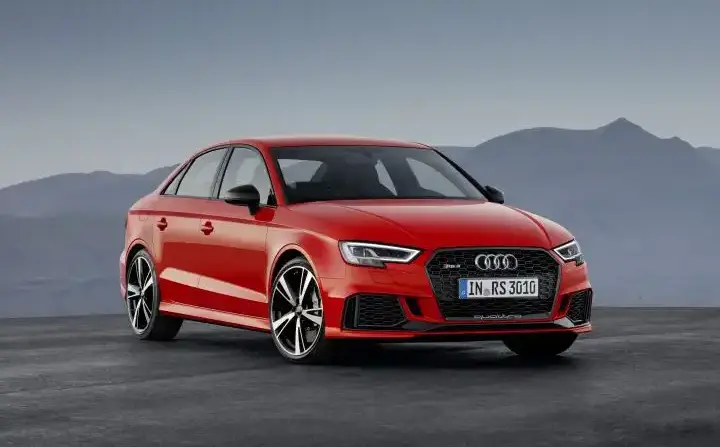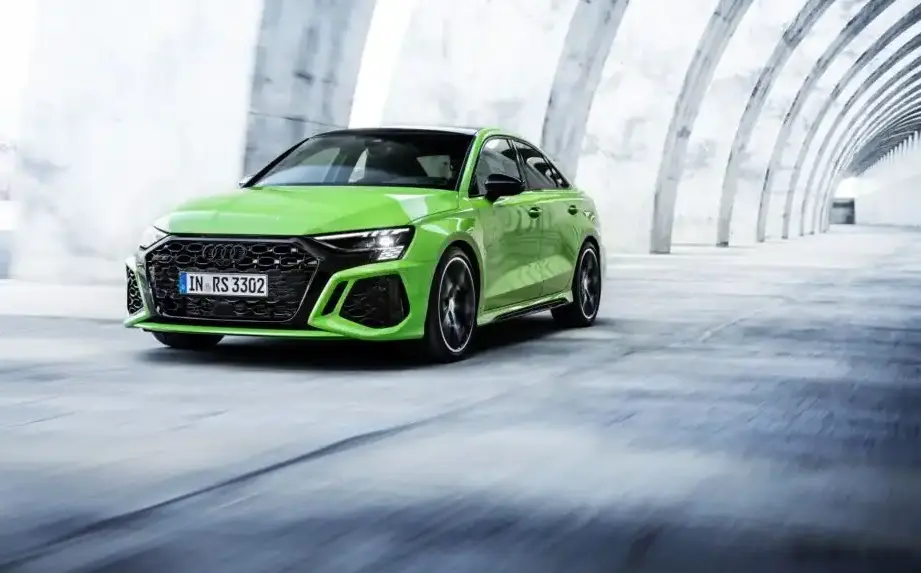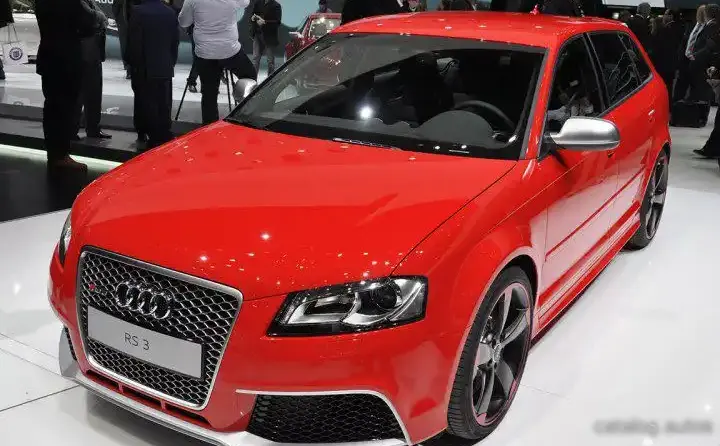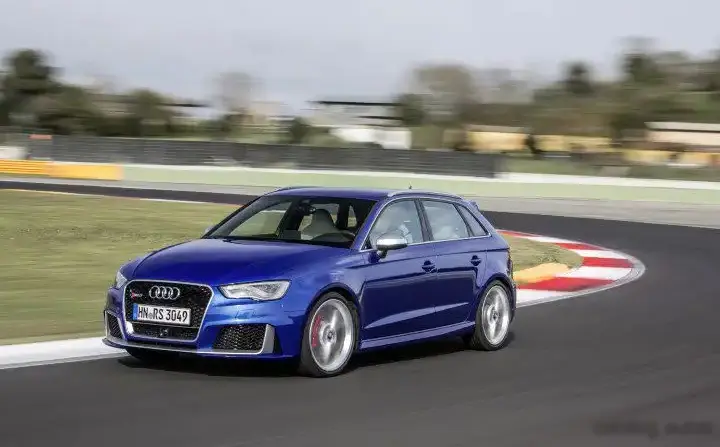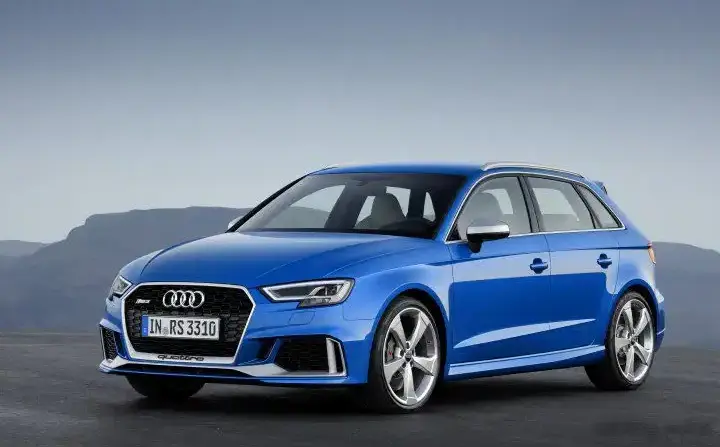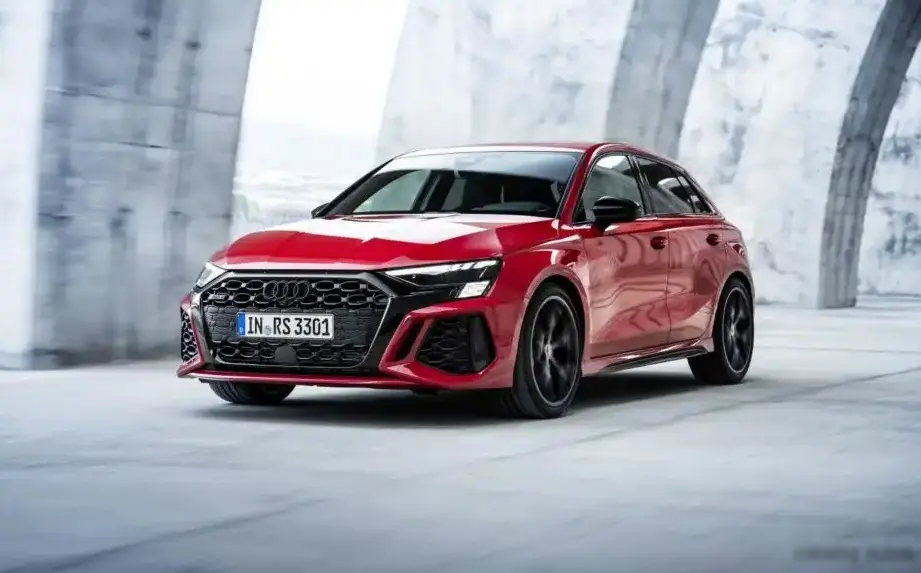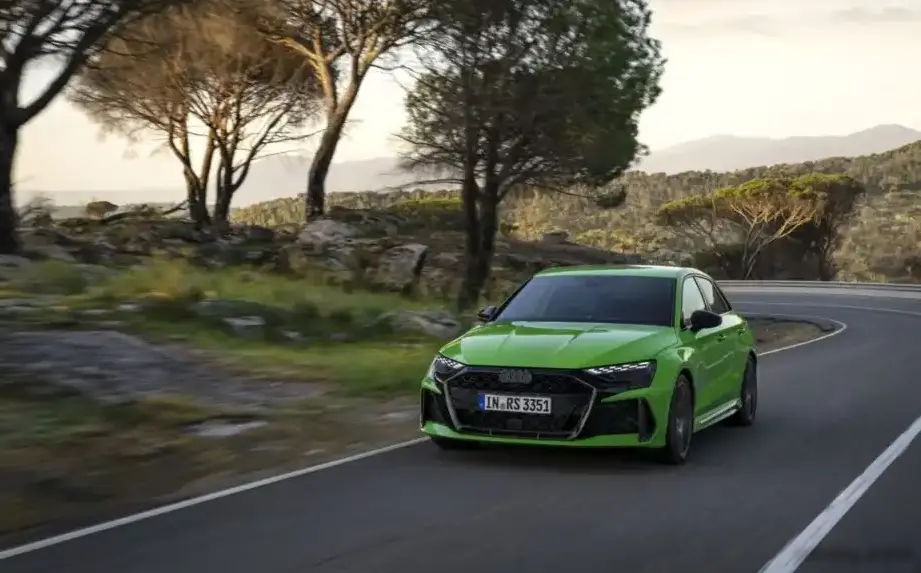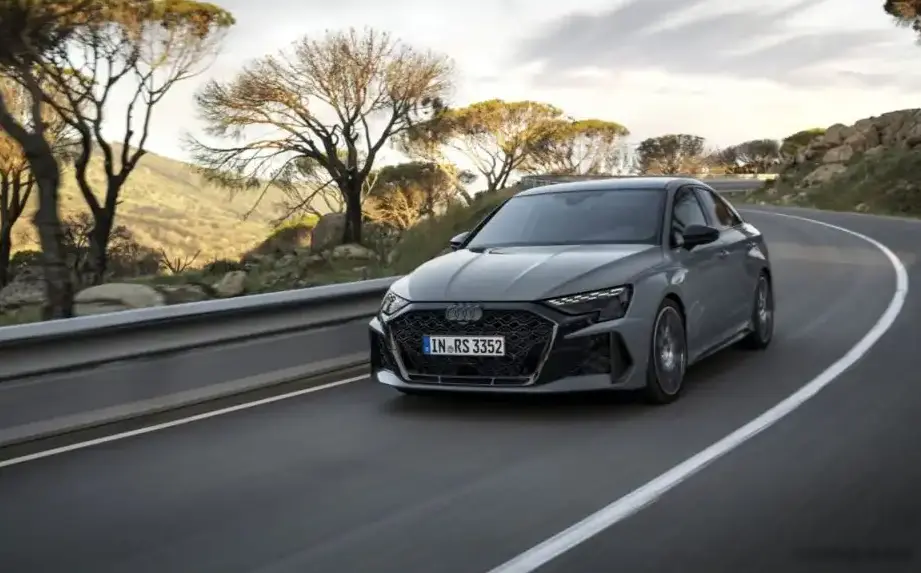
The Audi RS3 Sedan (8Y, facelift released in August 2024) represents the pinnacle of performance within the Audi A3 family. This variant, powered by the 2.5 TFSI inline-five cylinder engine producing 400 horsepower and paired with the seven-speed S tronic dual-clutch transmission and Audi’s quattro all-wheel-drive system, is designed for enthusiasts seeking a compact, high-performance luxury sedan. The facelift brought updated styling cues, enhanced technology, and subtle refinements to the already potent RS3 formula. It continues the RS3’s tradition of offering a unique driving experience, blending everyday usability with exhilarating performance.
Technical Specifications
| Brand | Audi |
| Model | RS3 |
| Generation | RS3 Sedan (8Y, facelift 2024) |
| Type (Engine) | 2.5 TFSI (400 Hp) quattro S tronic |
| Start of production | August, 2024 |
| Powertrain Architecture | Internal Combustion engine |
| Body type | Sedan |
| Seats | 5 |
| Doors | 4 |
| Combined fuel consumption (WLTP) | 9.1-9.4 l/100 km (25.8 – 25 US mpg, 31 – 30.1 UK mpg, 11 – 10.6 km/l) |
| CO2 emissions (WLTP) | 207-213 g/km |
| Fuel Type | Petrol (Gasoline) |
| Acceleration 0 – 100 km/h | 3.8 sec |
| Acceleration 0 – 62 mph | 3.8 sec |
| Acceleration 0 – 60 mph | 3.6 sec |
| Maximum speed | 250 km/h (155.34 mph), Electronically limited |
| Emission standard | Euro 6e |
| Weight-to-power ratio | 3.9 kg/Hp, 255.6 Hp/tonne |
| Weight-to-torque ratio | 3.1 kg/Nm, 319.5 Nm/tonne |
| Power | 400 Hp @ 5600-7000 rpm |
| Power per litre | 161.3 Hp/l |
| Torque | 500 Nm @ 2250-5600 rpm (368.78 lb.-ft. @ 2250-5600 rpm) |
| Engine layout | Front, Transverse |
| Engine displacement | 2480 cm3 (151.34 cu. in.) |
| Number of cylinders | 5 |
| Engine configuration | Inline |
| Cylinder Bore | 82.5 mm (3.25 in.) |
| Piston Stroke | 92.8 mm (3.65 in.) |
| Compression ratio | 10:1 |
| Number of valves per cylinder | 4 |
| Fuel injection system | Direct injection and Multi-port manifold injection |
| Engine aspiration | Turbocharger, Intercooler |
| Valvetrain | DOHC |
| Engine oil capacity | 7.1 l (7.5 US qt | 6.25 UK qt) |
| Coolant | 9.8 l (10.36 US qt | 8.62 UK qt) |
| Engine systems | Start & Stop System, Particulate filter |
| Kerb Weight | 1565 kg (3450.23 lbs.) |
| Max. weight | 2055 kg (4530.5 lbs.) |
| Max load | 490 kg (1080.27 lbs.) |
| Trunk (boot) space – minimum | 321 l (11.34 cu. ft.) |
| Fuel tank capacity | 55 l (14.53 US gal | 12.1 UK gal) |
| Max. roof load | 75 kg (165.35 lbs.) |
| Length | 4533 mm (178.46 in.) |
| Width | 1851 mm (72.87 in.) |
| Width including mirrors | 1984 mm (78.11 in.) |
| Height | 1412 mm (55.59 in.) |
| Wheelbase | 2631 mm (103.58 in.) |
| Front track | 1592 mm (62.68 in.) |
| Rear (Back) track | 1524 mm (60 in.) |
| Front overhang | 912 mm (35.91 in.) |
| Rear overhang | 990 mm (38.98 in.) |
| Drag coefficient (Cd) | 0.32 |
| Minimum turning circle (turning diameter) | 12 m (39.37 ft.) |
| Approach angle | 12.3° |
| Departure angle | 17° |
| Drivetrain Architecture | The Internal combustion engine (ICE) drives the front wheels permanently, and the rear wheels are driven through an electrically or mechanically operated clutch if necessary. |
| Drive wheel | All wheel drive (4×4) |
| Number of gears and type of gearbox | 7 gears, automatic transmission S tronic |
| Front suspension | Independent, type McPherson with coil spring and anti-roll bar |
| Rear suspension | Independent multi-link spring suspension with stabilizer |
| Front brakes | Ventilated discs, 375 mm |
| Rear brakes | Ventilated discs, 310 mm |
| Assisting systems | ABS (Anti-lock braking system) |
| Steering type | Steering rack and pinion |
| Power steering | Electric Steering |
| Tires size | Front wheel tires: 265/30 ZR19, Rear wheel tires: 245/35 ZR19 |
| Wheel rims size | Front wheel rims: 9J x 19, Rear wheel rims: 8J x 19 |
Powertrain & Engine Architecture
The heart of the 2024 RS3 Sedan is the EA855 2.5-liter inline-five cylinder engine. This engine, a hallmark of Audi’s RS models, is renowned for its distinctive sound and potent performance. The engine utilizes a cast iron block with an aluminum cylinder head, incorporating direct injection and multi-port fuel injection for optimal combustion efficiency. A single twin-scroll turbocharger, with an electronically controlled valve, provides significant boost, contributing to the engine’s 400 horsepower output at 5,600-7,000 rpm and 368.78 lb-ft of torque available from 2,250-5,600 rpm. The S tronic seven-speed dual-clutch transmission delivers rapid and precise gear changes, enhancing acceleration and responsiveness. The quattro all-wheel-drive system, with its electronically controlled multi-plate clutch, actively distributes torque between the front and rear axles, optimizing traction in various driving conditions.
Driving Characteristics
The RS3 Sedan 2.5 TFSI with the S tronic transmission offers a remarkably engaging driving experience. Acceleration is brisk, with 0-60 mph achieved in approximately 3.6 seconds. The S tronic transmission provides near-instantaneous shifts, whether in automatic or manual mode. The quattro all-wheel-drive system inspires confidence, providing exceptional grip and stability, particularly during cornering. Compared to a manual transmission equipped RS3, the S tronic version prioritizes ease of use and quicker acceleration times, though some purists may miss the engagement of a traditional manual gearbox. The engine’s broad torque curve ensures strong performance across the rev range, making it a versatile performer for both daily commuting and spirited driving.
Equipment & Trim Levels
The 2024 RS3 Sedan comes generously equipped as standard. Key features include RS sport seats upholstered in Nappa leather with a honeycomb pattern, a flat-bottom steering wheel wrapped in Alcantara, and stainless steel pedal caps. The interior boasts a virtual cockpit plus display, providing customizable information and graphics. Standard exterior features include a singleframe grille with a honeycomb mesh design, RS-specific bumpers, and a rear diffuser. Optional extras include carbon fiber trim elements, a Bang & Olufsen sound system, and adaptive suspension with RS mode. The RS3 sits at the top of the A3 lineup, offering a more focused and performance-oriented experience than the standard A3 or the S3.
Chassis & Braking
The RS3 Sedan features a sport-tuned suspension designed to deliver a balance between comfort and handling. The front suspension utilizes the McPherson strut design with a coil spring and anti-roll bar, while the rear suspension employs a multi-link setup with a stabilizer bar. Braking performance is provided by ventilated discs on all four wheels, with 375mm discs up front and 310mm discs at the rear. The ABS (Anti-lock braking system) ensures optimal stopping power and control. The RS3’s chassis is specifically tuned to handle the increased power and performance, providing a stable and responsive platform.
Market Reception & Comparison
The Audi RS3 Sedan has been consistently praised by automotive critics for its exceptional performance, refined interior, and engaging driving dynamics. The 2.5 TFSI engine is a particular highlight, lauded for its unique sound and strong power delivery. Compared to other compact performance sedans, such as the BMW M340i and the Cadillac CT4-V Blackwing, the RS3 offers a distinct character and a more focused driving experience. While its fuel economy of 9.1-9.4 l/100 km is typical for a high-performance vehicle, it is slightly higher than some of its competitors. Reliability has generally been good, though preventative maintenance is crucial for optimal performance.
Legacy
The 2.5 TFSI engine has proven to be a robust and reliable powerplant when properly maintained. The S tronic transmission, while offering quick shifts, requires regular servicing to ensure longevity. In the used car market, the RS3 Sedan (8Y) holds its value well, due to its performance credentials and desirability. The 2024 facelifted model is expected to further enhance the RS3’s reputation as a benchmark in the compact performance sedan segment, continuing a legacy of blending luxury, performance, and everyday usability.