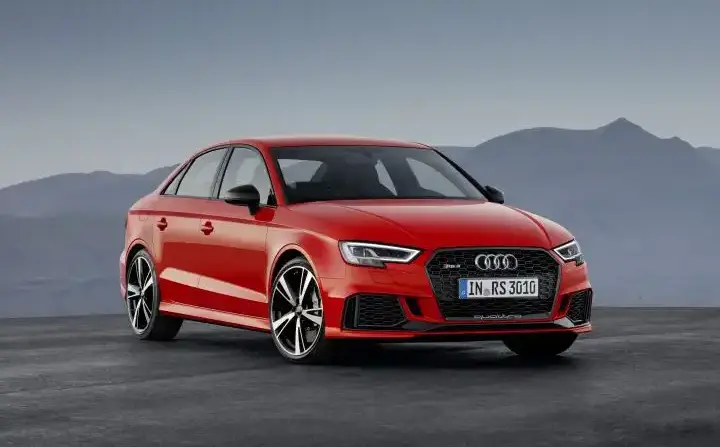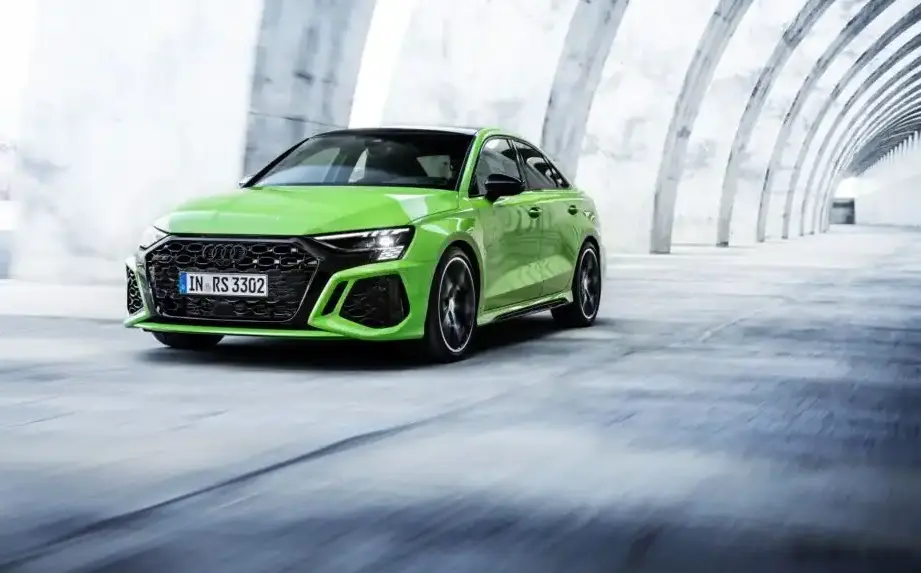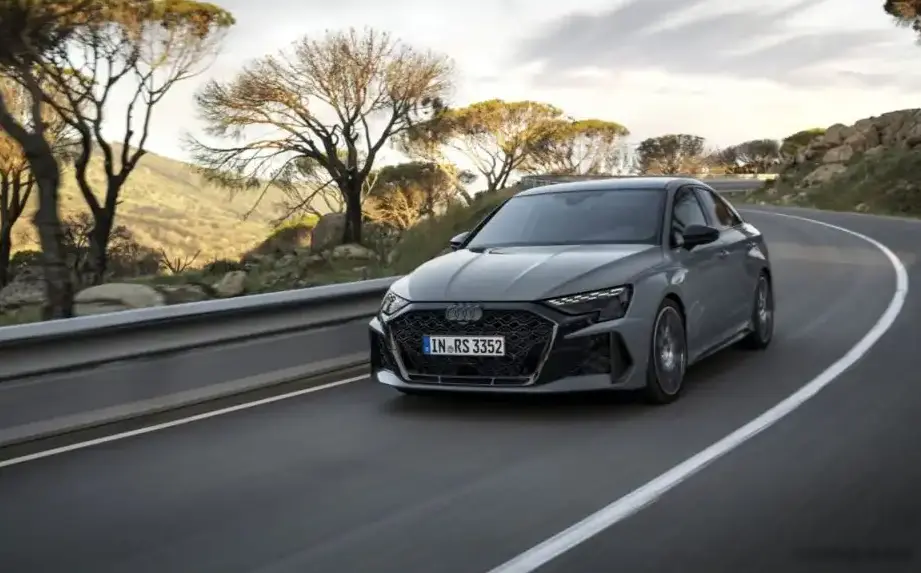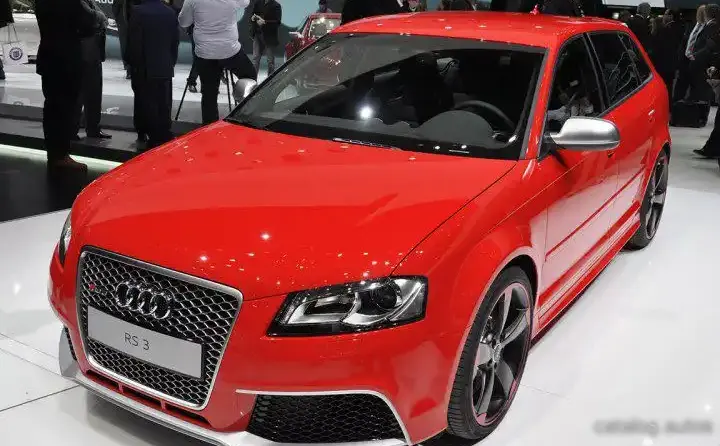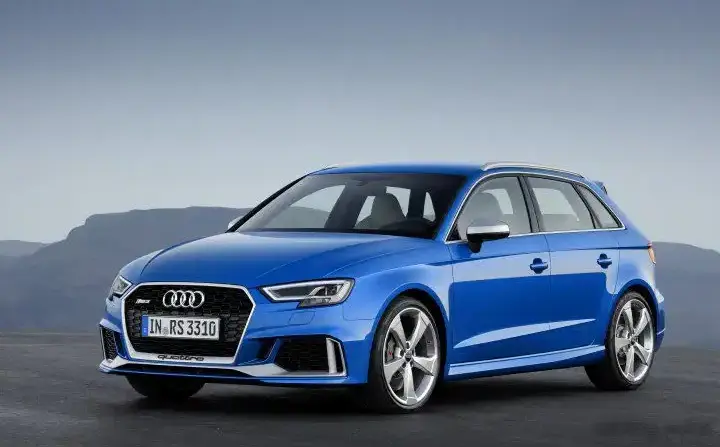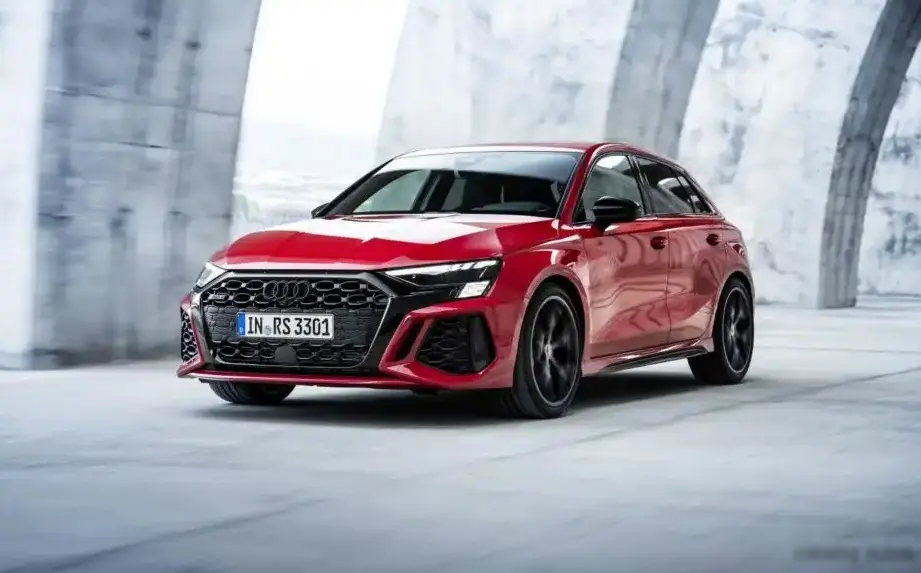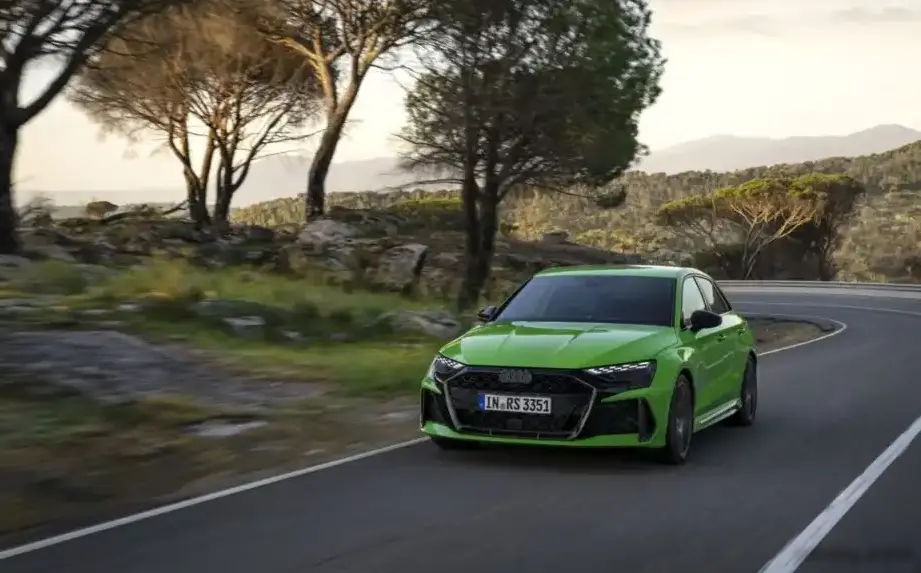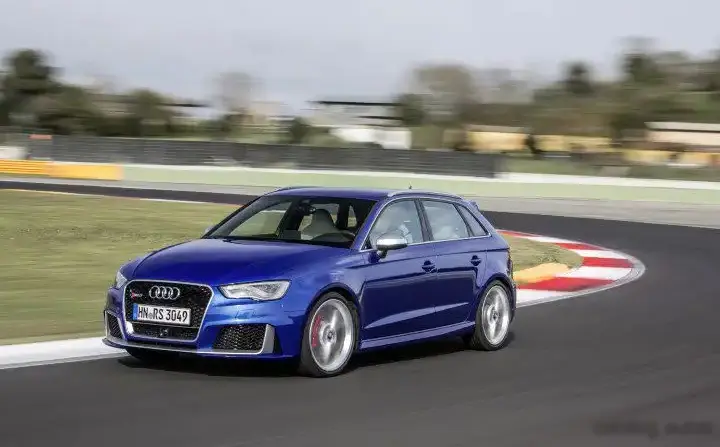
The Audi RS3 Sportback (8VA) 2.5 TFSI quattro S tronic represents the high-performance variant of the Audi A3 Sportback, produced between February 2015 and 2016. Positioned as the flagship model within the 8VA A3 range, the RS3 Sportback offered a substantial increase in power and performance compared to standard A3 models. It catered to enthusiasts seeking a compact, yet potent, hatchback with all-weather capability thanks to Audi’s renowned quattro all-wheel-drive system. This specific configuration, featuring the 2.5-liter turbocharged inline-five engine paired with the seven-speed S tronic dual-clutch transmission, was a key offering in Audi’s performance lineup.
Technical Specifications
| Brand | Audi |
| Model | RS3 |
| Generation | RS3 Sportback (8VA) |
| Type (Engine) | 2.5 TFSI (367 Hp) quattro S tronic |
| Start of production | February, 2015 |
| End of production | 2016 |
| Powertrain Architecture | Internal Combustion engine |
| Body type | Hatchback |
| Seats | 5 |
| Doors | 5 |
| Fuel consumption (urban) | 11.2 – 11.4 l/100 km (21 – 20.6 US mpg, 25.2 – 24.8 UK mpg, 8.9 – 8.8 km/l) |
| Fuel consumption (extra urban) | 6.3 – 6.5 l/100 km (37.3 – 36.2 US mpg, 44.8 – 43.5 UK mpg, 15.9 – 15.4 km/l) |
| Fuel consumption (combined) | 8.1 – 8.3 l/100 km (29 – 28.3 US mpg, 34.9 – 34 UK mpg, 12.3 – 12 km/l) |
| CO2 emissions | 189 – 194 g/km |
| Fuel Type | Petrol (Gasoline) |
| Acceleration 0 – 100 km/h | 4.3 sec |
| Acceleration 0 – 62 mph | 4.3 sec |
| Acceleration 0 – 60 mph | 4.1 sec |
| Maximum speed | 280 km/h (173.98 mph) |
| Emission standard | Euro 6 |
| Weight-to-power ratio | 4.1 kg/Hp, 241.4 Hp/tonne |
| Weight-to-torque ratio | 3.3 kg/Nm, 305.9 Nm/tonne |
| Power | 367 Hp @ 5550-6800 rpm |
| Power per litre | 148 Hp/l |
| Torque | 465 Nm @ 1625-5550 rpm (342.97 lb.-ft. @ 1625-5550 rpm) |
| Maximum engine speed | 6800 rpm |
| Engine layout | Front, Transverse |
| Engine Model/Code | CZGB |
| Engine displacement | 2480 cm3 (151.34 cu. in.) |
| Number of cylinders | 5 |
| Engine configuration | Inline |
| Cylinder Bore | 82.5 mm (3.25 in.) |
| Piston Stroke | 92.8 mm (3.65 in.) |
| Compression ratio | 10:1 |
| Number of valves per cylinder | 4 |
| Fuel injection system | Direct injection |
| Engine aspiration | Turbocharger, Intercooler |
| Valvetrain | DOHC |
| Engine oil capacity | 6.8 l (7.19 US qt | 5.98 UK qt) |
| Kerb Weight | 1520 kg (3351.03 lbs.) |
| Max. weight | 2020 kg (4453.34 lbs.) |
| Max load | 500 kg (1102.31 lbs.) |
| Trunk (boot) space – minimum | 280 l (9.89 cu. ft.) |
| Trunk (boot) space – maximum | 1120 l (39.55 cu. ft.) |
| Fuel tank capacity | 55 l (14.53 US gal | 12.1 UK gal) |
| Max. roof load | 75 kg (165.35 lbs.) |
| Length | 4343 mm (170.98 in.) |
| Width | 1800 mm (70.87 in.) |
| Width including mirrors | 1966 mm (77.4 in.) |
| Height | 1411 mm (55.55 in.) |
| Wheelbase | 2631 mm (103.58 in.) |
| Front track | 1559 mm (61.38 in.) |
| Rear (Back) track | 1514 mm (59.61 in.) |
| Front overhang | 891 mm (35.08 in.) |
| Rear overhang | 821 mm (32.32 in.) |
| Drag coefficient (Cd) | 0.34 |
| Minimum turning circle | 10.9 m (35.76 ft.) |
| Drive wheel | All wheel drive (4×4) |
| Number of gears and type of gearbox | 7 gears, automatic transmission S tronic |
| Front suspension | Independent, type McPherson with coil spring and anti-roll bar |
| Rear suspension | Independent multi-link suspension |
| Front brakes | Ventilated discs |
| Rear brakes | Ventilated discs |
| Assisting systems | ABS (Anti-lock braking system) |
| Steering type | Steering rack and pinion |
| Tires size | 235/35 R19; 255/30 R19 |
| Wheel rims size | 8J x 19 |
INTRODUCTION
The Audi RS3 Sportback (8VA) 2.5 TFSI quattro S tronic, launched in 2015, represented a significant step forward in the compact performance segment. Built on the Volkswagen Group’s MQB platform (specifically the A3/Golf/Leon/Octavia – 1HX0/A3), the RS3 Sportback aimed to deliver uncompromising performance in a practical, five-door hatchback body style. This model year marked the first generation of the RS3 Sportback, expanding the RS3 lineup beyond the coupe. The 2.5 TFSI engine and S tronic transmission combination was a core component of its appeal, offering a blend of rapid acceleration and sophisticated driving dynamics.
Powertrain & Engine Architecture
At the heart of the RS3 Sportback lies the 2.5-liter inline-five cylinder engine, designated CZGB. This engine is a descendant of the unit first seen in the Audi TT RS and RS Q3, but further refined for the RS3. It features direct fuel injection, a single twin-scroll turbocharger, and an intercooler to maximize power output. The engine produces 367 horsepower at 5550-6800 rpm and 342.97 lb.-ft. of torque between 1625-5550 rpm. The engine’s unique firing order contributes to its distinctive sound. The S tronic seven-speed dual-clutch transmission provides incredibly fast and smooth gear changes, enhancing both acceleration and driving engagement. This transmission allows for both fully automatic operation and manual gear selection via steering wheel-mounted paddles. The quattro all-wheel-drive system utilizes a multi-plate clutch to distribute torque between the front and rear axles, optimizing traction in various conditions.
Driving Characteristics
The RS3 Sportback 2.5 TFSI quattro S tronic delivers exhilarating performance. The combination of the potent engine, quick-shifting transmission, and all-wheel drive results in a 0-60 mph time of around 4.1 seconds and a top speed electronically limited to 155 mph (250 km/h), which could be increased with the optional RS Performance package. The S tronic transmission’s gear ratios are tuned for rapid acceleration, with shorter lower gears providing strong off-the-line performance. Compared to the standard A3 Sportback, the RS3 offers significantly more responsive throttle response and a more aggressive power delivery. While the manual transmission RS3 offered a more raw driving experience, the S tronic version provided greater convenience and arguably faster acceleration due to the transmission’s ability to execute perfectly timed shifts.
Equipment & Trim Levels
The RS3 Sportback came generously equipped as standard. Key features included sport seats upholstered in Nappa leather with embossed RS logos, a flat-bottomed steering wheel, aluminum interior trim, and Audi’s MMI infotainment system with a 7-inch display. Exterior styling cues included a unique RS front bumper with honeycomb grille, flared wheel arches, side skirts, a rear diffuser, and an RS exhaust system. Optional extras included a Bang & Olufsen sound system, adaptive dampers, carbon fiber interior trim, and various driver assistance systems such as adaptive cruise control and blind-spot monitoring. The RS3 Sportback was positioned as the premium offering within the A3 range, and its price reflected this.
Chassis & Braking
The RS3 Sportback featured a sport-tuned suspension with stiffer springs and dampers compared to the standard A3. The front suspension utilized the McPherson strut design, while the rear employed a multi-link setup. Larger ventilated disc brakes were fitted at all four corners, providing ample stopping power. The RS3 also benefited from a more direct steering ratio, enhancing responsiveness and driver feedback. The standard wheels were 19-inch alloy wheels, contributing to the car’s aggressive stance. The chassis was designed to handle the increased power output and provide a balanced and engaging driving experience.
Market Reception & Comparison
The Audi RS3 Sportback was generally well-received by automotive critics. It was praised for its potent performance, refined interior, and all-weather capability. Compared to rivals such as the Mercedes-Benz A45 AMG and the BMW M235i (later M240i), the RS3 offered a unique character thanks to its distinctive five-cylinder engine. The S tronic transmission was often lauded for its speed and smoothness, although some enthusiasts preferred the more engaging experience of a manual gearbox. Fuel economy, while not a primary concern for RS3 buyers, was respectable for a high-performance hatchback, averaging around 29 mpg in combined driving. Reliability was generally good, although the complexity of the engine and transmission required diligent maintenance.
Legacy
The first-generation Audi RS3 Sportback (8VA) established a strong foundation for subsequent RS3 models. The 2.5 TFSI engine and S tronic transmission combination proved to be a reliable and potent powertrain. On the used car market, these RS3 Sportbacks hold their value well, particularly well-maintained examples with low mileage. The distinctive engine sound and exhilarating performance continue to appeal to enthusiasts. While maintenance costs can be higher than those of standard A3 models, the RS3 Sportback remains a desirable and rewarding performance car.