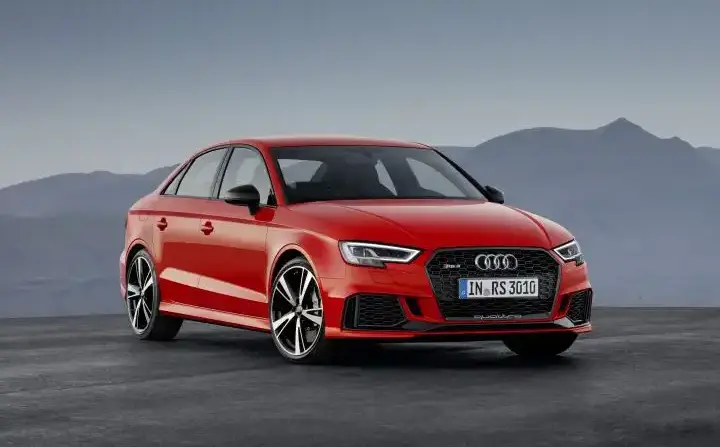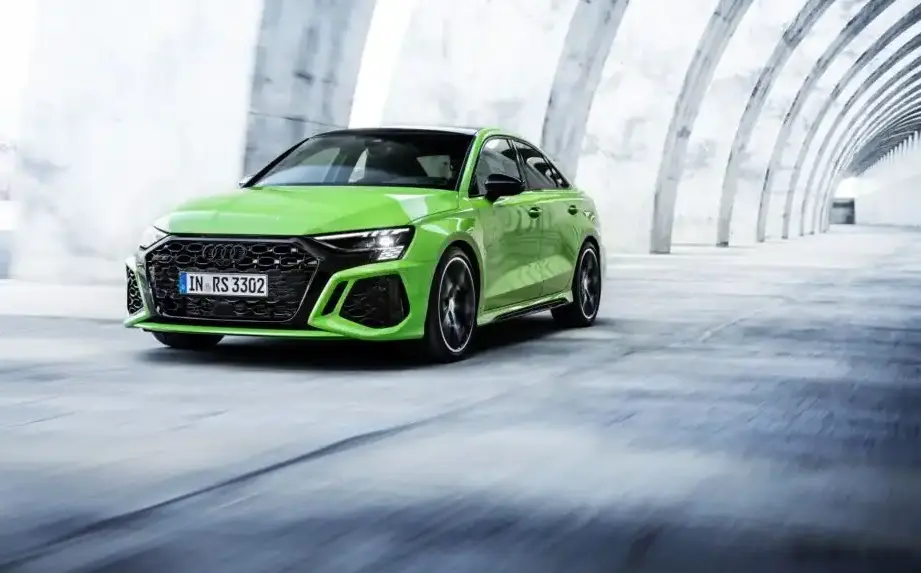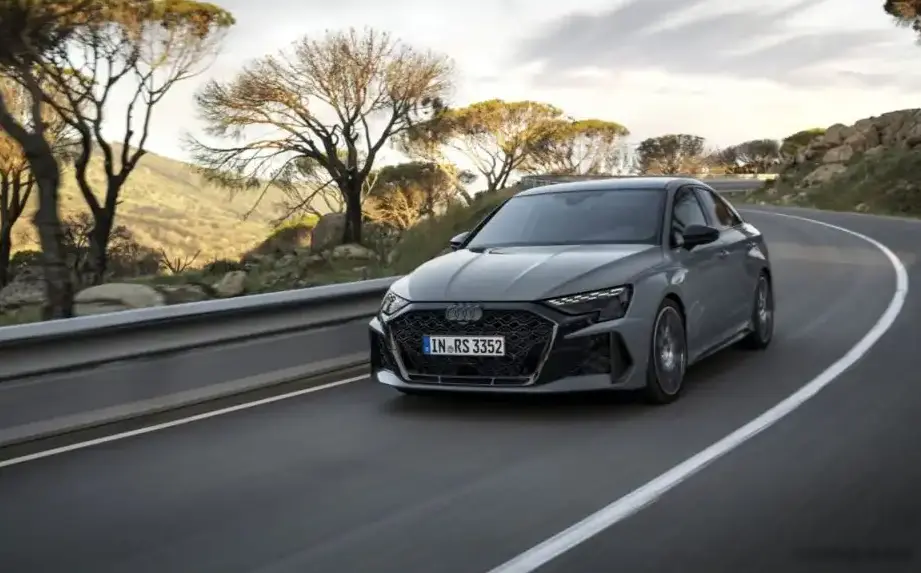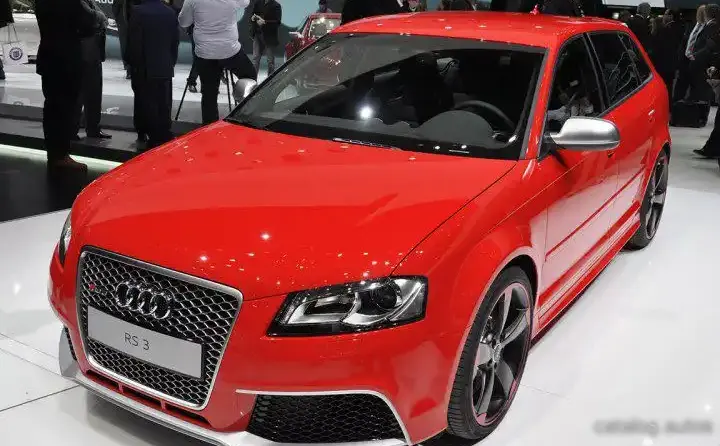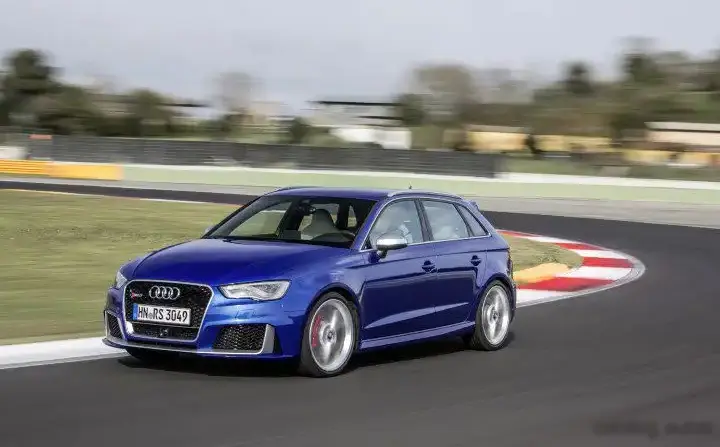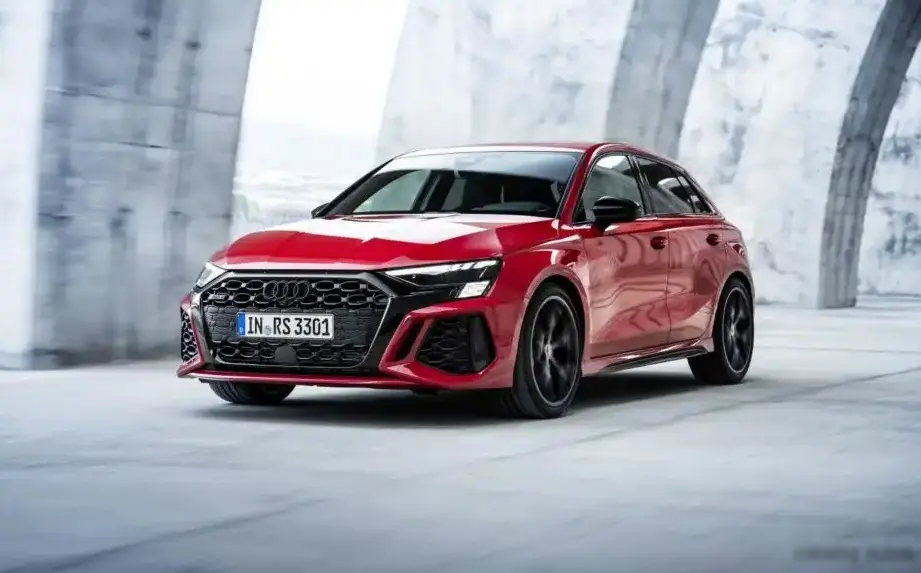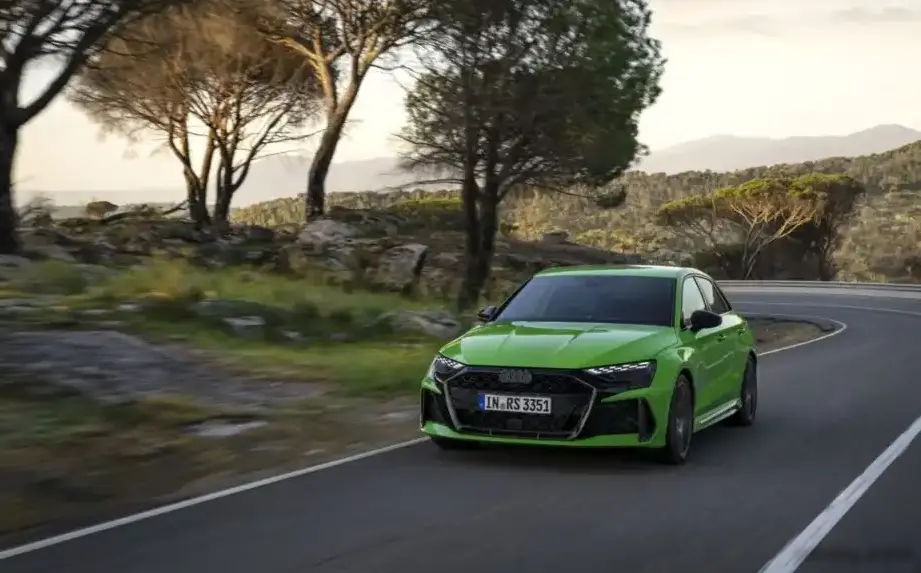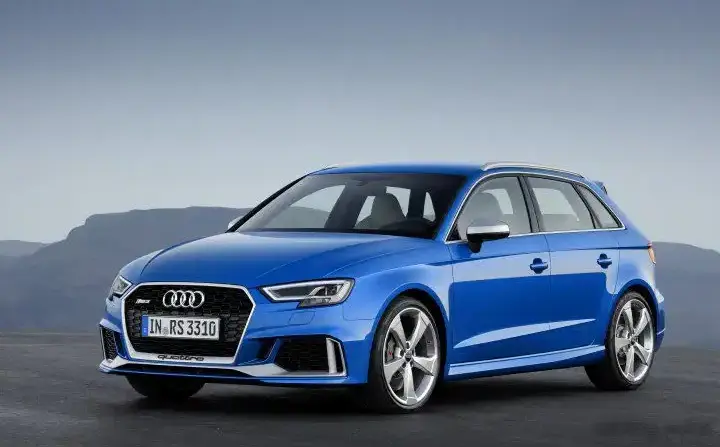
The Audi RS3 Sportback (8VA, facelift) with the 2.5 TFSI 400 hp engine and S tronic dual-clutch transmission represents the pinnacle of performance within the Audi A3 family. Produced from 2017 to 2020, this variant was a key offering in the high-performance compact segment, primarily targeting enthusiasts seeking a blend of everyday usability and exhilarating driving dynamics. It built upon the foundation of the 8VA A3 platform, known for its refined chassis and sophisticated technology, and elevated it with a potent engine, advanced all-wheel-drive system, and aggressive styling cues.
Technical Specifications
| Brand | Audi |
| Model | RS3 |
| Generation | RS3 Sportback (8VA, facelift) |
| Type (Engine) | 2.5 TFSI (400 Hp) quattro S tronic |
| Start of production | 2017 |
| End of production | 2020 |
| Powertrain Architecture | Internal Combustion engine |
| Body type | Hatchback |
| Seats | 5 |
| Doors | 5 |
| Fuel consumption (urban) | 11.3-11.4 l/100 km (20.8 – 20.6 US mpg, 25 – 24.8 UK mpg, 8.8 – 8.8 km/l) |
| Fuel consumption (extra urban) | 6.6-6.9 l/100 km (35.6 – 34.1 US mpg, 42.8 – 40.9 UK mpg, 15.2 – 14.5 km/l) |
| Fuel consumption (combined) | 8.3-8.5 l/100 km (28.3 – 27.7 US mpg, 34 – 33.2 UK mpg, 12 – 11.8 km/l) |
| CO2 emissions | 189-195 g/km |
| Fuel Type | Petrol (Gasoline) |
| Acceleration 0 – 100 km/h | 4.1 sec |
| Acceleration 0 – 62 mph | 4.1 sec |
| Acceleration 0 – 60 mph | 3.9 sec |
| Maximum speed | 250 km/h (155.34 mph), Electronically limited |
| Emission standard | Euro 6 |
| Weight-to-power ratio | 3.8 kg/Hp, 264.9 Hp/tonne |
| Weight-to-torque ratio | 3.1 kg/Nm, 317.9 Nm/tonne |
| Power | 400 Hp @ 5850-7000 rpm |
| Power per litre | 161.3 Hp/l |
| Torque | 480 Nm @ 1700-5850 rpm (354.03 lb.-ft. @ 1700-5850 rpm) |
| Engine layout | Front, Transverse |
| Engine Model/Code | EA855 evo / DAZA |
| Engine displacement | 2480 cm3 (151.34 cu. in.) |
| Number of cylinders | 5 |
| Engine configuration | Inline |
| Cylinder Bore | 82.5 mm (3.25 in.) |
| Piston Stroke | 92.8 mm (3.65 in.) |
| Compression ratio | 10:1 |
| Number of valves per cylinder | 4 |
| Fuel injection system | Direct injection and Multi-port manifold injection |
| Engine aspiration | Turbocharger, Intercooler |
| Valvetrain | DOHC |
| Engine oil capacity | 7.1 l (7.5 US qt | 6.25 UK qt) |
| Coolant | 10 l (10.57 US qt | 8.8 UK qt) |
| Kerb Weight | 1510 kg (3328.98 lbs.) |
| Max. weight | 2010 kg (4431.29 lbs.) |
| Max load | 500 kg (1102.31 lbs.) |
| Trunk (boot) space – minimum | 335 l (11.83 cu. ft.) |
| Trunk (boot) space – maximum | 1175 l (41.49 cu. ft.) |
| Fuel tank capacity | 55 l (14.53 US gal | 12.1 UK gal) |
| Max. roof load | 75 kg (165.35 lbs.) |
| Length | 4335 mm (170.67 in.) |
| Width | 1800 mm (70.87 in.) |
| Width including mirrors | 1966 mm (77.4 in.) |
| Height | 1411 mm (55.55 in.) |
| Wheelbase | 2631 mm (103.58 in.) |
| Front track | 1559 mm (61.38 in.) |
| Rear (Back) track | 1514 mm (59.61 in.) |
| Front overhang | 886 mm (34.88 in.) |
| Rear overhang | 818 mm (32.2 in.) |
| Drag coefficient (Cd) | 0.35 |
| Minimum turning circle | 11 m (36.09 ft.) |
| Drivetrain Architecture | All wheel drive (4×4). ICE drives front wheels, rear driven via clutch. |
| Number of gears and type of gearbox | 7 gears, automatic transmission S tronic |
| Front suspension | Independent, McPherson with coil spring and anti-roll bar |
| Rear suspension | Independent multi-link spring suspension with stabilizer |
| Front brakes | Ventilated discs, 370×34 mm |
| Rear brakes | Disc, 310×22 mm |
| Assisting systems | ABS (Anti-lock braking system) |
| Steering type | Steering rack and pinion |
| Power steering | Electric |
| Tires size | Front: 235/35 R19; Rear: 235/35 R19 |
| Wheel rims size | Front: 8J x 19; Rear: 8J x 19 |
INTRODUCTION
The 2017-2020 Audi RS3 Sportback, powered by the 2.5-liter turbocharged five-cylinder engine producing 400 horsepower, represented a significant leap forward in performance for the compact hatchback segment. Positioned as the top-tier variant of the A3 Sportback range, it catered to drivers seeking a thrilling and engaging driving experience without sacrificing practicality. This facelifted version of the 8VA RS3 built upon the success of the original, refining the aesthetics, technology, and overall driving dynamics. It was primarily sold in European and Asian markets, where the demand for high-performance hatchbacks is particularly strong.
Powertrain & Engine Architecture
At the heart of the RS3 Sportback lies the EA855 evo 2.5-liter inline-five cylinder engine, internally designated as the DAZA code. This engine is renowned for its unique firing order (1-2-4-5-3) which contributes to its distinctive exhaust note and smooth power delivery. The engine utilizes a combination of direct injection and multi-port fuel injection to optimize combustion efficiency and power output. A twin-scroll turbocharger with an intercooler provides significant boost, allowing the engine to produce 400 hp at 5850-7000 rpm and 480 Nm (354 lb-ft) of torque between 1700-5850 rpm.
The engine is paired with Audi’s seven-speed S tronic dual-clutch transmission. This transmission offers incredibly fast and precise gear changes, contributing to the RS3’s rapid acceleration. The S tronic transmission features a multi-plate wet clutch design for improved heat dissipation and durability. Power is then distributed to all four wheels via Audi’s quattro all-wheel-drive system, utilizing a multi-plate clutch to vary the torque split between the front and rear axles, optimizing traction and handling in all conditions.
Driving Characteristics
The RS3 Sportback 2.5 TFSI 400 hp S tronic delivers a truly exhilarating driving experience. The combination of the potent engine, quick-shifting transmission, and quattro all-wheel drive results in a 0-60 mph time of around 3.9 seconds and a limited top speed of 155 mph. The S tronic transmission’s quick shifts and the engine’s broad torque curve provide effortless acceleration in any gear. Compared to lower-powered A3 variants, the RS3 offers a significantly more responsive and engaging driving experience. While the manual transmission offered in earlier 8VA RS3 models provided a more raw connection, the S tronic offers superior speed and convenience. Compared to the 1.8 TFSI or 2.0 TFSI models, the RS3’s performance is in a different league, offering a level of acceleration and handling that is unmatched within the A3 range.
Equipment & Trim Levels
The RS3 Sportback came generously equipped as standard. Key features included sport seats upholstered in Nappa leather with diamond stitching, RS-specific bumpers and side skirts, a flat-bottom steering wheel, and stainless steel pedal caps. The infotainment system featured a high-resolution display screen with navigation and smartphone integration. Optional extras included a Bang & Olufsen sound system, adaptive cruise control, a panoramic sunroof, and carbon fiber interior trim. The interior generally featured dark color schemes with red accents, emphasizing the car’s sporty character.
Chassis & Braking
The RS3 Sportback featured a sport-tuned suspension with stiffer springs and dampers compared to standard A3 models. The front suspension utilized the McPherson strut design, while the rear employed a multi-link setup. Larger brakes, with ventilated discs measuring 370mm at the front and 310mm at the rear, provided ample stopping power. The RS3 also benefited from a more direct steering ratio, enhancing responsiveness and feel. Stabilizer bars were thicker than those found on lesser A3 variants, further reducing body roll during cornering.
Market Reception & Comparison
The RS3 Sportback was widely praised by automotive journalists for its exceptional performance, refined handling, and everyday usability. Critics noted the engine’s unique character and the effectiveness of the quattro all-wheel-drive system. Fuel economy, while not a priority for most RS3 buyers, was respectable for a car of its performance, averaging around 28 mpg in combined driving. Compared to rivals such as the Mercedes-AMG A45 and BMW M140i, the RS3 was often lauded for its more balanced handling and distinctive engine note. Reliability was generally good, although the complexity of the engine and transmission required diligent maintenance.
Legacy
The 2017-2020 Audi RS3 Sportback 2.5 TFSI 400 hp S tronic remains a highly sought-after vehicle in the used car market. Its combination of performance, practicality, and relative rarity has ensured its continued desirability among enthusiasts. The EA855 engine, while complex, has proven to be durable when properly maintained. The RS3 Sportback cemented Audi’s reputation as a leader in the high-performance compact segment and continues to be a benchmark for its competitors.