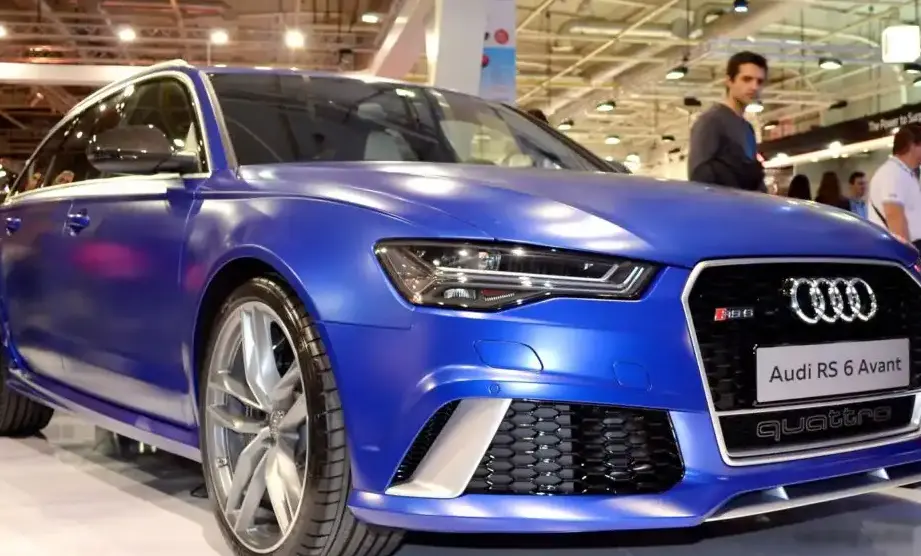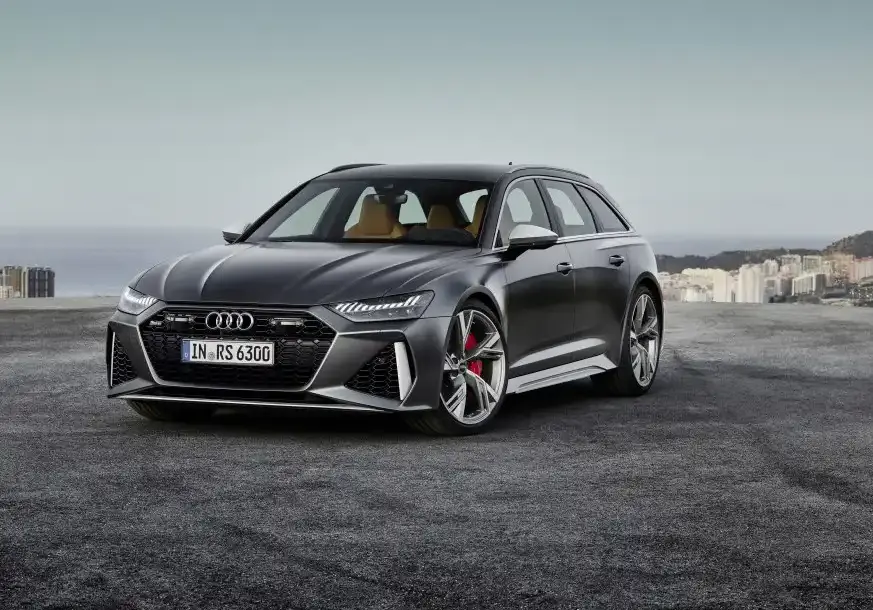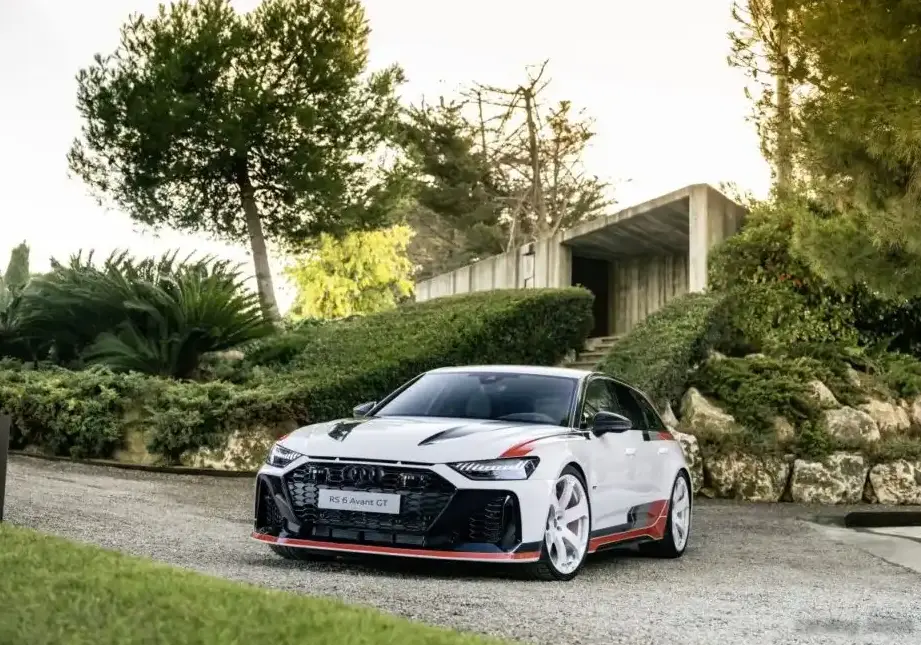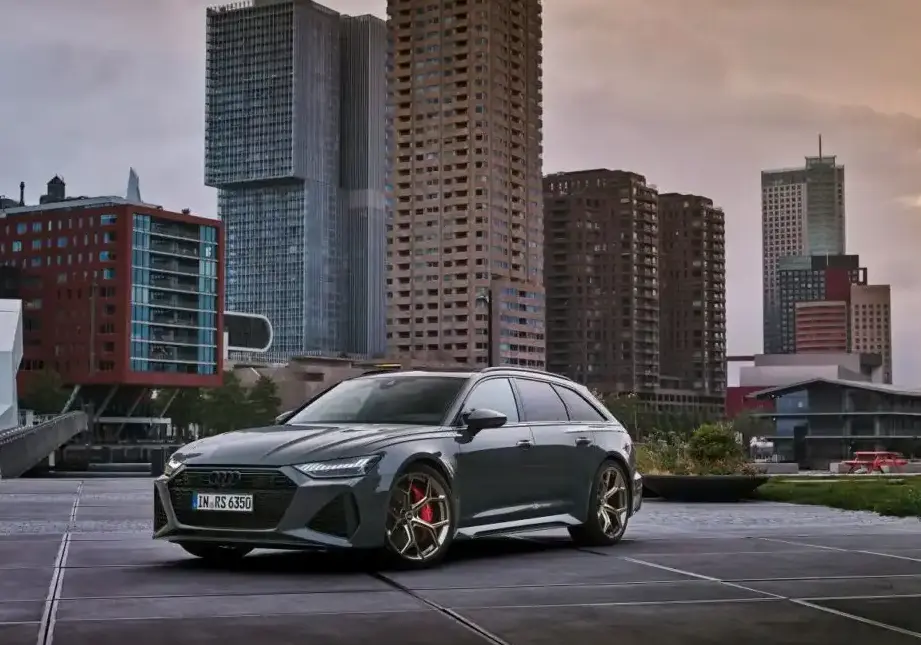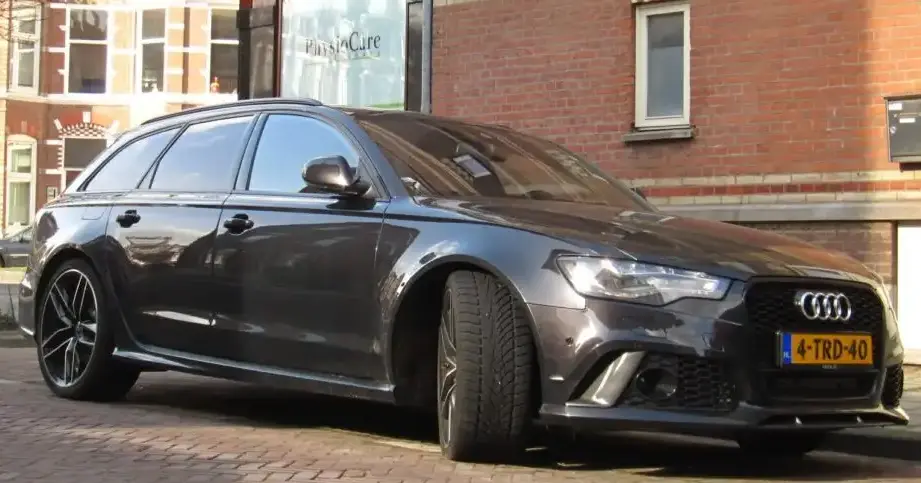
The Audi RS6 Avant (C7) 4.0 TFSI V8 quattro tiptronic, produced from January 2013 to September 2014, represents the pinnacle of performance within the C7 generation of Audi’s RS6 Avant model line. Positioned as the flagship variant, it combined a potent twin-turbocharged V8 engine with Audi’s renowned quattro all-wheel-drive system and an eight-speed tiptronic automatic transmission. This iteration of the RS6 Avant catered to buyers seeking uncompromising speed, luxury, and practicality in a high-performance station wagon. It was primarily marketed in Europe and other regions where the wagon body style enjoys significant popularity, offering a unique blend of supercar performance and everyday usability.
Technical Specifications
| Brand | Audi |
| Model | RS6 |
| Generation | RS6 Avant (C7) |
| Type (Engine) | 4.0 TFSI V8 (560 Hp) quattro tiptronic |
| Start of production | January, 2013 |
| End of production | September, 2014 |
| Powertrain Architecture | Internal Combustion engine |
| Body type | Station wagon (estate) |
| Seats | 5 |
| Doors | 5 |
| Fuel consumption (economy) – urban | 13.9 l/100 km (16.9 US mpg, 20.3 UK mpg, 7.2 km/l) |
| Fuel consumption (economy) – extra urban | 7.5 l/100 km (31.4 US mpg, 37.7 UK mpg, 13.3 km/l) |
| Fuel consumption (economy) – combined | 9.8 l/100 km (24 US mpg, 28.8 UK mpg, 10.2 km/l) |
| CO2 emissions | 229 g/km |
| Fuel Type | Petrol (Gasoline) |
| Acceleration 0 – 100 km/h | 3.9 sec |
| Acceleration 0 – 62 mph | 3.9 sec |
| Acceleration 0 – 60 mph | 3.7 sec |
| Maximum speed | 250 km/h (155.34 mph), Electronically limited |
| Emission standard | Euro 5 |
| Weight-to-power ratio | 3.5 kg/Hp, 289.4 Hp/tonne |
| Weight-to-torque ratio | 2.8 kg/Nm, 361.8 Nm/tonne |
| Power | 560 Hp @ 5700-6600 rpm |
| Power per litre | 140.2 Hp/l |
| Torque | 700 Nm @ 1750-5500 rpm (516.29 lb.-ft. @ 1750-5500 rpm) |
| Engine layout | Front, Longitudinal |
| Engine Model/Code | CRDB, CWUB |
| Engine displacement | 3993 cm3 (243.67 cu. in.) |
| Number of cylinders | 8 |
| Engine configuration | V-engine |
| Cylinder Bore | 84.5 mm (3.33 in.) |
| Piston Stroke | 89 mm (3.5 in.) |
| Compression ratio | 9.3:1 |
| Number of valves per cylinder | 4 |
| Fuel injection system | Direct injection |
| Engine aspiration | BiTurbo, Intercooler |
| Valvetrain | DOHC |
| Engine oil capacity | 8.3 l (8.77 US qt | 7.3 UK qt) |
| Coolant | 13 l (13.74 US qt | 11.44 UK qt) |
| Kerb Weight | 1935 kg (4265.94 lbs.) |
| Max. weight | 2565 kg (5654.86 lbs.) |
| Max load | 630 kg (1388.91 lbs.) |
| Trunk (boot) space – minimum | 565 l (19.95 cu. ft.) |
| Trunk (boot) space – maximum | 1680 l (59.33 cu. ft.) |
| Fuel tank capacity | 65 l (17.17 US gal | 14.3 UK gal) |
| Max. roof load | 100 kg (220.46 lbs.) |
| Permitted trailer load with brakes (8%) | 2100 kg (4629.71 lbs.) |
| Permitted trailer load with brakes (12%) | 2100 kg (4629.71 lbs.) |
| Permitted trailer load without brakes | 750 kg (1653.47 lbs.) |
| Permitted towbar download | 85 kg (187.39 lbs.) |
| Length | 4979 mm (196.02 in.) |
| Width | 1936 mm (76.22 in.) |
| Width including mirrors | 2086 mm (82.13 in.) |
| Height | 1461 mm (57.52 in.) |
| Wheelbase | 2915 mm (114.76 in.) |
| Front track | 1662 mm (65.43 in.) |
| Rear (Back) track | 1663 mm (65.47 in.) |
| Front overhang | 939 mm (36.97 in.) |
| Rear overhang | 1125 mm (44.29 in.) |
| Drag coefficient (Cd) | 0.352 |
| Minimum turning circle (turning diameter) | 11.9 m (39.04 ft.) |
| Drivetrain Architecture | The Internal combustion engine (ICE) drives permanently the four wheels of the vehicle. |
| Drive wheel | All wheel drive (4×4) |
| Number of gears and type of gearbox | 8 gears, automatic transmission tiptronic |
| Front suspension | Independent multi-link suspension, Transverse stabilizer, Air suspension |
| Rear suspension | Independent on trapezoidal lever, Air suspension, Transverse stabilizer |
| Front brakes | Ventilated discs |
| Rear brakes | Ventilated discs |
| Assisting systems | ABS (Anti-lock braking system) |
| Steering type | Steering rack and pinion |
| Power steering | Electric Steering |
| Tires size | 275/35 R20; 285/30 R21 |
| Wheel rims size | 9.5J x 20; 9.5J x 21 |
Powertrain & Engine Architecture
The heart of the RS6 Avant (C7) 4.0 TFSI is the 3,993 cc (243.67 cu. in.) twin-turbocharged V8 engine, designated CRDB or CWUB depending on minor revisions. This engine utilizes a 90-degree V-angle configuration, contributing to a smoother power delivery and reduced vibrations. Direct fuel injection (DFI) is employed, delivering fuel directly into the combustion chambers for improved efficiency and power. The engine features a dual-scroll turbocharger setup, minimizing turbo lag and maximizing boost across the rev range. Intercoolers are integrated to cool the compressed intake air, further enhancing performance. The eight-speed tiptronic automatic transmission, a staple of Audi’s performance models, provides quick and smooth gear changes. It features a torque converter and allows for both fully automatic operation and manual gear selection via steering wheel-mounted paddles.
Driving Characteristics
The 560 horsepower and 700 Nm (516 lb-ft) of torque delivered by the 4.0 TFSI engine, coupled with the quattro all-wheel-drive system, resulted in exhilarating acceleration. The 0-60 mph sprint was dispatched in approximately 3.7 seconds, and the car was electronically limited to a top speed of 155 mph (250 km/h). The tiptronic transmission, while incredibly capable, didn’t offer the same level of engagement as a traditional manual gearbox. However, its quick shifts and ability to hold gears during spirited driving compensated for this. The quattro system provided exceptional traction, particularly in adverse weather conditions, making the RS6 Avant a usable performance car year-round. Compared to lower-powered RS6 variants, the 4.0 TFSI offered a significantly more visceral driving experience, with a more responsive throttle and a more aggressive exhaust note.
Equipment & Trim Levels
The RS6 Avant 4.0 TFSI came standard with a comprehensive array of luxury and performance features. Interior appointments included Valcona leather upholstery, heated and ventilated front sport seats, carbon fiber trim, and a flat-bottomed steering wheel. Standard technology included Audi’s MMI navigation plus system with a touchscreen display, a Bang & Olufsen sound system, and advanced driver-assistance systems such as adaptive cruise control and blind-spot monitoring. Optional extras included ceramic brakes, a panoramic sunroof, and various customization options through Audi Exclusive.
Chassis & Braking
The RS6 Avant featured a sport-tuned suspension with adaptive air suspension as standard. This allowed the driver to adjust the ride height and damping characteristics to suit their preferences. Large ventilated disc brakes were fitted at all four corners, providing ample stopping power. The front brakes featured six-piston calipers, while the rear brakes utilized four-piston calipers. The chassis was reinforced with additional bracing to improve rigidity and handling precision. A rear stabilizer bar was included to minimize body roll during cornering.
Market Reception & Comparison
The RS6 Avant (C7) 4.0 TFSI was widely praised by automotive critics for its exceptional performance, luxurious interior, and practicality. It was often compared favorably to other high-performance wagons, such as the Mercedes-Benz E63 AMG Estate and the BMW M5 Touring (though the latter was not officially sold in the US market). Fuel economy, while not a primary concern for buyers of this vehicle, was reasonable for its performance level, averaging around 24 mpg combined. Reliability was generally good, although the complex twin-turbocharged engine and advanced technology required diligent maintenance.
Legacy
The Audi RS6 Avant (C7) 4.0 TFSI remains a highly sought-after vehicle in the used car market. Its combination of performance, luxury, and practicality has ensured its enduring appeal. The 4.0 TFSI engine, while complex, has proven to be relatively robust when properly maintained. Regular oil changes and adherence to Audi’s recommended service intervals are crucial for long-term reliability. Today, the C7 RS6 Avant represents a compelling option for enthusiasts seeking a high-performance wagon that can deliver thrills on the road and accommodate the demands of daily life.