Technical Specifications
| Brand | Audi |
| Model | RS Q3 |
| Generation | RS Q3 (F3) |
| Type (Engine) | 2.5 TFSI (400 Hp) quattro S tronic |
| Start of production | 2019 |
| Powertrain Architecture | Internal Combustion engine |
| Body type | SUV |
| Seats | 5 |
| Doors | 5 |
| Combined fuel consumption (WLTP) | 9.5-10.2 l/100 km (24.8 – 23.1 US mpg, 29.7 – 27.7 UK mpg, 10.5 – 9.8 km/l) |
| CO2 emissions (WLTP) | 222-231 g/km |
| Fuel consumption (economy) – urban (NEDC, WLTP equivalent) | 11.4-11.5 l/100 km (20.6 – 20.5 US mpg, 24.8 – 24.6 UK mpg, 8.8 – 8.7 km/l) |
| Fuel consumption (economy) – extra urban (NEDC, WLTP equivalent) | 7.3-7.4 l/100 km (32.2 – 31.8 US mpg, 38.7 – 38.2 UK mpg, 13.7 – 13.5 km/l) |
| Fuel consumption (economy) – combined (NEDC, WLTP equivalent) | 8.8-8.9 l/100 km (26.7 – 26.4 US mpg, 32.1 – 31.7 UK mpg, 11.4 – 11.2 km/l) |
| CO2 emissions (NEDC, WLTP equivalent) | 202-203 g/km |
| Fuel Type | Petrol (Gasoline) |
| Acceleration 0 – 100 km/h | 4.5 sec |
| Acceleration 0 – 62 mph | 4.5 sec |
| Acceleration 0 – 60 mph | 4.3 sec |
| Maximum speed | 250 km/h (155.34 mph), Electronically limited |
| Emission standard | Euro 6 |
| Weight-to-power ratio | 4.3 kg/Hp, 233.2 Hp/tonne |
| Weight-to-torque ratio | 3.6 kg/Nm, 279.9 Nm/tonne |
| Power | 400 Hp @ 5850-7000 rpm |
| Power per litre | 161.3 Hp/l |
| Torque | 480 Nm @ 1950-5850 rpm (354.03 lb.-ft. @ 1950-5850 rpm) |
| Engine layout | Front, Transverse |
| Engine Model/Code | EA855 evo / DNWA |
| Engine displacement | 2480 cm3 (151.34 cu. in.) |
| Number of cylinders | 5 |
| Engine configuration | Inline |
| Cylinder Bore | 82.5 mm (3.25 in.) |
| Piston Stroke | 92.8 mm (3.65 in.) |
| Compression ratio | 10:1 |
| Number of valves per cylinder | 4 |
| Fuel injection system | Direct injection and Multi-port manifold injection |
| Engine aspiration | Turbocharger, Intercooler |
| Valvetrain | DOHC |
| Engine oil capacity | 7.1 l (7.5 US qt | 6.25 UK qt) |
| Coolant | 9.6 l (10.14 US qt | 8.45 UK qt) |
| Kerb Weight | 1715 kg (3780.93 lbs.) |
| Max. weight | 2250 kg (4960.4 lbs.) |
| Max load | 535 kg (1179.47 lbs.) |
| Trunk (boot) space – minimum | 530 l (18.72 cu. ft.) |
| Trunk (boot) space – maximum | 1525 l (53.85 cu. ft.) |
| Fuel tank capacity | 63 l (16.64 US gal | 13.86 UK gal) |
| Max. roof load | 75 kg (165.35 lbs.) |
| Permitted trailer load with brakes (8%) | 1900 kg (4188.78 lbs.) |
| Permitted trailer load with brakes (12%) | 1900 kg (4188.78 lbs.) |
| Permitted trailer load without brakes | 750 kg (1653.47 lbs.) |
| Permitted towbar download | 90 kg (198.42 lbs.) |
| Length | 4506 mm (177.4 in.) |
| Width | 1851 mm (72.87 in.) |
| Width including mirrors | 2024 mm (79.69 in.) |
| Height | 1602 mm (63.07 in.) |
| Wheelbase | 2680 mm (105.51 in.) |
| Front track | 1590 mm (62.6 in.) |
| Rear (Back) track | 1583 mm (62.32 in.) |
| Front overhang | 913 mm (35.94 in.) |
| Rear overhang | 913 mm (35.94 in.) |
| Drag coefficient (Cd) | 0.35 |
| Approach angle | 19° |
| Departure angle | 15.2° |
| Drivetrain Architecture | The Internal combustion engine (ICE) drives the front wheels permanently, and the rear wheels are driven through an electrically or mechanically operated clutch if necessary. |
| Drive wheel | All wheel drive (4×4) |
| Number of gears and type of gearbox | 7 gears, automatic transmission S tronic |
| Front suspension | Independent, type McPherson with coil spring and anti-roll bar |
| Rear suspension | Independent multi-link spring suspension with stabilizer |
| Front brakes | Ventilated discs, 375 mm |
| Rear brakes | Ventilated discs, 310 mm |
| Assisting systems | ABS (Anti-lock braking system) |
| Steering type | Steering rack and pinion |
| Power steering | Electric Steering |
| Tires size | 255/40 R20; 255/35 R21 |
| Wheel rims size | 8.5J x 20; 8.5J x 21 |
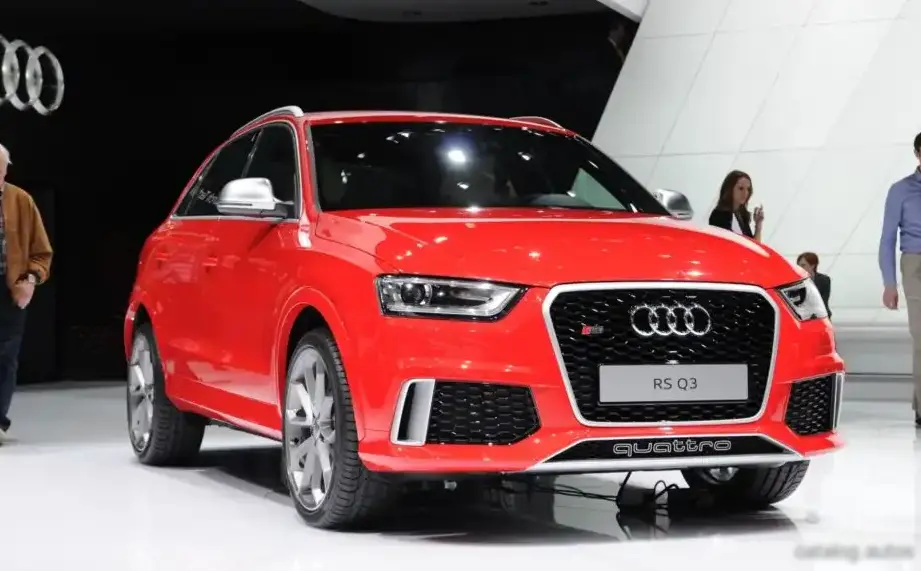
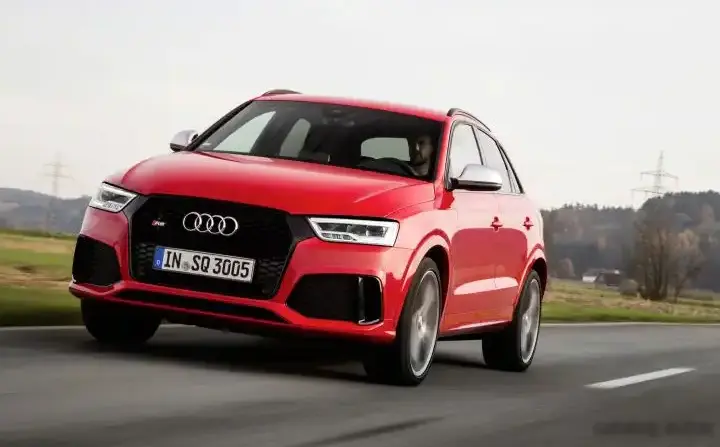
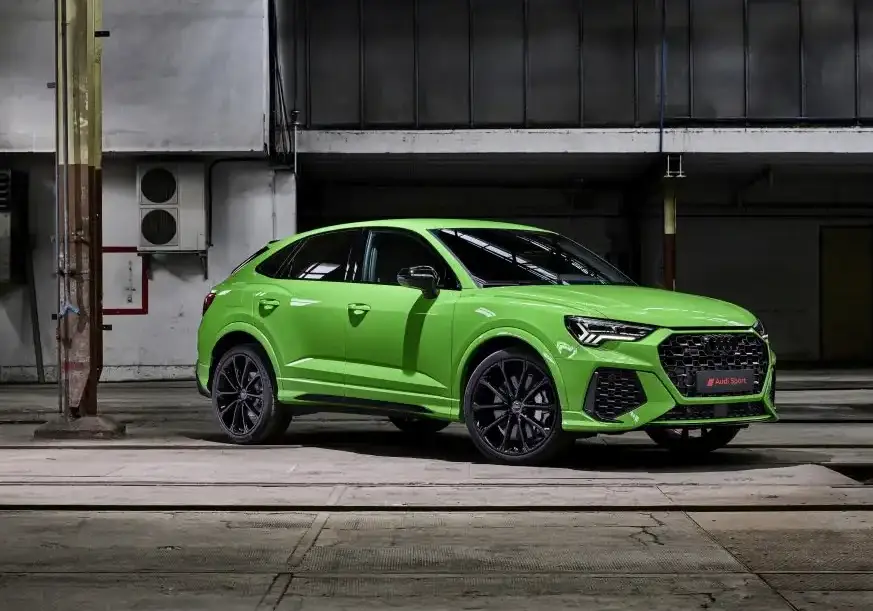
The Audi RS Q3 (F3) represents Audi’s entry into the high-performance compact SUV segment. Introduced in 2019, it’s built on the foundation of the second-generation Q3 (F3), sharing its platform with vehicles like the Volkswagen Tiguan and Skoda Karoq. However, the RS Q3 sets itself apart with significant upgrades to its powertrain, chassis, and styling. The F3 generation Q3, and consequently the RS Q3, boasts a more modern design compared to its predecessor, offering improved interior space and technology. The RS Q3 specifically targets drivers who want a sporty and engaging driving experience without sacrificing the practicality and versatility of an SUV.
Powertrain & Engine Architecture
The core of the RS Q3 is the EA855 evo 2.5-liter inline-five cylinder turbocharged engine, designated as DNWA. This engine is a signature of Audi’s RS models, celebrated for its unique sound and robust performance. It employs a combination of direct and multi-port fuel injection to optimize combustion efficiency and power delivery. The engine generates 400 horsepower at 5850-7000 rpm and 480 Nm (354 lb-ft) of torque between 1950 and 5850 rpm. A twin-scroll turbocharger with an electronically controlled valve further enhances responsiveness. This engine is coupled with a seven-speed S tronic dual-clutch transmission, providing quick and seamless gear changes. The transmission includes a launch control function for optimal acceleration. Power is distributed to all four wheels through Audi’s quattro all-wheel-drive system, utilizing a multi-plate clutch to vary the torque split between the front and rear axles.
Driving Characteristics
The RS Q3 delivers a noticeably more dynamic driving experience than standard Q3 models. The 2.5-liter engine provides strong acceleration, achieving a 0-60 mph time of around 4.3 seconds. The S tronic transmission contributes to this performance with its rapid shifts and precise control. The quattro all-wheel-drive system offers excellent traction and stability, especially in challenging weather conditions. The RS-tuned suspension, featuring stiffer springs and dampers, minimizes body roll and enhances handling precision. While the ride is firmer than the standard Q3, it remains reasonably comfortable for daily driving. The exhaust note is particularly distinctive, with a characteristic five-cylinder growl that enhances the overall driving experience. The gear ratios are optimized for both acceleration and high-speed cruising.
Equipment & Trim Levels
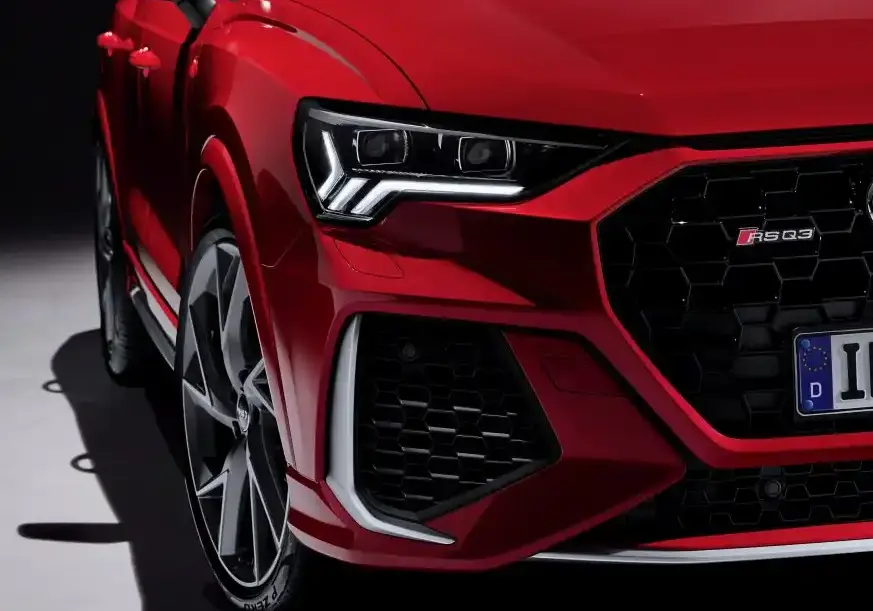
The RS Q3 comes well-equipped as standard. Key features include RS sport seats upholstered in Nappa leather with honeycomb stitching, a flat-bottomed RS steering wheel, and aluminum interior trim. The infotainment system features a 10.1-inch touchscreen display with Audi’s MMI navigation plus system. Standard safety features include Audi pre sense front, lane departure warning, and automatic emergency braking. Optional extras include a Bang & Olufsen sound system, a panoramic sunroof, and adaptive cruise control. The exterior styling is enhanced by RS-specific bumpers, a large rear spoiler, and oval exhaust tailpipes. A range of exterior color options are available, along with the option of carbon fiber trim elements.
Chassis & Braking
The RS Q3 features a specially tuned chassis designed to improve handling and stability. The suspension utilizes McPherson struts at the front and a multi-link setup at the rear, with stiffer springs and dampers compared to the standard Q3. The RS Q3 also benefits from a more robust stabilizer bar setup. Braking performance is provided by ventilated disc brakes on all four wheels, with larger discs (375mm front, 310mm rear) compared to the standard Q3. RS-branded calipers add a visual distinction. The ABS (Anti-lock Braking System) and electronic stability control systems are calibrated to work with the quattro all-wheel-drive system for optimal braking performance and control.
Market Reception & Comparison
The RS Q3 was generally well-received by automotive critics, who praised its powerful engine, engaging handling, and practical SUV body style. Compared to other high-performance compact SUVs, such as the BMW X2 M35i and Mercedes-AMG GLA 35, the RS Q3 offered a unique combination of performance and character thanks to its distinctive five-cylinder engine. Fuel economy, however, was a common criticism, with the RS Q3 returning around 24.8-23.1 US mpg in combined driving. Reliability reports have been generally positive, although the complexity of the engine and drivetrain may lead to higher maintenance costs compared to less powerful Q3 variants.
Legacy
The RS Q3 (F3) has become a sought-after and capable high-performance SUV. The 2.5-liter TFSI engine has proven to be a robust and reliable unit when properly maintained. In the used car market, the RS Q3 commands a premium price compared to standard Q3 models, reflecting its performance and exclusivity. As Audi continues to develop its RS lineup, the RS Q3 (F3) represents a significant step in bringing high-performance driving dynamics to a broader audience within the compact SUV segment.