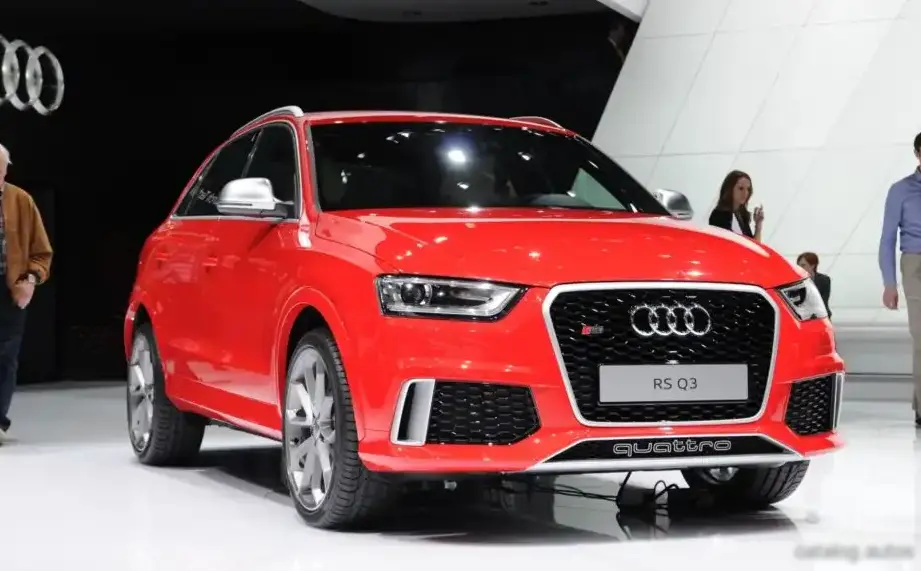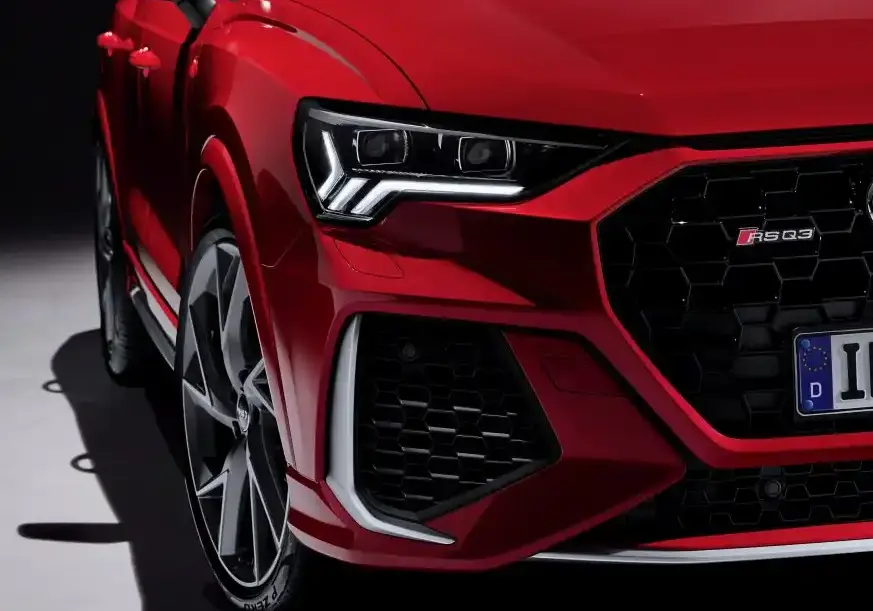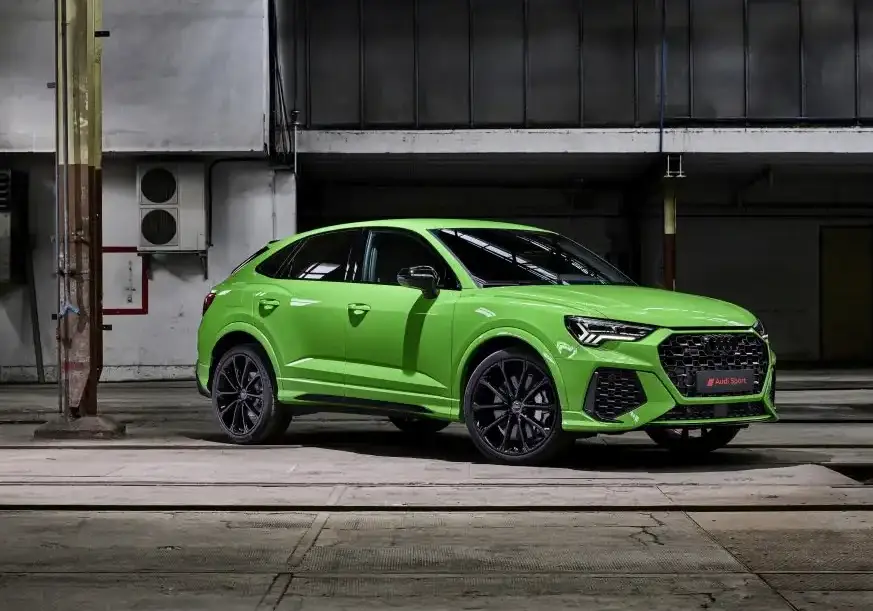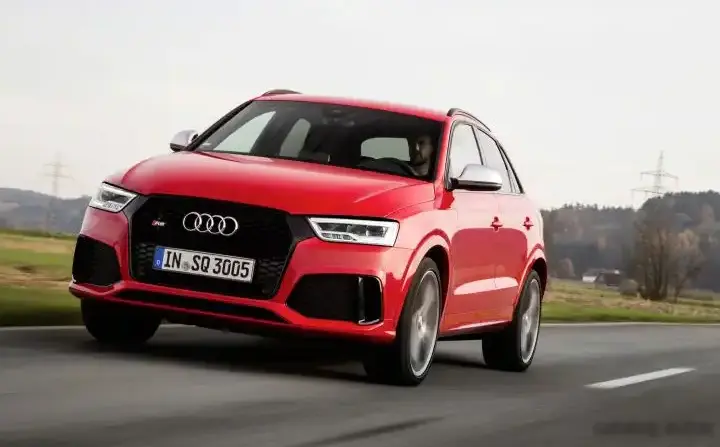
The Audi RS Q3 (facelift, produced from 2015 to 2016) represents the high-performance variant of the Audi Q3 compact SUV. Specifically, the 2.5 TFSI quattro S tronic model, boasting 340 horsepower, was positioned as the flagship offering within the Q3 range. This iteration built upon the foundation of the first-generation Q3 (internal code 8U), offering a significant performance upgrade and a more aggressive aesthetic compared to the standard models. It aimed to appeal to enthusiasts seeking a blend of practicality, luxury, and dynamic driving experience in a relatively compact package. The facelift brought styling revisions and updated technology, further refining the RS Q3’s appeal.
Technical Specifications
| Brand | Audi |
| Model | RS Q3 |
| Generation | RS Q3 (facelift 2015) |
| Type (Engine) | 2.5 TFSI (340 Hp) quattro S tronic |
| Start of production | 2015 |
| End of production | 2016 |
| Powertrain Architecture | Internal Combustion engine |
| Body type | SUV |
| Seats | 5 |
| Doors | 5 |
| Fuel consumption (economy) – urban | 11.6 l/100 km (20.3 US mpg, 24.4 UK mpg, 8.6 km/l) |
| Fuel consumption (economy) – extra urban | 6.6 l/100 km (35.6 US mpg, 42.8 UK mpg, 15.2 km/l) |
| Fuel consumption (economy) – combined | 8.4 l/100 km (28 US mpg, 33.6 UK mpg, 11.9 km/l) |
| CO2 emissions | 198 g/km |
| Fuel Type | Petrol (Gasoline) |
| Acceleration 0 – 100 km/h | 4.8 sec |
| Acceleration 0 – 62 mph | 4.8 sec |
| Acceleration 0 – 60 mph | 4.6 sec |
| Maximum speed | 250 km/h (155.34 mph) |
| Emission standard | Euro 6 |
| Weight-to-power ratio | 4.6 kg/Hp, 215.2 Hp/tonne |
| Weight-to-torque ratio | 3.5 kg/Nm, 284.8 Nm/tonne |
| Power | 340 Hp @ 5300-6700 rpm |
| Power per litre | 137.1 Hp/l |
| Torque | 450 Nm @ 1600-5300 rpm (331.9 lb.-ft. @ 1600-5300 rpm) |
| Engine layout | Front, Transverse |
| Engine Model/Code | CZGA |
| Engine displacement | 2480 cm3 (151.34 cu. in.) |
| Number of cylinders | 5 |
| Engine configuration | Inline |
| Cylinder Bore | 82.5 mm (3.25 in.) |
| Piston Stroke | 92.8 mm (3.65 in.) |
| Compression ratio | 10:1 |
| Number of valves per cylinder | 4 |
| Fuel injection system | Direct injection |
| Engine aspiration | Turbocharger, Intercooler |
| Valvetrain | DOHC |
| Engine oil capacity | 6.8 l (7.19 US qt | 5.98 UK qt) |
| Kerb Weight | 1580 kg (3483.3 lbs.) |
| Max. weight | 2215 kg (4883.24 lbs.) |
| Max load | 635 kg (1399.94 lbs.) |
| Trunk (boot) space – minimum | 356 l (12.57 cu. ft.) |
| Trunk (boot) space – maximum | 1261 l (44.53 cu. ft.) |
| Fuel tank capacity | 64 l (16.91 US gal | 14.08 UK gal) |
| Max. roof load | 75 kg (165.35 lbs.) |
| Permitted trailer load with brakes (8%) | 1900 kg (4188.78 lbs.) |
| Permitted trailer load with brakes (12%) | 1900 kg (4188.78 lbs.) |
| Permitted trailer load without brakes | 750 kg (1653.47 lbs.) |
| Permitted towbar download | 80 kg (176.37 lbs.) |
| Length | 4411 mm (173.66 in.) |
| Width | 1841 mm (72.48 in.) |
| Width including mirrors | 2019 mm (79.49 in.) |
| Height | 1598 mm (62.91 in.) |
| Wheelbase | 2603 mm (102.48 in.) |
| Front track | 1571 mm (61.85 in.) |
| Rear (Back) track | 1577 mm (62.09 in.) |
| Front overhang | 927 mm (36.5 in.) |
| Rear overhang | 881 mm (34.69 in.) |
| Minimum turning circle (turning diameter) | 11.8 m (38.71 ft.) |
| Drive wheel | All wheel drive (4×4) |
| Number of gears and type of gearbox | 7 gears, automatic transmission S tronic |
| Front suspension | Independent type McPherson |
| Rear suspension | Independent multi-link suspension |
| Front brakes | Ventilated discs |
| Rear brakes | Disc |
| Assisting systems | ABS (Anti-lock braking system) |
| Steering type | Steering rack and pinion |
| Tires size | 235/50 R 18 |
| Wheel rims size | 8.0J x 18 |
Powertrain & Engine Architecture
The heart of the RS Q3 is the 2.5-liter inline-five cylinder turbocharged engine, designated CZGA. This engine is a derivative of the unit found in other high-performance Audi models, known for its distinctive sound and robust power delivery. It utilizes direct fuel injection and a sophisticated turbocharging system with an intercooler to produce 340 horsepower and 450 Nm (331.9 lb-ft) of torque. The engine’s aluminum block and head contribute to its relatively lightweight construction. The S tronic seven-speed dual-clutch transmission is standard, providing rapid and precise gear changes. This transmission is known for its efficiency and responsiveness, contributing to the RS Q3’s quick acceleration. The quattro all-wheel-drive system distributes power between the front and rear axles, enhancing traction and stability, particularly in adverse weather conditions.
Driving Characteristics
The RS Q3 2.5 TFSI S tronic delivers a noticeably sporty driving experience. Acceleration from 0 to 60 mph takes approximately 4.6 seconds, and it reaches a limited top speed of 155 mph. The S tronic transmission provides seamless shifts, and the quattro all-wheel-drive system inspires confidence in corners. Compared to the standard Q3 models, the RS Q3 offers significantly more responsive throttle response and a more engaging driving feel. While the automatic transmission is quick, some enthusiasts might prefer the greater control offered by a manual gearbox, which was not available in this configuration. The suspension is firmer than the standard Q3, providing reduced body roll but potentially sacrificing some ride comfort.
Equipment & Trim Levels
The RS Q3 came generously equipped as standard. Interior features included sport seats upholstered in a combination of leather and Alcantara, a flat-bottomed steering wheel, and unique RS badging throughout the cabin. Standard exterior features included a distinctive RS front bumper, a rear diffuser, and roof rails. Optional extras included a panoramic sunroof, a Bang & Olufsen sound system, and various driver-assistance systems such as adaptive cruise control and park assist. The interior trim was typically finished in dark colors, with aluminum or carbon fiber accents to emphasize the sporty character of the vehicle.
Chassis & Braking
The RS Q3 features a sport-tuned suspension with stiffer springs and dampers compared to the standard Q3. The front suspension utilizes McPherson struts, while the rear employs a multi-link setup. Braking duties are handled by ventilated discs on all four wheels, providing ample stopping power. The RS Q3 also benefits from a more direct steering ratio, enhancing responsiveness and feel. The chassis was specifically tuned to handle the increased power output and provide a more dynamic driving experience.
Market Reception & Comparison
The RS Q3 was generally well-received by automotive critics, who praised its performance, handling, and distinctive engine note. However, some reviewers noted that the ride quality could be firm on rough roads. Compared to other performance SUVs in its class, such as the Porsche Macan, the RS Q3 offered a compelling combination of performance and practicality at a slightly lower price point. Fuel economy, while respectable for a performance SUV, was not a strong point, averaging around 28 mpg combined. Reliability was generally good, although the complexity of the turbocharged engine and dual-clutch transmission could potentially lead to higher maintenance costs over the long term.
Legacy
The 2015-2016 Audi RS Q3 2.5 TFSI quattro S tronic remains a desirable vehicle in the used car market. Its unique engine, strong performance, and relatively compact size make it an appealing option for enthusiasts. The CZGA engine is known for its durability when properly maintained, but regular servicing is crucial. The S tronic transmission requires periodic fluid changes to ensure smooth operation. Overall, the RS Q3 represents a compelling blend of performance, luxury, and practicality, and it continues to hold its value well due to its limited production numbers and enthusiast appeal.