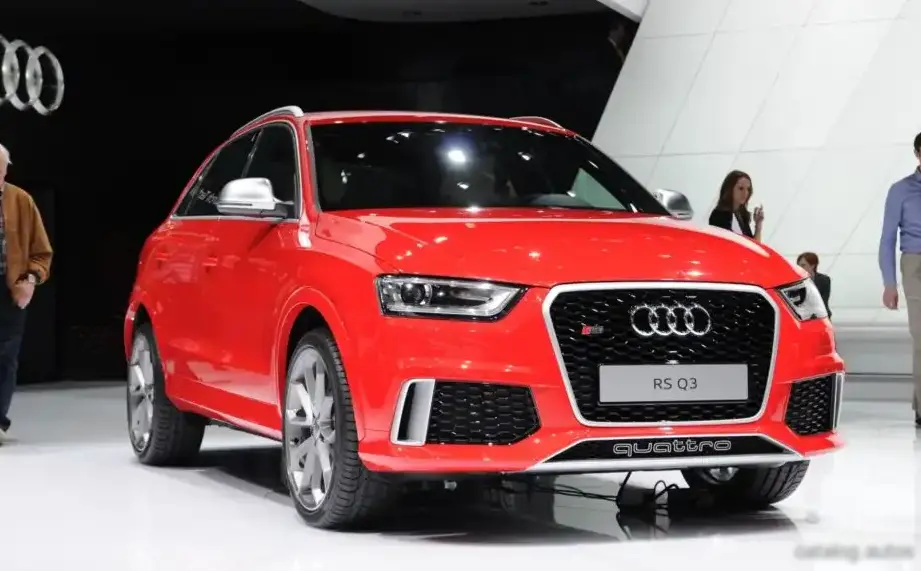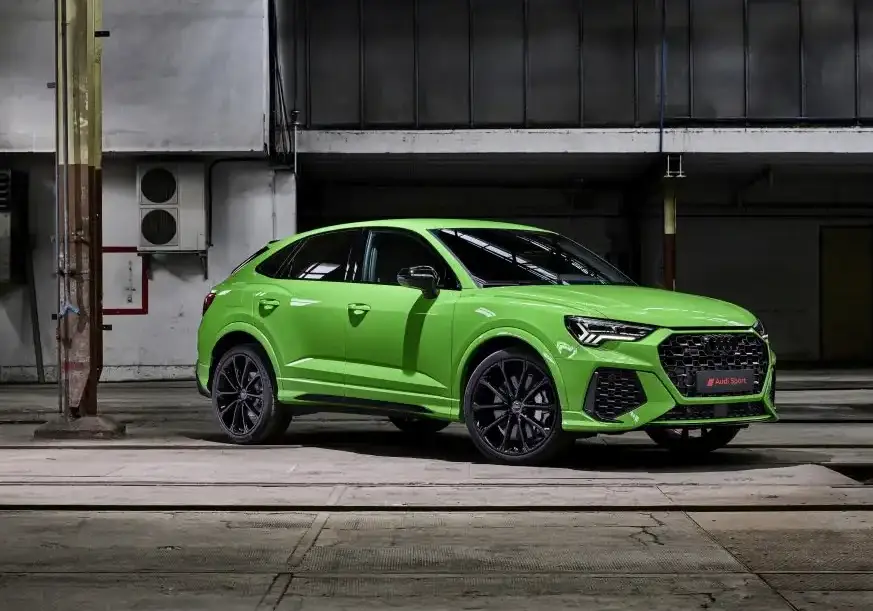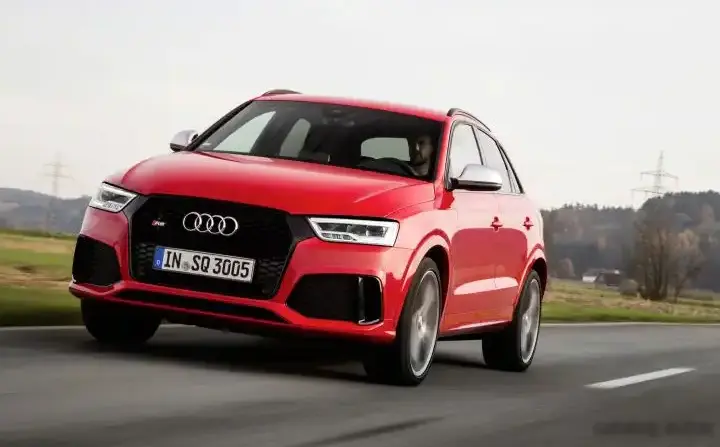
The Audi RS Q3 (facelift, produced from 2016 to 2018) represents the high-performance variant of the Audi Q3 compact SUV. Specifically, the 2.5 TFSI performance model, equipped with the quattro all-wheel drive system and a 7-speed S tronic dual-clutch transmission, stands as the most potent iteration of the Q3 line during its production run. This model was positioned as Audi’s answer to performance-oriented compact SUVs, offering a blend of everyday practicality and exhilarating driving dynamics. It built upon the foundation of the broader Q3 range (internal designation 8U), which aimed to provide a premium, versatile option within the burgeoning compact SUV segment.
Technical Specifications
| Brand | Audi |
| Model | RS Q3 |
| Generation | RS Q3 (facelift 2015) |
| Type (Engine) | 2.5 TFSI performance (367 Hp) quattro S tronic |
| Start of production | 2016 |
| End of production | 2018 |
| Powertrain Architecture | Internal Combustion engine |
| Body type | SUV |
| Seats | 5 |
| Doors | 5 |
| Fuel consumption (urban) | 11.8 l/100 km (19.9 US mpg, 23.9 UK mpg, 8.5 km/l) |
| Fuel consumption (extra urban) | 6.8 l/100 km (34.6 US mpg, 41.5 UK mpg, 14.7 km/l) |
| Fuel consumption (combined) | 8.6 l/100 km (27.4 US mpg, 32.8 UK mpg, 11.6 km/l) |
| CO2 emissions | 203 g/km |
| Fuel Type | Petrol (Gasoline) |
| Acceleration 0 – 100 km/h | 4.4 sec |
| Acceleration 0 – 62 mph | 4.4 sec |
| Acceleration 0 – 60 mph | 4.2 sec |
| Maximum speed | 270 km/h (167.77 mph) |
| Emission standard | Euro 6 |
| Weight-to-power ratio | 4.5 kg/Hp, 221.8 Hp/tonne |
| Weight-to-torque ratio | 3.6 kg/Nm, 281 Nm/tonne |
| Power | 367 Hp @ 5550-6800 rpm |
| Power per litre | 148 Hp/l |
| Torque | 465 Nm @ 1625-5550 rpm (342.97 lb.-ft. @ 1625-5550 rpm) |
| Engine layout | Front, Transverse |
| Engine Model/Code | CZGB |
| Engine displacement | 2480 cm3 (151.34 cu. in.) |
| Number of cylinders | 5 |
| Engine configuration | Inline |
| Cylinder Bore | 82.5 mm (3.25 in.) |
| Piston Stroke | 92.8 mm (3.65 in.) |
| Compression ratio | 10:1 |
| Number of valves per cylinder | 4 |
| Fuel injection system | Direct injection |
| Engine aspiration | Turbocharger, Intercooler |
| Valvetrain | DOHC |
| Engine oil capacity | 6.8 l (7.19 US qt | 5.98 UK qt) |
| Coolant | 10 l (10.57 US qt | 8.8 UK qt) |
| Kerb Weight | 1655 kg (3648.65 lbs.) |
| Max. weight | 2215 kg (4883.24 lbs.) |
| Max load | 560 kg (1234.59 lbs.) |
| Trunk (boot) space – minimum | 356 l (12.57 cu. ft.) |
| Trunk (boot) space – maximum | 1261 l (44.53 cu. ft.) |
| Fuel tank capacity | 64 l (16.91 US gal | 14.08 UK gal) |
| Max. roof load | 75 kg (165.35 lbs.) |
| Permitted trailer load with brakes (8%) | 2000 kg (4409.25 lbs.) |
| Permitted trailer load with brakes (12%) | 2000 kg (4409.25 lbs.) |
| Permitted trailer load without brakes | 750 kg (1653.47 lbs.) |
| Permitted towbar download | 80 kg (176.37 lbs.) |
| Length | 4411 mm (173.66 in.) |
| Width | 1841 mm (72.48 in.) |
| Width including mirrors | 2019 mm (79.49 in.) |
| Height | 1580 mm (62.2 in.) |
| Wheelbase | 2603 mm (102.48 in.) |
| Front track | 1571 mm (61.85 in.) |
| Rear (Back) track | 1577 mm (62.09 in.) |
| Front overhang | 927 mm (36.5 in.) |
| Rear overhang | 881 mm (34.69 in.) |
| Drag coefficient (Cd) | 0.34 |
| Minimum turning circle (turning diameter) | 11.8 m (38.71 ft.) |
| Drive wheel | All wheel drive (4×4) |
| Number of gears and type of gearbox | 7 gears, automatic transmission S tronic |
| Front suspension | Independent type McPherson |
| Rear suspension | Independent multi-link suspension |
| Front brakes | Ventilated discs |
| Rear brakes | Ventilated discs |
| Assisting systems | ABS (Anti-lock braking system) |
| Steering type | Steering rack and pinion |
| Power steering | Electric Steering |
| Tires size | 255/35 R20 |
| Wheel rims size | 8.5J x 20 |
Powertrain & Engine Architecture
The heart of the RS Q3 performance is the 2.5-liter inline-five cylinder turbocharged engine, designated CZGB. This engine is a direct descendant of the powerplant first seen in the Audi TT RS and RS3, renowned for its distinctive sound and robust performance. It utilizes a direct fuel injection system and a twin-scroll turbocharger with an intercooler to deliver 367 horsepower at 5550-6800 rpm and 465 Nm (342.97 lb-ft) of torque between 1625 and 5550 rpm. The engine features a 10:1 compression ratio and a dual overhead camshaft (DOHC) valvetrain with four valves per cylinder. The S tronic 7-speed dual-clutch transmission provides rapid and precise gear changes, contributing to the car’s quick acceleration. This transmission allows for both fully automatic operation and manual gear selection via steering wheel-mounted paddles.
Driving Characteristics
The RS Q3 performance delivers a noticeably more engaging driving experience than the standard Q3 models. The 2.5-liter engine provides strong acceleration, with a 0-60 mph time of around 4.2 seconds. The S tronic transmission ensures minimal power interruption during shifts, and the quattro all-wheel-drive system provides excellent traction in various conditions. The gear ratios are tuned for performance, prioritizing acceleration over outright fuel economy. While the ride is firm due to the sport-tuned suspension, it remains reasonably comfortable for daily driving. Compared to the standard Q3 1.8T or 2.0T models, the RS Q3 offers a significantly more powerful and responsive driving experience, trading some fuel efficiency for a substantial increase in performance.
Equipment & Trim Levels
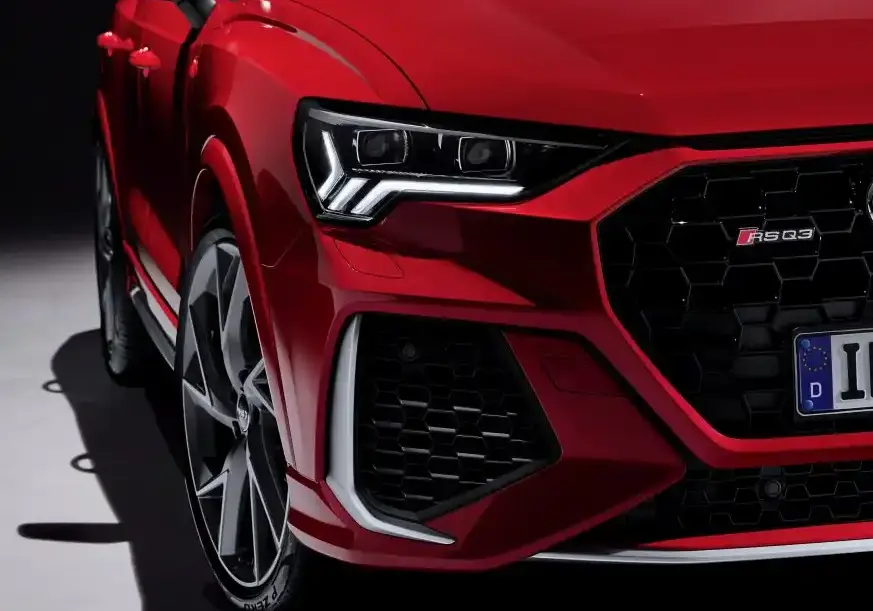
The RS Q3 performance came standard with a comprehensive list of features, including sport seats upholstered in Nappa leather with contrasting stitching, a flat-bottomed steering wheel, aluminum interior trim, and RS-specific badging. Exterior features included a unique RS honeycomb grille, enlarged air intakes, a roof spoiler, and 20-inch alloy wheels. Optional extras included a Bang & Olufsen sound system, a panoramic sunroof, and various driver assistance systems such as adaptive cruise control and blind-spot monitoring. The interior dashboard configuration was largely similar to other Q3 models, but with RS-specific graphics and instrumentation.
Chassis & Braking
The RS Q3 performance features a sport-tuned suspension with stiffer springs and dampers compared to the standard Q3. It utilizes an independent McPherson strut front suspension and an independent multi-link rear suspension. The braking system consists of ventilated discs on all four wheels, providing ample stopping power. The RS Q3 also incorporates Audi’s ABS (Anti-lock Braking System) and electronic stability control (ESC) systems for enhanced safety.
Market Reception & Comparison
The RS Q3 performance was generally well-received by automotive critics, who praised its powerful engine, responsive handling, and practical SUV body style. However, some reviewers noted that the ride could be firm and that the price was relatively high compared to other compact SUVs. In terms of fuel economy, the RS Q3 performance was less efficient than the standard Q3 models, achieving around 27.4 US mpg in combined driving. Compared to rivals like the Porsche Macan, the RS Q3 offered a similar level of performance at a lower price point.
Legacy
The 2.5 TFSI engine in the RS Q3 performance has proven to be a reliable and durable powerplant, although maintenance costs can be higher than those of smaller, less powerful engines. The S tronic transmission is also generally reliable, but requires regular servicing. On the used car market, the RS Q3 performance holds its value well due to its performance credentials and relative rarity. It remains a desirable option for enthusiasts seeking a high-performance compact SUV.