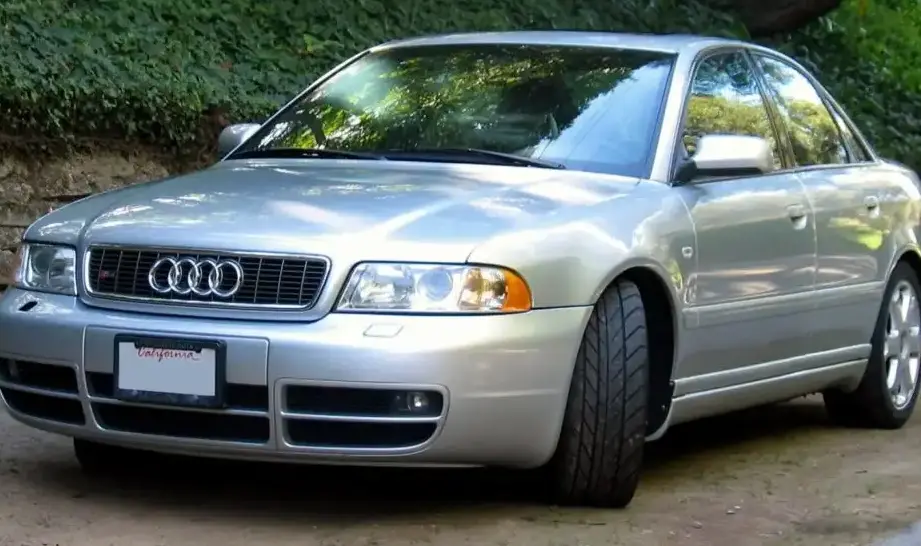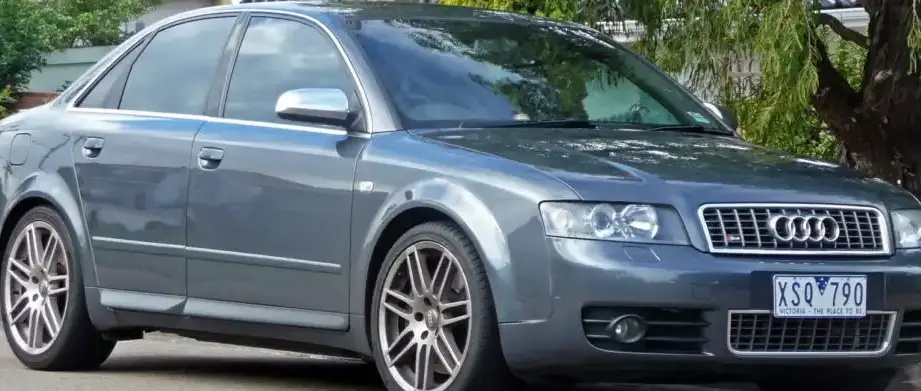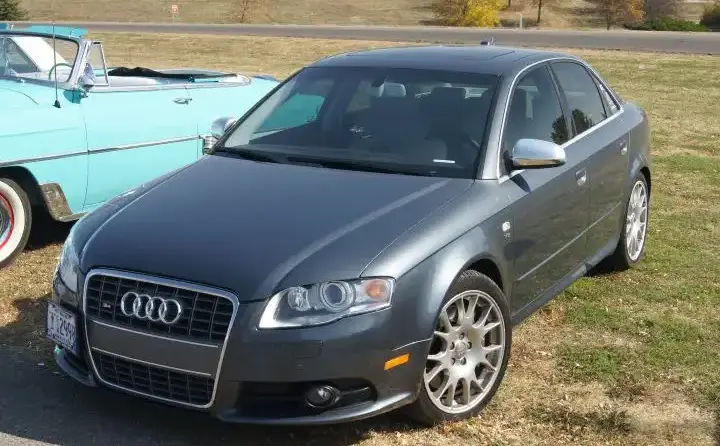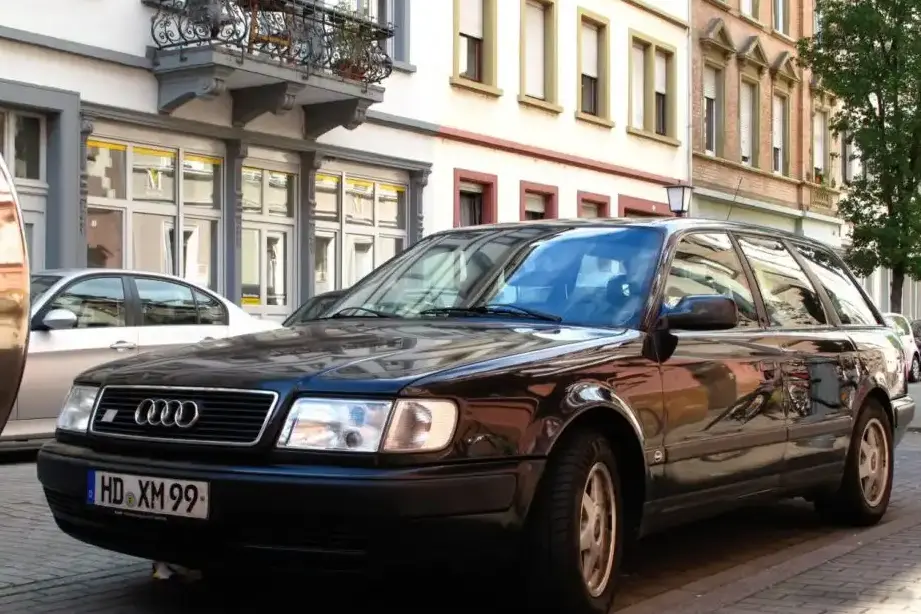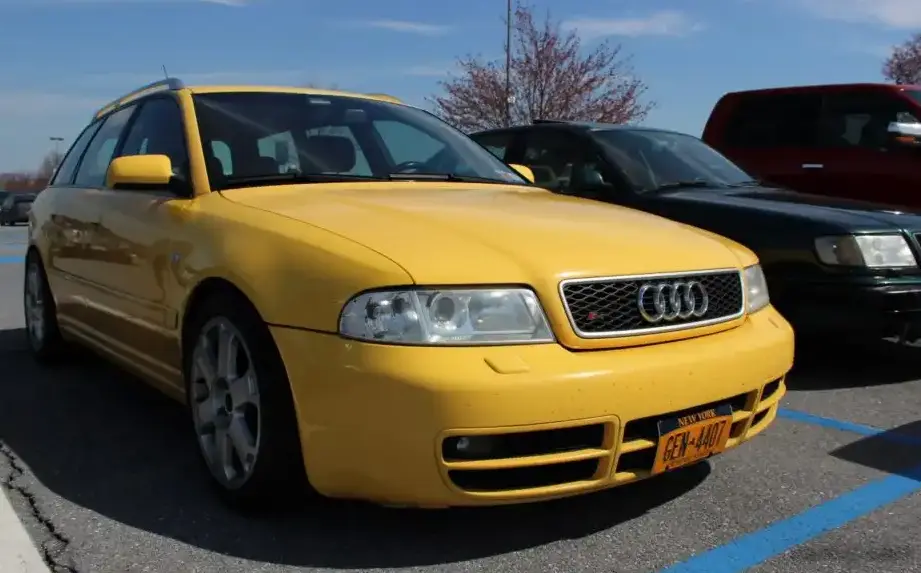
The Audi S4 (4A, C4) 2.2i Turbo quattro, produced between August 1991 and July 1994, represented a significant step forward for Audi’s performance sedan offerings. Positioned as the high-performance variant of the Audi 80/90 series (marketed as the Audi 90 in North America), the S4 brought quattro all-wheel drive and a turbocharged five-cylinder engine to a more accessible price point than the flagship Audi V8. This generation S4 was a key model in establishing Audi’s reputation for sophisticated, all-weather performance, and served as a precursor to the modern S4 lineage. It was built on the Audi B3 platform, internally designated 4A/C4.
Technical Specifications
| Brand | Audi |
| Model | S4 |
| Generation | S4 (4A,C4) |
| Type (Engine) | 2.2i Turbo (230 Hp) quattro |
| Start of production | August, 1991 |
| End of production | July, 1994 |
| Powertrain Architecture | Internal Combustion engine |
| Body type | Sedan |
| Seats | 5 |
| Doors | 4 |
| Fuel consumption (urban) | 14.6 l/100 km (16.1 US mpg, 19.3 UK mpg, 6.8 km/l) |
| Fuel consumption (extra urban) | 7.9 l/100 km (29.8 US mpg, 35.8 UK mpg, 12.7 km/l) |
| Fuel consumption (combined) | 9.5 l/100 km (24.8 US mpg, 29.7 UK mpg, 10.5 km/l) |
| Fuel Type | Petrol (Gasoline) |
| Acceleration 0 – 100 km/h | 6.8 sec |
| Acceleration 0 – 62 mph | 6.8 sec |
| Acceleration 0 – 60 mph | 6.5 sec |
| Maximum speed | 244 km/h (151.61 mph) |
| Weight-to-power ratio | 7 kg/Hp, 142.9 Hp/tonne |
| Weight-to-torque ratio | 4.6 kg/Nm, 217.4 Nm/tonne |
| Power | 230 Hp @ 5900 rpm |
| Power per litre | 103.3 Hp/l |
| Torque | 350 Nm @ 1950 rpm (258.15 lb.-ft. @ 1950 rpm) |
| Engine layout | Front, Longitudinal |
| Engine Model/Code | AAN |
| Engine displacement | 2226 cm3 (135.84 cu. in.) |
| Number of cylinders | 5 |
| Engine configuration | Inline |
| Cylinder Bore | 81 mm (3.19 in.) |
| Piston Stroke | 86.4 mm (3.4 in.) |
| Compression ratio | 9.3:1 |
| Number of valves per cylinder | 4 |
| Fuel injection system | Multi-port manifold injection |
| Engine aspiration | Turbocharger |
| Valvetrain | DOHC |
| Engine oil capacity | 4.5 l (4.76 US qt | 3.96 UK qt) |
| Coolant | 8 l (8.45 US qt | 7.04 UK qt) |
| Kerb Weight | 1610 kg (3549.44 lbs.) |
| Max. weight | 2160 kg (4761.98 lbs.) |
| Max load | 550 kg (1212.54 lbs.) |
| Trunk (boot) space – minimum | 510 l (18.01 cu. ft.) |
| Fuel tank capacity | 80 l (21.13 US gal | 17.6 UK gal) |
| Length | 4790 mm (188.58 in.) |
| Width | 1805 mm (71.06 in.) |
| Height | 1430 mm (56.3 in.) |
| Wheelbase | 2690 mm (105.91 in.) |
| Front track | 1555 mm (61.22 in.) |
| Rear (Back) track | 1525 mm (60.04 in.) |
| Drag coefficient (Cd) | 0.3 |
| Minimum turning circle | 11.4 m (37.4 ft.) |
| Drive wheel | All wheel drive (4×4) |
| Number of gears | 6 |
| Gearbox type | Manual transmission |
| Front brakes | Ventilated discs |
| Rear brakes | Disc |
| Assisting systems | ABS (Anti-lock braking system) |
| Steering type | Steering rack and pinion |
| Power steering | Hydraulic Steering |
| Tires size | 215/60 R16 |
| Wheel rims size | 16 |
Powertrain & Engine Architecture
The heart of the S4 was the Audi AAN engine, a 2.2-liter inline-five cylinder powerplant. This engine was a derivative of the Audi Ur-Quattro’s engine, but significantly revised with a larger turbocharger, improved cylinder head design, and a more sophisticated Bosch Motronic engine management system. The AAN featured multi-port fuel injection and a dual overhead camshaft (DOHC) valvetrain. The turbocharger provided substantial boost, contributing to the engine’s 230 horsepower and 258 lb-ft of torque. The engine’s longitudinal mounting and the quattro all-wheel-drive system created a balanced and capable platform. The six-speed manual transmission was the only gearbox option, providing precise control over the engine’s power delivery. The transmission’s gear ratios were carefully chosen to maximize acceleration and provide a comfortable cruising experience.
Driving Characteristics
The S4 2.2i Turbo quattro offered a compelling driving experience. The turbocharged five-cylinder engine delivered strong acceleration, with a noticeable surge of power as the turbo spooled up. While not as brutally fast as some contemporary sports cars, the S4’s all-wheel-drive system provided excellent traction, allowing it to put its power down effectively in a variety of conditions. The six-speed manual transmission offered a satisfyingly direct feel, and the gear ratios were well-matched to the engine’s powerband. Compared to the naturally aspirated Audi 80/90 models, the S4 offered a significantly more engaging and dynamic driving experience. It also outperformed the later 1.8L and TDI variants in terms of outright speed, though those models offered better fuel economy.
Equipment & Trim Levels
The S4 came relatively well-equipped as standard, reflecting its position as a premium performance model. Standard features typically included sport seats, a leather-wrapped steering wheel, power windows and locks, and an upgraded audio system. Optional extras included a sunroof, heated front seats, and upgraded alloy wheels. Interior trim was generally conservative, with dark wood or carbon fiber accents available. The S4’s interior was focused on functionality and driver comfort rather than outright luxury.
Chassis & Braking
The S4’s chassis was based on the Audi 80/90 platform, but with several key upgrades. The suspension was stiffer and lower than that of the standard models, providing improved handling and stability. The front suspension featured MacPherson struts, while the rear suspension utilized a semi-trailing arm design. Brakes were upgraded to ventilated discs at all four corners, providing ample stopping power. Anti-lock brakes (ABS) were standard. The S4’s chassis was well-balanced and provided a comfortable ride without sacrificing handling performance.
Market Reception & Comparison
The Audi S4 2.2i Turbo quattro was generally well-received by automotive critics. It was praised for its performance, handling, and all-weather capability. However, some critics noted that the turbocharged engine could be somewhat laggy at low speeds. Compared to other performance sedans of the era, such as the BMW M3 and the Mercedes-Benz 190E 2.5-16, the S4 offered a unique combination of performance and practicality. The S4’s all-wheel-drive system gave it a distinct advantage in slippery conditions, while its turbocharged engine provided strong acceleration. Fuel economy, while not exceptional, was reasonable for a performance car of this type.
Legacy
The Audi S4 (4A, C4) 2.2i Turbo quattro remains a sought-after classic among Audi enthusiasts. The AAN engine is known for its durability and tunability, and well-maintained examples can still provide a rewarding driving experience today. However, age and mileage can take their toll, and finding a well-preserved S4 can be challenging. Common issues include turbocharger wear, oil leaks, and corrosion. Despite these potential issues, the S4’s unique character and performance have ensured its place in automotive history. It laid the groundwork for the modern S4, establishing a tradition of sophisticated, all-weather performance that continues to this day. The AAN engine is still considered a high point in five-cylinder engine design, and its legacy lives on in Audi’s continued use of this configuration in later models.