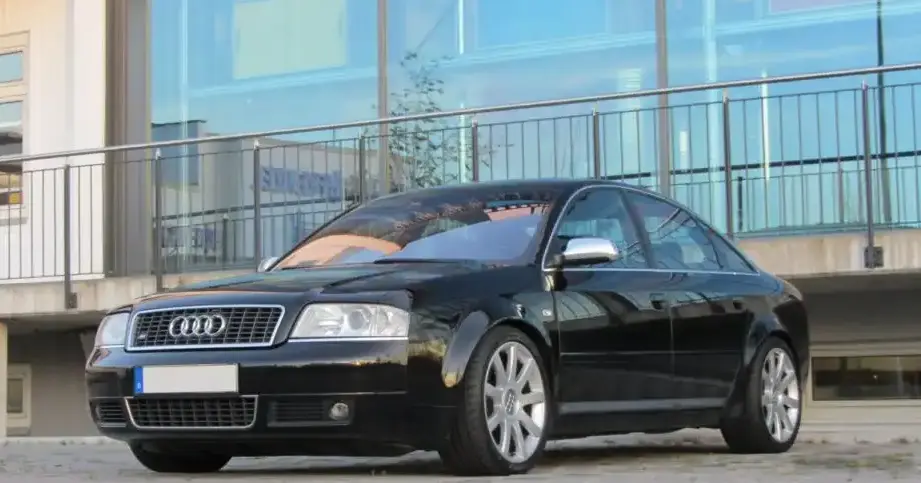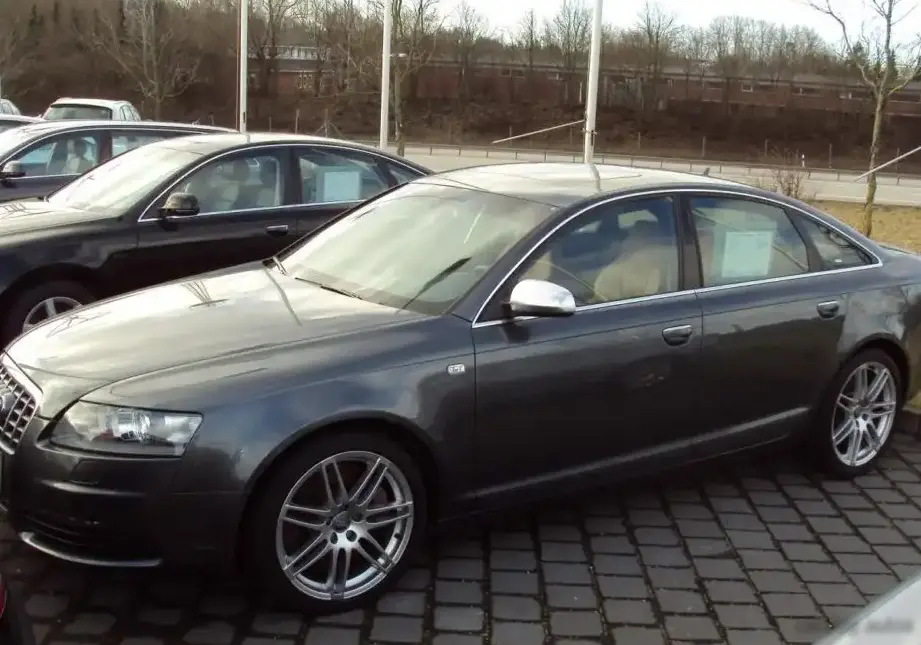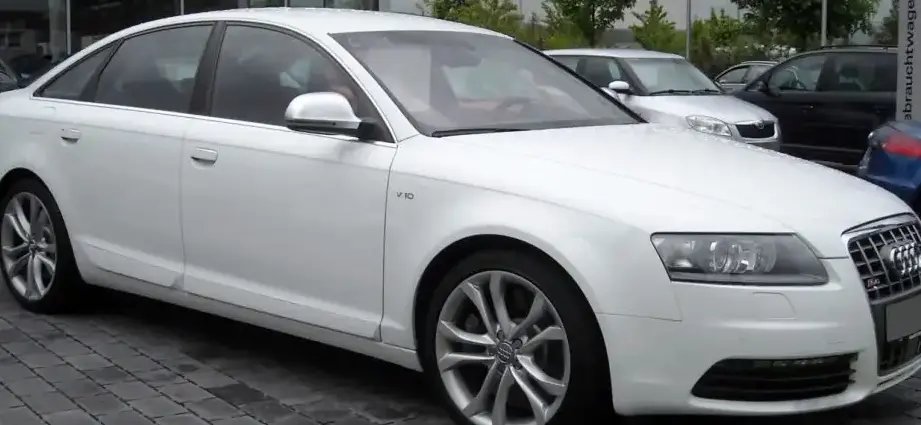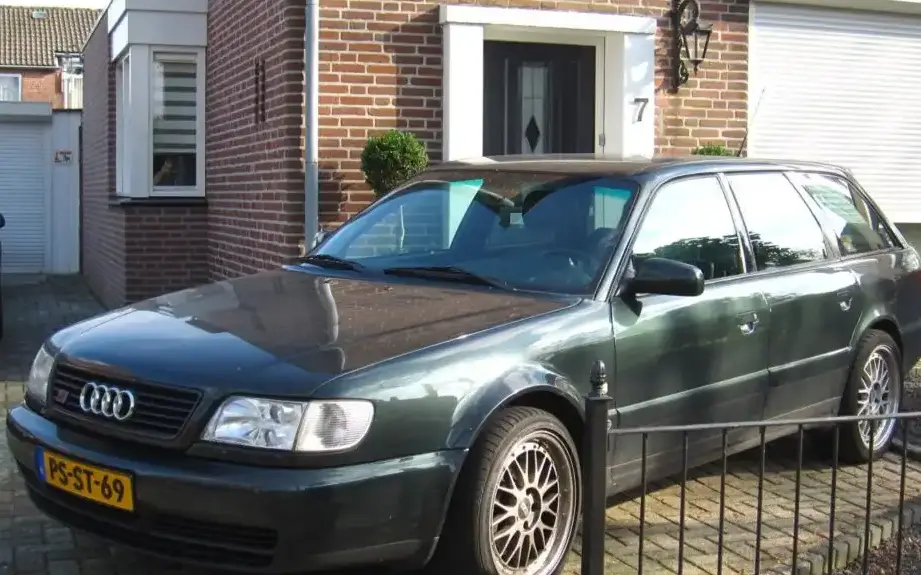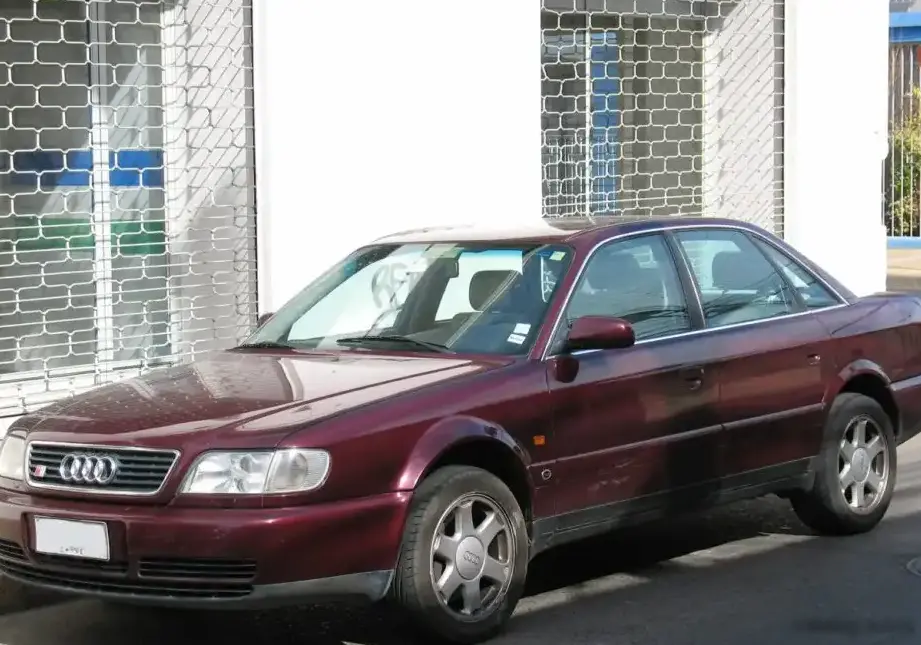
The Audi S6 (4A, C4) 4.2i V8 32V quattro, produced between September 1994 and October 1997, represents a high-performance iteration of the C4-generation Audi A6. Positioned as the flagship performance sedan within the A6 range, the S6 aimed to deliver a blend of luxury, refinement, and exhilarating performance. It was a key model in establishing Audi’s reputation for sophisticated all-wheel-drive technology and powerful engines. The C4 platform, also underpinning the Audi 100, was a significant step forward for Audi in terms of chassis technology and interior space.
Technical Specifications
| Brand | Audi |
| Model | S6 |
| Generation | S6 (4A,C4) |
| Type (Engine) | 4.2i V8 32V (290 Hp) quattro |
| Start of production | September, 1994 |
| End of production | October, 1997 |
| Powertrain Architecture | Internal Combustion engine |
| Body type | Sedan |
| Seats | 5 |
| Doors | 4 |
| Fuel consumption (economy) – urban | 18.9 l/100 km (12.4 US mpg, 14.9 UK mpg, 5.3 km/l) |
| Fuel consumption (economy) – extra urban | 9 l/100 km (26.1 US mpg, 31.4 UK mpg, 11.1 km/l) |
| Fuel consumption (economy) – combined | 13 l/100 km (18.1 US mpg, 21.7 UK mpg, 7.7 km/l) |
| Fuel Type | Petrol (Gasoline) |
| Acceleration 0 – 100 km/h | 5.9 sec |
| Acceleration 0 – 62 mph | 5.9 sec |
| Acceleration 0 – 60 mph | 5.6 sec |
| Maximum speed | 249 km/h (154.72 mph) |
| Weight-to-power ratio | 5.8 kg/Hp, 171.1 Hp/tonne |
| Weight-to-torque ratio | 4.2 kg/Nm, 236 Nm/tonne |
| Power | 290 Hp @ 5800 rpm |
| Power per litre | 69.5 Hp/l |
| Torque | 400 Nm @ 4000 rpm (295.02 lb.-ft. @ 4000 rpm) |
| Engine layout | Front, Longitudinal |
| Engine Model/Code | AEC |
| Engine displacement | 4172 cm3 (254.59 cu. in.) |
| Number of cylinders | 8 |
| Engine configuration | V-engine |
| Cylinder Bore | 84.5 mm (3.33 in.) |
| Piston Stroke | 93 mm (3.66 in.) |
| Compression ratio | 10.8:1 |
| Number of valves per cylinder | 4 |
| Fuel injection system | Multi-port manifold injection |
| Engine aspiration | Naturally aspirated engine |
| Valvetrain | DOHC |
| Engine oil capacity | 7.5 l (7.93 US qt | 6.6 UK qt) |
| Coolant | 8.5 l (8.98 US qt | 7.48 UK qt) |
| Kerb Weight | 1695 kg (3736.84 lbs.) |
| Max. weight | 2245 kg (4949.38 lbs.) |
| Max load | 550 kg (1212.54 lbs.) |
| Trunk (boot) space – minimum | 510 l (18.01 cu. ft.) |
| Fuel tank capacity | 80 l (21.13 US gal | 17.6 UK gal) |
| Max. roof load | 100 kg (220.46 lbs.) |
| Permitted trailer load with brakes (8%) | 2100 kg (4629.71 lbs.) |
| Permitted trailer load with brakes (12%) | 1900 kg (4188.78 lbs.) |
| Permitted trailer load without brakes | 750 kg (1653.47 lbs.) |
| Permitted towbar download | 75 kg (165.35 lbs.) |
| Length | 4797 mm (188.86 in.) |
| Width | 1804 mm (71.02 in.) |
| Height | 1430 mm (56.3 in.) |
| Wheelbase | 2692 mm (105.98 in.) |
| Front track | 1563 mm (61.54 in.) |
| Rear (Back) track | 1528 mm (60.16 in.) |
| Drag coefficient (Cd) | 0.34 |
| Minimum turning circle (turning diameter) | 11.4 m (37.4 ft.) |
| Drive wheel | All wheel drive (4×4) |
| Number of gears and type of gearbox | 6 gears, manual transmission |
| Front suspension | Independent, type McPherson with coil spring and anti-roll bar |
| Rear suspension | Independent on trapezoidal lever |
| Front brakes | Ventilated discs |
| Rear brakes | Ventilated discs |
| Assisting systems | ABS (Anti-lock braking system) |
| Steering type | Steering rack and pinion |
| Power steering | Hydraulic Steering |
| Tires size | 225/50 R16 |
| Wheel rims size | 7.5J x 16 |
Powertrain & Engine Architecture
The heart of the S6 4.2i is the AEC engine, a naturally aspirated 4.2-liter V8. This engine, a descendant of Audi’s long-running V8 lineage, featured a 90-degree V-angle and four valves per cylinder (32V). The engine utilized a Bosch Motronic engine management system controlling multi-port fuel injection. The AEC engine was known for its smooth power delivery and distinctive V8 sound. The six-speed manual transmission was standard, providing precise control over the engine’s output. The quattro all-wheel-drive system, a hallmark of Audi, distributed power between the front and rear axles, enhancing traction and stability, particularly in adverse weather conditions.
Driving Characteristics
The S6 4.2i offered a compelling driving experience. The 290 horsepower and 295 lb-ft of torque provided brisk acceleration, with 0-60 mph times consistently in the mid-5-second range. The six-speed manual transmission allowed drivers to fully exploit the engine’s powerband. While not as overtly aggressive as some contemporary sports sedans, the S6 prioritized a refined and balanced driving experience. The quattro system instilled confidence in all conditions, and the suspension provided a comfortable ride without sacrificing handling precision. Compared to the standard A6 2.8L models, the S6 offered a significant performance upgrade, while remaining more approachable than the even more potent RS6.
Equipment & Trim Levels
The S6 4.2i came generously equipped, reflecting its position as a premium performance sedan. Standard features included leather upholstery, power-adjustable front seats with memory function, automatic climate control, a premium sound system, and alloy wheels. Optional extras included a sunroof, upgraded audio systems, and various interior trim options. The interior design was characterized by a clean, functional layout with high-quality materials. The S6 also featured unique exterior styling cues, such as a subtle rear spoiler and distinctive alloy wheel designs, differentiating it from the standard A6.
Chassis & Braking
The S6 4.2i benefited from a robust chassis and capable braking system. The suspension featured independent McPherson struts at the front and an independent trapezoidal link setup at the rear, providing a good balance of ride comfort and handling. Ventilated disc brakes were fitted on all four wheels, providing ample stopping power. The anti-lock braking system (ABS) was standard, enhancing safety and control during hard braking. The S6’s chassis was designed to handle the increased power and torque of the V8 engine, delivering a stable and predictable driving experience.
Market Reception & Comparison
The Audi S6 4.2i was generally well-received by automotive critics. It was praised for its powerful engine, refined interior, and all-weather capability thanks to the quattro system. However, some reviewers noted that its fuel economy was relatively poor, a common trait of high-performance V8 engines. Compared to rivals like the BMW M5 and Mercedes-Benz E500, the S6 offered a more understated and balanced approach to performance. The S6’s reliability was generally good, although maintenance costs could be higher than those of less complex vehicles.
Legacy
The Audi S6 (4A, C4) 4.2i V8 32V quattro remains a desirable classic among Audi enthusiasts. The AEC engine, while not without its maintenance requirements, is known for its durability and potential for modification. Today, well-maintained examples command a premium in the used car market. The S6’s combination of performance, luxury, and all-wheel-drive capability cemented its place as a significant model in Audi’s history, paving the way for future generations of high-performance S models. Its influence can still be seen in Audi’s current lineup of performance sedans.