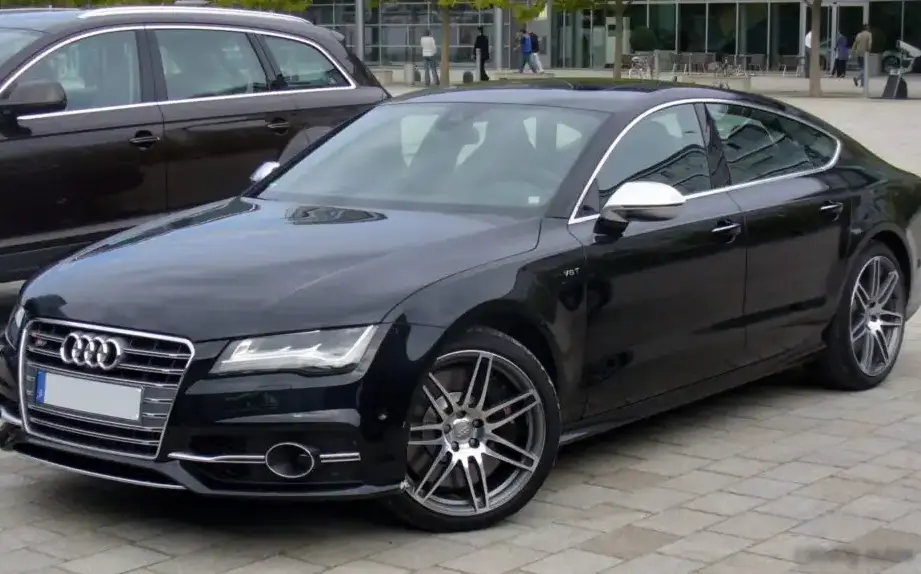
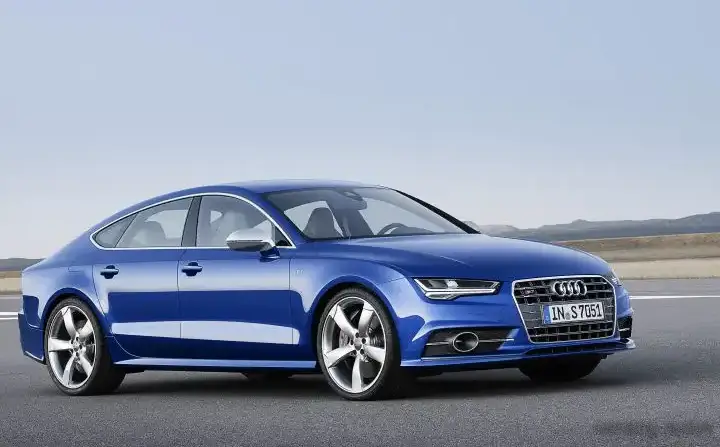
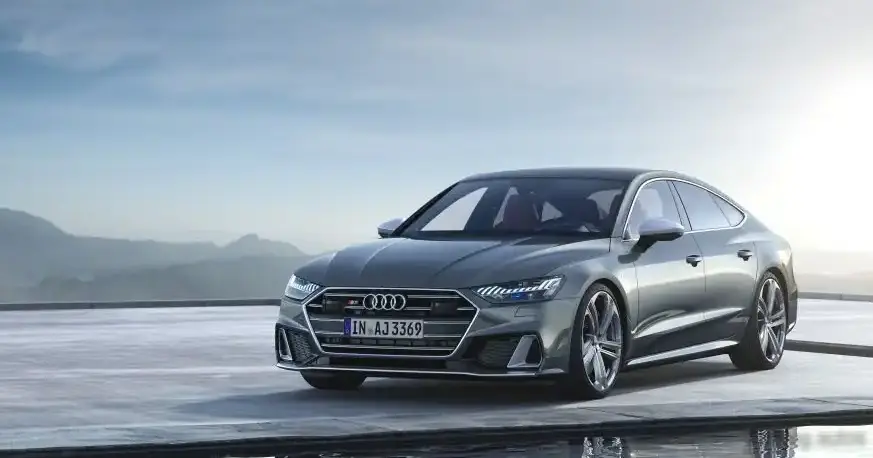
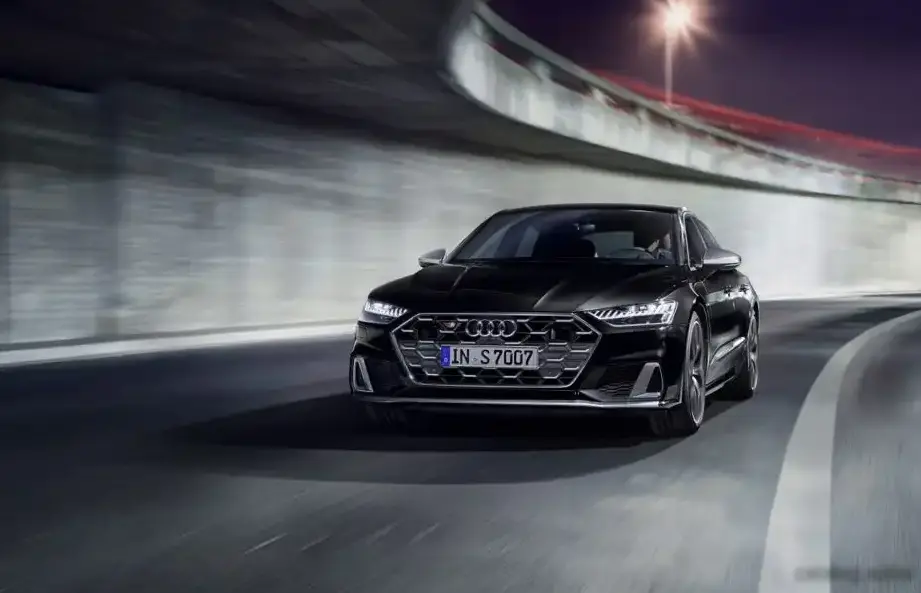
The Audi S7 Sportback (C7 facelift, produced from 2016 to 2019) represents the pinnacle of performance and luxury within the C7 generation of Audi’s A7 Sportback line. This variant, equipped with the 4.0 TFSI COD V8 engine producing 450 horsepower and paired with the seven-speed S tronic dual-clutch transmission and Audi’s quattro all-wheel-drive system, was positioned as the high-performance offering, bridging the gap between the standard A7 and the even more focused RS 7. The “facelift” designation refers to a series of cosmetic and technological updates applied mid-cycle to the C7 platform, enhancing both its aesthetic appeal and driving experience. This model aimed to deliver a grand touring experience with impressive acceleration and handling, wrapped in a sophisticated and practical liftback body style.
Technical Specifications
| Brand | Audi |
| Model | S7 |
| Generation | S7 Sportback (C7 facelift 2016) |
| Type (Engine) | 4.0 TFSI COD V8 (450 Hp) quattro S tronic |
| Start of production | 2016 |
| End of production | 2019 |
| Powertrain Architecture | Internal Combustion engine |
| Body type | Liftback |
| Seats | 4 |
| Doors | 5 |
| Fuel consumption (urban) | 13.2-13.4 l/100 km (17.8 – 17.6 US mpg, 21.4 – 21.1 UK mpg, 7.6 – 7.5 km/l) |
| Fuel consumption (extra urban) | 7.0-7.2 l/100 km (33.6 – 32.7 US mpg, 40.4 – 39.2 UK mpg, 14.3 – 13.9 km/l) |
| Fuel consumption (combined) | 9.3-9.5 l/100 km (25.3 – 24.8 US mpg, 30.4 – 29.7 UK mpg, 10.8 – 10.5 km/l) |
| CO2 emissions | 215-220 g/km |
| Fuel Type | Petrol (Gasoline) |
| Acceleration 0 – 100 km/h | 4.6 sec |
| Acceleration 0 – 62 mph | 4.6 sec |
| Acceleration 0 – 60 mph | 4.4 sec |
| Maximum speed | 250 km/h (155.34 mph) |
| Emission standard | EURO 6 |
| Weight-to-power ratio | 4.3 kg/Hp, 230.2 Hp/tonne |
| Weight-to-torque ratio | 3.6 kg/Nm, 281.3 Nm/tonne |
| Power | 450 Hp @ 5800-6400 rpm |
| Power per litre | 112.7 Hp/l |
| Torque | 550 Nm @ 1400-5700 rpm (405.66 lb.-ft. @ 1400-5700 rpm) |
| Engine layout | Front, Longitudinal |
| Engine Model/Code | CTGE |
| Engine displacement | 3993 cm3 (243.67 cu. in.) |
| Number of cylinders | 8 |
| Engine configuration | V-engine |
| Cylinder Bore | 84.5 mm (3.33 in.) |
| Piston Stroke | 89 mm (3.5 in.) |
| Compression ratio | 10.1:1 |
| Number of valves per cylinder | 4 |
| Fuel injection system | Direct injection |
| Engine aspiration | Turbocharger, Intercooler |
| Valvetrain | DOHC |
| Engine oil capacity | 8.3 l (8.77 US qt | 7.3 UK qt) |
| Coolant | 12 l (12.68 US qt | 10.56 UK qt) |
| Kerb Weight | 1955 kg (4310.04 lbs.) |
| Max. weight | 2565 kg (5654.86 lbs.) |
| Max load | 610 kg (1344.82 lbs.) |
| Trunk (boot) space – minimum | 535 l (18.89 cu. ft.) |
| Trunk (boot) space – maximum | 1390 l (49.09 cu. ft.) |
| Fuel tank capacity | 75 l (19.81 US gal | 16.5 UK gal) |
| Max. roof load | 100 kg (220.46 lbs.) |
| Permitted trailer load with brakes (8%) | 2100 kg (4629.71 lbs.) |
| Permitted trailer load with brakes (12%) | 2100 kg (4629.71 lbs.) |
| Permitted trailer load without brakes | 750 kg (1653.47 lbs.) |
| Permitted towbar download | 85 kg (187.39 lbs.) |
| Length | 4981 mm (196.1 in.) |
| Width | 1911 mm (75.24 in.) |
| Height | 1398 mm (55.04 in.) |
| Wheelbase | 2917 mm (114.84 in.) |
| Front track | 1642 mm (64.65 in.) |
| Rear (Back) track | 1634 mm (64.33 in.) |
| Drag coefficient (Cd) | 0.30 |
| Minimum turning circle (turning diameter) | 11.9 m (39.04 ft.) |
| Drive wheel | All wheel drive (4×4) |
| Number of gears and type of gearbox | 7 gears, automatic transmission S-tronic |
| Front suspension | Independent multi-link suspension |
| Rear suspension | Independent on trapezoidal lever |
| Front brakes | Ventilated discs |
| Rear brakes | Ventilated discs |
| Assisting systems | ABS (Anti-lock braking system) |
| Steering type | Steering rack and pinion |
| Power steering | Electric Steering |
| Tires size | 255/40 R19 |
| Wheel rims size | 8.5J x 19 |
Powertrain & Engine Architecture
The heart of the 2016-2019 Audi S7 Sportback is the 4.0 TFSI CTGE engine, a twin-turbocharged 4.0-liter V8. This engine utilizes Audi’s Cylinder on Demand (COD) technology, which shuts down one bank of cylinders during low-load cruising to improve fuel efficiency. The engine employs direct fuel injection and a dual-clutch transmission (S tronic) with seven forward gears. The S tronic transmission offers incredibly fast and smooth shifts, contributing significantly to the car’s performance. The engine’s architecture is a 90-degree V8, providing inherent balance and smoothness. The turbochargers are twin-scroll units, minimizing turbo lag and maximizing responsiveness. The valvetrain is a double overhead camshaft (DOHC) design with four valves per cylinder, optimizing airflow for increased power output.
Driving Characteristics
The 450 horsepower and 405.66 lb.-ft. of torque delivered by the 4.0 TFSI engine, combined with the quick-shifting S tronic transmission and quattro all-wheel drive, result in exhilarating performance. Acceleration from 0 to 60 mph takes approximately 4.4 seconds, and the car feels remarkably stable and planted even at high speeds. The S tronic transmission’s gear ratios are tuned for both rapid acceleration and comfortable highway cruising. Compared to the standard A7’s engines, the S7 offers a significantly more potent driving experience. While the RS 7 provides even more extreme performance, the S7 strikes a balance between usability and excitement. The all-wheel-drive system provides excellent traction in all weather conditions, enhancing confidence and control.
Equipment & Trim Levels
The S7 Sportback came standard with a comprehensive list of features, including leather upholstery, three-zone automatic climate control, a premium sound system, and Audi’s MMI infotainment system with navigation. Standard exterior features included S-specific styling cues, such as a unique grille, side skirts, and rear diffuser. Optional extras included features like adaptive cruise control, a head-up display, and upgraded interior trim materials. The interior typically featured sport seats with prominent bolstering, providing excellent support during spirited driving. The dashboard layout was clean and modern, with a focus on driver ergonomics.
Chassis & Braking
The S7 Sportback features a sophisticated suspension system designed to deliver both comfort and handling. The front suspension utilizes an independent multi-link setup, while the rear suspension employs an independent trapezoidal link design. The suspension is tuned to provide a sporty yet compliant ride. Braking duties are handled by ventilated discs on all four wheels, providing ample stopping power. The electronic stability control (ESC) system is integrated with the quattro all-wheel-drive system to enhance stability and control. The steering is a rack-and-pinion system with electric power assistance, offering precise and responsive steering feel.
Market Reception & Comparison
The 2016-2019 Audi S7 Sportback was generally well-received by automotive critics. It was praised for its powerful engine, refined interior, and comfortable ride. Compared to its competitors, such as the BMW 6 Series Gran Coupe and the Mercedes-Benz CLS, the S7 offered a compelling combination of performance, luxury, and practicality. Fuel economy was considered reasonable for a high-performance vehicle of its size and capability. Reliability reports have been generally positive, although some owners have reported minor issues with the infotainment system and occasional turbocharger-related concerns.
Legacy
The 4.0 TFSI engine in the S7 Sportback has proven to be a robust and reliable powertrain when properly maintained. The S tronic transmission is also generally considered durable, although regular fluid changes are essential. On the used car market, the 2016-2019 S7 Sportback remains a desirable option for buyers seeking a high-performance luxury liftback. Its combination of power, refinement, and practicality continues to appeal to enthusiasts. While maintenance costs can be higher than those of more mainstream vehicles, the S7’s overall build quality and performance characteristics ensure its continued relevance in the luxury performance segment.