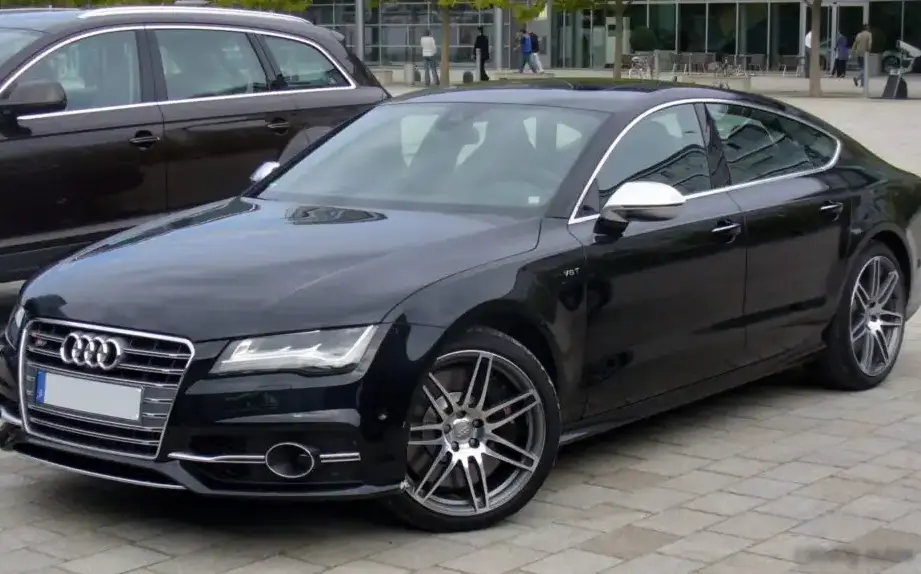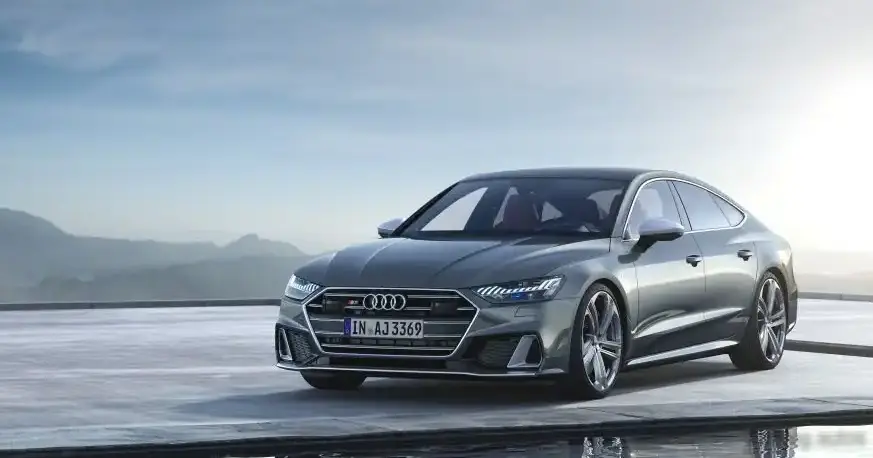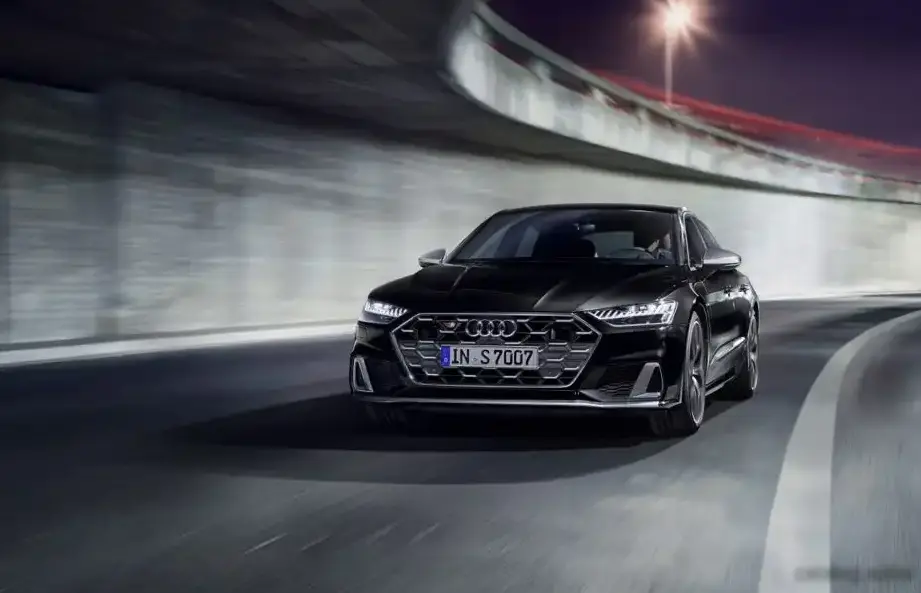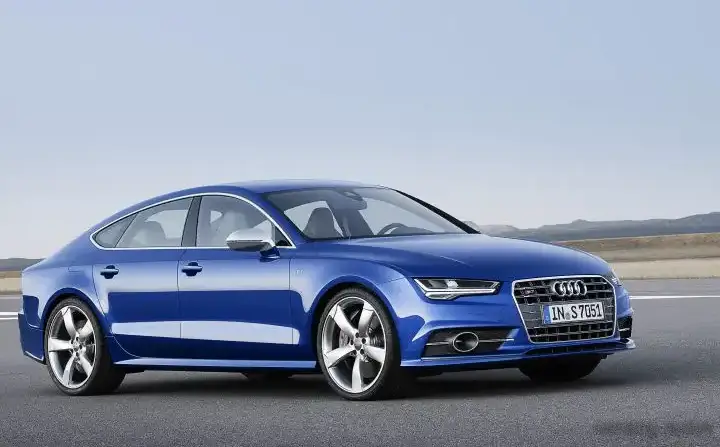
The Audi S7 Sportback (C7 facelift, produced from 2014 to 2016) represents a compelling blend of luxury, performance, and practicality within the executive car segment. Positioned as the performance-oriented variant of the A7 Sportback, the S7 facelift offered a significant upgrade over its predecessor, particularly with the introduction of the refined 4.0 TFSI V8 engine paired with the quick-shifting S tronic dual-clutch transmission and Audi’s quattro all-wheel drive system. This specific configuration aimed to deliver exhilarating performance while maintaining a comfortable and sophisticated driving experience. The C7 generation S7 Sportback was a key model for Audi, showcasing their technological prowess and design language in the premium liftback market.
Technical Specifications
| Brand | Audi |
| Model | S7 |
| Generation | S7 Sportback (C7 facelift 2014) |
| Type (Engine) | 4.0 TFSI V8 (450 Hp) quattro S tronic |
| Start of production | 2014 |
| End of production | 2016 |
| Powertrain Architecture | Internal Combustion engine |
| Body type | Liftback |
| Seats | 4 |
| Doors | 5 |
| Fuel consumption (urban) | 13.2 l/100 km (17.8 US mpg, 21.4 UK mpg, 7.6 km/l) |
| Fuel consumption (extra urban) | 7 l/100 km (33.6 US mpg, 40.4 UK mpg, 14.3 km/l) |
| Fuel consumption (combined) | 9.3 l/100 km (25.3 US mpg, 30.4 UK mpg, 10.8 km/l) |
| CO2 emissions | 215 g/km |
| Fuel Type | Petrol (Gasoline) |
| Acceleration 0 – 100 km/h | 4.6 sec |
| Acceleration 0 – 62 mph | 4.6 sec |
| Acceleration 0 – 60 mph | 4.4 sec |
| Maximum speed | 250 km/h (155.34 mph) |
| Emission standard | Euro 6 |
| Weight-to-power ratio | 4.3 kg/Hp, 230.2 Hp/tonne |
| Weight-to-torque ratio | 3.6 kg/Nm, 281.3 Nm/tonne |
| Power | 450 Hp @ 5800-6400 rpm |
| Power per litre | 112.7 Hp/l |
| Torque | 550 Nm @ 1400-5700 rpm (405.66 lb.-ft. @ 1400-5700 rpm) |
| Maximum engine speed | 6400 rpm |
| Engine layout | Front, Longitudinal |
| Engine Model/Code | CTGE |
| Engine displacement | 3993 cm3 (243.67 cu. in.) |
| Number of cylinders | 8 |
| Engine configuration | V-engine |
| Cylinder Bore | 84.5 mm (3.33 in.) |
| Piston Stroke | 89 mm (3.5 in.) |
| Compression ratio | 10.1:1 |
| Number of valves per cylinder | 4 |
| Fuel injection system | Direct injection |
| Engine aspiration | BiTurbo, Intercooler |
| Valvetrain | DOHC |
| Engine oil capacity | 8.3 l (8.77 US qt | 7.3 UK qt) |
| Coolant | 12 l (12.68 US qt | 10.56 UK qt) |
| Kerb Weight | 1955 kg (4310.04 lbs.) |
| Max. weight | 2565 kg (5654.86 lbs.) |
| Max load | 610 kg (1344.82 lbs.) |
| Trunk (boot) space – minimum | 535 l (18.89 cu. ft.) |
| Trunk (boot) space – maximum | 1390 l (49.09 cu. ft.) |
| Fuel tank capacity | 75 l (19.81 US gal | 16.5 UK gal) |
| Max. roof load | 100 kg (220.46 lbs.) |
| Permitted trailer load with brakes (8%) | 2100 kg (4629.71 lbs.) |
| Permitted trailer load with brakes (12%) | 2100 kg (4629.71 lbs.) |
| Permitted trailer load without brakes | 750 kg (1653.47 lbs.) |
| Permitted towbar download | 85 kg (187.39 lbs.) |
| Length | 4980 mm (196.06 in.) |
| Width | 1911 mm (75.24 in.) |
| Width including mirrors | 2139 mm (84.21 in.) |
| Height | 1408 mm (55.43 in.) |
| Wheelbase | 2916 mm (114.8 in.) |
| Front track | 1641 mm (64.61 in.) |
| Rear (Back) track | 1632 mm (64.25 in.) |
| Front overhang | 941 mm (37.05 in.) |
| Rear overhang | 1123 mm (44.21 in.) |
| Drag coefficient (Cd) | 0.3 |
| Minimum turning circle (turning diameter) | 11.9 m (39.04 ft.) |
| Drive wheel | All wheel drive (4×4) |
| Number of gears and type of gearbox | 7 gears, automatic transmission S-tronic |
| Front suspension | Independent multi-link suspension |
| Rear suspension | Independent on trapezoidal lever |
| Front brakes | Ventilated discs |
| Rear brakes | Ventilated discs |
| Assisting systems | ABS (Anti-lock braking system) |
| Steering type | Steering rack and pinion |
| Power steering | Electric Steering |
| Tires size | 255/40 R19 |
| Wheel rims size | 8.5J x 19 |
Powertrain & Engine Architecture
The heart of the 2014-2016 Audi S7 Sportback is the 4.0 TFSI V8 engine, designated with the code CTGE. This engine is a twin-turbocharged 4.0-liter (3993 cc) V8, producing 450 horsepower at 5800-6400 rpm and a substantial 550 Nm (405.66 lb-ft) of torque available from a low 1400 rpm all the way to 5700 rpm. The engine utilizes direct fuel injection and a sophisticated dual-scroll turbocharger setup, one turbocharger per cylinder bank, to minimize turbo lag and maximize responsiveness. The engine also features cylinder deactivation technology, which shuts down cylinders under light load conditions to improve fuel efficiency. The S tronic 7-speed dual-clutch transmission delivers incredibly fast and smooth gear changes, contributing to the car’s impressive acceleration. This transmission allows for both fully automatic operation and manual gear selection via steering wheel-mounted paddles.
Driving Characteristics
The combination of the 450 hp V8 and the 7-speed S tronic results in a remarkably quick and engaging driving experience. Acceleration from 0 to 60 mph takes approximately 4.4 seconds, and the car feels effortlessly powerful in everyday driving situations. The quattro all-wheel-drive system provides excellent traction, particularly in inclement weather, and contributes to confident handling. The S tronic transmission’s quick shifts and the engine’s broad torque curve mean that power is always readily available. Compared to the base A7 models, the S7 offers a significantly more dynamic driving experience, with sharper throttle response and more aggressive gear changes. While not as raw or visceral as some dedicated sports cars, the S7 strikes a compelling balance between performance and comfort.
Equipment & Trim Levels
The S7 Sportback came generously equipped as standard. Typical features included leather upholstery, three-zone automatic climate control, a premium sound system, and Audi’s MMI infotainment system with navigation. Optional extras included features like adaptive cruise control, a head-up display, ventilated front seats, and carbon fiber interior trim. The S7’s interior was characterized by its high-quality materials, meticulous craftsmanship, and a driver-focused design. The standard sport seats provided excellent support, and the overall cabin ambiance was one of refined luxury.
Chassis & Braking
The S7 Sportback features a sport-tuned suspension, lowering the ride height compared to the A7. The front suspension utilizes a multi-link design, while the rear employs a trapezoidal link setup. This configuration provides a good balance between ride comfort and handling precision. The braking system consists of ventilated discs on all four wheels, providing ample stopping power. The electronic stability control (ESC) system is integrated with the quattro all-wheel-drive system to enhance stability and control.
Market Reception & Comparison
The 2014-2016 Audi S7 Sportback was generally well-received by automotive critics. It was praised for its powerful engine, quick transmission, comfortable ride, and luxurious interior. Compared to its rivals, such as the BMW 6 Series Gran Coupe and the Mercedes-Benz CLS, the S7 was often noted for its more understated styling and its excellent all-weather capability thanks to the quattro system. Fuel economy, while not a priority for most S7 buyers, was respectable for a high-performance vehicle of its size and weight. Reliability reports have been generally positive, although preventative maintenance is crucial for any high-performance German car.
Legacy
The Audi S7 Sportback (C7 facelift) remains a desirable used car today. The 4.0 TFSI V8 engine, while complex, is generally considered to be robust when properly maintained. Regular oil changes and adherence to the manufacturer’s recommended service intervals are essential. The S tronic transmission is also reliable, but it’s important to ensure that it has been serviced according to Audi’s specifications. The C7 S7 Sportback represents a sweet spot in terms of performance, luxury, and value, making it a compelling choice for buyers seeking a high-performance executive car.