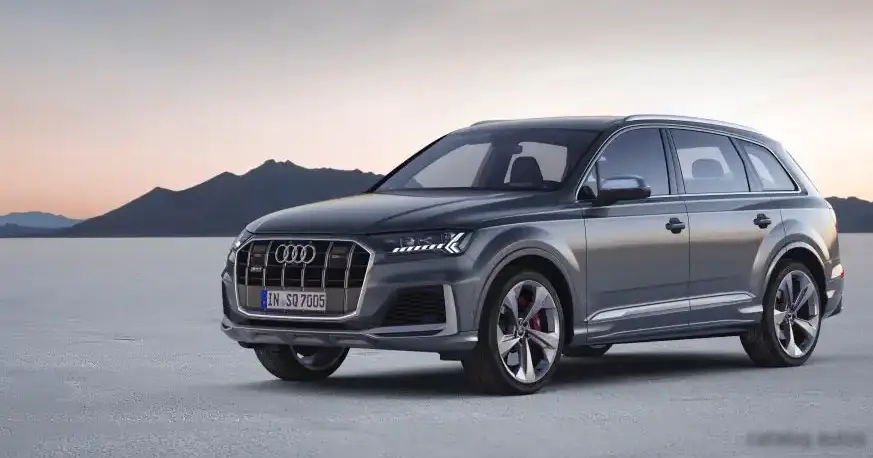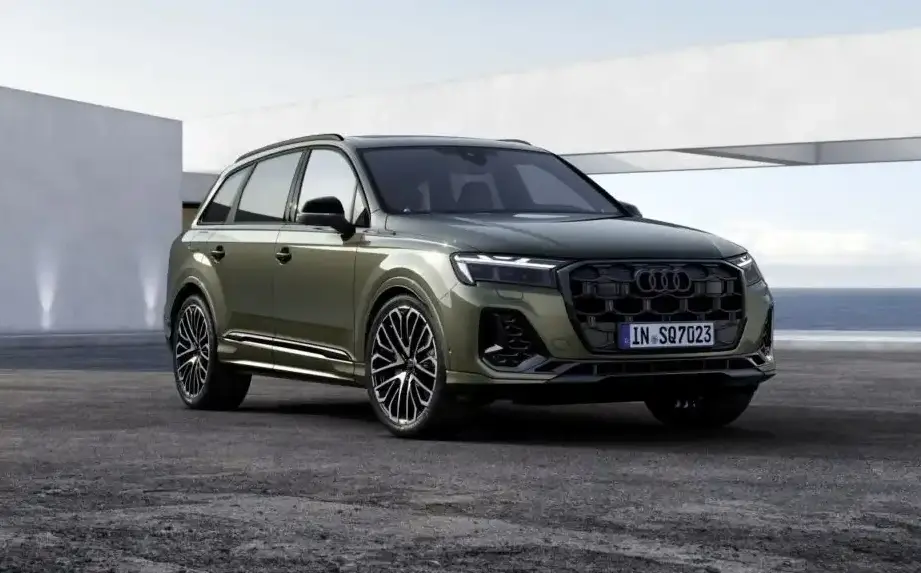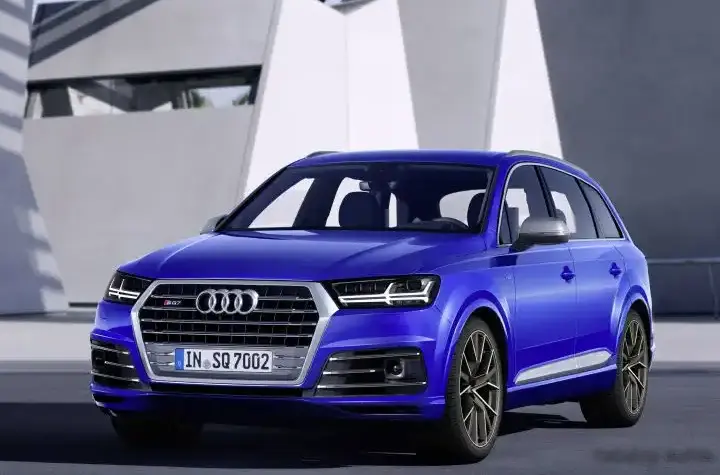
The Audi SQ7 (Typ 4M) 4.0 TDI V8 quattro Tiptronic 7-Seat, produced from 2016 to 2019, represents a performance-oriented iteration of Audi’s Q7 luxury SUV. Positioned as the high-performance variant within the second-generation Q7 lineup (Typ 4M, launched in 2015), the SQ7 aimed to deliver sports car-like acceleration and handling in a family-sized package. It served as a direct competitor to high-performance SUVs like the Porsche Cayenne S and BMW X5 M Sport. The Typ 4M generation marked a significant shift for the Q7, moving to the MLB Evo platform, resulting in substantial weight reduction and improved dynamics compared to its predecessor.
Technical Specifications
| Brand | Audi |
| Model | SQ7 |
| Generation | SQ7 (Typ 4M) |
| Type (Engine) | 4.0 TDI V8 (435 Hp) quattro Tiptronic 7 Seat |
| Start of production | 2016 |
| End of production | 2019 |
| Powertrain Architecture | Internal Combustion engine |
| Body type | SUV |
| Seats | 7 |
| Doors | 5 |
| Fuel consumption (urban) | 8.4-8.7 l/100 km (28 – 27 US mpg, 33.6 – 32.5 UK mpg, 11.9 – 11.5 km/l) |
| Fuel consumption (extra urban) | 6.5-6.9 l/100 km (36.2 – 34.1 US mpg, 43.5 – 40.9 UK mpg, 15.4 – 14.5 km/l) |
| Fuel consumption (combined) | 7.2-7.6 l/100 km (32.7 – 30.9 US mpg, 39.2 – 37.2 UK mpg, 13.9 – 13.2 km/l) |
| CO2 emissions | 190-199 g/km |
| Fuel Type | Diesel |
| Acceleration 0 – 100 km/h | 4.9 sec |
| Acceleration 0 – 62 mph | 4.9 sec |
| Acceleration 0 – 60 mph | 4.7 sec |
| Maximum speed | 250 km/h (155.34 mph) |
| Emission standard | Euro 6 |
| Weight-to-power ratio | 5.4 kg/Hp, 186.7 Hp/tonne |
| Weight-to-torque ratio | 2.6 kg/Nm, 386.3 Nm/tonne |
| Power | 435 Hp @ 3750-5000 rpm |
| Power per litre | 110 Hp/l |
| Torque | 900 Nm @ 1000-3250 rpm (663.81 lb.-ft. @ 1000-3250 rpm) |
| Maximum engine speed | 5000 rpm |
| Engine layout | Front, Longitudinal |
| Engine Model/Code | CZAC, DHVA |
| Engine displacement | 3956 cm3 (241.41 cu. in.) |
| Number of cylinders | 8 |
| Engine configuration | V-engine |
| Cylinder Bore | 83 mm (3.27 in.) |
| Piston Stroke | 91.4 mm (3.6 in.) |
| Compression ratio | 16:1 |
| Number of valves per cylinder | 4 |
| Fuel injection system | Diesel Commonrail |
| Engine aspiration | Twin-Turbo and Electric Powered Compressor, Intercooler |
| Valvetrain | DOHC |
| Engine oil capacity | 9.1 l (9.62 US qt | 8.01 UK qt) |
| Kerb Weight | 2330 kg (5136.77 lbs.) |
| Max. weight | 3200 kg (7054.79 lbs.) |
| Max load | 870 kg (1918.02 lbs.) |
| Trunk (boot) space – minimum | 235 l (8.3 cu. ft.) |
| Trunk (boot) space – maximum | 1890 l (66.74 cu. ft.) |
| Fuel tank capacity | 85 l (22.45 US gal | 18.7 UK gal) |
| Max. roof load | 100 kg (220.46 lbs.) |
| Permitted trailer load with brakes (8%) | 3500 kg (7716.18 lbs.) |
| Permitted trailer load with brakes (12%) | 3500 kg (7716.18 lbs.) |
| Permitted trailer load without brakes | 750 kg (1653.47 lbs.) |
| Permitted towbar download | 140 kg (308.65 lbs.) |
| Length | 5069 mm (199.57 in.) |
| Width | 1968 mm (77.48 in.) |
| Width including mirrors | 2212 mm (87.09 in.) |
| Height | 1741 mm (68.54 in.) |
| Wheelbase | 2996 mm (117.95 in.) |
| Front track | 1679 mm (66.1 in.) |
| Rear (Back) track | 1679 mm (66.1 in.) |
| Front overhang | 978 mm (38.5 in.) |
| Rear overhang | 1095 mm (43.11 in.) |
| Ride height (ground clearance) | 245 mm (9.65 in.) |
| Drag coefficient (Cd) | 0.331 |
| Minimum turning circle (turning diameter) | 12.4 m (40.68 ft.) |
| Approach angle | 20.1° |
| Departure angle | 19° |
| Ramp-over (brakeover) angle | 14.9° |
| Wading depth | 535 mm (21.06 in.) |
| Drive wheel | All wheel drive (4×4) |
| Number of gears and type of gearbox | 8 gears, automatic transmission Tiptronic |
| Front suspension | Independent multi-link suspension |
| Rear suspension | Independent multi-link suspension |
| Front brakes | Ventilated discs |
| Rear brakes | Ventilated discs |
| Assisting systems | ABS (Anti-lock braking system) |
| Steering type | Steering rack and pinion |
| Power steering | Electric Steering |
| Tires size | 285/45 R20 |
| Wheel rims size | 20 |
Powertrain & Engine Architecture
The heart of the SQ7 is the 4.0-liter twin-turbocharged V8 diesel engine, designated as the CZAC or DHVA engine code depending on the specific production year and market. This engine is a significant departure from earlier Audi diesel engines, incorporating a sophisticated electric powered compressor (EPC) alongside the conventional exhaust gas turbochargers. The EPC, powered by a 48-volt electrical system, provides near-instant boost at low engine speeds, effectively eliminating turbo lag and delivering a more responsive driving experience. The engine utilizes a diesel commonrail fuel injection system, operating at extremely high pressures to optimize combustion efficiency and reduce emissions. The valvetrain employs double overhead camshafts (DOHC) with four valves per cylinder. The eight-speed Tiptronic automatic transmission is specifically tuned for the high torque output of the V8 diesel, offering smooth and rapid gear changes.
Driving Characteristics
The SQ7 4.0 TDI delivers a remarkably potent driving experience. The combination of the powerful engine and the quick-shifting Tiptronic transmission results in a 0-60 mph time of around 4.7 seconds. The electric compressor significantly improves low-end responsiveness, making the SQ7 feel surprisingly agile for its size. Compared to the standard Q7, the SQ7 benefits from a more aggressively tuned suspension and steering, providing a more engaging and controlled driving experience. While not as overtly sporty as some dedicated performance SUVs, the SQ7 strikes a good balance between comfort and performance, making it a capable and enjoyable vehicle for both daily driving and spirited excursions. The automatic transmission, while efficient, doesn’t offer the same level of driver engagement as a manual gearbox, but its smooth operation and quick shifts contribute to the overall refined driving experience.
Equipment & Trim Levels
The SQ7 typically came well-equipped as standard, reflecting its position as the flagship Q7 variant. Standard features included leather upholstery, heated and ventilated front seats, a panoramic sunroof, a premium sound system, and Audi’s Virtual Cockpit digital instrument cluster. Optional extras included adaptive air suspension, massaging front seats, and a variety of driver-assistance systems such as adaptive cruise control and lane-keeping assist. Interior trim options included various wood and aluminum finishes, allowing buyers to personalize the cabin to their preferences. Exterior styling cues included unique S-model bumpers, side skirts, and a rear spoiler, along with quad exhaust outlets.
Chassis & Braking
The SQ7’s chassis is based on the MLB Evo platform, which utilizes a mix of high-strength steel and aluminum to reduce weight and improve rigidity. The suspension features independent multi-link setups at both the front and rear, providing a comfortable ride and precise handling. The SQ7 typically came equipped with large ventilated disc brakes at all four corners, providing ample stopping power. The standard quattro all-wheel-drive system distributes torque between the front and rear axles as needed, enhancing traction and stability in all weather conditions.
Market Reception & Comparison
The SQ7 was generally well-received by automotive critics, who praised its powerful engine, refined ride, and luxurious interior. However, some reviewers noted that the diesel engine, while potent, lacked the emotional appeal of a gasoline-powered V8. Compared to the standard Q7, the SQ7 offered a significant performance upgrade, but at a higher price point. Against competitors like the Porsche Cayenne S and BMW X5 M Sport, the SQ7 offered a compelling combination of performance, luxury, and practicality. Fuel economy was a strong point for the SQ7, with combined fuel consumption figures in the range of 32.7-30.9 US mpg, making it relatively efficient for a large, high-performance SUV.
Legacy
The SQ7 (Typ 4M) established itself as a strong contender in the performance SUV segment. The 4.0 TDI V8 engine, with its innovative electric powered compressor, proved to be a reliable and durable powertrain. On the used car market, the SQ7 commands a premium over the standard Q7, reflecting its higher performance and more luxurious features. While diesel emissions regulations have impacted the desirability of diesel vehicles in some markets, the SQ7 remains a sought-after SUV for those seeking a blend of performance, luxury, and practicality.