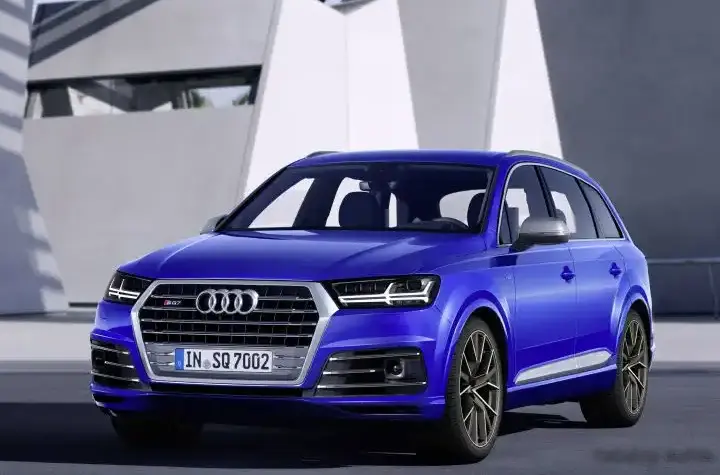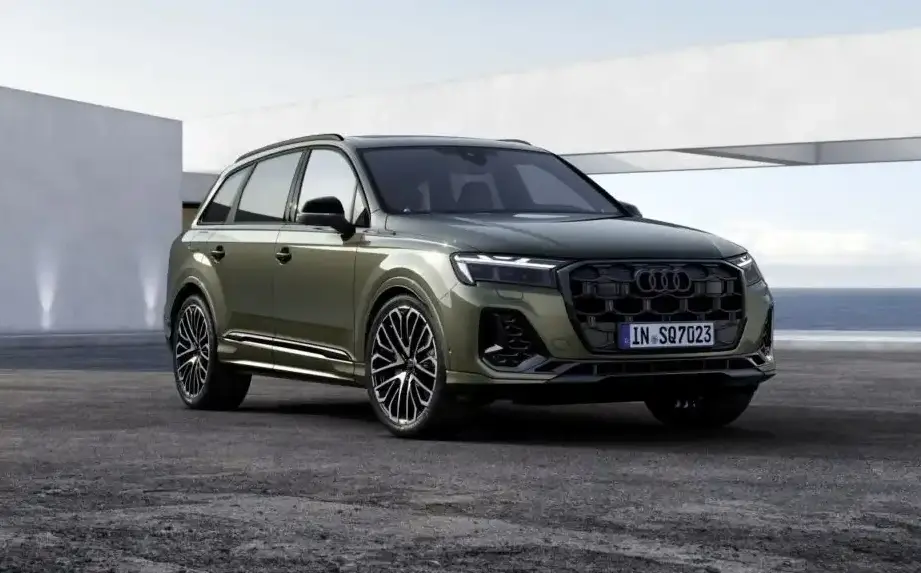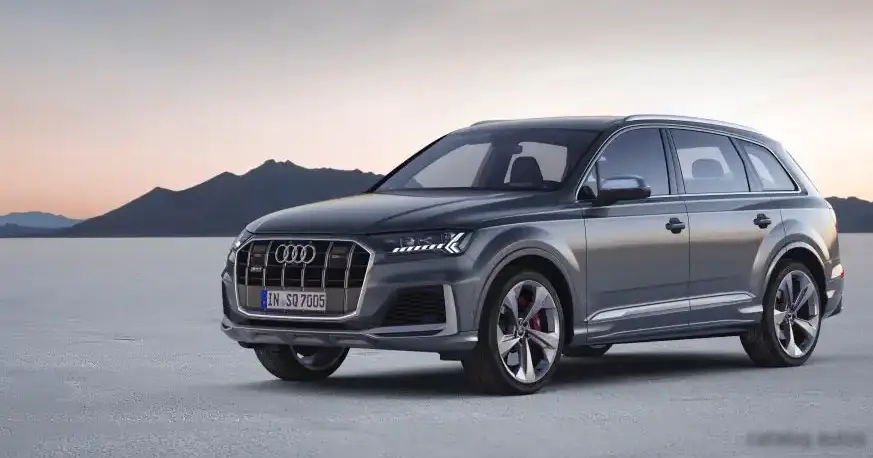
The Audi SQ7 (Typ 4M, facelift 2019) represents a high-performance iteration of Audi’s Q7 SUV, introduced in September 2019 as part of a mid-cycle refresh for the Typ 4M generation. This variant is distinguished by its potent 4.0-liter TDI V8 engine, mild-hybrid technology, and standard quattro all-wheel drive system coupled with an eight-speed tiptronic automatic transmission. Positioned as the performance flagship of the Q7 line, it slots above the standard Q7 and the Q7 e-tron plug-in hybrid, offering a blend of luxury, space, and substantial performance. Production continued until September 2020, making it a relatively short-lived but significant model within the Q7 family.
Technical Specifications
| Brand | Audi |
| Model | SQ7 |
| Generation | SQ7 (Typ 4M, facelift 2019) |
| Type (Engine) | 4.0 TDI V8 (435 Hp) Mild Hybrid quattro tiptronic |
| Start of production | September, 2019 |
| End of production | September, 2020 |
| Powertrain Architecture | MHEV (Mild Hybrid Electric Vehicle) |
| Body type | SUV |
| Seats | 5 |
| Doors | 5 |
| Combined fuel consumption (WLTP) | 9.1-9.7 l/100 km (25.8 – 24.2 US mpg) |
| CO2 emissions (WLTP) | 238-255 g/km |
| Fuel consumption (urban) | 8.4-8.6 l/100 km (28 – 27.4 US mpg) |
| Fuel consumption (extra urban) | 6.8-7.0 l/100 km (34.6 – 33.6 US mpg) |
| Fuel consumption (combined) | 7.4-7.6 l/100 km (31.8 – 30.9 US mpg) |
| CO2 emissions | 194-200 g/km |
| Fuel Type | Diesel |
| Acceleration 0 – 100 km/h | 4.8 sec |
| Acceleration 0 – 62 mph | 4.8 sec |
| Acceleration 0 – 60 mph | 4.6 sec |
| Maximum speed | 250 km/h (155.34 mph) |
| Emission standard | Euro 6 DG |
| Weight-to-power ratio | 5.3 kg/Hp |
| Weight-to-torque ratio | 2.6 kg/Nm |
| Gross battery capacity | 0.5 kWh |
| Battery voltage | 48 V |
| Battery technology | Lithium-ion (Li-Ion) |
| Power | 435 Hp @ 3750-4750 rpm |
| Torque | 900 Nm @ 1250-3250 rpm (663.81 lb.-ft.) |
| Engine layout | Front, Longitudinal |
| Engine Model/Code | EA898 / DMVA |
| Engine displacement | 3956 cm3 (241.41 cu. in.) |
| Number of cylinders | 8 |
| Engine configuration | V-engine |
| Cylinder Bore | 83 mm (3.27 in.) |
| Piston Stroke | 91.4 mm (3.6 in.) |
| Compression ratio | 16:1 |
| Number of valves per cylinder | 4 |
| Fuel injection system | Diesel Commonrail |
| Engine aspiration | Twin-Turbo and Electric Powered Compressor, Intercooler |
| Valvetrain | DOHC |
| Engine oil capacity | 8.8 l (9.3 US qt | 7.74 UK qt) |
| Coolant | 14.9 l (15.74 US qt | 13.11 UK qt) |
| Kerb Weight | 2320 kg (5114.72 lbs.) |
| Max. weight | 3050 kg (6724.1 lbs.) |
| Max load | 730 kg (1609.37 lbs.) |
| Trunk (boot) space – minimum | 772 l (27.26 cu. ft.) |
| Trunk (boot) space – maximum | 1975 l (69.75 cu. ft.) |
| Fuel tank capacity | 85 l (22.45 US gal | 18.7 UK gal) |
| AdBlue tank | 24 l (6.34 US gal | 5.28 UK gal) |
| Max. roof load | 100 kg (220.46 lbs.) |
| Permitted trailer load with brakes (8%) | 3500 kg (7716.18 lbs.) |
| Permitted trailer load without brakes | 750 kg (1653.47 lbs.) |
| Length | 5066 mm (199.45 in.) |
| Width | 1970 mm (77.56 in.) |
| Height | 1743 mm (68.62 in.) |
| Wheelbase | 2996 mm (117.95 in.) |
| Front/Rear track | 1663 mm (65.47 in.) |
| Drag coefficient (Cd) | 0.33 |
| Minimum turning circle | 12.5 m (41.01 ft.) |
| Front suspension | Independent multi-link suspension, Air suspension |
| Rear suspension | Independent multi-link suspension, Air suspension |
| Front brakes | Ventilated discs, 400 mm |
| Rear brakes | Ventilated discs, 370 mm |
| Gearbox | 8 gears, automatic transmission tiptronic |
| Tire size | 285/45 R20 |
INTRODUCTION
The 2019 facelift of the Audi Q7 brought with it the updated SQ7 variant, building upon the already successful Typ 4M platform. This generation Q7, launched in 2015, represented a significant shift for Audi’s largest SUV, moving to the MLB Evo platform shared with other Volkswagen Group vehicles like the Bentley Bentayga and Porsche Cayenne. The SQ7, specifically, was designed to appeal to buyers seeking a high-performance SUV without sacrificing the practicality and luxury expected from the Q7. The introduction of the 48V mild-hybrid system further enhanced both performance and efficiency, solidifying its position as a technologically advanced offering in the premium SUV segment.
Powertrain & Engine Architecture
At the heart of the SQ7 is the EA898 4.0-liter TDI V8 engine, designated with the code DMVA. This engine is a sophisticated diesel powerplant featuring a cast iron block and aluminum cylinder heads. It utilizes a common rail direct injection system, delivering fuel at extremely high pressures for optimized combustion. The engine employs a sequential twin-turbocharger setup, with one smaller turbocharger for immediate response at low engine speeds and a larger turbocharger for increased power at higher RPMs. Crucially, this engine incorporates an Electric Powered Compressor (EPC) driven by the 48V mild-hybrid system. The EPC spools up instantly, eliminating turbo lag and providing a near-instantaneous power boost. The 48V system also powers a belt starter generator (BSG) enabling start-stop functionality and allowing for coasting with the engine switched off, further improving fuel economy. The eight-speed tiptronic automatic transmission is specifically tuned for the high torque output of the V8, offering smooth and rapid gear changes.
Driving Characteristics
The SQ7’s 435 horsepower and 900 Nm (663.81 lb-ft) of torque deliver impressive acceleration. The 0-60 mph sprint is dispatched in around 4.6 seconds, making it a genuinely quick SUV. The mild-hybrid system and EPC contribute to a remarkably responsive driving experience, with minimal turbo lag. The tiptronic transmission provides smooth shifts in automatic mode, and drivers can also take control with the paddle shifters. While not as overtly sporty as some performance SUVs, the SQ7 offers a refined and powerful driving experience. The air suspension provides a comfortable ride, and the quattro all-wheel drive system ensures excellent traction in all conditions. The gear ratios are optimized for both acceleration and highway cruising, providing ample power for overtaking maneuvers.
Equipment & Trim Levels
The SQ7 came generously equipped as standard. Interior features typically included Valcona leather upholstery, heated and ventilated front seats with massage function, a panoramic sunroof, and a premium Bang & Olufsen sound system. The Audi virtual cockpit, a fully digital instrument cluster, was also standard. Infotainment was handled by Audi’s MMI touch response system, featuring dual touchscreens. Optional extras included adaptive cruise control, a head-up display, and various interior trim packages. The exterior styling was enhanced with S-specific body kit, including unique front and rear bumpers, side skirts, and quad exhaust outlets.
Chassis & Braking
The SQ7 utilizes an independent multi-link suspension setup at both the front and rear, enhanced by Audi’s adaptive air suspension system. This system allows the ride height to be adjusted, providing a balance between comfort and handling. Larger brakes compared to the standard Q7 were fitted, with ventilated discs measuring 400mm at the front and 370mm at the rear, providing ample stopping power. The quattro all-wheel drive system utilizes a self-locking center differential, distributing torque between the front and rear axles as needed.
Market Reception & Comparison
The SQ7 was generally well-received by automotive critics, praised for its powerful engine, refined ride, and luxurious interior. Compared to the standard Q7, the SQ7 offered a significant performance upgrade, while maintaining a similar level of practicality and comfort. Against competitors like the Porsche Cayenne S Diesel and the BMW X5 M50d, the SQ7 offered a compelling combination of performance, luxury, and technology. Fuel economy, while respectable for a vehicle of its size and performance, was not its strongest suit, falling slightly behind some of its competitors. Reliability reports have been generally positive, although the complexity of the engine and mild-hybrid system means that maintenance costs can be higher than for simpler vehicles.
Legacy
The 2019-2020 Audi SQ7 represents a high point in the development of high-performance diesel SUVs. The combination of the potent V8 engine, mild-hybrid technology, and sophisticated all-wheel drive system created a vehicle that was both powerful and refined. On the used car market, these SQ7s hold their value relatively well, reflecting their desirability and strong performance credentials. The EA898 engine, while complex, has proven to be durable when properly maintained. The SQ7’s legacy lies in its demonstration of how diesel power could be combined with advanced technology to deliver a compelling and luxurious SUV experience.