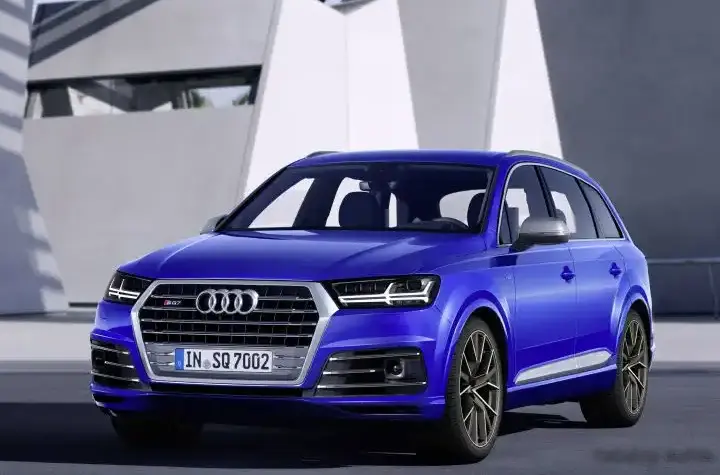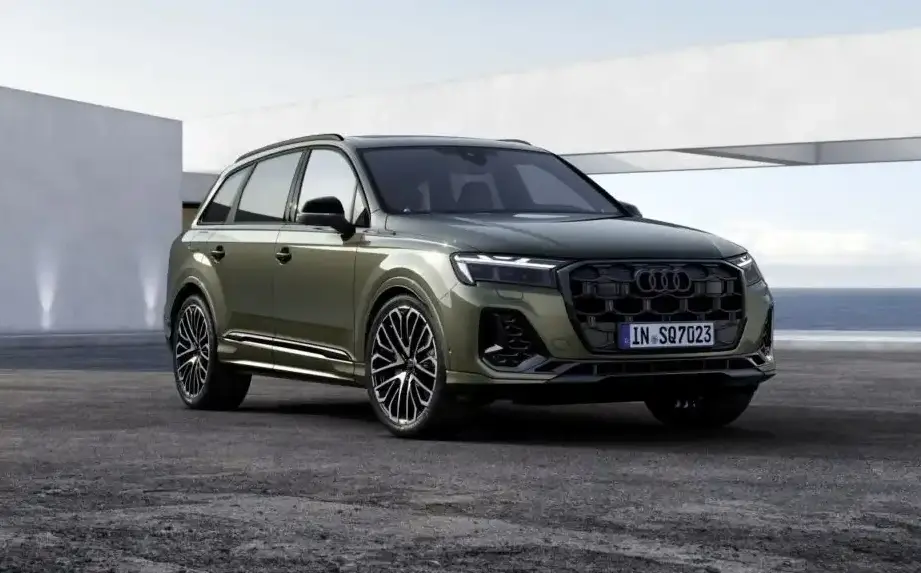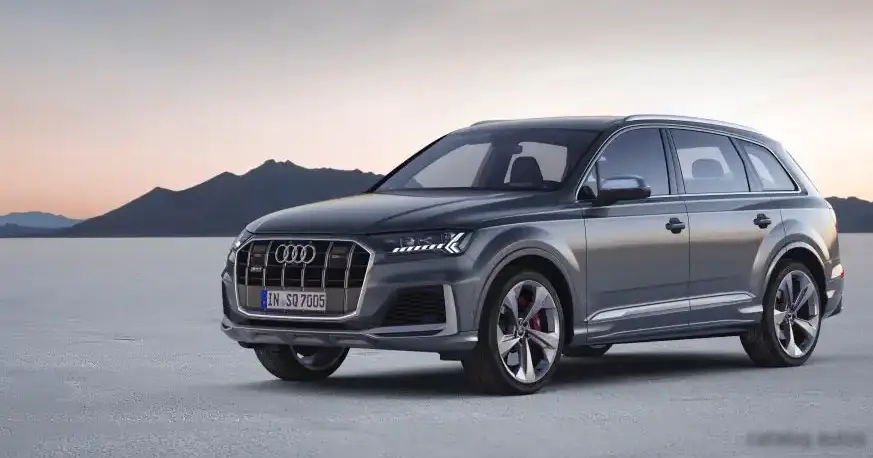
The Audi SQ7 (Typ 4M, facelift 2019) with the 4.0 TFSI V8 engine producing 507 horsepower represents the performance pinnacle of the second-generation Q7 SUV. Introduced in 2020 and continuing through the 2024 model year, this variant occupied the top-tier position within the Q7 lineup, offering a blend of luxury, space, and substantial performance. It built upon the foundation of the 4M platform, shared with the standard Q7, but distinguished itself through its potent engine, upgraded suspension, and aggressive styling cues. This model aimed to compete with high-performance luxury SUVs like the Porsche Cayenne and BMW X5 M, offering a compelling alternative for buyers seeking a sporty yet practical vehicle.
Technical Specifications
| Brand | Audi |
| Model | SQ7 |
| Generation | SQ7 (Typ 4M, facelift 2019) |
| Type (Engine) | 4.0 TFSI V8 (507 Hp) quattro tiptronic |
| Start of production | 2020 |
| End of production | 2024 |
| Powertrain Architecture | Internal Combustion engine |
| Body type | SUV |
| Seats | 5-7 |
| Doors | 5 |
| Fuel consumption (economy) – urban (NEDC) | 16.4 l/100 km (14.3 US mpg, 17.2 UK mpg, 6.1 km/l) |
| Fuel consumption (economy) – extra urban (NEDC) | 9.5 l/100 km (24.8 US mpg, 29.7 UK mpg, 10.5 km/l) |
| Fuel consumption (economy) – combined (NEDC) | 12.0 l/100 km (19.6 US mpg, 23.5 UK mpg, 8.3 km/l) |
| CO2 emissions (NEDC) | 276 g/km |
| Fuel Type | Petrol (Gasoline) |
| Acceleration 0 – 100 km/h | 4.1 sec |
| Acceleration 0 – 62 mph | 4.1 sec |
| Acceleration 0 – 60 mph | 3.9 sec |
| Maximum speed | 250 km/h (155.34 mph) |
| Emission standard | Euro 6d-ISC-FCM |
| Weight-to-power ratio | 4.3 kg/Hp, 230.5 Hp/tonne |
| Weight-to-torque ratio | 2.9 kg/Nm, 350 Nm/tonne |
| Power | 507 Hp @ 5500 rpm |
| Power per litre | 126.9 Hp/l |
| Torque | 770 Nm @ 2000-4000 rpm (567.92 lb.-ft. @ 2000-4000 rpm) |
| Engine layout | Front, Longitudinal |
| Engine Model/Code | DCU |
| Engine displacement | 3996 cm3 (243.85 cu. in.) |
| Number of cylinders | 8 |
| Engine configuration | V-engine |
| Cylinder Bore | 86 mm (3.39 in.) |
| Piston Stroke | 86 mm (3.39 in.) |
| Compression ratio | 10.1:1 |
| Number of valves per cylinder | 4 |
| Fuel injection system | Direct injection |
| Engine aspiration | Twin-Turbo, Intercooler |
| Engine oil capacity | 9.5 l (10.04 US qt, 8.36 UK qt) |
| Coolant | 14.9 l (15.74 US qt, 13.11 UK qt) |
| Kerb Weight | 2200-2265 kg (4850.17 – 4993.47 lbs.) |
| Max. weight | 2850-3020 kg (6283.17 – 6657.96 lbs.) |
| Max load | 650-755 kg (1433 – 1664.49 lbs.) |
| Trunk (boot) space – minimum | 803-705 l (28.36 – 24.9 cu. ft.) |
| Trunk (boot) space – maximum | 1990 l (70.28 cu. ft.) |
| Fuel tank capacity | 85 l (22.45 US gal, 18.7 UK gal) |
| Max. roof load | 100 kg (220.46 lbs.) |
| Permitted trailer load with brakes (8%) | 3500 kg (7716.18 lbs.) |
| Permitted trailer load with brakes (12%) | 3500 kg (7716.18 lbs.) |
| Permitted trailer load without brakes | 750 kg (1653.47 lbs.) |
| Permitted towbar download | 140 kg (308.65 lbs.) |
| Length | 5067 mm (199.49 in.) |
| Width | 1970 mm (77.56 in.) |
| Width including mirrors | 2212 mm (87.09 in.) |
| Height | 1743 mm (68.62 in.) |
| Wheelbase | 2996 mm (117.95 in.) |
| Front track | 1663 mm (65.47 in.) |
| Rear (Back) track | 1663 mm (65.47 in.) |
| Drag coefficient (Cd) | 0.33 |
| Minimum turning circle (turning diameter) | 12.5 m (41.01 ft.) |
| Drivetrain Architecture | The Internal combustion engine (ICE) drives permanently the four wheels of the vehicle. |
| Drive wheel | All wheel drive (4×4) |
| Number of gears and type of gearbox | 8 gears, automatic transmission tiptronic |
| Front suspension | Independent multi-link suspension |
| Rear suspension | Independent multi-link suspension |
| Front brakes | Ventilated discs |
| Rear brakes | Ventilated discs |
| Assisting systems | ABS (Anti-lock braking system) |
| Steering type | Steering rack and pinion |
| Power steering | Electric Steering |
| Tires size | 285/45 R20 112 Y XL |
| Wheel rims size | 9.0J x 20 |
Powertrain & Engine Architecture
The heart of the SQ7 is Audi’s 4.0-liter twin-turbocharged V8 engine, internally designated as the DCU code. This engine represents a significant evolution of Audi’s V8 architecture, featuring a hot-side-inside configuration where the turbochargers are positioned within the V of the engine banks. This layout minimizes exhaust gas travel, resulting in quicker turbo spool-up and improved responsiveness. The engine utilizes direct fuel injection, delivering fuel directly into the combustion chambers for precise control and increased efficiency. The valvetrain employs four valves per cylinder, optimized for both low-end torque and high-rpm power. The engine is paired with a sophisticated eight-speed tiptronic automatic transmission. This transmission offers smooth and quick shifts, and features a torque converter lockup clutch to improve efficiency at cruising speeds. The quattro all-wheel-drive system distributes power between the front and rear axles, enhancing traction and stability in all conditions.
Driving Characteristics
The SQ7’s 507 horsepower and 568 lb-ft of torque translate into exhilarating performance. Acceleration from 0 to 60 mph takes approximately 3.9 seconds, making it one of the quickest SUVs in its class. The eight-speed tiptronic transmission is well-tuned, providing seamless gear changes and contributing to the vehicle’s overall responsiveness. While the engine delivers strong power throughout the rev range, the peak torque is available from a low 2000 rpm, providing effortless acceleration in everyday driving situations. Compared to the standard Q7’s engines, the SQ7 offers a significantly more engaging driving experience, with a more aggressive throttle response and a sportier exhaust note. The quattro all-wheel drive system provides exceptional grip, inspiring confidence in various weather conditions.
Equipment & Trim Levels
The SQ7 came standard with a comprehensive array of luxury and technology features. Interior appointments included premium leather upholstery, heated and ventilated front seats, a panoramic sunroof, and a high-end Bang & Olufsen sound system. Standard technology features included Audi’s virtual cockpit digital instrument cluster, a large infotainment touchscreen with navigation, and a suite of advanced driver-assistance systems, such as adaptive cruise control, lane-keeping assist, and automatic emergency braking. Optional extras included massaging front seats, rear-seat entertainment, and a head-up display. The exterior styling was enhanced with unique SQ7 badging, a sportier front fascia, and larger exhaust outlets.
Chassis & Braking
The SQ7 features a specially tuned suspension system designed to deliver a balance of comfort and handling. The standard suspension utilizes adaptive dampers, allowing the driver to adjust the ride quality to suit their preferences. Available options included an air suspension system, which further enhances ride comfort and provides adjustable ride height. The braking system consists of ventilated discs at all four corners, providing ample stopping power. Larger brake rotors and calipers were often included as part of optional performance packages. The SQ7’s chassis is reinforced compared to the standard Q7, improving rigidity and handling precision.
Market Reception & Comparison
The Audi SQ7 was generally well-received by automotive critics, who praised its powerful engine, luxurious interior, and refined driving dynamics. However, some reviewers noted that its fuel economy was relatively poor compared to some of its competitors. Compared to the standard Q7, the SQ7 offered a significant performance upgrade, but at a higher price point. Against rivals like the Porsche Cayenne and BMW X5 M, the SQ7 offered a compelling combination of performance, luxury, and practicality. The 1.8L and 3.0L Q7 models were positioned as more fuel-efficient and affordable options, targeting buyers who prioritized practicality over outright performance.
Legacy
The Audi SQ7 (Typ 4M) has established itself as a desirable performance SUV in the used car market. The 4.0 TFSI V8 engine, while complex, has proven to be relatively reliable when properly maintained. Regular oil changes and adherence to the manufacturer’s recommended service intervals are crucial for long-term durability. Common issues reported by owners include occasional turbocharger problems and potential issues with the air suspension system. Despite these potential concerns, the SQ7 remains a popular choice for buyers seeking a high-performance luxury SUV with a spacious interior and a refined driving experience.