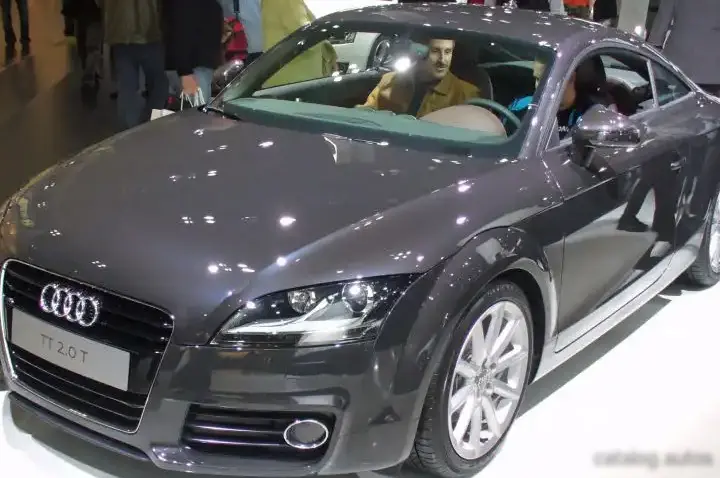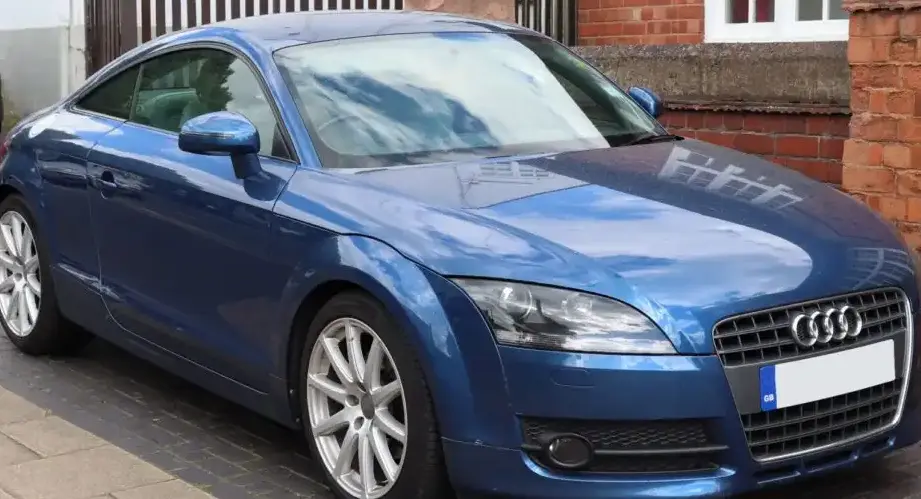
The Audi TT Coupe (8J) 2.0 TDI quattro, produced between 2008 and 2010, represented a compelling blend of sporty styling and diesel efficiency within the second generation (8J) TT lineup. Positioned as a mid-range offering, it catered to buyers seeking a more economical alternative to the petrol-powered variants, without sacrificing the all-weather capability of Audi’s quattro all-wheel-drive system. This model occupied a niche between the entry-level 1.8 TFSI and the higher-performance 2.0 TFSI, appealing to those prioritizing fuel economy and torque for everyday driving. It was primarily sold in the European market, where diesel engines held significant popularity.
Technical Specifications
| Brand | Audi |
| Model | TT |
| Generation | TT Coupe (8J) |
| Type (Engine) | 2.0 TDI (170 Hp) quattro |
| Start of production | 2008 |
| End of production | 2010 |
| Powertrain Architecture | Internal Combustion engine |
| Body type | Coupe |
| Seats | 4 |
| Doors | 3 |
| Fuel consumption (urban) | 7 l/100 km (33.6 US mpg, 40.4 UK mpg, 14.3 km/l) |
| Fuel consumption (extra urban) | 4.3 l/100 km (54.7 US mpg, 65.7 UK mpg, 23.3 km/l) |
| Fuel consumption (combined) | 5.3 l/100 km (44.4 US mpg, 53.3 UK mpg, 18.9 km/l) |
| CO2 emissions | 139 g/km |
| Fuel Type | Diesel |
| Acceleration 0 – 100 km/h | 7.5 sec |
| Acceleration 0 – 62 mph | 7.5 sec |
| Acceleration 0 – 60 mph | 7.1 sec |
| Maximum speed | 226 km/h (140.43 mph) |
| Emission standard | Euro 4 |
| Weight-to-power ratio | 8.1 kg/Hp, 124.1 Hp/tonne |
| Weight-to-torque ratio | 3.9 kg/Nm, 255.5 Nm/tonne |
| Power | 170 Hp @ 4200 rpm |
| Power per litre | 86.4 Hp/l |
| Torque | 350 Nm @ 1750-2500 rpm (258.15 lb.-ft. @ 1750-2500 rpm) |
| Engine layout | Front, Transverse |
| Engine Model/Code | CBBB, CFGB |
| Engine displacement | 1968 cm3 (120.09 cu. in.) |
| Number of cylinders | 4 |
| Engine configuration | Inline |
| Cylinder Bore | 81 mm (3.19 in.) |
| Piston Stroke | 95.5 mm (3.76 in.) |
| Compression ratio | 16.5:1 |
| Number of valves per cylinder | 4 |
| Fuel injection system | Diesel Commonrail |
| Engine aspiration | Turbocharger, Intercooler |
| Valvetrain | DOHC |
| Engine oil capacity | 4.3 l (4.54 US qt | 3.78 UK qt) |
| Coolant | 8.7 l (9.19 US qt | 7.65 UK qt) |
| Kerb Weight | 1370 kg (3020.33 lbs.) |
| Max. weight | 1770 kg (3902.18 lbs.) |
| Max load | 400 kg (881.85 lbs.) |
| Trunk (boot) space – minimum | 290 l (10.24 cu. ft.) |
| Trunk (boot) space – maximum | 700 l (24.72 cu. ft.) |
| Fuel tank capacity | 60 l (15.85 US gal | 13.2 UK gal) |
| Max. roof load | 75 kg (165.35 lbs.) |
| Length | 4178 mm (164.49 in.) |
| Width | 1842 mm (72.52 in.) |
| Height | 1352 mm (53.23 in.) |
| Wheelbase | 2468 mm (97.17 in.) |
| Front track | 1572 mm (61.89 in.) |
| Rear (Back) track | 1558 mm (61.34 in.) |
| Drag coefficient (Cd) | 0.30 |
| Minimum turning circle | 10.96 m (35.96 ft.) |
| Drive wheel | All wheel drive (4×4) |
| Number of gears | 6 |
| Gearbox type | Manual transmission |
| Front suspension | Independent, type McPherson with coil spring and anti-roll bar |
| Rear suspension | Independent torsion suspension |
| Front brakes | Ventilated discs |
| Rear brakes | Disc |
| Assisting systems | ABS (Anti-lock braking system) |
| Steering type | Steering rack and pinion |
| Tires size | 225/55 R16 |
| Wheel rims size | 7.5J x 16 |
Powertrain & Engine Architecture
The heart of the 2.0 TDI quattro is the Volkswagen Group’s 1968cc inline-four cylinder diesel engine, specifically the CBBB or CFGB engine codes. These engines are characterized by their common rail direct injection system, delivering fuel at extremely high pressures for optimized combustion. The engine utilizes a turbocharger with an intercooler to boost power and torque, mitigating turbo lag and improving efficiency. The DOHC (Double Overhead Camshaft) valvetrain, with four valves per cylinder, further enhances breathing and contributes to the engine’s relatively high specific output. The 16.5:1 compression ratio is typical for a diesel engine, aiding in efficient combustion. The six-speed manual transmission was standard, providing a good balance between performance and fuel economy. The quattro all-wheel-drive system, utilizing a multi-plate clutch, distributes power between the front and rear axles as needed, enhancing traction and stability, particularly in adverse weather conditions.
Driving Characteristics
The 2.0 TDI quattro offered a distinctly different driving experience compared to the petrol-powered TT variants. While lacking the outright acceleration of the 2.0 TFSI, it provided a substantial 350 Nm (258 lb-ft) of torque available from a low 1750 rpm. This resulted in strong mid-range acceleration and effortless cruising. The six-speed manual transmission was well-matched to the engine’s characteristics, allowing drivers to keep the engine within its optimal power band. The quattro system provided excellent grip and stability, inspiring confidence in corners and on slippery surfaces. The gear ratios were tuned for efficiency, prioritizing fuel economy over outright performance. Compared to the 1.8 TFSI, the 2.0 TDI felt more relaxed at highway speeds, requiring less frequent gear changes. However, it didn’t possess the same eagerness to rev or the sporty exhaust note of its petrol counterparts.
Equipment & Trim Levels
The 2.0 TDI quattro typically came equipped with a respectable level of standard features. This included climate control, alloy wheels, a multi-function steering wheel, and a basic audio system. Interior upholstery was generally cloth, although leather options were available. Optional extras included a premium audio system, navigation system, sport seats, and parking sensors. The dashboard layout was typical of the 8J TT, featuring a minimalist design with a focus on the driver. Trim levels varied slightly depending on the market, but generally offered a range of cosmetic and convenience upgrades.
Chassis & Braking
The 8J TT’s chassis was designed to provide a balance between comfort and handling. The front suspension utilized McPherson struts with coil springs and an anti-roll bar, while the rear employed an independent torsion beam setup. This configuration provided a relatively compliant ride, while still offering good body control. The braking system consisted of ventilated discs at the front and solid discs at the rear, providing adequate stopping power for the vehicle’s weight and performance. ABS (Anti-lock Braking System) was standard, enhancing safety and stability during emergency braking.
Market Reception & Comparison
The Audi TT Coupe 2.0 TDI quattro was generally well-received by automotive critics. It was praised for its fuel efficiency, strong torque, and all-weather capability. However, some reviewers noted that the engine lacked the refinement and excitement of the petrol-powered variants. Compared to the 1.8 TFSI, the 2.0 TDI offered better fuel economy and more torque, but at the expense of some performance. Compared to the 2.0 TFSI, it was slower but more economical. Its reliability was generally considered good, typical of Volkswagen Group diesel engines of the era.
Legacy
The 2.0 TDI quattro has proven to be a relatively durable and reliable powertrain. Well-maintained examples are still common on the used car market today. The engine is known for its longevity, provided it receives regular servicing and is not subjected to excessive abuse. The quattro all-wheel-drive system continues to be a valuable asset, particularly in regions with inclement weather. While not as sought-after as the higher-performance petrol variants, the 2.0 TDI quattro remains a practical and stylish option for buyers seeking a fuel-efficient and capable coupe.