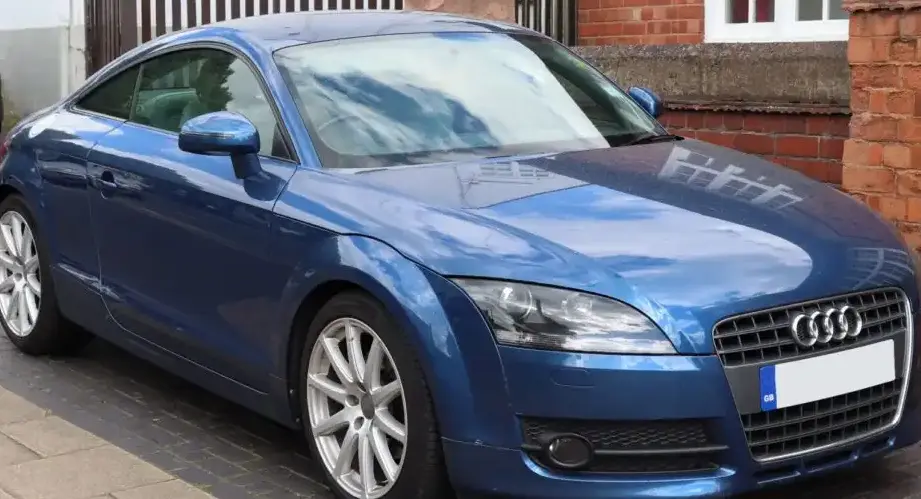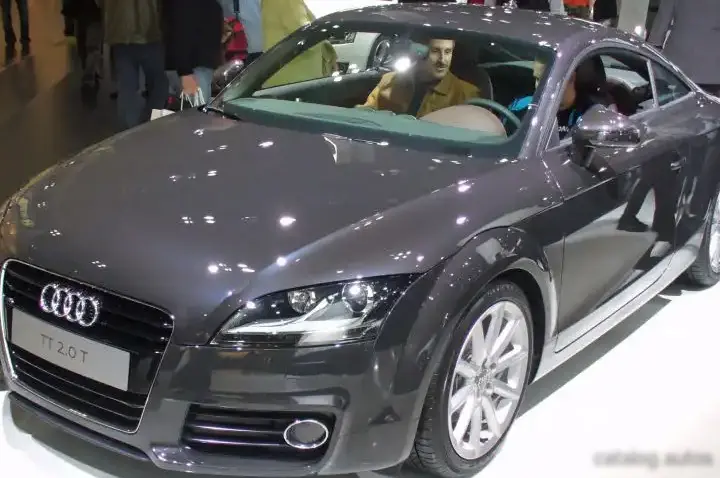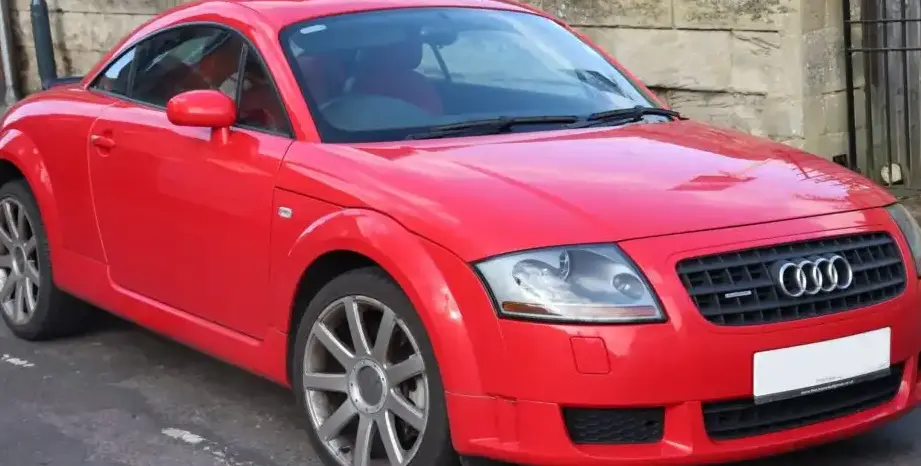
The Audi TT Coupe (8N facelift), specifically the 1.8T quattro variant, represents a pivotal point in Audi’s early 21st-century design and engineering philosophy. Produced from 2000 through 2006, this iteration of the first-generation TT built upon the original’s Bauhaus-inspired aesthetics while addressing some initial criticisms regarding handling and practicality. The 1.8T quattro occupied a middle ground in the 8N lineup, offering a compelling blend of performance, all-weather capability, and relative affordability compared to the flagship 3.2-liter V6 model. It was positioned as a more accessible entry point into the TT experience for buyers seeking a sporty coupe with everyday usability.
Technical Specifications
| Brand | Audi |
| Model | TT |
| Generation | TT Coupe (8N, facelift 2000) |
| Type (Engine) | 1.8 T (190 Hp) quattro |
| Start of production | September, 2005 |
| End of production | June, 2006 |
| Powertrain Architecture | Internal Combustion engine |
| Body type | Coupe |
| Seats | 4 |
| Doors | 3 |
| Fuel consumption (urban) | 13 l/100 km (18.1 US mpg, 21.7 UK mpg, 7.7 km/l) |
| Fuel consumption (extra urban) | 7.5 l/100 km (31.4 US mpg, 37.7 UK mpg, 13.3 km/l) |
| Fuel consumption (combined) | 9.4 l/100 km (25 US mpg, 30.1 UK mpg, 10.6 km/l) |
| CO2 emissions | 226 g/km |
| Fuel Type | Petrol (Gasoline) |
| Acceleration 0 – 100 km/h | 7.5 sec |
| Acceleration 0 – 62 mph | 7.5 sec |
| Acceleration 0 – 60 mph | 7.1 sec |
| Maximum speed | 232 km/h (144.16 mph) |
| Emission standard | Euro 4 |
| Weight-to-power ratio | 7.4 kg/Hp, 134.8 Hp/tonne |
| Weight-to-torque ratio | 5.9 kg/Nm, 170.2 Nm/tonne |
| Power | 190 Hp @ 5700 rpm |
| Power per litre | 106.7 Hp/l |
| Torque | 240 Nm @ 1980-5400 rpm (177.01 lb.-ft. @ 1980-5400 rpm) |
| Engine layout | Front, Transverse |
| Engine Model/Code | BVR |
| Engine displacement | 1781 cm3 (108.68 cu. in.) |
| Number of cylinders | 4 |
| Engine configuration | Inline |
| Cylinder Bore | 81 mm (3.19 in.) |
| Piston Stroke | 86.4 mm (3.4 in.) |
| Compression ratio | 9.5:1 |
| Number of valves per cylinder | 5 |
| Fuel injection system | Multi-port manifold injection |
| Engine aspiration | Turbocharger, Intercooler |
| Valvetrain | DOHC |
| Engine oil capacity | 4.6 l (4.86 US qt | 4.05 UK qt) |
| Coolant | 7 l (7.4 US qt | 6.16 UK qt) |
| Kerb Weight | 1410 kg (3108.52 lbs.) |
| Max. weight | 1795 kg (3957.3 lbs.) |
| Max load | 385 kg (848.78 lbs.) |
| Trunk (boot) space – minimum | 220 l (7.77 cu. ft.) |
| Trunk (boot) space – maximum | 490 l (17.3 cu. ft.) |
| Fuel tank capacity | 62 l (16.38 US gal | 13.64 UK gal) |
| Length | 4041 mm (159.09 in.) |
| Width | 1764 mm (69.45 in.) |
| Height | 1345 mm (52.95 in.) |
| Wheelbase | 2429 mm (95.63 in.) |
| Front track | 1528 mm (60.16 in.) |
| Rear (Back) track | 1505 mm (59.25 in.) |
| Drag coefficient (Cd) | 0.32 |
| Minimum turning circle | 10.6 m (34.78 ft.) |
| Drivetrain Architecture | The Internal combustion engine (ICE) drives the front wheels of the vehicle. |
| Drive wheel | Front wheel drive |
| Number of gears | 6 gears, manual transmission |
| Front suspension | Independent, type McPherson with coil spring and anti-roll bar |
| Rear suspension | Independent multi-link spring suspension with stabilizer |
| Front brakes | Ventilated discs |
| Rear brakes | Disc |
| Assisting systems | ABS (Anti-lock braking system) |
| Steering type | Steering rack and pinion |
| Tires size | 205/55 R16 |
| Wheel rims size | 7J x 16 |
INTRODUCTION
The Audi TT Coupe (8N facelift) 1.8T quattro, produced from 2005 to 2006, represents a refined version of Audi’s groundbreaking sports coupe. The facelift brought subtle but important changes to the exterior – most notably revised headlights and grille – and addressed earlier criticisms of the 8N’s handling. Built on the Volkswagen Group’s A4-based 1HX0 platform (also known as the A3 platform), the TT aimed to deliver a premium, sporty driving experience in a compact and stylish package. The 1.8T quattro trim served as a sweet spot in the range, offering a significant performance upgrade over the base 1.8T while remaining more accessible than the range-topping 3.2 VR6.
Powertrain & Engine Architecture
At the heart of the 1.8T quattro lies the Audi-developed 1.8-liter turbocharged inline-four cylinder engine, internally designated as the BVR engine code. This engine is a descendant of the long-running EA827 family, known for its robust construction and tuning potential. The BVR features a cast iron block and aluminum cylinder head, incorporating five valves per cylinder (three intake, two exhaust) operated by a double overhead camshaft (DOHC) valvetrain. Fuel delivery is managed by a multi-port fuel injection system, and the engine benefits from an intercooled turbocharger, boosting power output to 190 horsepower at 5700 rpm and 240 Nm (177 lb-ft) of torque available from 1980 to 5400 rpm. The engine is transversely mounted, driving all four wheels through Audi’s renowned quattro all-wheel-drive system. The transmission is a 6-speed manual, providing precise gear changes and enhancing driver engagement.
Driving Characteristics
The 1.8T quattro offers a noticeably more engaging driving experience than the standard 1.8T. The quattro system provides excellent traction, particularly in inclement weather, and allows for confident cornering. While not as brutally quick as the 3.2 VR6, the 1.8T delivers ample power for spirited driving, with the turbocharger providing a noticeable surge of acceleration. The 6-speed manual transmission is well-matched to the engine’s characteristics, offering a satisfyingly direct feel. The gear ratios are spaced to keep the engine within its optimal power band, ensuring responsive performance in a variety of driving situations. Compared to the VR6, the 1.8T feels lighter and more agile, while the manual transmission provides a greater sense of control.
Equipment & Trim Levels
The 1.8T quattro typically came equipped with a generous array of standard features. Interior appointments included sport seats upholstered in a combination of cloth and leather, a leather-wrapped steering wheel, and aluminum trim accents. Standard equipment also included automatic climate control, a single-CD stereo system, and power windows and locks. Optional extras included a premium Bose sound system, navigation system, sunroof, and heated front seats. The exterior styling was enhanced by 16-inch alloy wheels and a subtle rear spoiler. The overall interior design prioritized a minimalist aesthetic, focusing on functionality and driver ergonomics.
Chassis & Braking
The 8N TT’s chassis features an independent McPherson strut suspension at the front and a multi-link suspension at the rear, providing a good balance of ride comfort and handling precision. Stabilizer bars are fitted to both axles to reduce body roll during cornering. The 1.8T quattro models were equipped with ventilated disc brakes at the front and solid disc brakes at the rear, providing adequate stopping power for everyday driving and spirited performance. Anti-lock braking system (ABS) was standard, enhancing safety and control. The suspension tuning was slightly firmer than the base TT models, contributing to a more sporty driving feel.
Market Reception & Comparison
The Audi TT Coupe (8N facelift) 1.8T quattro was generally well-received by automotive critics. It was praised for its stylish design, engaging driving dynamics, and all-weather capability. Compared to the base 1.8T, the quattro version offered a significant improvement in traction and handling. While the 3.2 VR6 provided more outright performance, the 1.8T quattro was considered a more sensible and affordable option for many buyers. Fuel economy was respectable for a sports coupe, averaging around 25 mpg in combined driving. Reliability was generally good, although some owners reported issues with the turbocharger and the electronic stability program.
Legacy
The Audi TT 8N, including the 1.8T quattro variant, played a significant role in establishing Audi as a premium sports car manufacturer. The 1.8T engine proved to be a durable and reliable powerplant, and many examples are still on the road today. The 1.8T quattro remains a popular choice among enthusiasts seeking a stylish and engaging coupe that offers a good balance of performance, practicality, and affordability. In the used car market, well-maintained examples command a premium, reflecting the model’s enduring appeal and its status as a modern classic.