Technical Specifications
| Brand | Audi |
| Model | TT |
| Generation | TT Coupe (8N, facelift 2000) |
| Type (Engine) | 3.2i V6 24V (250 Hp) quattro |
| Start of production | July, 2003 |
| End of production | June, 2006 |
| Powertrain Architecture | Internal Combustion engine |
| Body type | Coupe |
| Seats | 4 |
| Doors | 3 |
| Fuel consumption (urban) | 14.9 l/100 km (15.8 US mpg, 19 UK mpg, 6.7 km/l) |
| Fuel consumption (extra urban) | 8.1 l/100 km (29 US mpg, 34.9 UK mpg, 12.3 km/l) |
| Fuel consumption (combined) | 10.6 l/100 km (22.2 US mpg, 26.6 UK mpg, 9.4 km/l) |
| CO2 emissions | 254 g/km |
| Fuel Type | Petrol (Gasoline) |
| Acceleration 0 – 100 km/h | 6.5 sec |
| Acceleration 0 – 62 mph | 6.5 sec |
| Acceleration 0 – 60 mph | 6.2 sec |
| Maximum speed | 250 km/h (155.34 mph) |
| Emission standard | Euro 4 |
| Weight-to-power ratio | 6 kg/Hp, 167.8 Hp/tonne |
| Weight-to-torque ratio | 4.7 kg/Nm, 214.8 Nm/tonne |
| Power | 250 Hp @ 6300 rpm |
| Power per litre | 78.4 Hp/l |
| Torque | 320 Nm @ 2800-3200 rpm (236.02 lb.-ft. @ 2800-3200 rpm) |
| Engine layout | Front, Transverse |
| Engine Model/Code | BHE, BPF |
| Engine displacement | 3189 cm3 (194.6 cu. in.) |
| Number of cylinders | 6 |
| Engine configuration | V-engine |
| Cylinder Bore | 84 mm (3.31 in.) |
| Piston Stroke | 95.9 mm (3.78 in.) |
| Compression ratio | 11.3:1 |
| Number of valves per cylinder | 4 |
| Fuel injection system | Multi-port manifold injection |
| Engine aspiration | Naturally aspirated engine |
| Valvetrain | DOHC |
| Engine oil capacity | 5.5 l (5.81 US qt, 4.84 UK qt) |
| Coolant | 7 l (7.4 US qt, 6.16 UK qt) |
| Kerb Weight | 1490 kg (3284.89 lbs.) |
| Max. weight | 1875 kg (4133.67 lbs.) |
| Max load | 385 kg (848.78 lbs.) |
| Trunk (boot) space – minimum | 220 l (7.77 cu. ft.) |
| Trunk (boot) space – maximum | 490 l (17.3 cu. ft.) |
| Fuel tank capacity | 62 l (16.38 US gal, 13.64 UK gal) |
| Max. roof load | 75 kg (165.35 lbs.) |
| Length | 4041 mm (159.09 in.) |
| Width | 1764 mm (69.45 in.) |
| Height | 1346 mm (52.99 in.) |
| Wheelbase | 2422 mm (95.35 in.) |
| Front track | 1528 mm (60.16 in.) |
| Rear (Back) track | 1513 mm (59.57 in.) |
| Drag coefficient (Cd) | 0.32 |
| Minimum turning circle | 10.6 m (34.78 ft.) |
| Drive wheel | All wheel drive (4×4) |
| Number of gears | 6 gears, manual transmission |
| Front suspension | Independent, type McPherson with coil spring and anti-roll bar |
| Rear suspension | Independent multi-link spring suspension with stabilizer |
| Front brakes | Ventilated discs |
| Rear brakes | Ventilated discs |
| Assisting systems | ABS (Anti-lock braking system) |
| Steering type | Steering rack and pinion |
| Power steering | Hydraulic Steering |
| Tires size | 225/45 R17 |
| Wheel rims size | 7.5 x 17 |
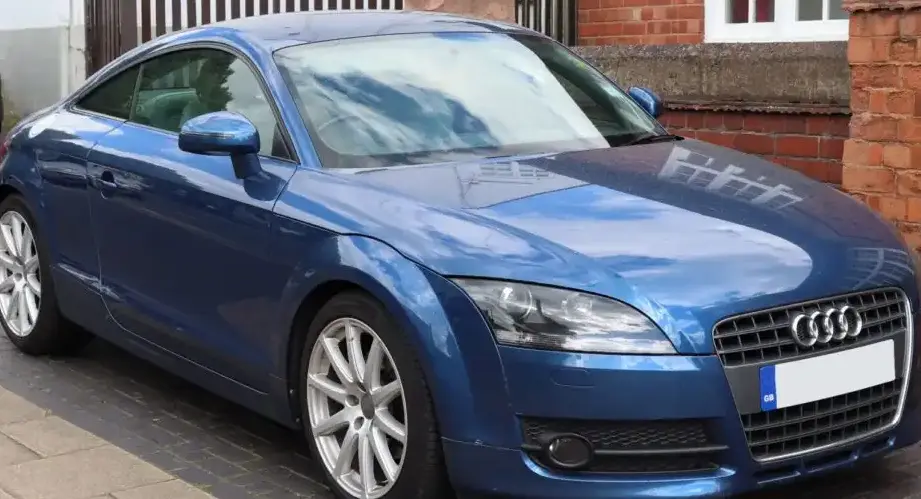
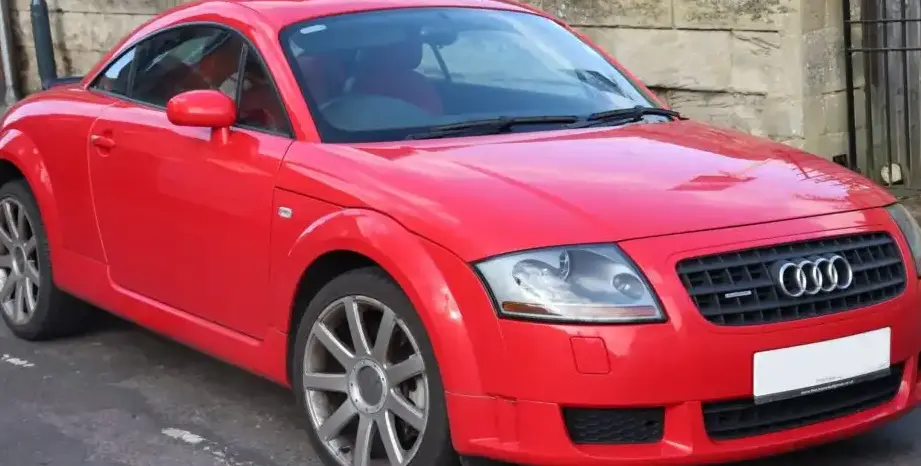
The Audi TT Coupe (8N facelift) 3.2i V6 24V quattro, produced between 2003 and 2006, was the performance leader of the first-generation TT lineup. Based on the Volkswagen Group’s A4 (B6) platform – internally designated 1HX0/A3 – it aimed to deliver a more engaging and sophisticated driving experience than its four-cylinder counterparts. The “facelift” designation refers to cosmetic and mechanical updates applied in 2000, including revised headlights, taillights, and interior trim. The 3.2-liter V6 model was introduced later in the facelift cycle, solidifying the TT’s position as a genuine sports coupe.
Powertrain & Engine Architecture
The heart of the 3.2i quattro is the BHE or BPF engine code, a naturally aspirated 3.2-liter V6 engine. This engine, part of Audi’s VR6 family, features a narrow-angle V6 configuration (15 degrees between cylinder banks), allowing it to be relatively compact for a six-cylinder engine. It utilizes multi-port fuel injection and a double overhead camshaft (DOHC) valvetrain with four valves per cylinder. The engine produces 250 horsepower at 6300 rpm and 320 Nm (236 lb-ft) of torque between 2800 and 3200 rpm. The engine’s design prioritizes smooth power delivery and a characteristic V6 sound. The standard transmission was a six-speed manual, although a six-speed automatic was also offered. The automatic transmission was geared for a balance of performance and fuel efficiency, but the manual offered a more direct connection to the engine.
Driving Characteristics
The 3.2i quattro delivers a noticeably more potent driving experience than the 1.8T models. Acceleration from 0 to 60 mph takes approximately 6.2 seconds, and the car has a governed top speed of 155 mph. The V6 engine provides strong, linear power throughout the rev range, making it easy to exploit the engine’s capabilities. The quattro all-wheel-drive system provides excellent traction, particularly in adverse weather conditions, and contributes to the car’s balanced handling. Compared to the front-wheel-drive 1.8T, the 3.2i quattro exhibits significantly reduced understeer and a more neutral cornering balance. The manual transmission offers precise shifts and enhances driver engagement, while the automatic, while smooth, feels slightly less responsive.
Equipment & Trim Levels
The 3.2i quattro typically came well-equipped, reflecting its position as the range-topping model. Standard features included leather upholstery, sport seats, automatic climate control, a premium audio system, and xenon headlights. Optional extras included navigation system, sunroof, and upgraded wheels. Interior trim was typically finished in aluminum or wood accents. The overall interior design was minimalist and driver-focused, in line with the TT’s sporty character.
Chassis & Braking
The 3.2i quattro features a fully independent suspension system, with McPherson struts at the front and a multi-link setup at the rear. Stabilizer bars are fitted to both axles to reduce body roll. Braking duties are handled by ventilated disc brakes on all four wheels, providing ample stopping power. The quattro all-wheel-drive system distributes power between the front and rear axles as needed, optimizing traction and stability. The suspension tuning is firmer than that of the lower-spec TT models, providing a more controlled and responsive ride.
Market Reception & Comparison
The 3.2i quattro was generally well-received by automotive critics, who praised its performance, handling, and refined interior. It was often compared favorably to rivals such as the Porsche Cayman and BMW Z4. However, some critics noted that the price was relatively high, and the fuel economy was not particularly impressive. Compared to the 1.8T models, the 3.2i quattro offered a significant performance upgrade but came at a higher price point and with increased running costs. The 1.8T remained a popular choice for buyers prioritizing fuel efficiency and affordability.
Legacy
The Audi TT 3.2i V6 24V quattro has become a sought-after model among enthusiasts. The VR6 engine is known for its reliability, although regular maintenance is essential. The quattro all-wheel-drive system is also generally robust. Today, well-maintained examples command a premium in the used car market. The 3.2i quattro represents a high point in the first-generation TT’s development, offering a compelling blend of performance, style, and sophistication. Its enduring appeal lies in its unique character and its ability to deliver a genuinely engaging driving experience.