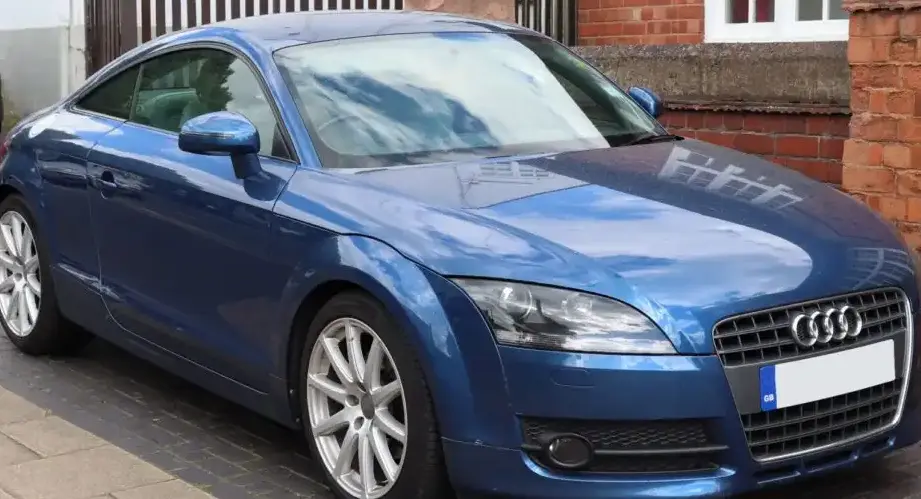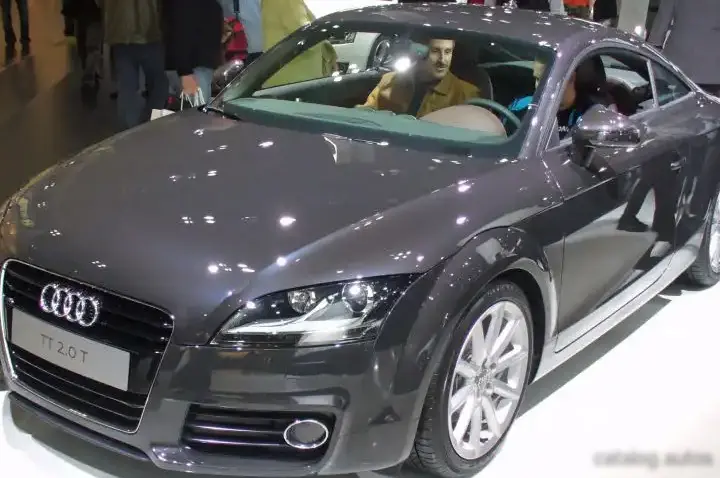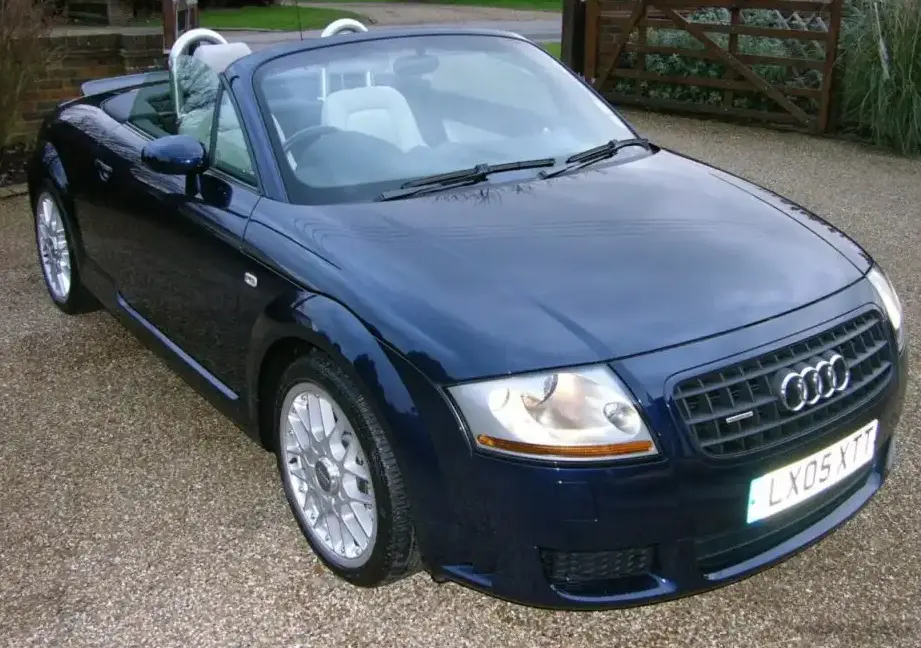
The Audi TT Roadster (8N, facelifted in 2000) 3.2i V6 24V quattro Automatic represents the pinnacle of performance for the first-generation TT Roadster. Produced from July 2003 to June 2006, this variant combined the sporty aesthetics of the TT with a potent, naturally aspirated V6 engine and Audi’s renowned quattro all-wheel-drive system. It occupied the top-tier position in the 8N Roadster lineup, offering a more engaging and powerful driving experience than the 1.8-liter four-cylinder models. This model was a key part of Audi’s strategy to broaden the TT’s appeal beyond its initial focus on style, attracting buyers seeking genuine performance credentials.
Technical Specifications
| Brand | Audi |
| Model | TT |
| Generation | TT Roadster (8N, facelift 2000) |
| Type (Engine) | 3.2i V6 24V (250 Hp) quattro Automatic |
| Start of production | July, 2003 |
| End of production | June, 2006 |
| Powertrain Architecture | Internal Combustion engine |
| Body type | Roadster |
| Seats | 2 |
| Doors | 2 |
| Fuel consumption (urban) | 13.7 l/100 km (17.2 US mpg, 20.6 UK mpg, 7.3 km/l) |
| Fuel consumption (extra urban) | 7.7 l/100 km (30.5 US mpg, 36.7 UK mpg, 13 km/l) |
| Fuel consumption (combined) | 9.9 l/100 km (23.8 US mpg, 28.5 UK mpg, 10.1 km/l) |
| CO2 emissions | 238 g/km |
| Fuel Type | Petrol (Gasoline) |
| Acceleration 0 – 100 km/h | 6.6 sec |
| Acceleration 0 – 62 mph | 6.6 sec |
| Acceleration 0 – 60 mph | 6.3 sec |
| Maximum speed | 250 km/h (155.34 mph) |
| Emission standard | Euro 4 |
| Weight-to-power ratio | 6.4 kg/Hp, 157.2 Hp/tonne |
| Weight-to-torque ratio | 5 kg/Nm, 201.3 Nm/tonne |
| Power | 250 Hp @ 6300 rpm |
| Power per litre | 78.4 Hp/l |
| Torque | 320 Nm @ 2800-3200 rpm (236.02 lb.-ft. @ 2800-3200 rpm) |
| Engine layout | Front, Transverse |
| Engine Model/Code | BHE, BPF |
| Engine displacement | 3189 cm3 (194.6 cu. in.) |
| Number of cylinders | 6 |
| Engine configuration | V-engine |
| Cylinder Bore | 84 mm (3.31 in.) |
| Piston Stroke | 95.9 mm (3.78 in.) |
| Compression ratio | 11.3:1 |
| Number of valves per cylinder | 4 |
| Fuel injection system | Multi-port manifold injection |
| Engine aspiration | Naturally aspirated engine |
| Valvetrain | DOHC |
| Engine oil capacity | 5.5 l (5.81 US qt | 4.84 UK qt) |
| Coolant | 7 l (7.4 US qt | 6.16 UK qt) |
| Kerb Weight | 1590 kg (3505.35 lbs.) |
| Max. weight | 1890 kg (4166.74 lbs.) |
| Max load | 300 kg (661.39 lbs.) |
| Trunk (boot) space – minimum | 180 l (6.36 cu. ft.) |
| Fuel tank capacity | 62 l (16.38 US gal | 13.64 UK gal) |
| Length | 4041 mm (159.09 in.) |
| Width | 1764 mm (69.45 in.) |
| Height | 1348 mm (53.07 in.) |
| Wheelbase | 2429 mm (95.63 in.) |
| Front track | 1528 mm (60.16 in.) |
| Rear (Back) track | 1505 mm (59.25 in.) |
| Drag coefficient (Cd) | 0.35 |
| Minimum turning circle | 10.6 m (34.78 ft.) |
| Drive wheel | All wheel drive (4×4) |
| Number of gears and type of gearbox | 6 gears, automatic transmission DSG |
| Front suspension | Independent, type McPherson with coil spring and anti-roll bar |
| Rear suspension | Independent multi-link spring suspension with stabilizer |
| Front brakes | Ventilated discs |
| Rear brakes | Ventilated discs |
| Assisting systems | ABS (Anti-lock braking system) |
| Steering type | Steering rack and pinion |
| Power steering | Hydraulic Steering |
| Tires size | 225/45 R17 |
| Wheel rims size | 7.5J x 17 |
INTRODUCTION
The Audi TT Roadster (8N) 3.2i V6 quattro Automatic, produced between 2003 and 2006, represented a significant upgrade within the first-generation TT lineup. The 8N chassis, launched in 1998, was a design departure for Audi, emphasizing a rounded, Bauhaus-inspired aesthetic. The facelift in 2000 brought subtle styling revisions and, more importantly, the introduction of the 3.2-liter V6 engine as the range-topping option. This Roadster variant combined the open-air driving experience with a powerful engine and the security of Audi’s quattro all-wheel-drive system, making it a desirable choice for enthusiasts. It was built on the Volkswagen Group’s A4/Golf platform (PL45 or 1HX0), sharing components with models like the VW Golf, Bora, and Audi A3.
Powertrain & Engine Architecture
The heart of this TT Roadster is the BHE or BPF engine code, a 3.2-liter naturally aspirated V6 engine. This engine, part of Audi’s VR6 family, features a narrow-angle V6 configuration (15 degrees between cylinder banks). This design allows for a relatively compact engine that can be mounted transversely, optimizing space utilization in the front-wheel-drive-based chassis. The engine utilizes multi-port fuel injection and a double overhead camshaft (DOHC) valvetrain with four valves per cylinder. The 3.2-liter engine produces 250 horsepower at 6300 rpm and 320 Nm (236 lb-ft) of torque between 2800 and 3200 rpm. Paired with this engine is a six-speed Direct-Shift Gearbox (DSG), a dual-clutch transmission that provides quick and smooth gear changes. The DSG offers both fully automatic operation and the ability for the driver to manually select gears via the shift lever or steering wheel-mounted paddles.
Driving Characteristics
The 3.2i V6 Automatic TT Roadster delivers a noticeably more spirited driving experience compared to the 1.8-liter versions. The V6 provides ample power throughout the rev range, with strong acceleration and a satisfying engine note. The DSG transmission contributes to this by providing rapid shifts and keeping the engine in its optimal power band. While not as raw or focused as a manual transmission, the DSG offers a good balance of performance and convenience. The quattro all-wheel-drive system provides excellent traction, particularly in adverse weather conditions, enhancing stability and confidence. The gear ratios are tuned for a blend of acceleration and cruising efficiency, making it suitable for both spirited drives and long-distance journeys. Compared to the 1.8T models, the 3.2 V6 feels significantly more responsive and capable, though it does come with a slight increase in weight.
Equipment & Trim Levels
The 3.2i V6 quattro Automatic typically came well-equipped as the top-of-the-line Roadster variant. Standard features included leather upholstery, automatic climate control, a premium sound system, and alloy wheels. Optional extras included features like heated seats, navigation system, and upgraded interior trim packages. The interior design retained the TT’s signature circular air vents and minimalist dashboard layout. The instrument cluster featured distinctive aluminum-look gauges. The steering wheel was often leather-wrapped and featured controls for the audio system and, in some cases, the DSG transmission.
Chassis & Braking
The TT Roadster’s chassis features an independent McPherson strut suspension at the front and a multi-link suspension at the rear. This setup provides a good balance of ride comfort and handling precision. Stabilizer bars are fitted to both axles to reduce body roll during cornering. Braking duties are handled by ventilated disc brakes on all four wheels, providing ample stopping power. The ABS (Anti-lock Braking System) is standard, enhancing safety and control. The suspension tuning is slightly firmer than the 1.8T models to better manage the increased power and weight of the V6 engine.
Market Reception & Comparison
The 3.2i V6 quattro Automatic TT Roadster was generally well-received by automotive critics. It was praised for its powerful engine, engaging driving dynamics, and sophisticated interior. However, some reviewers noted that the fuel economy was relatively poor compared to the 1.8T models. Compared to the 1.8T versions, the 3.2 V6 offered a significant performance upgrade but came at a higher price point and with increased running costs. The 1.8T models were often seen as a more practical and economical choice for everyday driving, while the 3.2 V6 appealed to buyers prioritizing performance and exclusivity. The 3.2 V6 also offered a more refined driving experience than the diesel options available in some European markets.
Legacy
The 3.2i V6 engine proved to be a reliable unit when properly maintained. The DSG transmission, while sophisticated, can require more frequent servicing than a traditional automatic transmission. Today, the 8N TT Roadster 3.2i V6 quattro Automatic is considered a desirable classic, particularly among Audi enthusiasts. Well-maintained examples command a premium in the used car market. The combination of its distinctive styling, powerful engine, and all-wheel-drive system continues to appeal to drivers seeking a sporty and engaging roadster experience. Its relative rarity compared to the 1.8T models further enhances its collectibility.