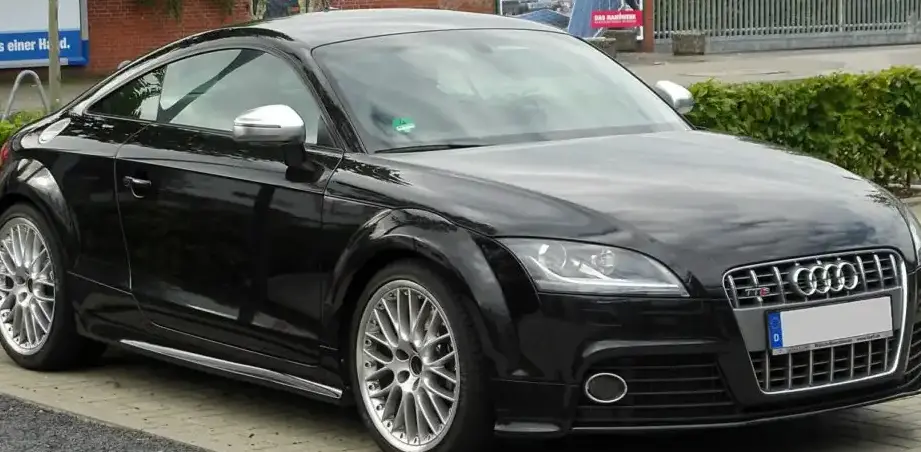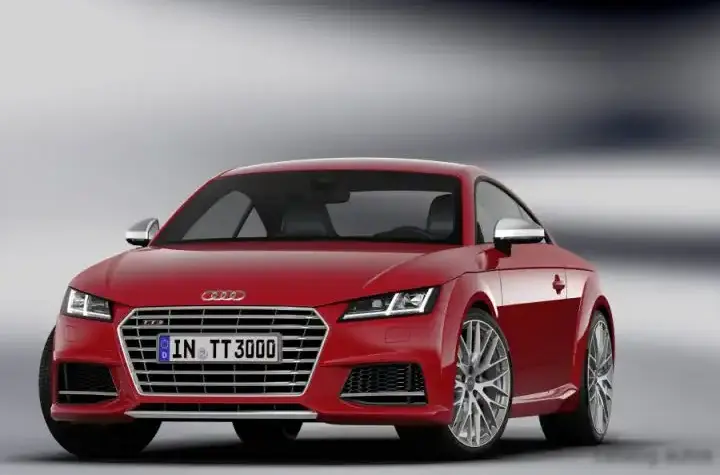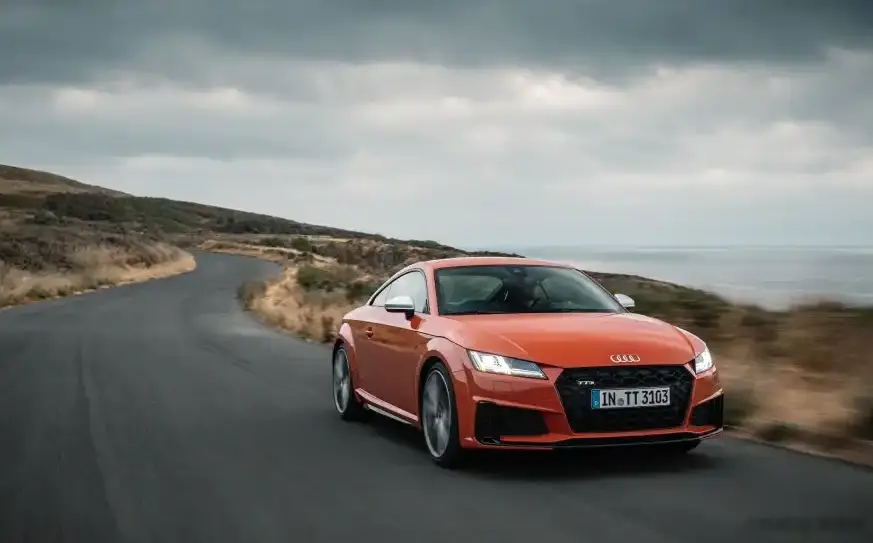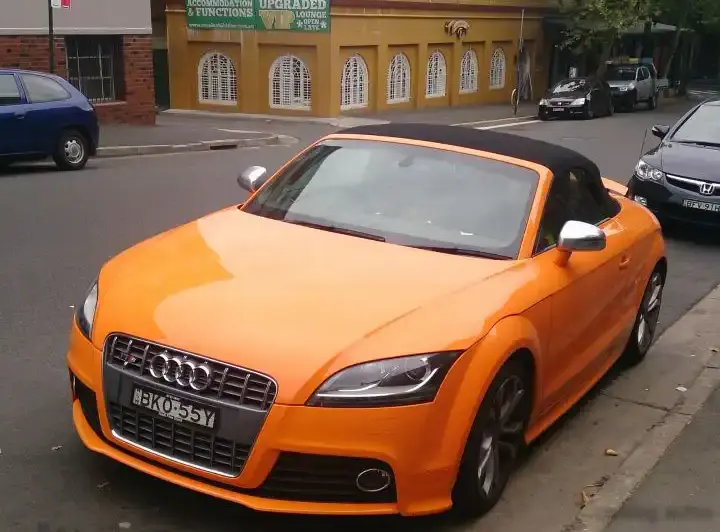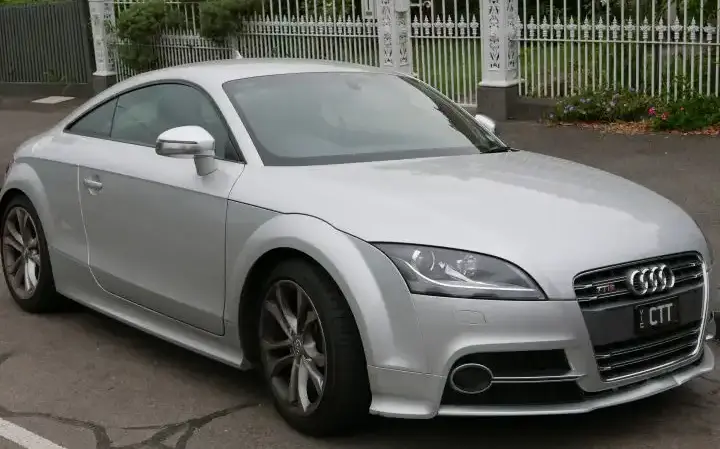
The Audi TTS Coupe (8J, facelift) with the 2.0 TFSI 272 horsepower engine and S tronic dual-clutch transmission represents a performance-oriented iteration of the second-generation Audi TT. Introduced in 2010 as part of a mid-cycle refresh of the 8J platform, this variant aimed to bridge the gap between the standard TT and the higher-performance TT RS. Production continued through June 2014, solidifying its place as a desirable enthusiast’s coupe. The 8J TT, and subsequently the TTS, were pivotal in establishing Audi’s design language and showcasing its quattro all-wheel-drive technology in a more accessible package.
Technical Specifications
| Brand | Audi |
| Model | TT |
| Generation | TTS Coupe (8J, facelift 2010) |
| Type (Engine) | 2.0 TFSI (272 Hp) quattro S Tronic |
| Start of production | 2010 |
| End of production | June, 2014 |
| Powertrain Architecture | Internal Combustion engine |
| Body type | Coupe |
| Seats | 4 |
| Doors | 3 |
| Fuel consumption (urban) | 10.6 l/100 km (22.2 US mpg, 26.6 UK mpg, 9.4 km/l) |
| Fuel consumption (extra urban) | 6 l/100 km (39.2 US mpg, 47.1 UK mpg, 16.7 km/l) |
| Fuel consumption (combined) | 7.7 l/100 km (30.5 US mpg, 36.7 UK mpg, 13 km/l) |
| CO2 emissions | 179 g/km |
| Fuel Type | Petrol (Gasoline) |
| Acceleration 0 – 100 km/h | 5.2 sec |
| Acceleration 0 – 62 mph | 5.2 sec |
| Acceleration 0 – 60 mph | 4.9 sec |
| Maximum speed | 250 km/h (155.34 mph) |
| Emission standard | Euro 5 |
| Weight-to-power ratio | 5.2 kg/Hp, 192.2 Hp/tonne |
| Weight-to-torque ratio | 4 kg/Nm, 247.3 Nm/tonne |
| Power | 272 Hp @ 6000 rpm |
| Power per litre | 137.1 Hp/l |
| Torque | 350 Nm @ 2500-5000 rpm (258.15 lb.-ft. @ 2500-5000 rpm) |
| Engine layout | Front, Transverse |
| Engine Model/Code | CDLB |
| Engine displacement | 1984 cm3 (121.07 cu. in.) |
| Number of cylinders | 4 |
| Engine configuration | Inline |
| Cylinder Bore | 82.5 mm (3.25 in.) |
| Piston Stroke | 92.8 mm (3.65 in.) |
| Compression ratio | 9.8:1 |
| Number of valves per cylinder | 4 |
| Fuel injection system | Direct injection |
| Engine aspiration | Turbocharger, Intercooler |
| Valvetrain | DOHC |
| Engine oil capacity | 4.5 l (4.76 US qt | 3.96 UK qt) |
| Coolant | 9 l (9.51 US qt | 7.92 UK qt) |
| Kerb Weight | 1415 kg (3119.54 lbs.) |
| Max. weight | 1815 kg (4001.39 lbs.) |
| Max load | 400 kg (881.85 lbs.) |
| Trunk (boot) space – minimum | 292 l (10.31 cu. ft.) |
| Trunk (boot) space – maximum | 700 l (24.72 cu. ft.) |
| Fuel tank capacity | 60 l (15.85 US gal | 13.2 UK gal) |
| Max. roof load | 75 kg (165.35 lbs.) |
| Length | 4198 mm (165.28 in.) |
| Width | 1842 mm (72.52 in.) |
| Width including mirrors | 1952 mm (76.85 in.) |
| Height | 1345 mm (52.95 in.) |
| Wheelbase | 2468 mm (97.17 in.) |
| Front track | 1555 mm (61.22 in.) |
| Rear (Back) track | 1546 mm (60.87 in.) |
| Front overhang | 911 mm (35.87 in.) |
| Rear overhang | 819 mm (32.24 in.) |
| Drag coefficient (Cd) | 0.31 |
| Minimum turning circle | 10.96 m (35.96 ft.) |
| Drive wheel | All wheel drive (4×4) |
| Number of gears | 6 |
| Gearbox type | automatic transmission S tronic |
| Front suspension | Independent, type McPherson with coil spring and anti-roll bar |
| Rear suspension | Independent multi-link spring suspension with stabilizer |
| Front brakes | Ventilated discs |
| Rear brakes | Ventilated discs |
| Assisting systems | ABS (Anti-lock braking system) |
| Steering type | Steering rack and pinion |
| Tires size | 245/40 R18 |
| Wheel rims size | 9J x 18 |
INTRODUCTION
The 2010-2014 Audi TTS Coupe, powered by the 2.0 TFSI engine producing 272 horsepower and paired with the S tronic dual-clutch transmission, occupied a sweet spot in Audi’s lineup. It was positioned above the standard TT Coupe, offering significantly enhanced performance, while remaining more accessible and focused than the range-topping TT RS. Built on the Volkswagen Group’s PQ35 (8J) platform, shared with models like the Golf Mk5 and Scirocco, the TTS benefitted from a refined chassis and Audi’s renowned quattro all-wheel-drive system. This facelifted version brought subtle styling updates and improvements to the interior, further enhancing its appeal.
Powertrain & Engine Architecture
At the heart of the TTS lies the 2.0-liter turbocharged four-cylinder engine, designated CDLB. This engine is a direct-injection unit, utilizing FSI (Fuel Stratified Injection) technology for improved efficiency and power delivery. The CDLB features a single turbocharger with an intercooler, boosting output to 272 hp at 6000 rpm and 350 Nm (258 lb-ft) of torque available from 2500 to 5000 rpm. The engine employs a dual overhead camshaft (DOHC) valvetrain with four valves per cylinder.
The S tronic transmission is a six-speed dual-clutch gearbox. This transmission offers incredibly fast and smooth shifts, contributing significantly to the TTS’s performance. Unlike a traditional automatic, the S tronic uses two separate clutches – one for odd gears and one for even gears – allowing for pre-selection of the next gear, resulting in near-instantaneous gear changes. The quattro all-wheel-drive system is a permanent system, distributing power between the front and rear axles based on traction conditions. This provides excellent grip and stability, particularly in adverse weather.
Driving Characteristics
The TTS Coupe with the 2.0 TFSI and S tronic delivers a compelling driving experience. Acceleration from 0 to 60 mph takes approximately 4.9 seconds, and it reaches a top speed of 155 mph (electronically limited). The S tronic transmission provides crisp, responsive shifts, whether in automatic or manual mode (controlled via steering wheel-mounted paddles). The quattro all-wheel-drive system inspires confidence, providing tenacious grip in all conditions. Compared to the standard TT with a manual transmission, the TTS offers a noticeable increase in power and a more refined driving experience. While the TT RS provides even more raw performance, the TTS strikes a balance between speed and usability.
Equipment & Trim Levels
The TTS Coupe came well-equipped as standard. Key features included leather upholstery, sport seats, a multi-function steering wheel, automatic climate control, and a premium audio system. Exterior features included unique TTS styling cues, such as a distinctive front grille, larger air intakes, and a rear spoiler. Optional extras included navigation, parking sensors, upgraded audio systems (Bose or Bang & Olufsen), and various interior trim options. The interior typically featured aluminum trim accents, emphasizing the car’s sporty character.
Chassis & Braking
The TTS Coupe features a sport-tuned suspension, with McPherson struts at the front and a multi-link setup at the rear. The suspension is firmer than that of the standard TT, providing improved handling and reduced body roll. Brakes consist of ventilated discs all around, providing ample stopping power. ABS (Anti-lock Braking System) is standard. The TTS typically featured larger diameter brakes compared to the base TT models.
Market Reception & Comparison
The Audi TTS Coupe was generally well-received by automotive critics. It was praised for its performance, handling, and refined interior. Comparisons were often drawn to rivals such as the BMW Z4 and Porsche Cayman. The TTS offered a compelling blend of performance and practicality, making it a popular choice for enthusiasts. Fuel economy was respectable for a performance coupe, averaging around 30.5 mpg combined. Reliability was generally good, although some owners reported minor issues with the turbocharger and direct injection system.
Legacy
The Audi TTS Coupe (8J) remains a desirable used car today. The 2.0 TFSI engine, while requiring regular maintenance (particularly oil changes), is generally considered reliable. The S tronic transmission, if properly maintained, can provide years of trouble-free operation. The TTS’s combination of performance, style, and all-weather capability continues to appeal to enthusiasts. Its influence can be seen in subsequent generations of the TT, which have continued to build on its success.