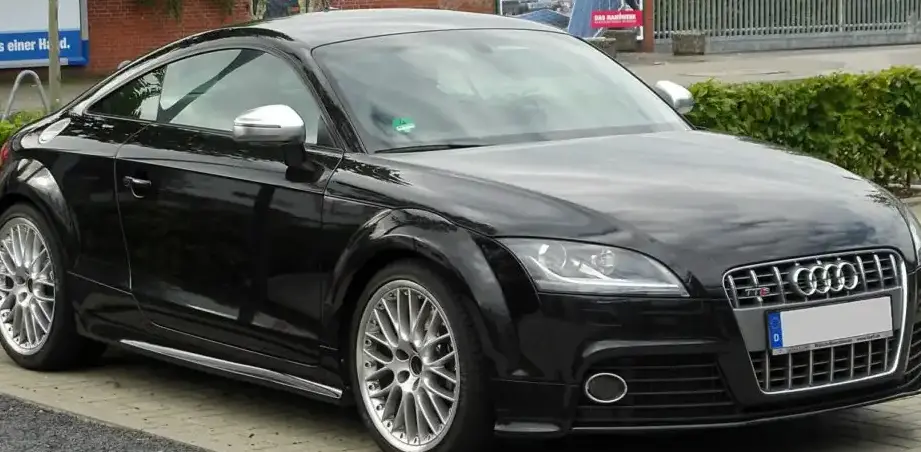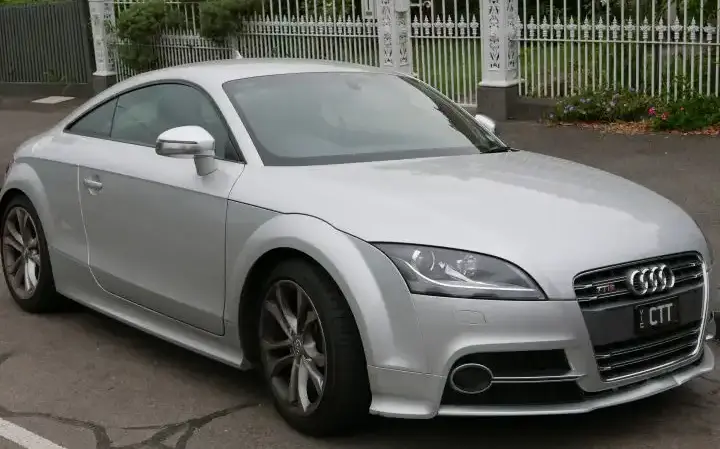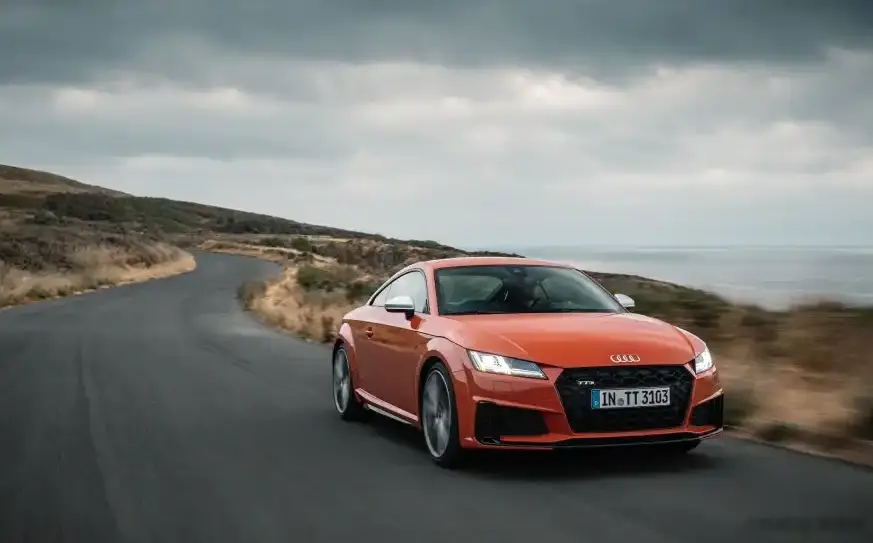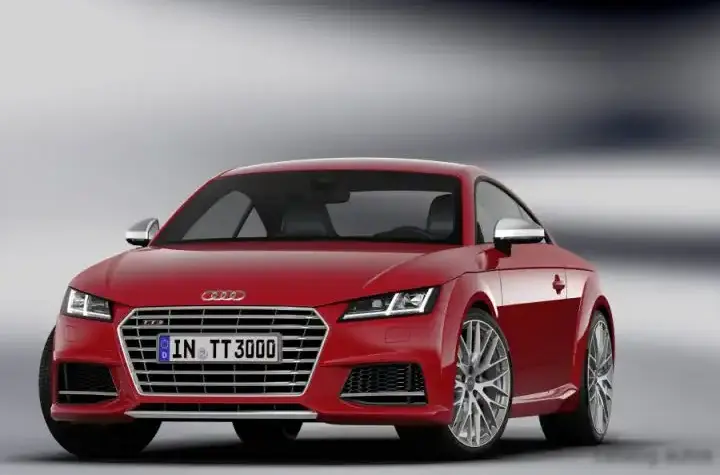
The Audi TTS Coupe (8S), produced between 2015 and 2018, represents the performance-oriented variant of the third-generation Audi TT. Positioned above the standard TT Coupe and below the even more focused TT RS, the TTS aimed to deliver a compelling blend of everyday usability and engaging driving dynamics. It served as a key model within Audi’s lineup, appealing to enthusiasts seeking a sporty coupe with all-weather capability thanks to its standard quattro all-wheel drive system. This specific configuration, featuring the 2.0 TFSI engine producing 292 horsepower paired with the S tronic dual-clutch transmission, was a popular choice for buyers prioritizing performance and convenience.
Technical Specifications
| Brand | Audi |
| Model | TT |
| Generation | TTS Coupe (8S) |
| Type (Engine) | 2.0 TFSI (292 Hp) quattro S tronic |
| Start of production | 2015 |
| End of production | 2018 |
| Powertrain Architecture | Internal Combustion engine |
| Body type | Coupe |
| Seats | 4 |
| Doors | 3 |
| Fuel consumption (economy) – urban | 10.2 l/100 km (23.1 US mpg, 27.7 UK mpg, 9.8 km/l) |
| Fuel consumption (economy) – extra urban | 8.7 l/100 km (27 US mpg, 32.5 UK mpg, 11.5 km/l) |
| Fuel consumption (economy) – combined | 9.4 l/100 km (25 US mpg, 30.1 UK mpg, 10.6 km/l) |
| Fuel Type | Petrol (Gasoline) |
| Maximum speed | 250 km/h (155.34 mph) |
| Weight-to-power ratio | 5 kg/Hp, 198.6 Hp/tonne |
| Weight-to-torque ratio | 3.9 kg/Nm, 258.5 Nm/tonne |
| Power | 292 Hp @ 5400-6200 rpm |
| Power per litre | 147.2 Hp/l |
| Torque | 380 Nm @ 1900-5300 rpm (280.27 lb.-ft. @ 1900-5300 rpm) |
| Engine layout | Front, Transverse |
| Engine Model/Code | CYFB, DJJA |
| Engine displacement | 1984 cm3 (121.07 cu. in.) |
| Number of cylinders | 4 |
| Engine configuration | Inline |
| Cylinder Bore | 82.5 mm (3.25 in.) |
| Piston Stroke | 92.8 mm (3.65 in.) |
| Compression ratio | 9.3:1 |
| Number of valves per cylinder | 4 |
| Fuel injection system | Direct injection |
| Engine aspiration | Turbocharger, Intercooler |
| Valvetrain | DOHC |
| Engine oil capacity | 5.7 l (6.02 US qt | 5.02 UK qt) |
| Coolant | 9.5 l (10.04 US qt | 8.36 UK qt) |
| Kerb Weight | 1470 kg (3240.8 lbs.) |
| Trunk (boot) space – minimum | 340 l (12.01 cu. ft.) |
| Fuel tank capacity | 55 l (14.53 US gal | 12.1 UK gal) |
| Length | 4191 mm (165 in.) |
| Width | 1832 mm (72.13 in.) |
| Height | 1343 mm (52.87 in.) |
| Wheelbase | 2505 mm (98.62 in.) |
| Front track | 1574 mm (61.97 in.) |
| Rear (Back) track | 1553 mm (61.14 in.) |
| Front overhang | 893 mm (35.16 in.) |
| Rear overhang | 793 mm (31.22 in.) |
| Drag coefficient (Cd) | 0.30 |
| Minimum turning circle (turning diameter) | 10.6 m (34.78 ft.) |
| Drive wheel | All wheel drive (4×4) |
| Number of gears and type of gearbox | 6 gears, automatic transmission S tronic |
| Front suspension | Independent, type McPherson with coil spring and anti-roll bar |
| Rear suspension | Independent coil spring |
| Front brakes | Ventilated discs |
| Rear brakes | Ventilated discs |
| Assisting systems | ABS (Anti-lock braking system) |
| Steering type | Steering rack and pinion |
| Power steering | Electric Steering |
| Tires size | 245/35 R19 |
| Wheel rims size | 9.0J x 19 |
Powertrain & Engine Architecture
The heart of the TTS Coupe is the 2.0 TFSI engine, specifically the CYFB or DJJA engine codes depending on the exact production year and market. This is a highly refined, turbocharged and direct-injected four-cylinder engine. Direct injection allows for precise fuel delivery, enhancing both power and efficiency. The engine utilizes a single twin-scroll turbocharger with an intercooler to mitigate turbo lag and maximize boost pressure. The valvetrain employs a Dual Overhead Camshaft (DOHC) configuration with four valves per cylinder, optimizing airflow for increased performance.
The S tronic six-speed dual-clutch transmission is a crucial component of the TTS experience. This transmission offers incredibly fast and smooth gear changes, contributing significantly to the car’s acceleration and responsiveness. It operates in both automatic and manual modes, allowing the driver to choose between convenience and control. The quattro all-wheel-drive system, a hallmark of Audi, distributes power between the front and rear axles as needed, providing exceptional traction in various conditions. The system typically favors a rear-biased distribution for a more engaging driving experience.
Driving Characteristics
The 292 horsepower and 380 Nm (280 lb-ft) of torque delivered by the 2.0 TFSI engine, combined with the S tronic transmission and quattro all-wheel drive, result in a genuinely quick and capable coupe. Acceleration from 0 to 60 mph is typically achieved in around 4.7 seconds. The S tronic transmission’s quick shifts and the quattro system’s traction ensure minimal wheelspin and efficient power delivery. Compared to the standard TT with lower-powered engines, the TTS offers a significantly more potent driving experience. While not as raw or visceral as the TT RS with its five-cylinder engine, the TTS provides a more accessible and refined performance profile. The gear ratios are tuned for a balance between acceleration and fuel economy, making it suitable for both spirited driving and everyday commuting.
Equipment & Trim Levels
The TTS Coupe came well-equipped as standard. Key features included sport seats upholstered in a combination of leather and Alcantara, a flat-bottomed steering wheel, Audi’s Virtual Cockpit digital instrument cluster, and a premium sound system. Exterior styling cues differentiating the TTS from the standard TT included a more aggressive front fascia with larger air intakes, a rear spoiler, and quad exhaust outlets. Optional extras included features like adaptive dampers (Audi magnetic ride control), a Bang & Olufsen sound system, and various interior trim options. The TTS trim level generally sat in the middle of the TT range, offering a substantial step up in performance and features compared to the base models, but remaining more affordable and less extreme than the TT RS.
Chassis & Braking
The TTS Coupe features a fully independent suspension system, with McPherson struts at the front and a multi-link setup at the rear. The suspension is tuned for a sporty yet comfortable ride. Compared to the standard TT, the TTS benefits from stiffer springs and dampers, as well as a thicker stabilizer bar, reducing body roll and improving handling precision. Braking duties are handled by ventilated discs on all four wheels, providing ample stopping power. The ABS (Anti-lock Braking System) and electronic stability control systems further enhance safety and control.
Market Reception & Comparison
The Audi TTS Coupe (8S) was generally well-received by automotive critics. It was praised for its strong performance, engaging handling, and refined interior. Fuel economy, while not exceptional, was considered reasonable for a performance coupe, averaging around 25 mpg in combined driving. Compared to rivals like the BMW M235i/M240i and Porsche 718 Cayman, the TTS offered a compelling combination of performance, practicality, and value. Some critics noted that the engine lacked the character of some competitors, but the overall package was highly regarded.
Legacy
The 2.0 TFSI engine and S tronic transmission combination in the TTS Coupe have proven to be relatively reliable. While preventative maintenance is crucial, these powertrains are generally known for their durability. On the used car market, the TTS Coupe (8S) remains a desirable option for buyers seeking a sporty and well-equipped coupe. Values have held up reasonably well, reflecting the car’s performance and reputation. The TTS continues to be appreciated by enthusiasts for its blend of performance, technology, and everyday usability.