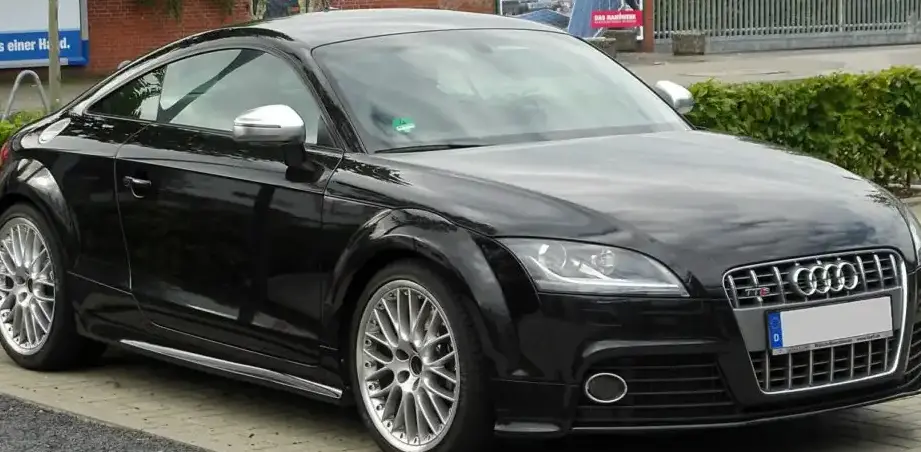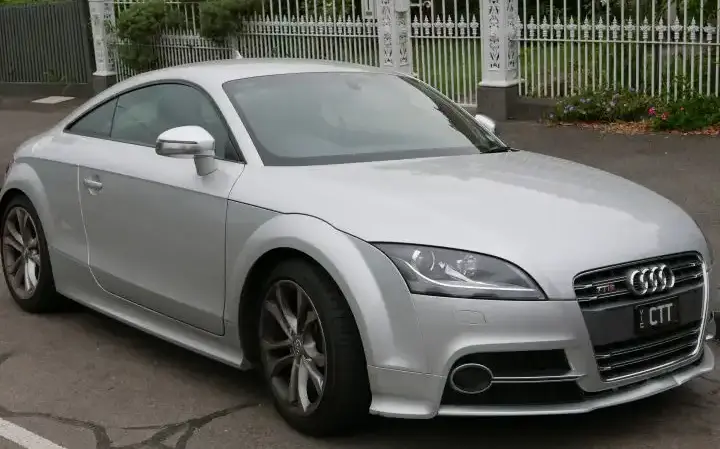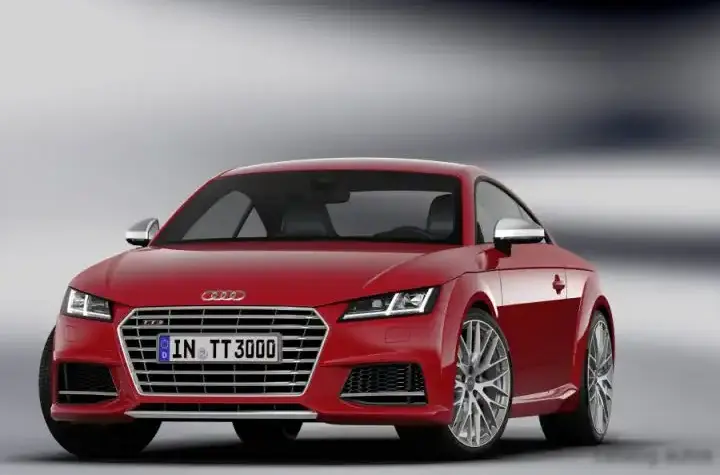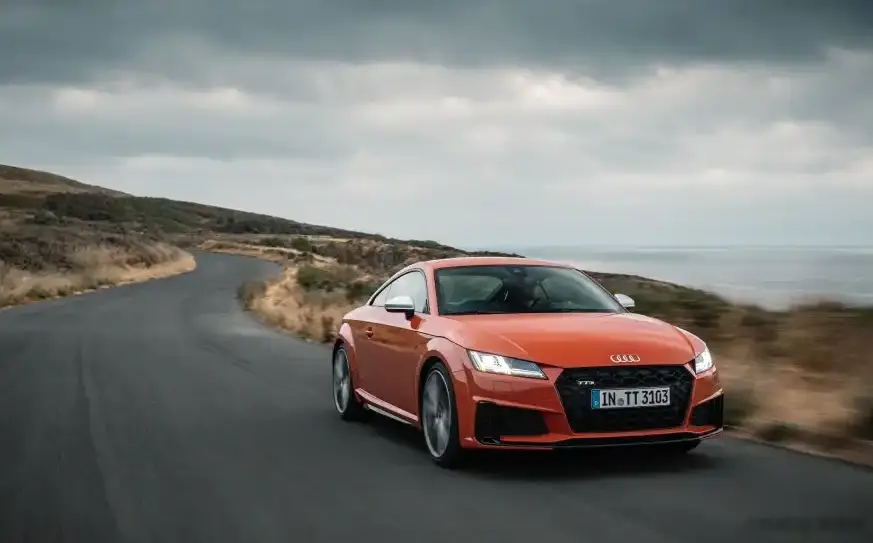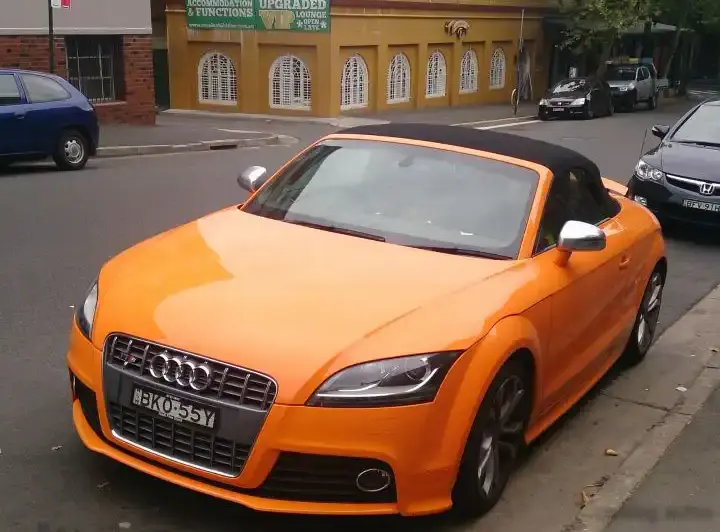
The Audi TTS Roadster (8J) 2.0 TFSI quattro, produced from May 2008 to 2010, represented a performance-focused iteration of the second-generation TT Roadster. Positioned between the standard TT Roadster and the more hardcore TT RS Roadster, the TTS aimed to deliver a compelling blend of open-top driving enjoyment and genuine sports car performance. It was a key model in Audi’s strategy to broaden the appeal of the TT range, offering a more accessible entry point into the high-performance convertible market than its ultimate sibling. The 8J chassis, shared with the Volkswagen Golf Mk5 and other models within the Volkswagen Group, provided a solid foundation for the TTS’s dynamic capabilities.
Technical Specifications
| Brand | Audi |
| Model | TT |
| Generation | TTS Roadster (8J) |
| Type (Engine) | 2.0 TFSI (272 Hp) quattro |
| Start of production | May, 2008 |
| End of production | 2010 |
| Powertrain Architecture | Internal Combustion engine |
| Body type | Roadster |
| Seats | 2 |
| Doors | 2 |
| Fuel consumption (urban) | 11.1 l/100 km (21.2 US mpg, 25.4 UK mpg, 9 km/l) |
| Fuel consumption (extra urban) | 6.7 l/100 km (35.1 US mpg, 42.2 UK mpg, 14.9 km/l) |
| Fuel consumption (combined) | 8.3 l/100 km (28.3 US mpg, 34 UK mpg, 12 km/l) |
| CO2 emissions | 189 g/km |
| Fuel Type | Petrol (Gasoline) |
| Acceleration 0 – 100 km/h | 5.7 sec |
| Acceleration 0 – 62 mph | 5.7 sec |
| Acceleration 0 – 60 mph | 5.4 sec |
| Maximum speed | 250 km/h (155.34 mph) |
| Emission standard | Euro 5 |
| Weight-to-power ratio | 5.4 kg/Hp, 184.4 Hp/tonne |
| Weight-to-torque ratio | 4.2 kg/Nm, 237.3 Nm/tonne |
| Power | 272 Hp @ 6000 rpm |
| Power per litre | 137.1 Hp/l |
| Torque | 350 Nm @ 2500-5000 rpm (258.15 lb.-ft. @ 2500-5000 rpm) |
| Engine layout | Front, Transverse |
| Engine Model/Code | CDLB |
| Engine displacement | 1984 cm3 (121.07 cu. in.) |
| Number of cylinders | 4 |
| Engine configuration | Inline |
| Cylinder Bore | 82.5 mm (3.25 in.) |
| Piston Stroke | 92.8 mm (3.65 in.) |
| Compression ratio | 10.3:1 |
| Number of valves per cylinder | 4 |
| Fuel injection system | Direct injection |
| Engine aspiration | Turbocharger, Intercooler |
| Valvetrain | DOHC |
| Engine oil capacity | 4.5 l (4.76 US qt | 3.96 UK qt) |
| Coolant | 9 l (9.51 US qt | 7.92 UK qt) |
| Kerb Weight | 1475 kg (3251.82 lbs.) |
| Max. weight | 1795 kg (3957.3 lbs.) |
| Max load | 320 kg (705.48 lbs.) |
| Trunk (boot) space – minimum | 250 l (8.83 cu. ft.) |
| Fuel tank capacity | 60 l (15.85 US gal | 13.2 UK gal) |
| Length | 4198 mm (165.28 in.) |
| Width | 1842 mm (72.52 in.) |
| Width including mirrors | 1952 mm (76.85 in.) |
| Height | 1350 mm (53.15 in.) |
| Wheelbase | 2468 mm (97.17 in.) |
| Front track | 1555 mm (61.22 in.) |
| Rear (Back) track | 1546 mm (60.87 in.) |
| Front overhang | 911 mm (35.87 in.) |
| Rear overhang | 819 mm (32.24 in.) |
| Minimum turning circle | 10.9 m (35.76 ft.) |
| Drive wheel | All wheel drive (4×4) |
| Number of gears | 6 |
| Gearbox type | Manual transmission |
| Front suspension | Independent, type McPherson with coil spring and anti-roll bar |
| Rear suspension | Independent multi-link spring suspension with stabilizer |
| Front brakes | Ventilated discs |
| Rear brakes | Disc |
| Assisting systems | ABS (Anti-lock braking system) |
| Steering type | Steering rack and pinion |
| Power steering | Electric Steering |
| Tires size | 245/40 R18 |
| Wheel rims size | 9J x 18 |
Powertrain & Engine Architecture
The heart of the TTS Roadster was the 2.0-liter TFSI (Turbocharged Fuel Stratified Injection) engine, specifically the CDLB engine code. This powerplant was a significant upgrade over the standard TT’s 2.0 TFSI, boasting 272 horsepower and 350 Nm (258 lb-ft) of torque. The engine featured direct injection, a turbocharger with an intercooler, and a dual overhead camshaft (DOHC) valvetrain with four valves per cylinder. Audi’s direct injection system allowed for precise fuel delivery, optimizing combustion efficiency and power output. The turbocharger provided a substantial boost in power, while the intercooler helped to cool the intake air, further enhancing performance. The six-speed manual transmission was standard, providing drivers with full control over the engine’s power. The quattro all-wheel-drive system, a hallmark of Audi performance models, distributed power between all four wheels, ensuring excellent traction and stability, particularly in challenging conditions.
Driving Characteristics
The TTS Roadster offered a noticeably more engaging driving experience than the standard TT Roadster. The increased power and torque, combined with the quattro all-wheel-drive system, resulted in brisk acceleration – 0 to 60 mph in approximately 5.4 seconds. The manual transmission allowed for precise gear changes, while the well-tuned suspension provided a good balance between comfort and handling. Compared to the standard TT, the TTS felt more planted and responsive, with less body roll in corners. While not as raw or focused as the TT RS, the TTS provided a satisfying and accessible sports car experience. The gear ratios were optimized for performance, allowing the engine to stay within its peak power and torque bands during spirited driving.
Equipment & Trim Levels
The TTS Roadster came generously equipped as standard. Key features included sport seats upholstered in a combination of leather and Alcantara, a multi-function steering wheel, automatic climate control, and a high-quality audio system. Exterior styling cues included a unique front bumper with larger air intakes, a rear spoiler, and distinctive 18-inch alloy wheels. Optional extras included navigation system, parking sensors, and upgraded audio systems. The interior trim was typically finished in aluminum or carbon fiber accents, adding to the sporty ambiance. The TTS trim level was positioned as the premium offering within the TT Roadster range, offering a more luxurious and performance-oriented experience than the base model.
Chassis & Braking
The TTS Roadster utilized a McPherson strut front suspension and a multi-link rear suspension, providing a comfortable yet controlled ride. The suspension was tuned to be firmer than the standard TT, enhancing handling and reducing body roll. Brakes consisted of ventilated discs at all four corners, providing ample stopping power. The ABS (Anti-lock Braking System) was standard, enhancing safety and stability during braking. The steering was a rack-and-pinion system with electric power assistance, offering precise and responsive steering feel.
Market Reception & Comparison
The Audi TTS Roadster was generally well-received by automotive critics. It was praised for its performance, handling, and stylish design. Critics noted that the TTS offered a compelling alternative to other premium roadsters, such as the BMW Z4 and Porsche Boxster. Compared to the standard TT Roadster, the TTS offered a significant performance upgrade, but at a higher price point. Fuel economy was reasonable for a performance car, averaging around 28.3 US mpg in combined driving. Reliability was generally good, although some owners reported minor issues with the turbocharger and direct injection system.
Legacy
The 8J generation TTS Roadster remains a popular choice among enthusiasts today. The 2.0 TFSI engine, while requiring regular maintenance, is generally considered to be reliable. The quattro all-wheel-drive system continues to be a valuable asset, providing excellent traction in all weather conditions. The TTS Roadster’s combination of performance, style, and practicality has ensured its enduring appeal in the used car market. Parts availability is generally good, and the car’s relatively simple mechanical design makes it relatively easy to maintain. The 8J TTS Roadster represents a sweet spot in the TT lineup, offering a compelling blend of performance and refinement at a reasonable price.