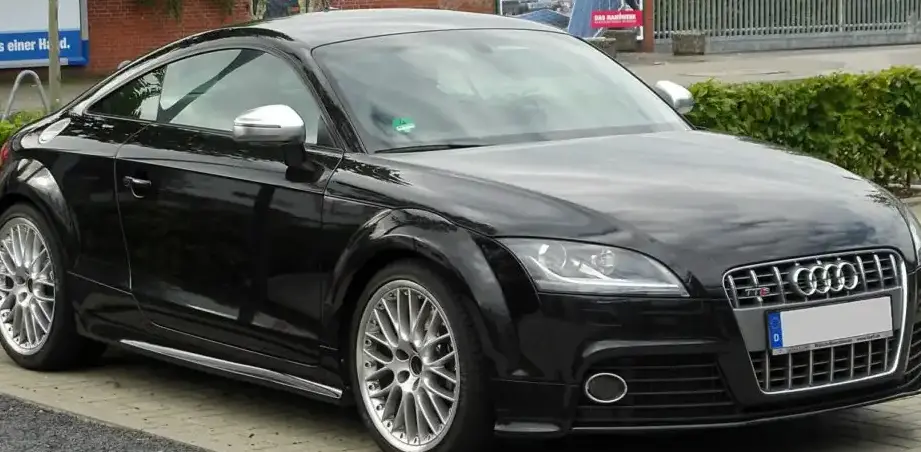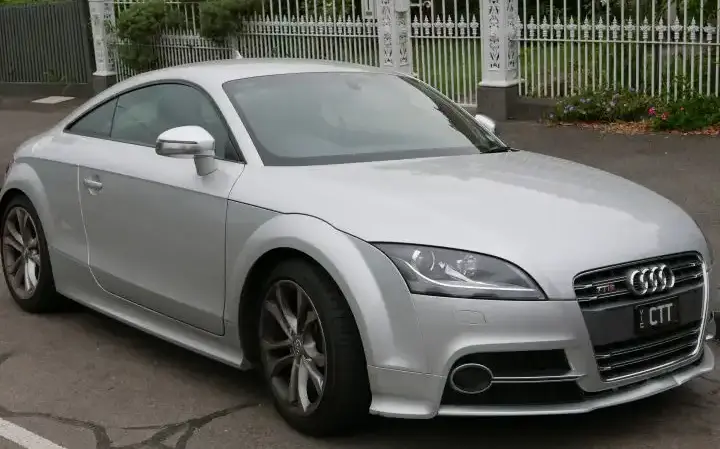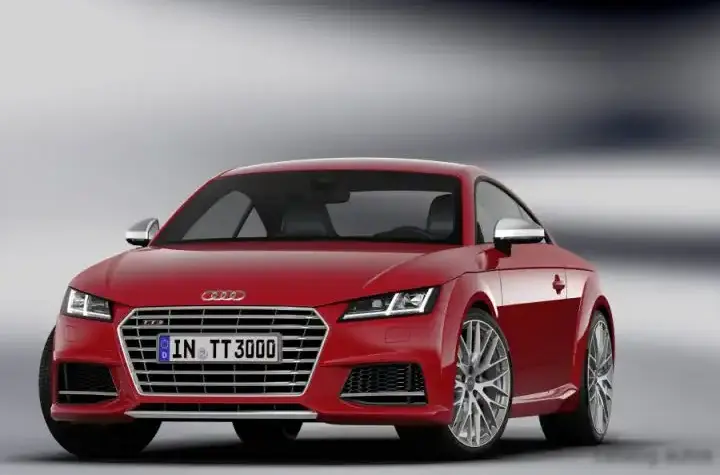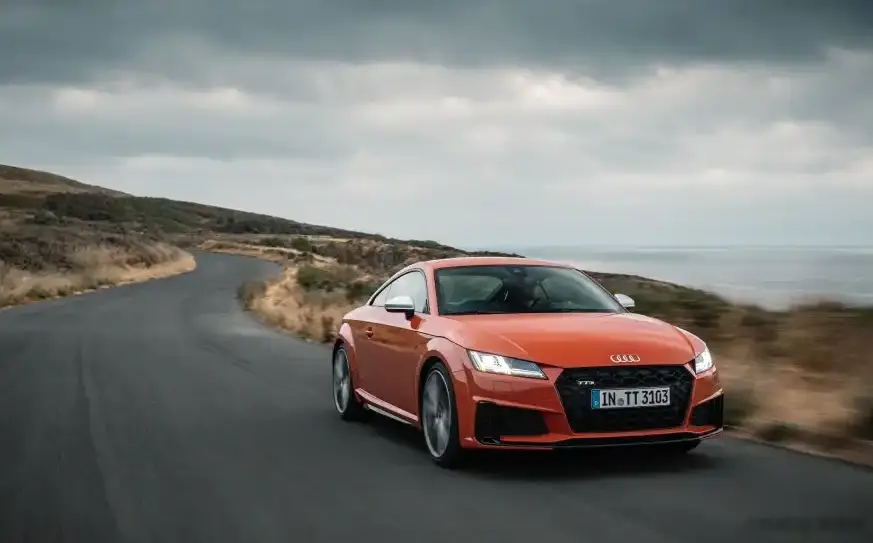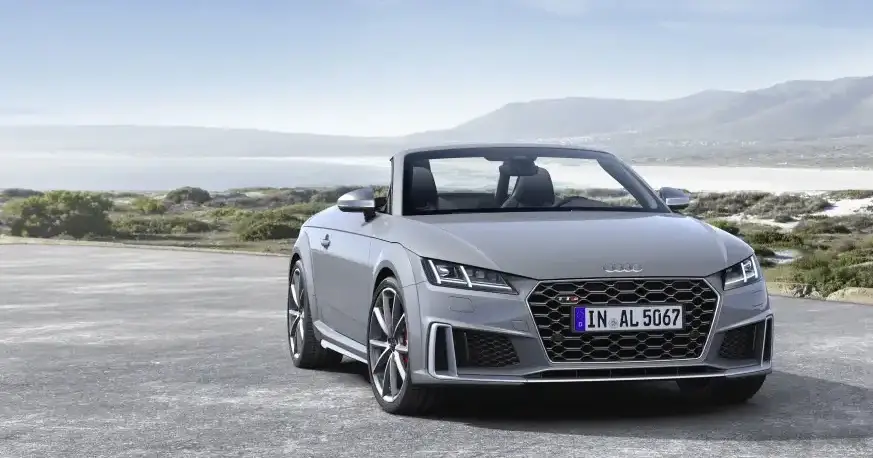
The Audi TTS Roadster (8S, facelift) with the 2.0 TFSI 306 horsepower engine and S tronic dual-clutch transmission represents a performance-focused iteration of Audi’s popular TT Roadster. Produced from 2018 to 2020, this variant sat at the top of the non-RS TT Roadster lineup, offering a significant step up in power and handling compared to the base 1.8 TFSI and 2.0 TFSI models. It was positioned as a direct competitor to Porsche Boxster and BMW Z4, appealing to drivers seeking a sporty, open-top experience with a premium badge.
Technical Specifications
| Brand | Audi |
| Model | TT |
| Generation | TTS Roadster (8S, facelift 2018) |
| Type (Engine) | 2.0 TFSI (306 Hp) quattro S tronic |
| Start of production | 2018 |
| End of production | 2020 |
| Powertrain Architecture | Internal Combustion engine |
| Body type | Roadster |
| Seats | 2 |
| Doors | 2 |
| Combined fuel consumption (WLTP) | 8.2-8.3 l/100 km (28.7 – 28.3 US mpg, 34.4 – 34 UK mpg, 12.2 – 12 km/l) |
| CO2 emissions (WLTP) | 185-189 g/km |
| Fuel consumption (urban) | 9.2 l/100 km (25.6 US mpg, 30.7 UK mpg, 10.9 km/l) |
| Fuel consumption (extra urban) | 6.1-6.2 l/100 km (38.6 – 37.9 US mpg, 46.3 – 45.6 UK mpg, 16.4 – 16.1 km/l) |
| Fuel consumption (combined) | 7.2-7.3 l/100 km (32.7 – 32.2 US mpg, 39.2 – 38.7 UK mpg, 13.9 – 13.7 km/l) |
| CO2 emissions | 165-166 g/km |
| Fuel Type | Petrol (Gasoline) |
| Acceleration 0 – 100 km/h | 4.8 sec |
| Acceleration 0 – 62 mph | 4.8 sec |
| Acceleration 0 – 60 mph | 4.6 sec |
| Maximum speed | 250 km/h (155.34 mph) |
| Emission standard | Euro 6 |
| Weight-to-power ratio | 4.9 kg/Hp, 204.7 Hp/tonne |
| Weight-to-torque ratio | 3.7 kg/Nm, 267.6 Nm/tonne |
| Power | 306 Hp @ 5400-6500 rpm |
| Power per litre | 154.2 Hp/l |
| Torque | 400 Nm @ 2000-5300 rpm (295.02 lb.-ft. @ 2000-5300 rpm) |
| Engine layout | Front, Transverse |
| Engine Model/Code | DNUF |
| Engine displacement | 1984 cm3 (121.07 cu. in.) |
| Engine configuration | Inline |
| Cylinder Bore | 82.5 mm (3.25 in.) |
| Piston Stroke | 92.8 mm (3.65 in.) |
| Compression ratio | 9.3:1 |
| Number of valves per cylinder | 4 |
| Fuel injection system | Direct injection |
| Engine aspiration | Turbocharger, Intercooler |
| Engine oil capacity | 5.7 l (6.02 US qt, 5.02 UK qt) |
| Coolant | 10.1 l (10.67 US qt, 8.89 UK qt) |
| Kerb Weight | 1495 kg (3295.91 lbs.) |
| Max. weight | 1825 kg (4023.44 lbs.) |
| Max load | 330 kg (727.53 lbs.) |
| Trunk (boot) space – minimum | 280 l (9.89 cu. ft.) |
| Fuel tank capacity | 45 l (11.89 US gal, 9.9 UK gal) |
| Length | 4199 mm (165.31 in.) |
| Width | 1832 mm (72.13 in.) |
| Width including mirrors | 1966 mm (77.4 in.) |
| Height | 1345 mm (52.95 in.) |
| Wheelbase | 2505 mm (98.62 in.) |
| Front track | 1574 mm (61.97 in.) |
| Rear track | 1553 mm (61.14 in.) |
| Front overhang | 890 mm (35.04 in.) |
| Rear overhang | 804 mm (31.65 in.) |
| Drag coefficient (Cd) | 0.33 |
| Minimum turning circle | 11 m (36.09 ft.) |
| Drive wheel | All wheel drive (4×4) |
| Number of gears and type of gearbox | 7 gears, automatic transmission S tronic |
| Front suspension | Independent type McPherson |
| Rear suspension | Independent multi-link suspension |
| Front brakes | Ventilated discs |
| Rear brakes | Disc |
| Assisting systems | ABS (Anti-lock braking system) |
| Steering type | Steering rack and pinion |
| Power steering | Electric Steering |
| Tires size | 245/40 R18 93Y |
| Wheel rims size | 8.5J x 18 |
INTRODUCTION
The 8S generation Audi TT, launched in 2014, represented a significant evolution of the iconic sports car. The facelift in 2018 brought with it revised styling, updated technology, and refinements to the engine lineup. The TTS Roadster, in its facelifted form, occupied the sweet spot for many enthusiasts, offering a compelling blend of performance, style, and everyday usability. Built on the Volkswagen Group’s MQB platform (specifically the 1HX0/A3 variant), the TTS Roadster benefited from a lightweight construction and sophisticated chassis technology. This particular variant, equipped with the 2.0 TFSI engine and S tronic transmission, was available from 2018 through 2020.
Powertrain & Engine Architecture
At the heart of the TTS Roadster lies the 2.0-liter turbocharged four-cylinder engine, designated as the DNUF engine code. This engine is a direct-injection unit, utilizing a sophisticated fuel system to deliver precise fuel metering for optimal combustion. The engine features a single scroll turbocharger and intercooler, boosting output to 306 horsepower and 295 lb-ft of torque. The engine’s valvetrain employs four valves per cylinder, contributing to its high-revving nature. The S tronic seven-speed dual-clutch transmission is a key component of the TTS experience. This transmission offers incredibly fast and smooth gear changes, enhancing both acceleration and driving engagement. The quattro all-wheel-drive system, standard on the TTS, distributes power between the front and rear axles, providing excellent traction and stability in all conditions. The system utilizes a multi-plate clutch to dynamically adjust the power split based on driving conditions.
Driving Characteristics
The 2.0 TFSI engine in the TTS Roadster delivers a potent and responsive driving experience. Acceleration from 0 to 60 mph takes approximately 4.6 seconds, making it a genuinely quick car. The S tronic transmission contributes significantly to this performance, providing near-instantaneous shifts. Compared to the standard 2.0 TFSI TT Roadster, the TTS offers a noticeably more aggressive power delivery and a more engaging driving feel. While the manual transmission option available on other TT models appealed to purists, the S tronic offered superior acceleration and convenience. The quattro all-wheel-drive system provides exceptional grip, allowing the driver to confidently exploit the engine’s power even in challenging conditions. The gear ratios are tuned for performance, with shorter ratios in the lower gears for quick acceleration and longer ratios for efficient cruising.
Equipment & Trim Levels
The TTS Roadster came generously equipped as standard. Key features included sport seats upholstered in leather and Alcantara, a flat-bottomed steering wheel, Audi’s Virtual Cockpit digital instrument cluster, and a premium sound system. Exterior features included unique TTS styling cues, such as a distinctive front grille, quad exhaust outlets, and a rear spoiler. Optional extras included adaptive dampers, a Bang & Olufsen sound system, and various interior trim options. The interior design emphasized a driver-focused layout, with controls logically arranged and easily accessible.
Chassis & Braking
The TTS Roadster’s chassis is designed for sporty handling. It features independent suspension all around, with McPherson struts at the front and a multi-link setup at the rear. The suspension is tuned to provide a balance between comfort and control. The TTS Roadster also benefits from a slightly stiffer suspension setup compared to the standard TT Roadster. Braking performance is excellent, thanks to ventilated discs at all four corners and Audi’s ABS anti-lock braking system. The braking system is designed to provide consistent and reliable stopping power, even under demanding conditions.
Market Reception & Comparison
The Audi TTS Roadster (8S, facelift) was generally well-received by automotive critics. It was praised for its performance, handling, and stylish design. Some critics noted that the ride could be a bit firm on rough roads, but this was generally considered a worthwhile trade-off for the car’s sporty character. Compared to the base TT Roadster, the TTS offered a significant performance upgrade, justifying its higher price tag. Fuel economy was respectable for a performance car, averaging around 28-32 mpg in mixed driving. Reliability was generally good, although some owners reported minor issues with the infotainment system.
Legacy
The 2.0 TFSI engine and S tronic transmission combination in the TTS Roadster have proven to be relatively reliable over the long term. The engine is known for its durability and performance, while the S tronic transmission is generally robust when properly maintained. On the used car market, the TTS Roadster holds its value well, reflecting its desirability and performance credentials. These vehicles continue to appeal to enthusiasts seeking a sporty and stylish roadster with a premium badge. Regular maintenance, including oil changes and transmission servicing, is crucial to ensure the continued reliability of this powertrain.